Sintra · Lisboa
Palácio e Parque Biester
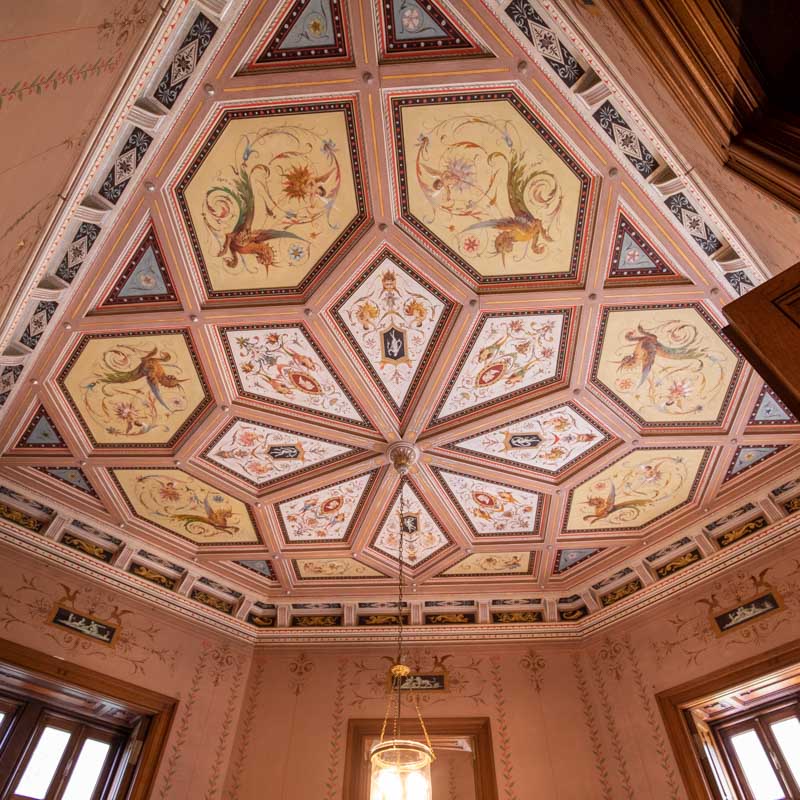
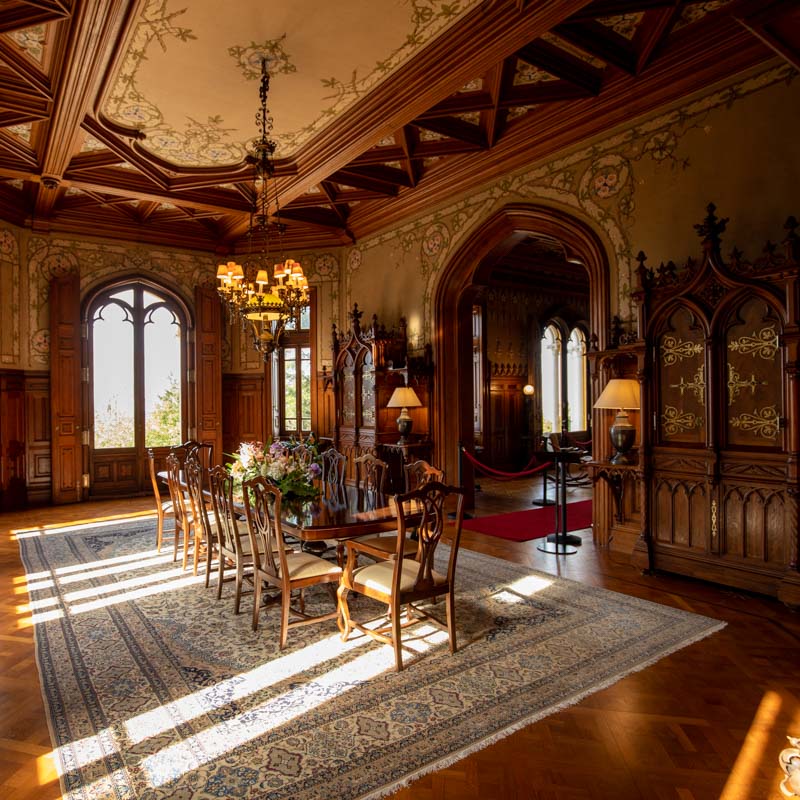
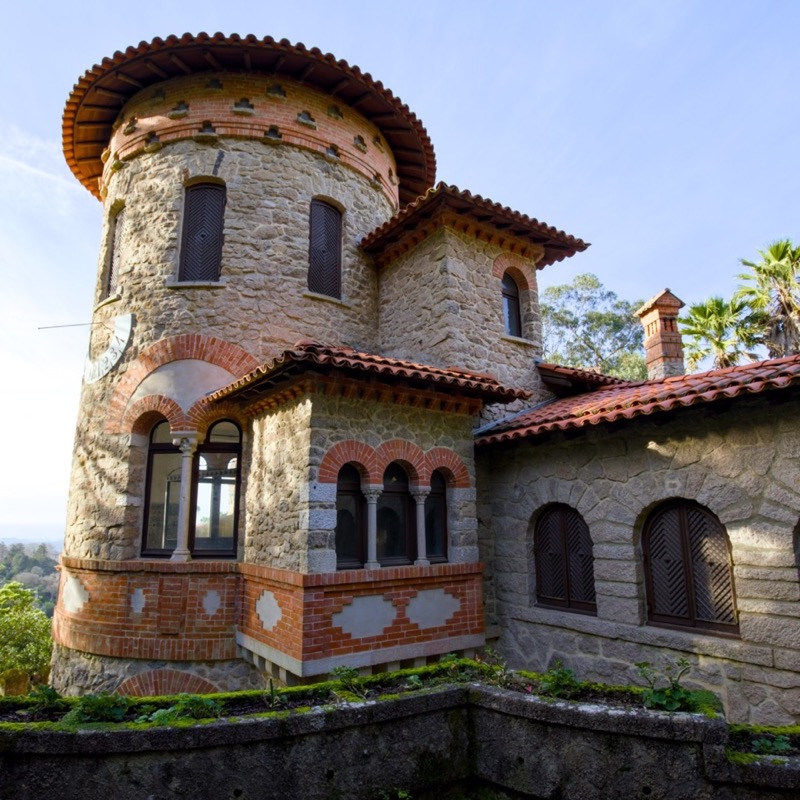
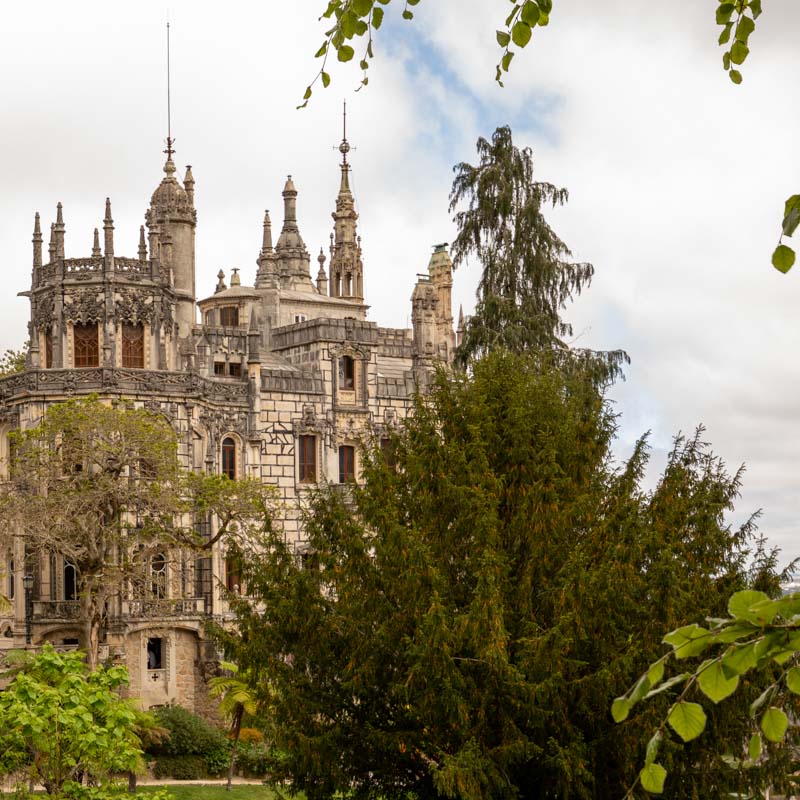
In Sintra, Palácio e Parque Biester show how late Romanticism could be both theatrical and intimate at the same time. Built in the last decade of the nineteenth century for the Biester family, the palace was designed by José Luiz Monteiro and enriched by Luigi Manini and Leandro Braga, in a dialogue of decorative painting, carved wood and revivalist forms that gives it an almost theatrical air. After a long private life, it opened to the public in 2022, finally allowing visitors to move through rooms shaped for domestic life yet filled with symbolic imagination. Outside, the park designed by the French landscaper François Nogré descends the hillside in terraces, with watercourses, exotic species and viewpoints towards the Moorish Castle and, farther away, the sea. Gruta da Pena, set into a rocky recess, deepens that blend of staged nature and mystery. Among turrets, ferns and winding paths, Biester helps one understand that in Sintra Romanticism was not only a style: it was a way of inhabiting the landscape.
Why it matters
On the slopes of Sintra, the Biester Palace and Park belongs to the late phase of the town’s great Romantic houses. The ensemble was built in the last decades of the 19th century, when wealthy families chose Sintra for summer residences integrated into the hills. Around 1890, Frederico Biester invited José Luís Monteiro to design the house, with artistic collaboration in the interior decoration. The result is close to the eclectic taste of the period, between late Romanticism and Art Nouveau, but it also shows modern attention to domestic function. The park, designed by the French landscape architect François Nogré, completed the house with paths, slopes, views and exotic species. After restoration works, the palace opened to the public in 2022. Today, it is one of the values associated with the Cultural Landscape of Sintra, inscribed by UNESCO as World Heritage in 1995.
Architecture and history
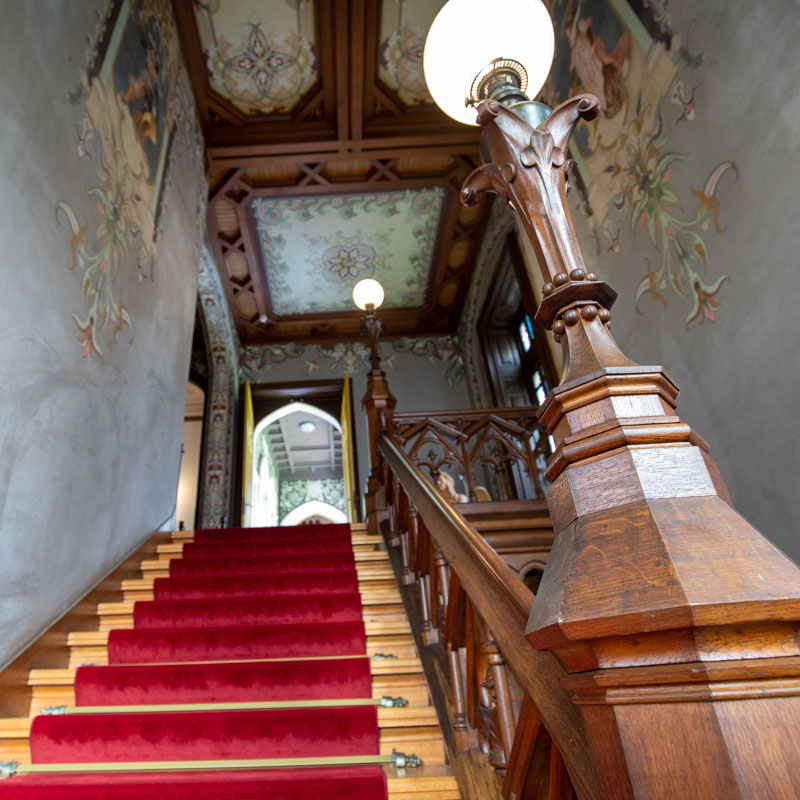
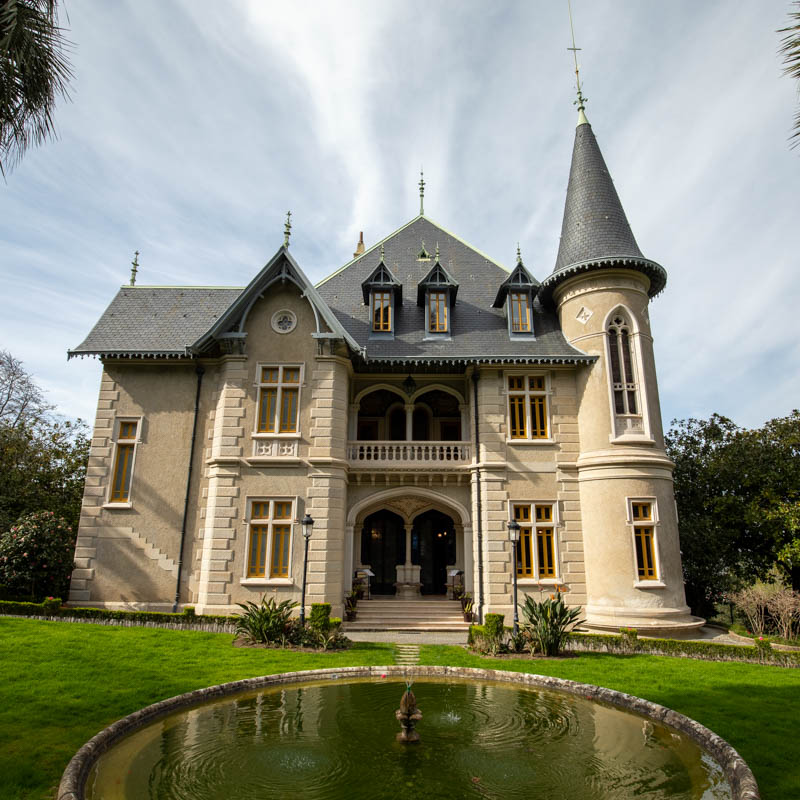
The conical tower, steep roofs and narrow openings give the palace a very recognisable silhouette among the vegetation. The house draws on models of central and northern European architectural influence, then appreciated in Portugal, and combines this reference with a Romantic and decorative language. The composition does not depend on a single façade: balconies, cut-outs, projecting volumes and different heights make the building change appearance as one moves through the park. Inside, the organisation includes spaces such as the Entrance Gallery, the Library, the Music Room, the Ballroom, the Main Staircase and the Chapel. Wood carving, decorative painting and ceramics help show that the house was conceived as a collaborative work, where architecture and applied arts share the same atmosphere.
More context
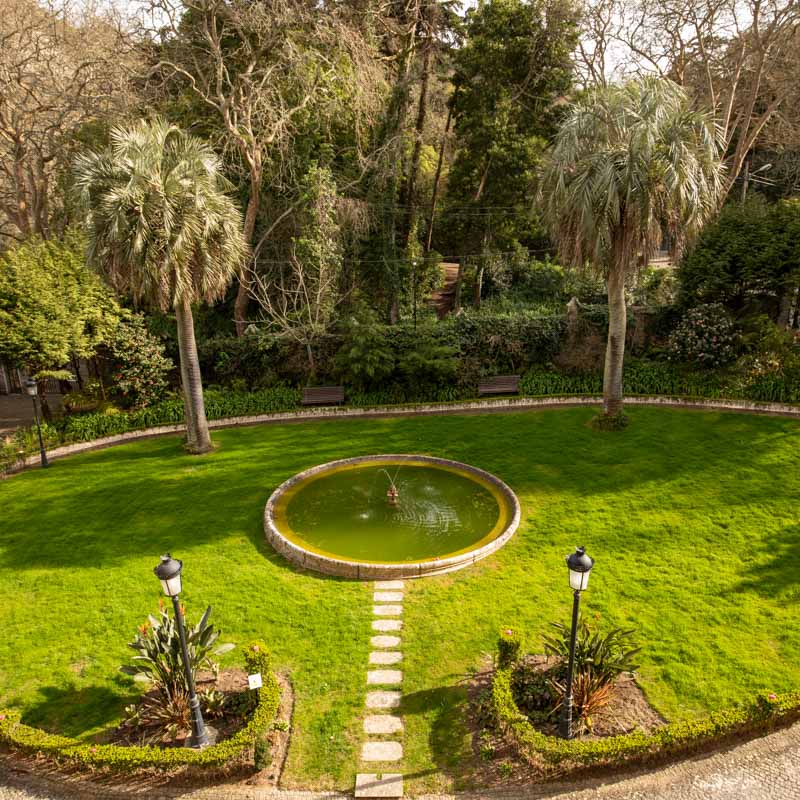
The botanical park reveals the house gradually. The sloping paths create different viewpoints towards the palace and lead to areas with water, shade and dense vegetation. Notice the camellias of Chinese and Japanese origin, the green and red beeches from Central Europe, the Australian acacias, the Australian ferns and the North American firs, examples of the botanical variety associated with Romantic taste. Elements such as the Plane Tree Cascade, the Pena Grotto, the Australian Fern Lake, the Castle Walk and the viewpoints help turn the route into a sequence of scenes. Inside the building, the Library, the Chapel and the Main Staircase deserve special attention, because they show how domestic intimacy, religiosity, reading and social display coexisted in a late-century noble house.
Routes
Explore this place in a cultural route
Gallery