

Sintra · Lisboa
Palácio e Quinta da Regaleira
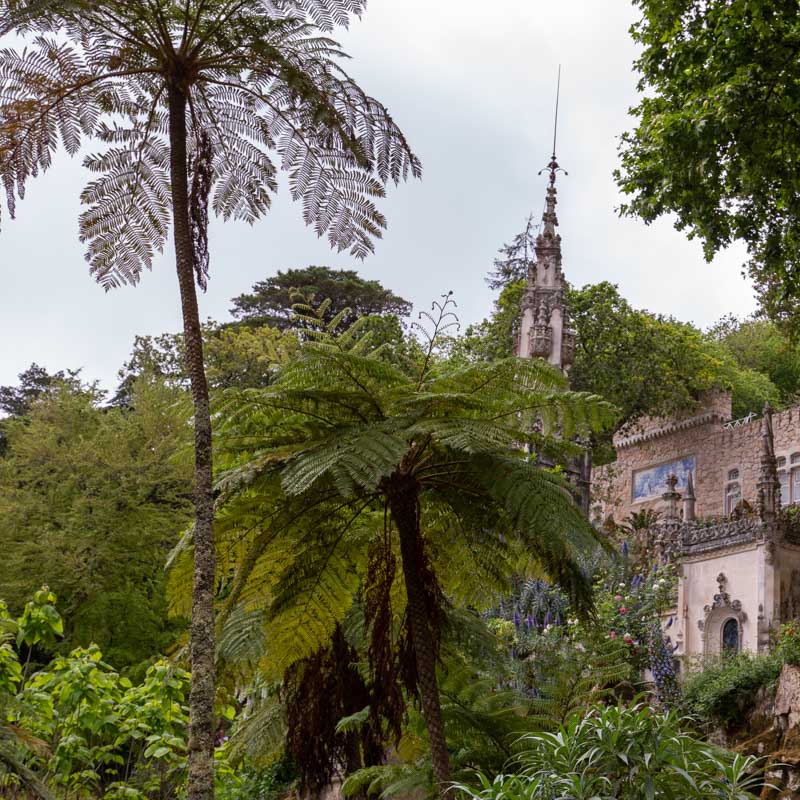
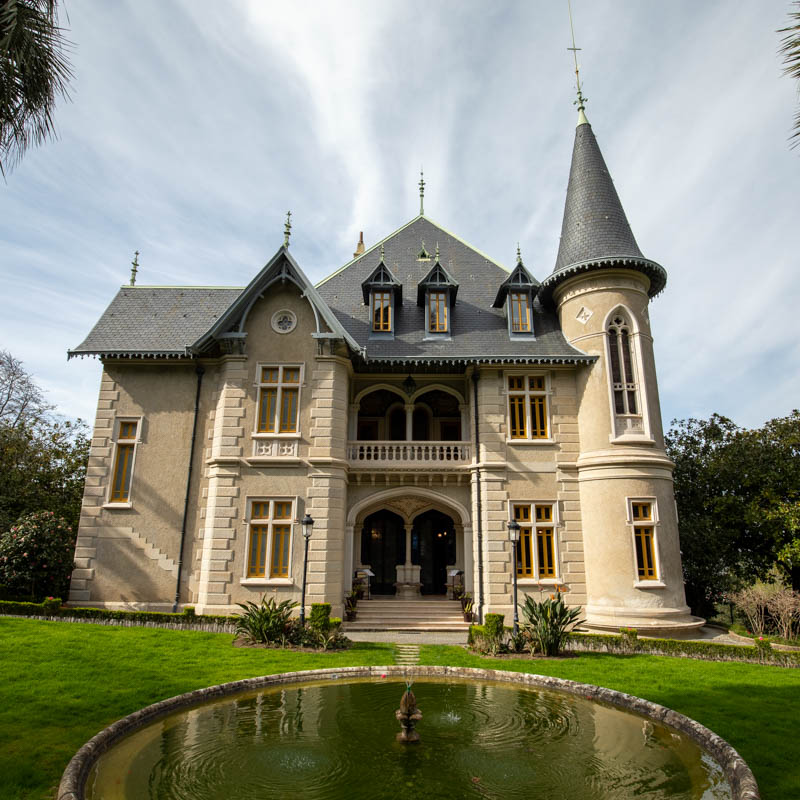
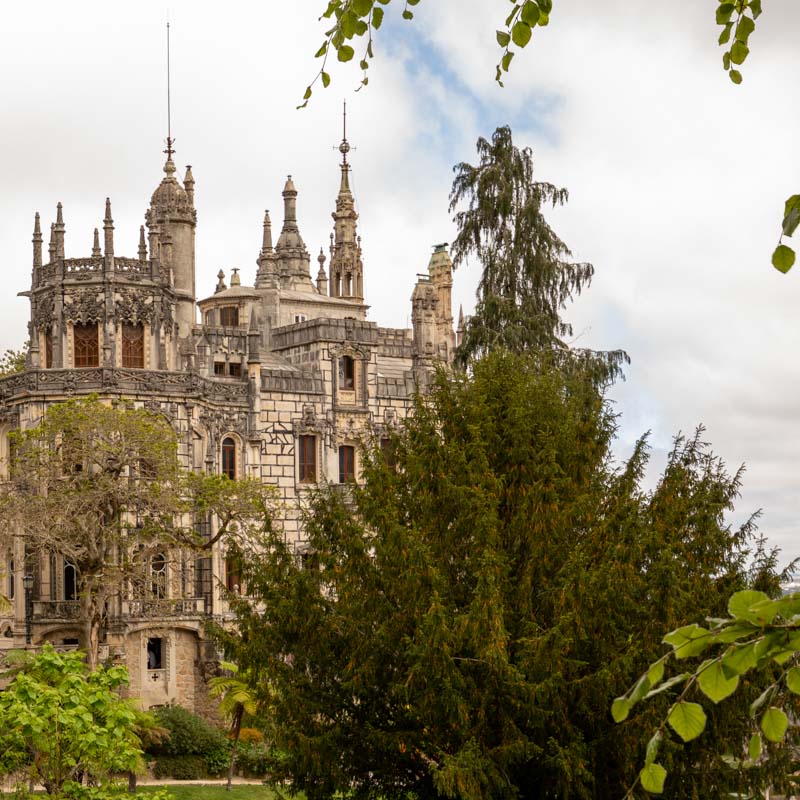
In Sintra, the Palace and Quinta da Regaleira feel less like a country house than like a world imagined in stone, water and vegetation. António Augusto Carvalho Monteiro bought the property in 1892 and, with Luigi Manini, transformed it between 1904 and 1910 into a theatrical ensemble where Neo-Manueline, Gothic, Renaissance and Classical forms meet with almost operatic freedom. The palace and chapel rise like parts of a larger enigma: in the park, lakes, grottoes, tunnels and the famous Initiation Well create a landscape charged with symbolic allusions, some linked to Masonic, Templar and Rosicrucian imagery. It is no surprise that people in Sintra called it the “Wedding Cake”. Yet Regaleira also impresses through its harmony with the hills and the way each corner seems designed to be discovered slowly. Part of the Cultural Landscape of Sintra, it shows how late Romanticism could turn a garden into a narrative and a visit into an experience of mystery.
Why it matters
At the heart of the Cultural Landscape of Sintra, inscribed by UNESCO as World Heritage in 1995, Quinta da Regaleira shows how the hills were transformed by gardens, palaces and routes imagined to converse with nature. The property gained the form we recognise today through António Augusto de Carvalho Monteiro, who bought the estate in 1892. Between 1904 and 1911, he commissioned the neo-Manueline palace and redesigned the park with Luigi Manini, an Italian architect, painter and scenographer. Regaleira is distinctive because it was not only a residence: it was conceived as a combination of architecture, landscape and symbols. The result brings together revivalist taste, cultural references and a very personal reading of Portuguese history, in a place where the route through the garden matters as much as the visit to the palace.
Architecture and history
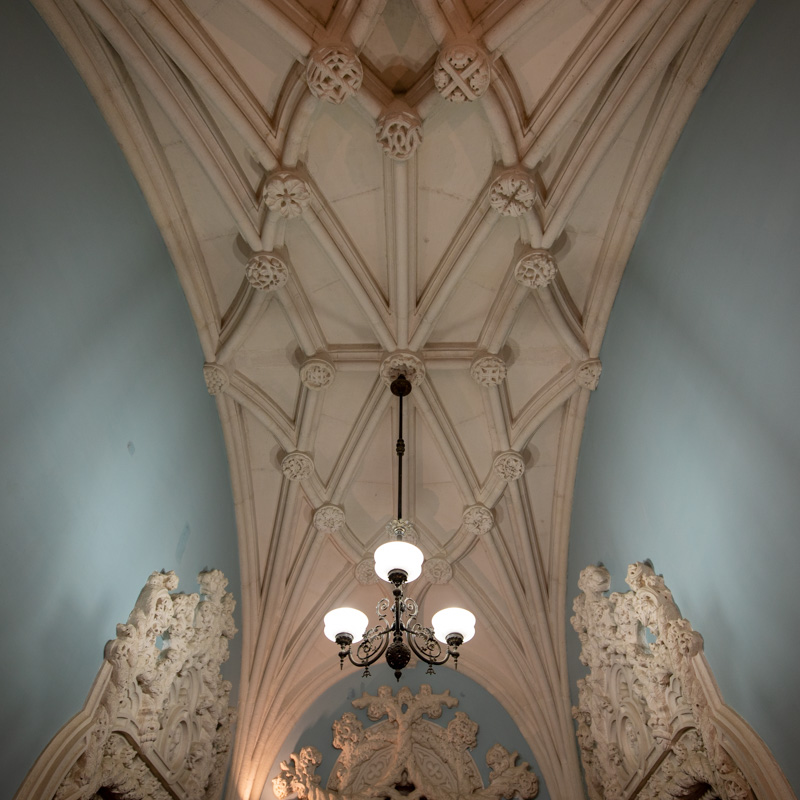
The palace concentrates Regaleira’s most visible language, with revivalist forms that evoke the Manueline, the Renaissance and medieval imagery. The stone decoration, towers, chapel and ornamental elements create a scenographic architecture, consistent with Manini’s theatrical experience. The estate, covering around four hectares, is not organised as a simple strolling garden. Lakes, grottoes, towers, wells, terraces, fountains and paths build a sequence of discoveries. The ensemble includes palace, chapel, towers, underground complex, garden and many decorative elements. Sintra Town Council associates several of these places with alchemical meanings and references such as Freemasonry, the Templars and the Rosicrucians. Rather than confirming fixed interpretations, these signs help visitors understand Regaleira as a work designed to suggest, hide and reveal.
More context
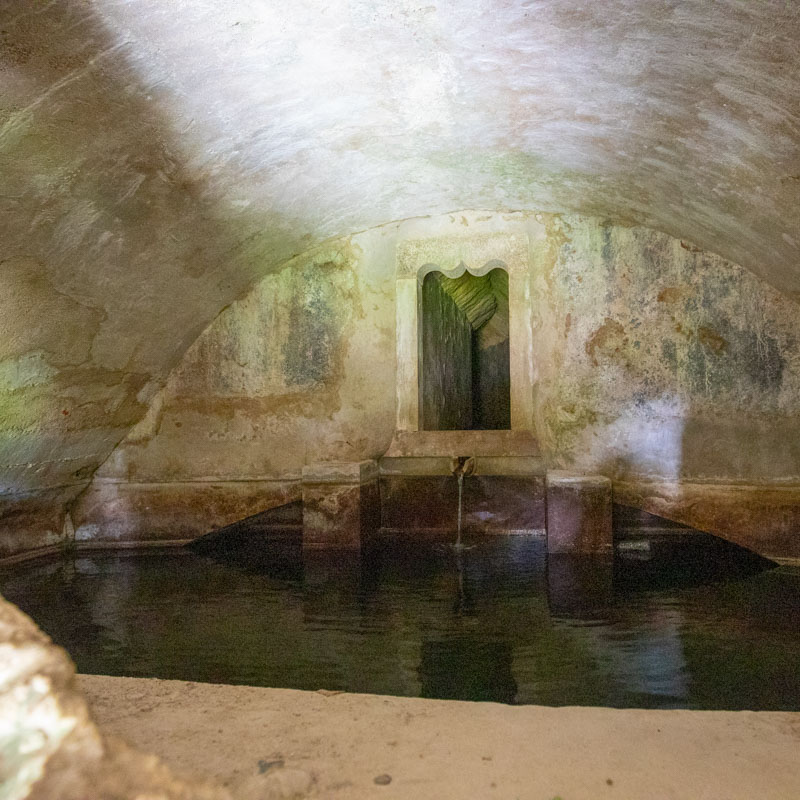
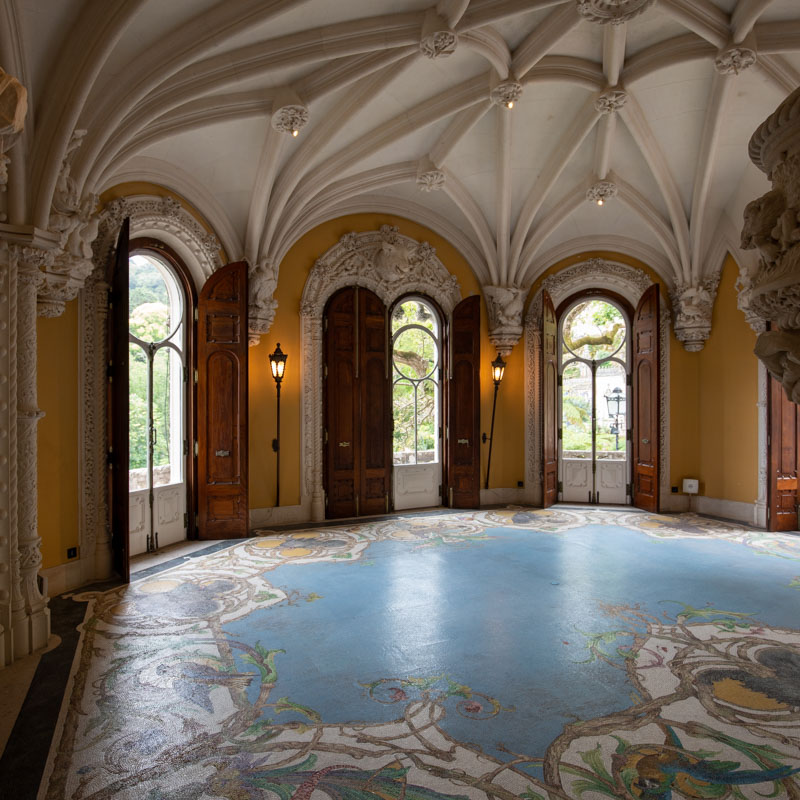
The Initiation Well is the feature that best sums up the logic of the route: a spiral descent that turns bodily movement into an experience of discovery. The connection to the underground passages and the Grotto of the East shows how the estate was designed to alternate light, shadow, water, stone and surprise. In the palace, only the noble floor is normally included in the visiting circuit, so pay close attention to the accessible rooms, their relationship with the façade and the way the decoration extends the imagination of the exterior. The chapel should be seen as part of the same symbolic system, not as an isolated building. On the Terrace of the Gods, the stone statues, urns and vases give rhythm to the garden and recall that Regaleira also depends on sculpture, scale and the staging of the path.
Routes
Explore this place in a cultural route
Gallery