LxDiscover
ExploreMapRoutesRegionsAbout
Get the app

Map · 203 / 203

Explore the map

Regions:
Arco Triunfal da Rua Augusta4.7

Arco Triunfal da Rua Augusta

Arch • Lisboa, Lisboa

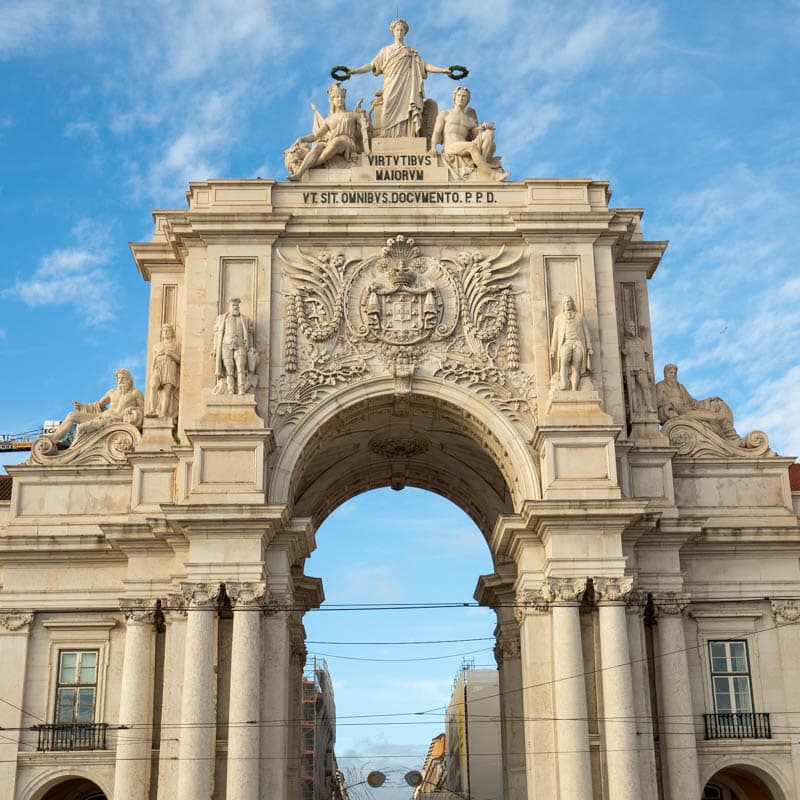
More than a monumental entrance, the Rua Augusta Triumphal Arch is the great symbolic gateway to the Lisbon that rose again after the 1755 earthquake. Conceived in the context of the Pombaline reconstruction, it took more than a century to reach its final form, and that delay says much about the city’s slow reinvention. At the top, Glory crowns Genius and Valour; below, figures such as Vasco da Gama, Viriato, Nuno Álvares Pereira and the Marquis of Pombal turn the monument into a statement of memory and power. It is also worth noticing the Latin inscription, dedicated to the virtues of the ancients, and the way the arch frames the Baixa, Praça do Comércio and the Tagus. Seen up close, it impresses with its scale and sculptural relief; seen from above, it offers one of the clearest readings of the Pombaline plan and of Lisbon’s deep bond with the river.
Estádio do Dragão4.7

Estádio do Dragão

Stadium • Porto, Porto

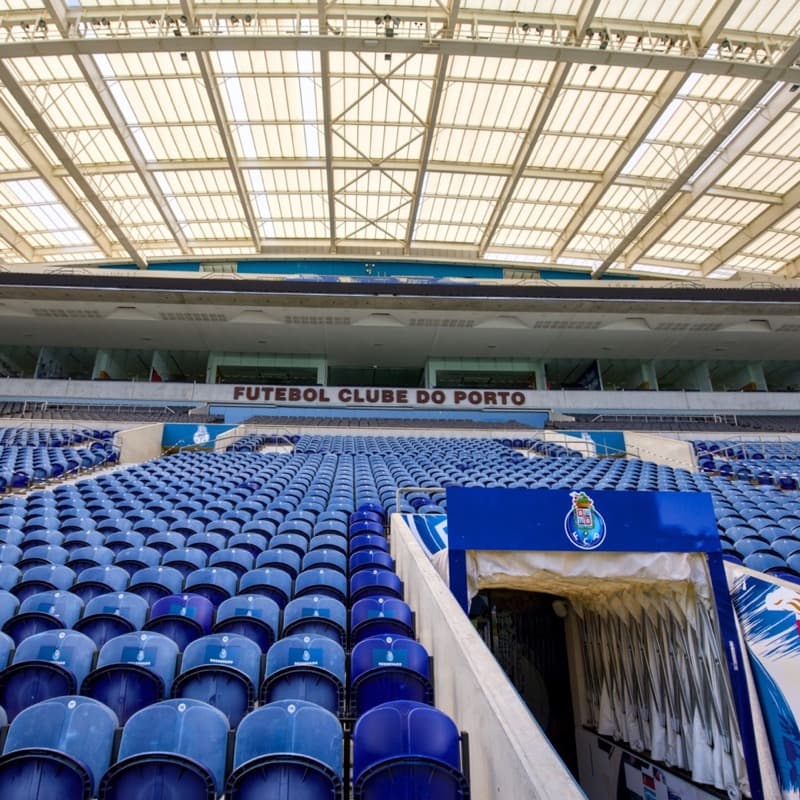
Estádio do Dragão rises in the eastern part of Porto as the home of Futebol Clube do Porto since 2003. Inaugurated on 16 November that year, with a match between FC Porto and FC Barcelona, it replaced the former Estádio das Antas and came to hold 50,033 spectators. Designed by the architect Manuel Salgado, it was built in the context of Euro 2004 and hosted the competition’s opening ceremony. Its architecture combines structural clarity and large scale: the roof over the stands uses a metal structure covered with polycarbonate sheets, a solution distinguished in 2005 with the European award for steel and mixed construction. More than a sports venue, the Dragão functions as a multifunctional space, prepared for a variety of events. Inside it, the FC Porto Museum adds to the stadium experience a reading of memory, trophies and collective identity.

Cristo Rei4.6

Cristo Rei

Monument • Almada, Setúbal

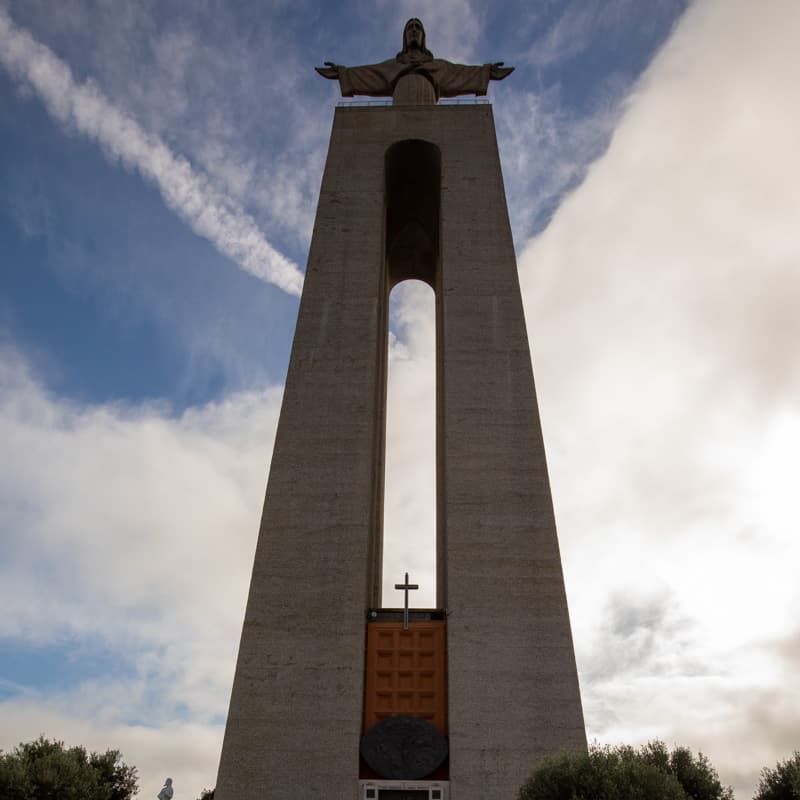
High above Pragal, with arms open over the Tagus, Cristo Rei has become one of the most striking shapes in Lisbon’s skyline, although it already belongs to Almada. The idea was born when Cardinal Cerejeira saw Christ the Redeemer in Rio de Janeiro, yet the monument gained its deepest meaning in the vow made by the Portuguese bishops in 1940: if the country were spared from the Second World War, a great sign of gratitude and peace would be raised here. Inaugurated in 1959, with a design by António Lino and sculpture by Francisco Franco, the ensemble joins the solemn scale of a sanctuary to the simple force of a figure turned towards the city. It is worth noticing the void between the four pillars and letting your eyes rise to the open arms before lingering at the viewpoint, where the Tagus and Lisbon seem to unfold in a single breath.

Zoomarine4.6

Zoomarine

Theme Park • Guia, Faro

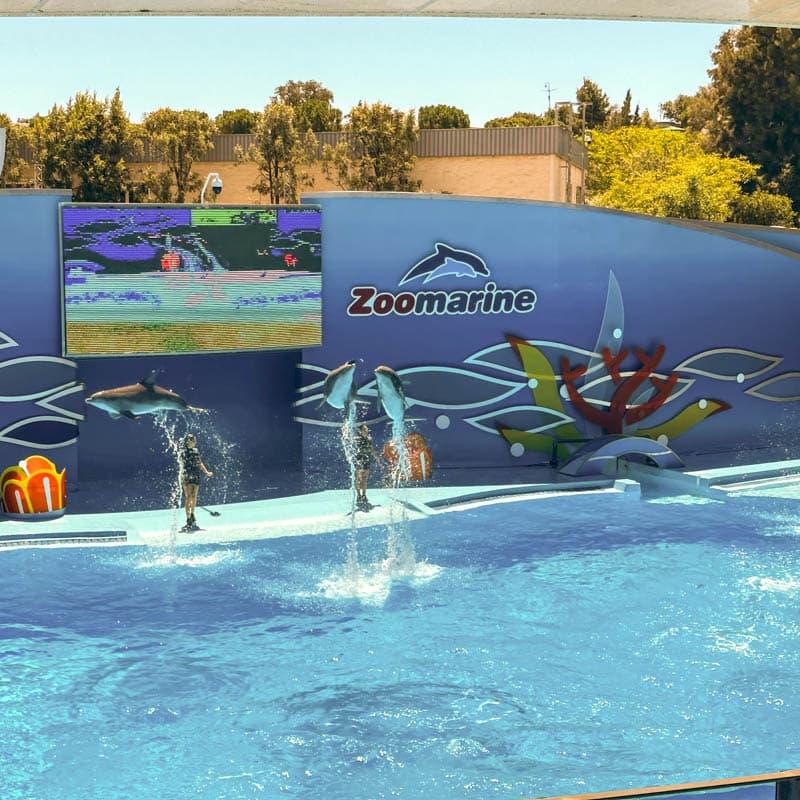
In Guia, near Albufeira, Zoomarine opened in 1991 as a theme park devoted to the marine world, but over time it has taken on a broader meaning. Through zoological presentations, aquariums, habitats and water attractions, the site brings together entertainment and environmental awareness, seeking to draw visitors closer to ocean life. That mission becomes especially tangible at Porto d’Abrigo, created in 2002: it was the first Marine Species Rehabilitation Centre in Portugal and it continues to rescue, treat and return animals to the wild in partnership with ICNF. During a visit, the contrast between the park’s lively atmosphere and this quieter conservation work gives the place a distinctive identity. More than a leisure venue, Zoomarine shows how curiosity, when guided well, can turn into knowledge and care for the sea.

Mosteiro da Batalha4.7

Mosteiro da Batalha

Monastery • Batalha, Leiria

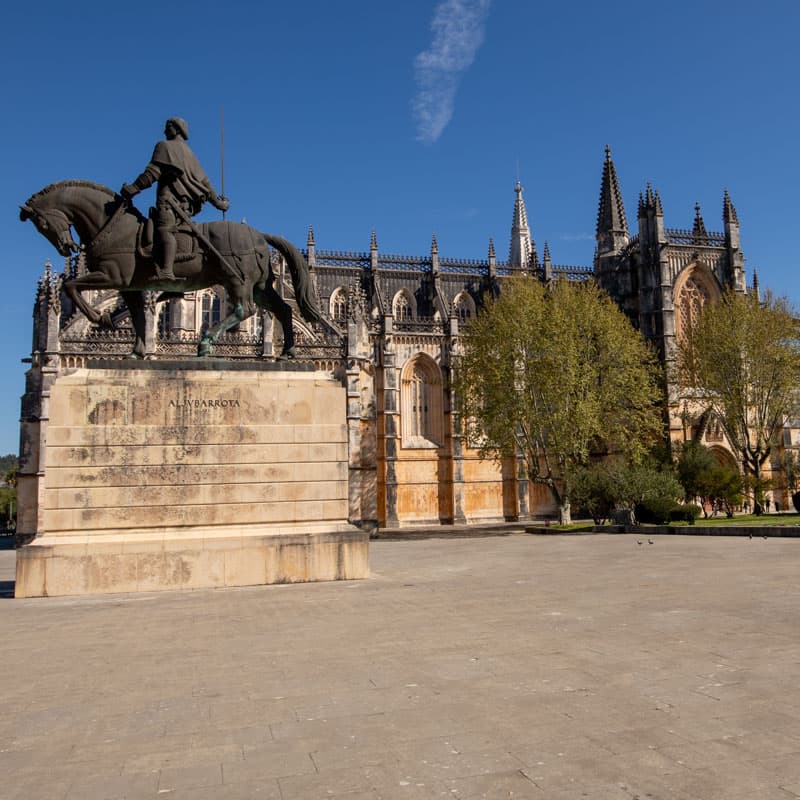
At the Monastery of Batalha, the memory of a victory was turned into stone. King João I ordered it to be built in fulfilment of the vow he made after Aljubarrota, and what began as an act of thanksgiving became, for more than a century and a half, the great building site of the Portuguese monarchy. Here the late Gothic and the Manueline styles took shape, yet the place impresses as much for its history as for its form: the soaring nave, the lace-like Royal Cloister and the Unfinished Chapels give the whole complex a solemn, restless beauty. In the Founder’s Chapel, the tomb of João I and Philippa of Lancaster, surrounded by the tombs of their children, also makes the monastery the symbolic heart of the Avis dynasty. Between convent silence, filtered light and golden stone, one understands why this monument is at once a memory of independence, a royal pantheon and one of the most striking creations of Portuguese art.

Convento de Cristo4.7

Convento de Cristo

Convent • Tomar, Santarém

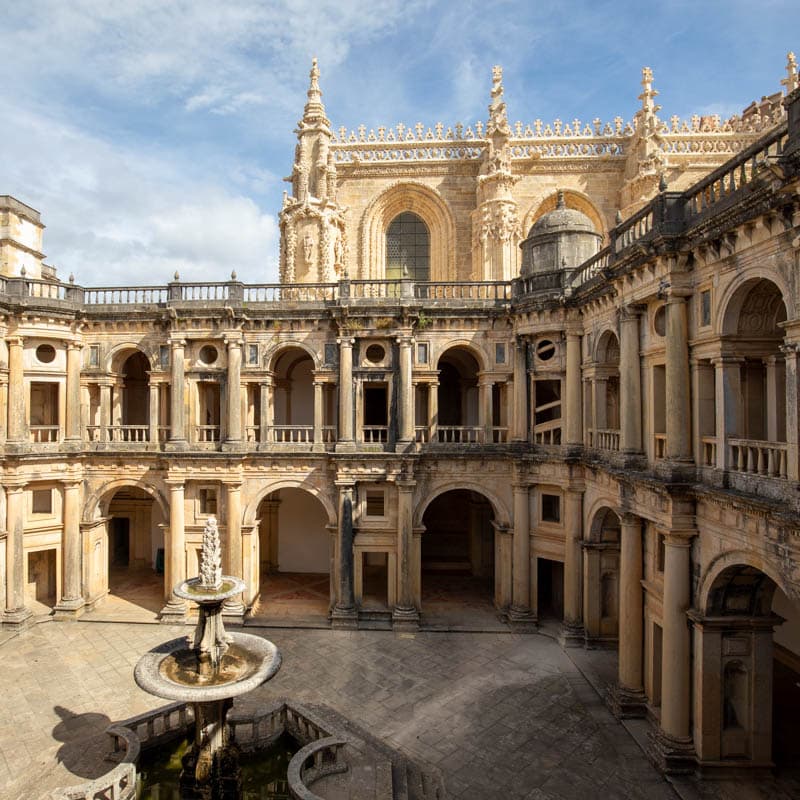
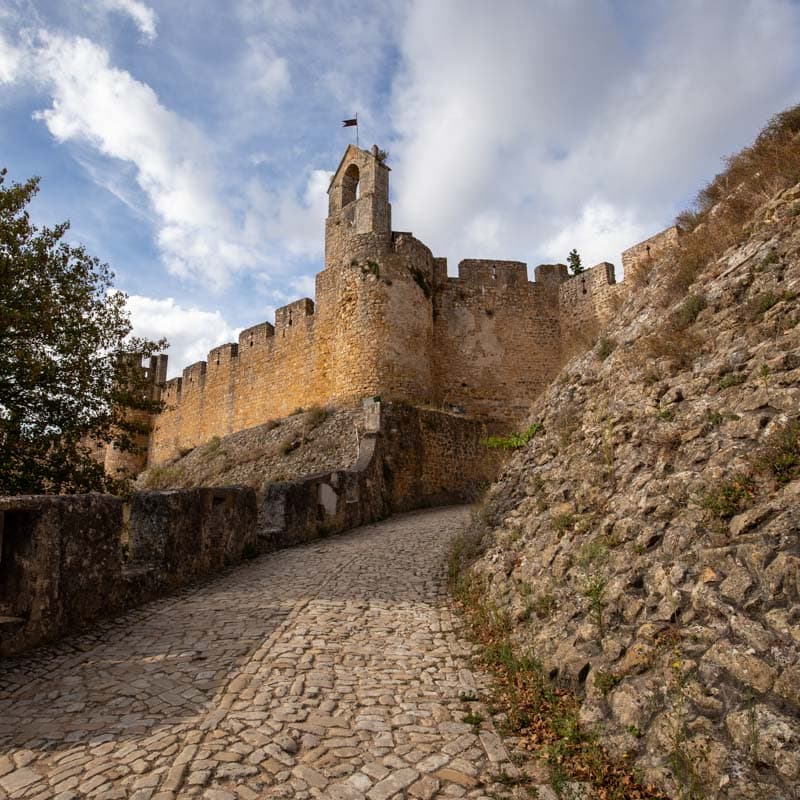
On a hilltop overlooking Tomar, the Convent of Christ brings together the former Templar Castle, the convent of the Order of Christ and other spaces connected with its historic enclosure. Its history begins in 1160, with the foundation of the castle by the Templars. At its centre stands the Charola, a Romanesque oratory inspired by the Holy Sepulchre in Jerusalem, later enriched with painting, sculpture and gilded woodcarving. After the extinction of the Templars, the Order of Christ received this heritage; under Prince Henry the Navigator new cloisters were built, and King Manuel I enlarged the convent church, where the celebrated Chapter House Window stands out. Built over several centuries, the complex brings together Romanesque, Gothic, Manueline, Renaissance, Mannerist and Baroque elements. Inscribed on the UNESCO World Heritage List in 1983, it remains a monumental reading of Portuguese history.

Castelo de Mertola4.5

Castelo de Mertola

Castle • Mértola, Beja

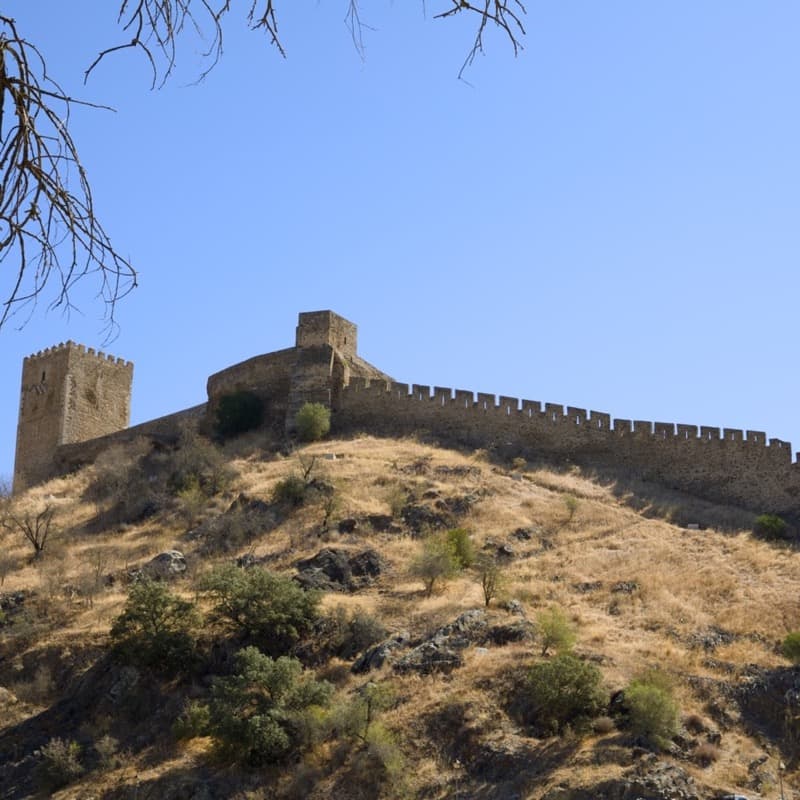
On the rocky height where the Oeiras stream meets the Guadiana, Mértola Castle preserves the defensive memory of a town shaped by the river. The beginnings of the fortification belong to the Islamic period, when Mértola was an important river port between Mérida and the Atlantic. In 1238, the knights of Santiago conquered the city and chose it as the seat of the Order in Portugal, a status it kept until 1316. The castle’s Gothic work is generally dated to 1292, the year inscribed on the Keep, built under the patronage of D. João Fernandes, master of Santiago. The fortress has a quadrangular, slightly trapezoidal plan, with towers at the corners, and the Keep rises to almost 30 metres. In the alcazaba, excavations begun in 1978 revealed a Late Medieval necropolis, an Islamic quarter and a palaeo-Christian religious complex. The castle has been a National Monument since 1951.

Castelo de Elvas4.3

Castelo de Elvas

Castle • Elvas, Portalegre

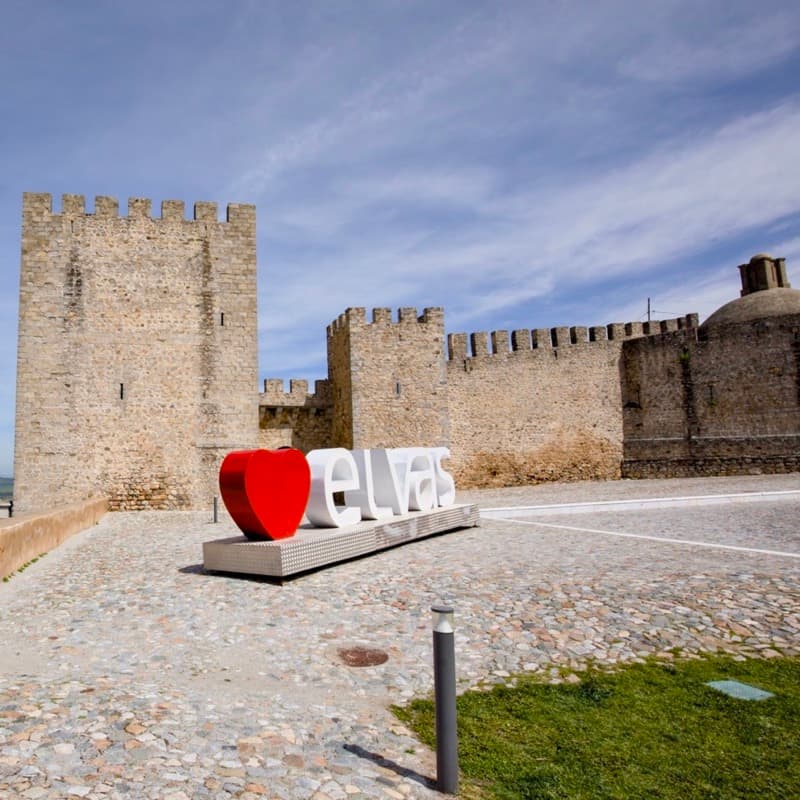
At the highest point of Elvas, the Castle dominates the border city and sums up centuries of defence of Portuguese territory. The fortification stands on a Muslim structure, was rebuilt after the definitive conquest of Elvas in 1226 and completed in 1228, during the reign of King Sancho II. In the following centuries it received extensions and adaptations, including interventions associated with King Dinis, King João II and King Manuel I, until it acquired, in the 16th century, much of the appearance recognised today. It was the residence of the town governor and the setting for events linked to diplomacy and royal life, such as peace treaties, exchanges of princesses and royal wedding banquets. Without a military function from the second half of the 19th century, it reached the 20th century in ruins before being valued as heritage. Classified in 1906, it is described by the municipality as the first Portuguese National Monument. It forms part of the Garrison Border Town of Elvas and its Fortifications, inscribed by UNESCO in 2012.

Castelo de Santa Maria da Feira4.6

Castelo de Santa Maria da Feira

Castle • Santa Maria da Feira, Aveiro

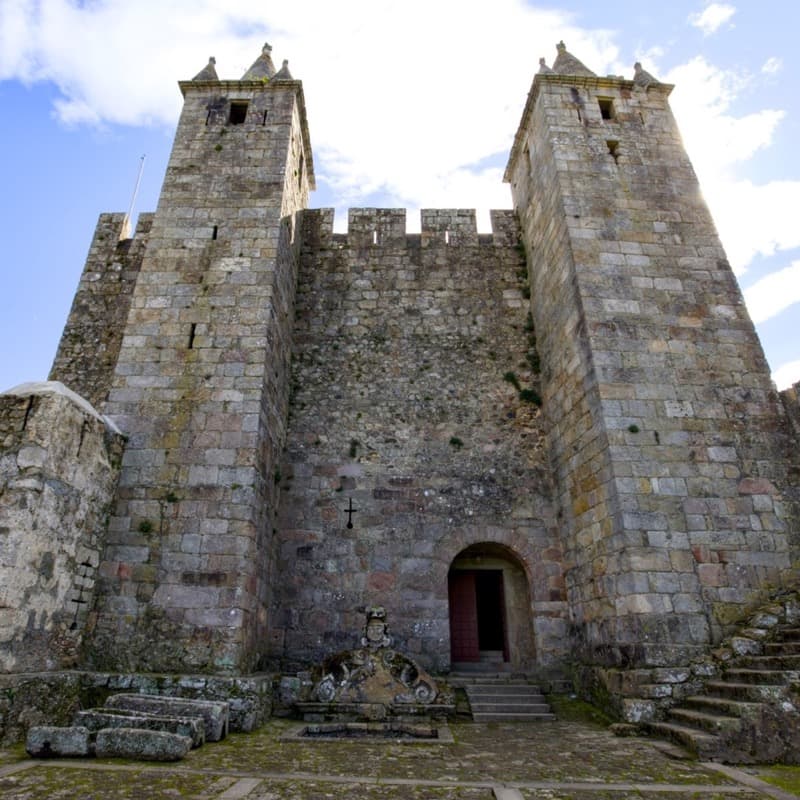
The Castle of Santa Maria da Feira rises in the municipality of Santa Maria da Feira, as a fortification linked to the former Terra de Santa Maria. Classified as a National Monument since 1910, it has its origins in the Reconquest, before the formation of the Portuguese nation, and served as the administrative and military seat of a vast region south of the Douro. The image that now defines the ensemble was shaped mainly in the 15th century, when King Afonso V handed it to Fernão Pereira with the task of restoring it. Inside the enclosure, the town gate protected by the barbican, the parade ground, the wall-walk, the keep, the well tower and the tenaille reveal successive military adaptations. Beside the barbican, the chapel and the chaplain’s house, ordered to be built in 1656, recall the coexistence of defence, noble residence and devotion.

Castelo de Montemor-O-Novo4.3

Castelo de Montemor-O-Novo

Castle • Montemor-o-Novo, Évora

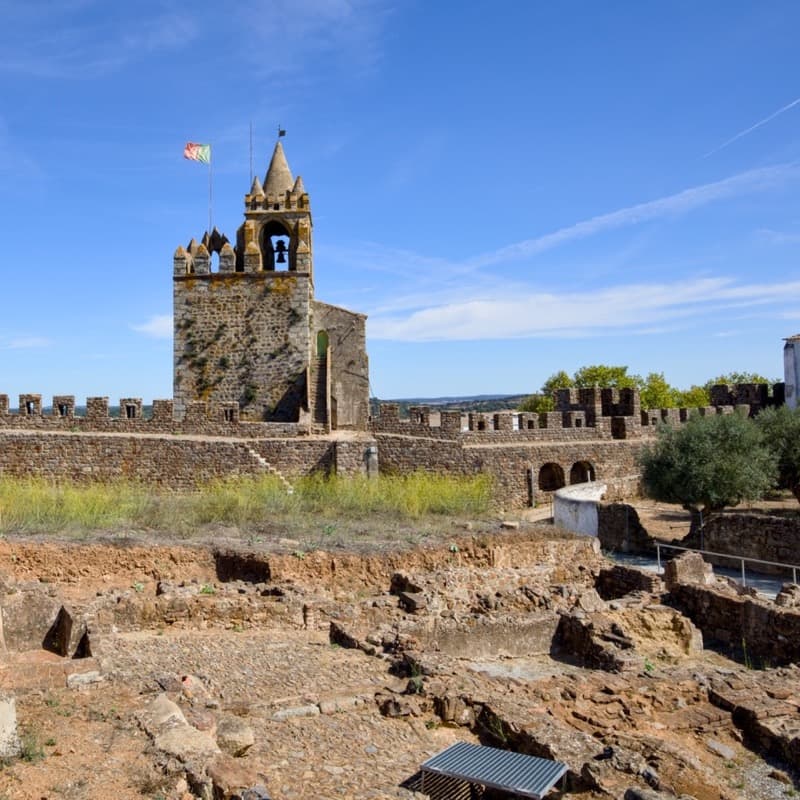
Montemor-o-Novo Castle preserves the original enclosure of the old town, high above this Alentejo city. The medieval fortification gained new momentum after the charter granted by King Sancho I in 1203, and major works were carried out under King Dinis, including the town wall. Later, in the time of King João I, Montemor-o-Novo became part of the lordship granted to Nuno Álvares Pereira. At the end of the 15th century, further works were directed by the master stonemason Afonso Mendes de Oliveira, and the castle hosted the Cortes of 1496. The complex, classified as a National Monument since 1951, preserves extensive walls, towers, cisterns, chapels and ruins that recall the former life within the walls. The Clock Tower watched over the Town Gate, the main entrance to an enclosure almost two kilometres in perimeter. From the 16th century onwards, the population gradually moved outside the walls, forming the present-day city.

Castelo de Bragança4.6

Castelo de Bragança

Castle • Bragança, Bragança

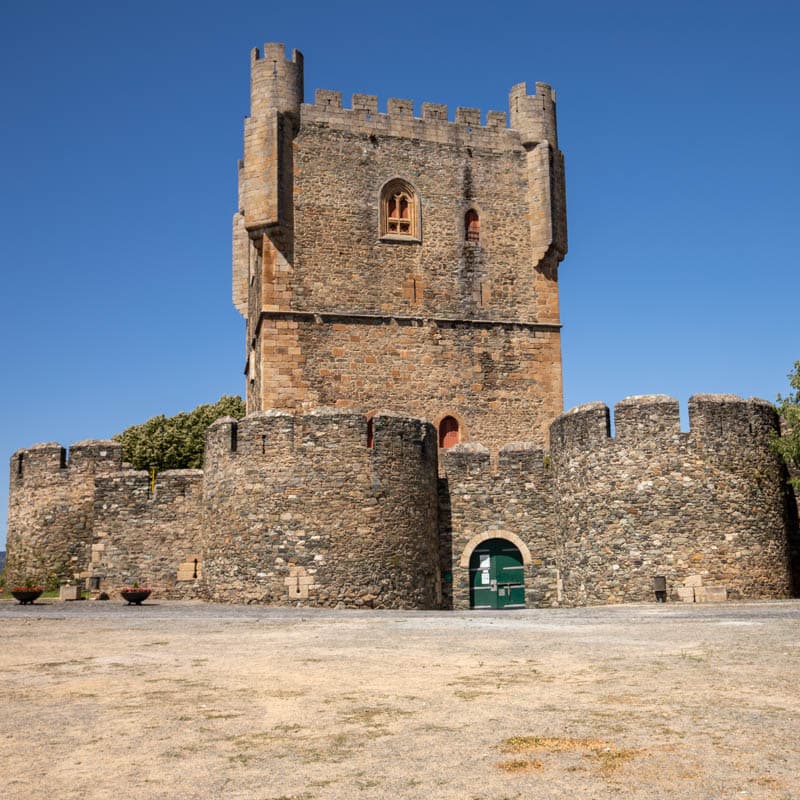
In Bragança, the castle does more than crown the city: within its walls it shelters a small citadel where medieval life still seems to retain a human scale. The story begins with King Sancho I, who in 1187 granted a charter to the new settlement and ordered its first walls to be built in order to secure the Trás-os-Montes frontier; King Dinis strengthened the enclosure and, in the fifteenth century, João I began the fortress that can still be recognised today, dominated by the powerful keep completed under Afonso V. From the top, the view opens over Portuguese mountains and Leonese lands, recalling that this was for centuries a place of watchfulness. Yet Bragança is also distinguished by what it contains within the walls: the Domus Municipalis, a singular example of Romanesque civil architecture in the Iberian Peninsula, gives the whole site a rare character, somewhere between fortified town, civic memory and frontier castle.

Portugal dos Pequenitos4.3

Portugal dos Pequenitos

Theme Park • Coimbra, Coimbra

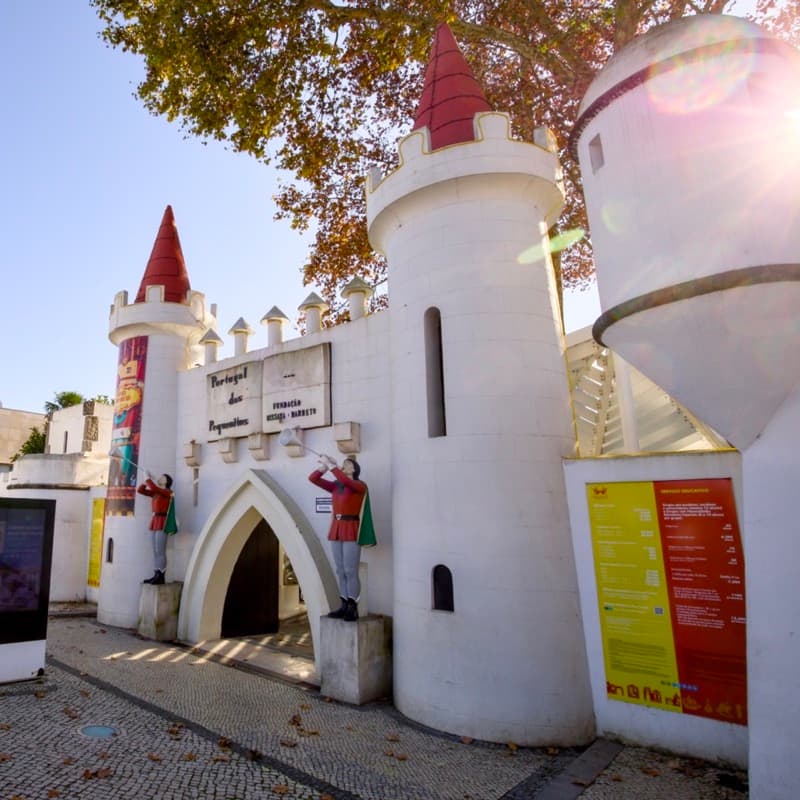
In Coimbra, beside Rossio de Santa Clara, Portugal dos Pequenitos turns the scale of architecture into a pedagogical language. Conceived by Bissaya Barreto as part of his work in defence of children, it was created as a playful and educational extension of the Casa da Criança Rainha Santa Isabel, which still operates there today. The park-garden opened on 8 June 1940 and was designed by the architect Cassiano Branco. Its first phase brought together Portuguese regional houses; the following ones added areas dedicated to the country’s main monuments and to the ethnographic and monumental representation of the Portuguese-speaking African countries, Brazil, Macau, India and Timor. Among houses, pavilions, gardens and small volumes, the ensemble presents styles and typologies of Portuguese architecture, linked to regional characteristics and traditional crafts. It is a place designed for children, but also a visual synthesis of Portuguese material culture.

Sé Catedral da Guarda4.6

Sé Catedral da Guarda

Church • Guarda, Guarda

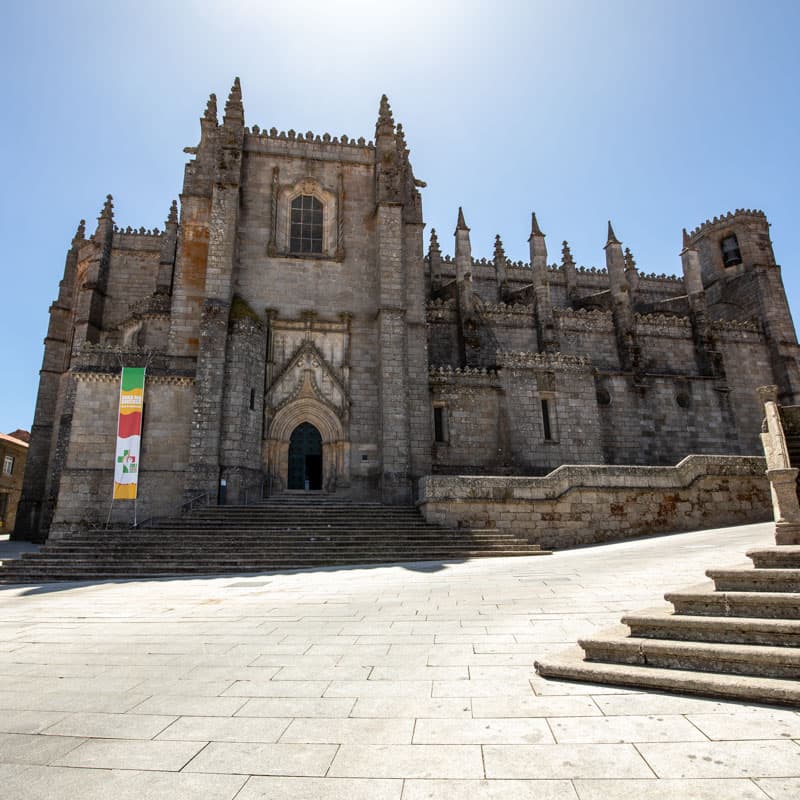
In the heart of Portugal’s highest city, Guarda Cathedral stands with the luminous severity of granite. Work began around 1390, in the reign of King John I, on the initiative of Bishop Vasco de Lamego, and continued for about a century and a half; from that long process came a building where Gothic and Manueline forms live together with remarkable ease. On the outside, its massive volumes, buttresses, octagonal towers and lace-like outline give it an almost military air, well suited to an old frontier city. Inside, the surprise is different: twisted columns, the vaulting and above all the great altarpiece in Ançã stone, made by João de Ruão in the sixteenth century, bring an unexpected richness of form. The cathedral is not striking only because of its scale. It is striking because it seems to gather, in one single body, the harshness of the mountain, the ambition of a royal building site and the patient faith of several generations.

Fundação da Casa de Mateus4.3

Fundação da Casa de Mateus

Historic House • Vila Real, Vila Real

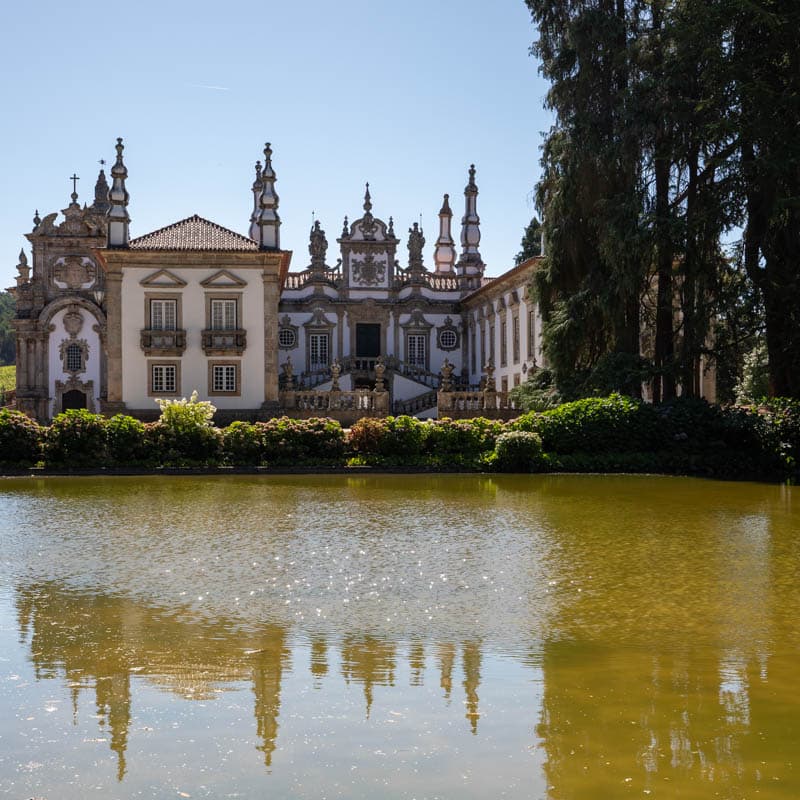
In Vila Real, the Casa de Mateus Foundation shows how a manor house can become a living cultural centre without losing the memory of the family that lived there. Created in 1970 by D. Francisco de Sousa Botelho de Albuquerque, it was born from the donation for public service of the House, Chapel, Winery, gardens, orchards, vineyards, woodland and a vast archive, library and museum collection. The setting helps explain the power of the place: the Baroque house, completed in 1744 and linked to the name of Nicolau Nasoni, is reflected in its famous water mirror and opens onto boxwood gardens, a rose garden and parkland. Inside, the reception rooms, chapel and library extend centuries of domestic and artistic life; among rare books and materials connected with the 1817 edition of The Lusiads, one understands that Mateus preserves not only a palace, but an enduring way of linking heritage, landscape and cultural creation.

Praça de Touros do Campo Pequeno4.2

Praça de Touros do Campo Pequeno

Commercial Space • Lisboa, Lisboa

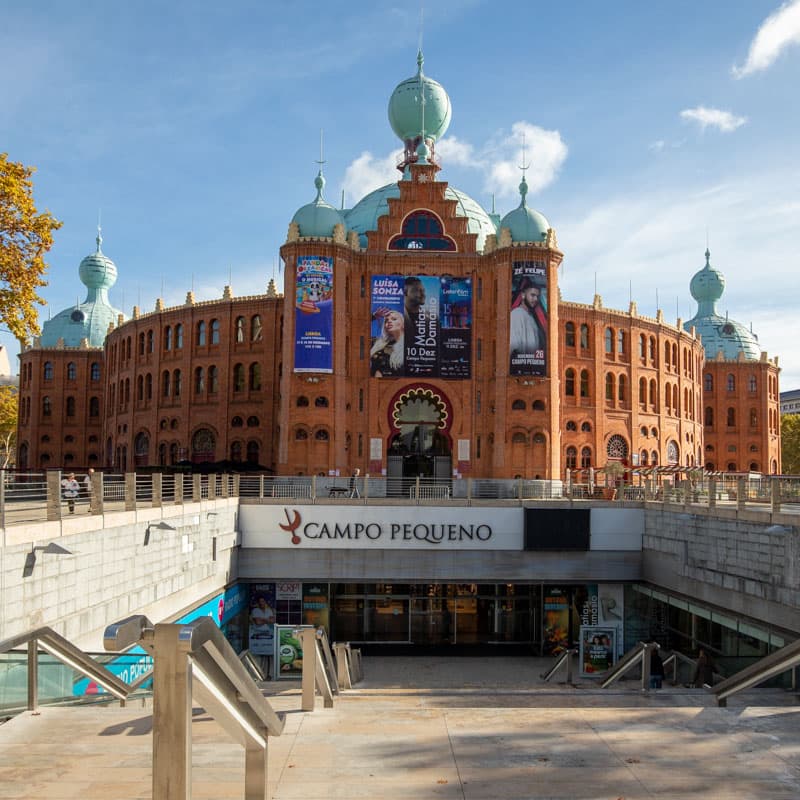
With its red-brick silhouette and neo-Moorish domes, Campo Pequeno seems to bring an unexpected imaginary world into Lisbon, yet its real strength lies in the way it gathers more than a century of urban life into one place. Opened in 1892 and designed by Dias da Silva, it was created as a bullring and soon became one of the city’s social stages, hosting a royal bullfight at the start of the twentieth century, rallies under the Estado Novo and, after the Carnation Revolution, major democratic gatherings. The renovation completed in 2006 preserved the building’s character and gave it a new life as a multi-purpose venue. It is worth noticing the arches, the exposed brick and the turrets, restored to their original turquoise blue. Today, between memory, tradition and reinvention, Campo Pequeno still shows how Lisbon changes without completely erasing its earlier traces.

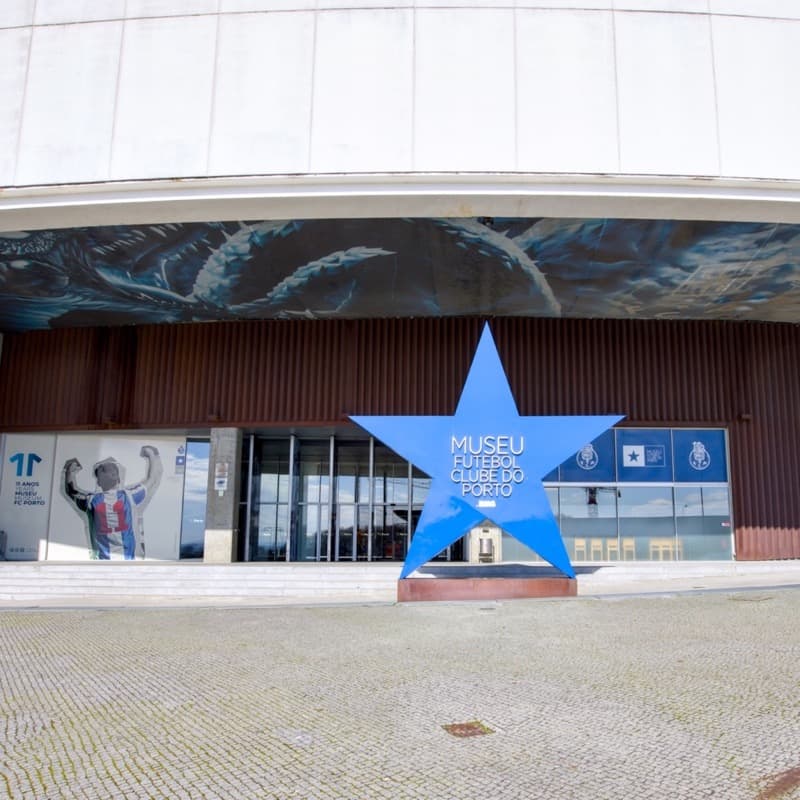
Museu FC Porto4.7

Museu FC Porto

Museum • Porto, Porto

The Museu FC Porto is located in Estádio do Dragão, in the eastern area of the city of Porto. Inaugurated on 28 September 2013, on the day when Futebol Clube do Porto marked 120 years, it occupies around 7,000 square metres dedicated to the history and heritage of the club. The permanent exhibition is spread across 27 thematic areas, where trophies, documents, images, objects and interactive resources build a narrative that brings together football, other sports, institutional memory and the life of the city. Among the most visible pieces is Valquíria Dragão, a work by Joana Vasconcelos installed in the reception area. The museum also presents temporary exhibitions, an educational service and spaces supporting its cultural programme. More than a celebration of sporting results, it offers an organised reading of collective identity, made of victories, symbols, protagonists and belonging.

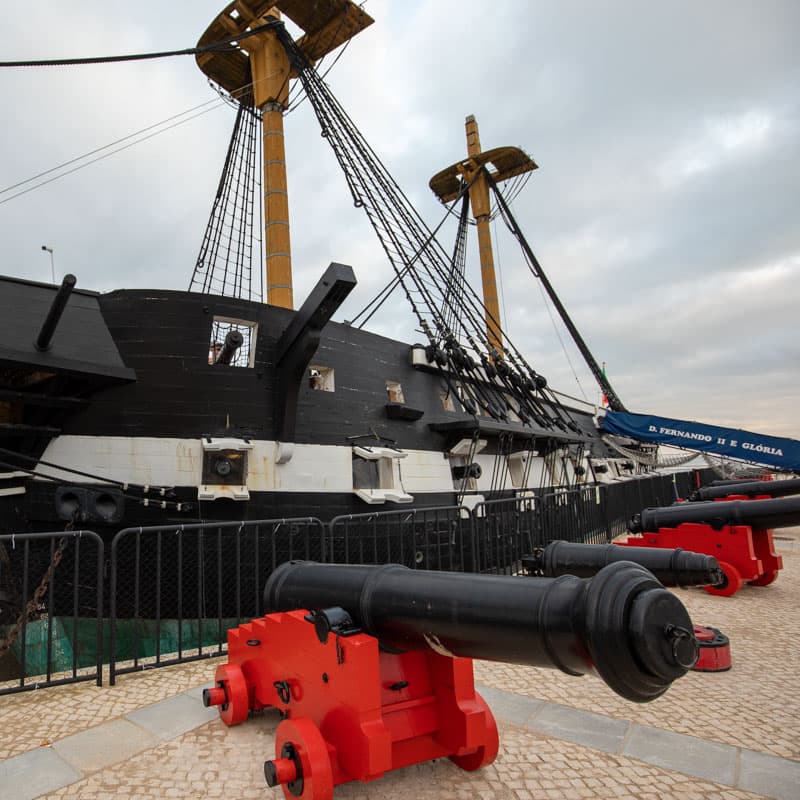
Fragata D. Fernando II e Glória4.7

Fragata D. Fernando II e Glória

Museum Ship • Almada, Setúbal

Some ships seem to contain an entire empire within them, and the frigate D. Fernando II e Glória is one of them. Built in Daman and launched in 1843, it was the last great ship of the Portuguese Navy to sail entirely under canvas and the last to serve the India Run. Over 33 years it covered more than 100,000 nautical miles in a succession of voyages linking Lisbon to Portugal’s overseas world. It later served as the Naval Artillery School, housed a social institution for disadvantaged boys and, in 1963, was nearly lost in a fire that left it half-submerged. Restored and opened to the public in 1998, it returned as a museum ship. During a visit, it is worth lingering on the main deck, the gun deck and the cabins: among the masts, the teak wood and the cramped spaces, the hardship and scale of life on board become easier to grasp. Remarkably, it never entered combat.

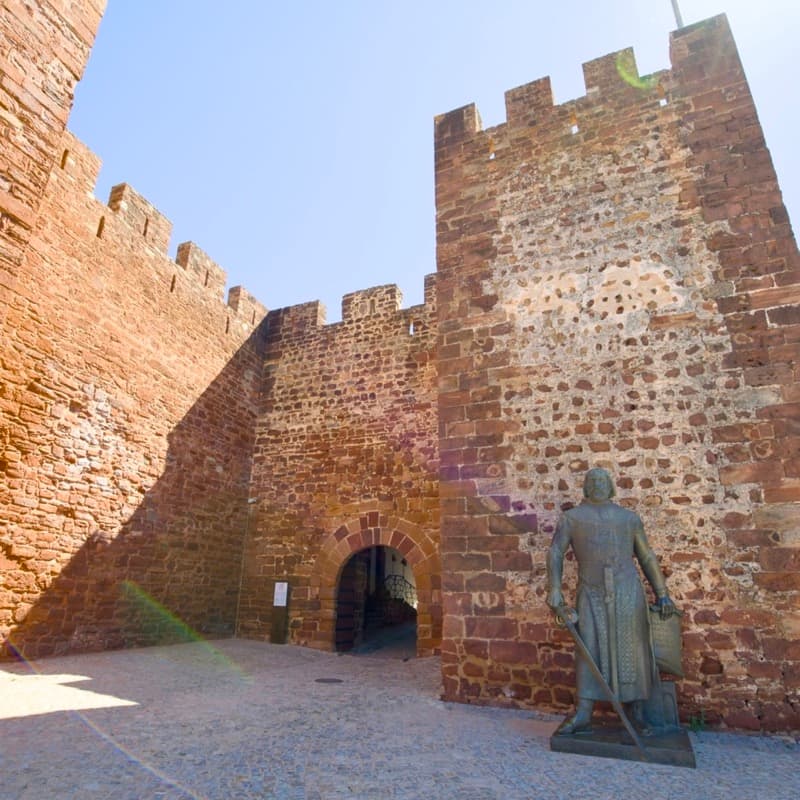
Castelo de Silves4.4

Castelo de Silves

Castle • Silves, Faro

At the top of Silves, the Castle preserves the most visible presence of the former Islamic city. Classified as a National Monument since 1910, it is presented by Património Cultural as one of the principal Muslim fortifications in Portuguese territory. Its construction dates back to the beginnings of Islamic rule in the Peninsula, with archaeological finds dated to the 8th and 9th centuries; in the 11th century, when Silves gained great importance and was the capital of a taifa under Al-Mutamid, the general layout of the enclosure was established. The alcazaba, built in military rammed earth faced with Silves sandstone, has an irregular plan and eleven quadrangular towers, two of them albarrã towers. Inside, the Cisterna da Moura, dated to the 11th century, stands out for its scale: it covers around 820 square metres and rises to a height of ten metres. The reddish walls, wall-walks and archaeological remains allow medieval Silves to be read in stone.

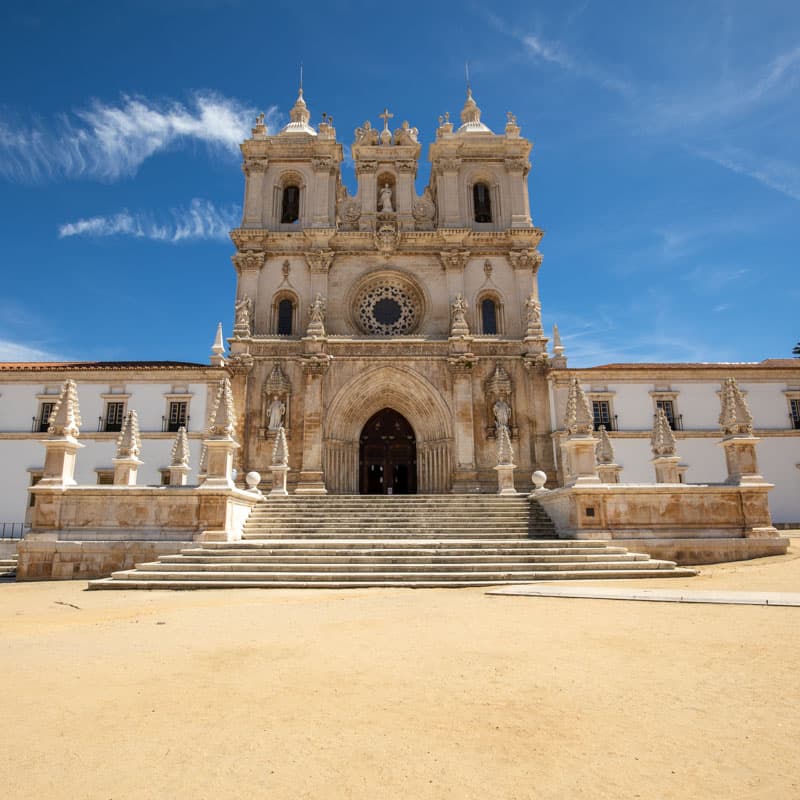
Mosteiro de Alcobaça4.6

Mosteiro de Alcobaça

Monastery • Alcobaça, Leiria

In Alcobaça, monumental scale rises from an ideal of discipline and silence. Founded in 1153 by King Afonso Henriques and entrusted to the Cistercians, the monastery became the order’s main house in Portugal and one of the most remarkable monastic complexes in Europe. Building began in 1178, and the church introduced the new Gothic language here with an almost severe clarity, faithful to the spirit of Cister. That austerity takes on another intensity before the tombs of King Pedro and Inês de Castro, fourteenth-century masterpieces in which love, death and Christian hope were carved with rare symbolic force. The monastery is also a complete organism, made up of cloister, refectory, chapter house and the famous eighteenth-century kitchen, where one senses how monastic life joined prayer, study and work. Between luminous stone and the order of its spaces, Alcobaça preserves the ambition of turning daily life into a form of eternity.

Castelo de Tomar4.7

Castelo de Tomar

Castle • Tomar, Santarém

On the hilltop overlooking Tomar, the Castle of Tomar marks the beginning of the great Convent of Christ complex. The fortification began to be built in 1160, after the donation of the region to the Templars, and is linked to Gualdim Pais, master of the Order of the Temple. Its position protected a strategic point between the Tagus and Coimbra, then the capital of the kingdom. Even today, Romanesque military solutions associated with the Templars can be read in the walls, such as the sloping base that strengthened them, and the keep, rising above the citadel. In the lower enclosure stood the former fortified town; to the west was placed the Charola, the Templar oratory that would later become part of the Convent of Christ. Classified as a National Monument in 1910 and included in the ensemble inscribed by UNESCO in 1983, the castle preserves the defensive memory that shaped Tomar.

Showing 20 places mixed across regions — refine your search to see more.