Arco Triunfal da Rua Augusta

Lisboa · Lisboa

Arco Triunfal da Rua Augusta

ArchXVIIIMonumental Architecture
Rua Augusta 2, 1100-053 Lisboa4.7 Rating · 26,47930 min

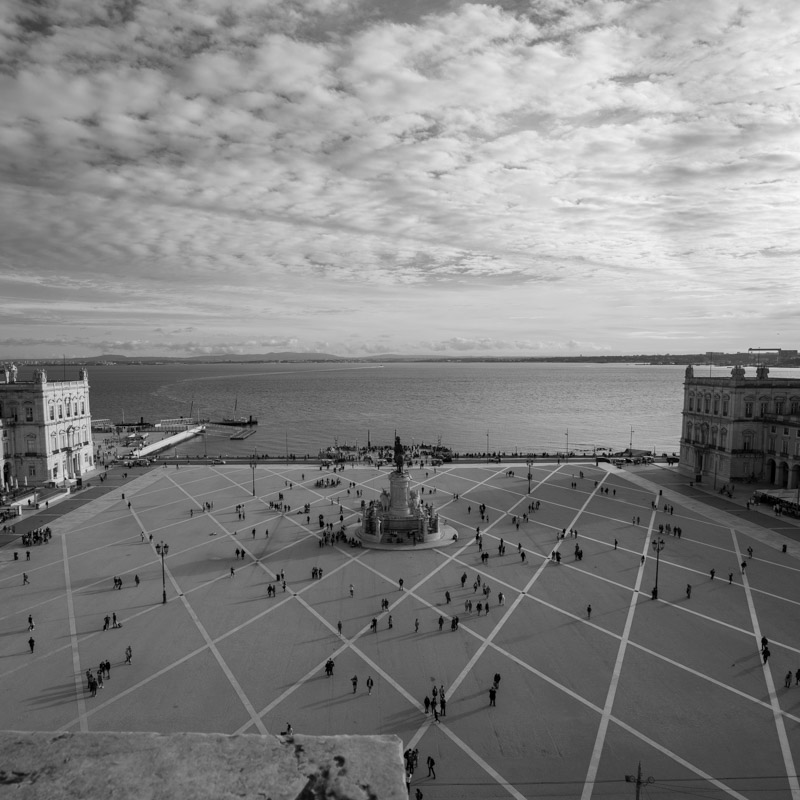
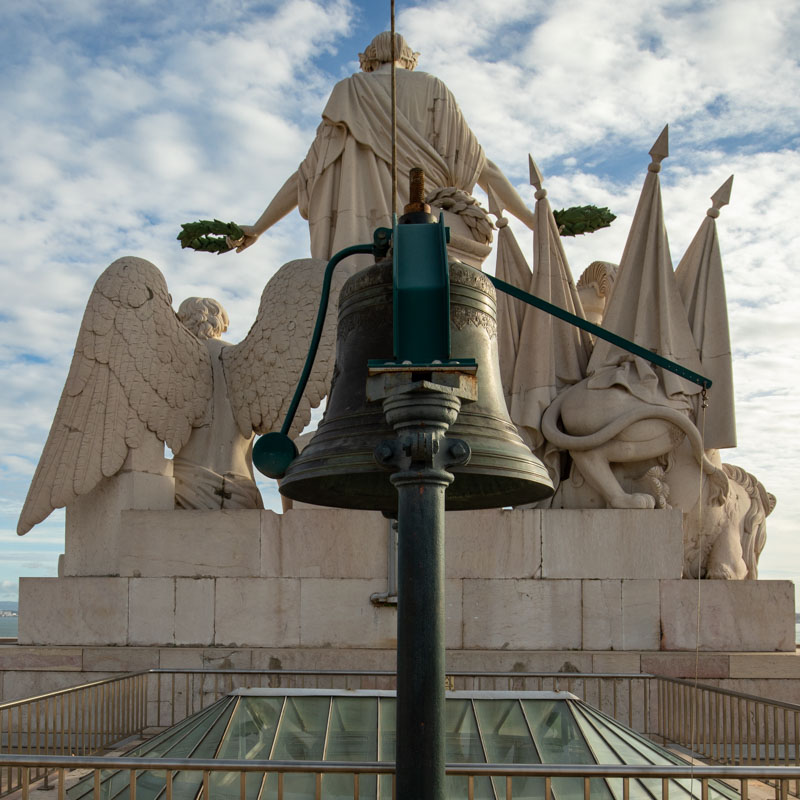
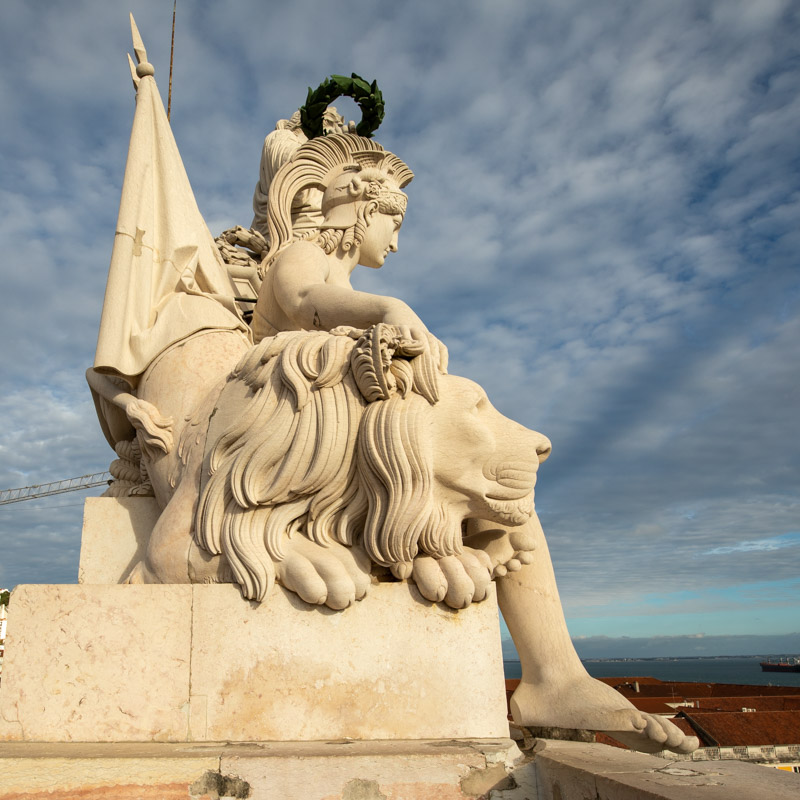
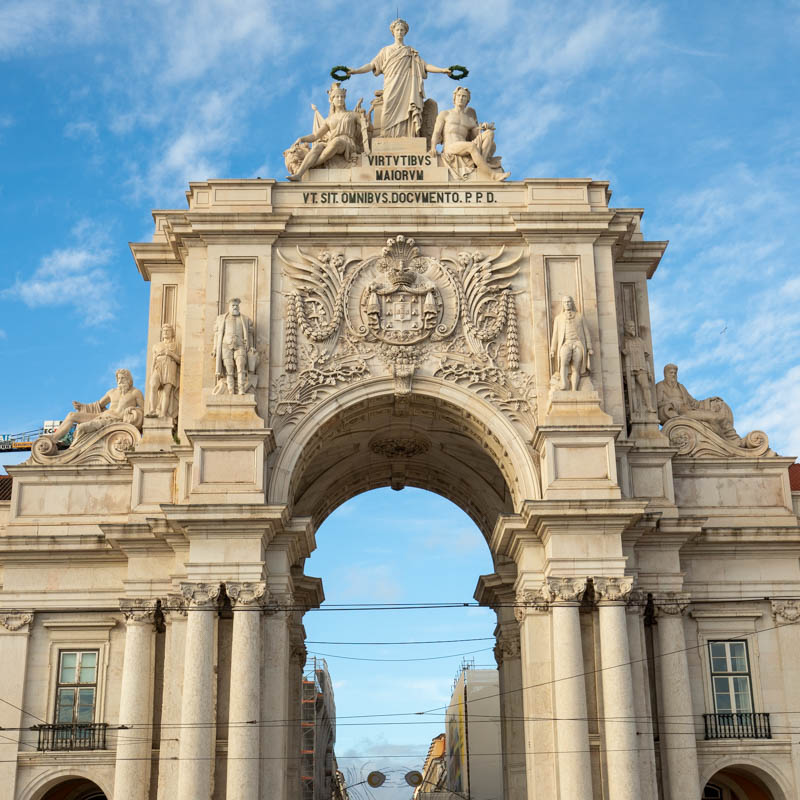
More than a monumental entrance, the Rua Augusta Triumphal Arch is the great symbolic gateway to the Lisbon that rose again after the 1755 earthquake. Conceived in the context of the Pombaline reconstruction, it took more than a century to reach its final form, and that delay says much about the city’s slow reinvention. At the top, Glory crowns Genius and Valour; below, figures such as Vasco da Gama, Viriato, Nuno Álvares Pereira and the Marquis of Pombal turn the monument into a statement of memory and power. It is also worth noticing the Latin inscription, dedicated to the virtues of the ancients, and the way the arch frames the Baixa, Praça do Comércio and the Tagus. Seen up close, it impresses with its scale and sculptural relief; seen from above, it offers one of the clearest readings of the Pombaline plan and of Lisbon’s deep bond with the river.

Why it matters

The Rua Augusta Triumphal Arch stands on Praça do Comércio and was born from the reconstruction of Lisbon after the 1755 earthquake. The monument was planned in 1759 as part of the Pombaline design for the new downtown, with the initial scheme associated with Eugénio dos Santos. The work, however, followed a long and uneven path. For decades, the arch remained incomplete, limited to its lower section and cornice, while the city gradually took on the orderly form that still defines this historic centre. In 1815 the colonnades that give it its monumental presence were installed, but the crowning section came later. A competition opened in 1843 selected the design by Veríssimo José da Costa to complete the structure. The final result only took shape in the 1870s. More than an urban gateway, the arch became a symbol of the city’s recovery and of the memory of the Pombaline rebuilding. Its symbolic role was to celebrate the remade city and affirm the order of the new urban plan. It also came to mark the main axis of the Baixa.

Architecture and history

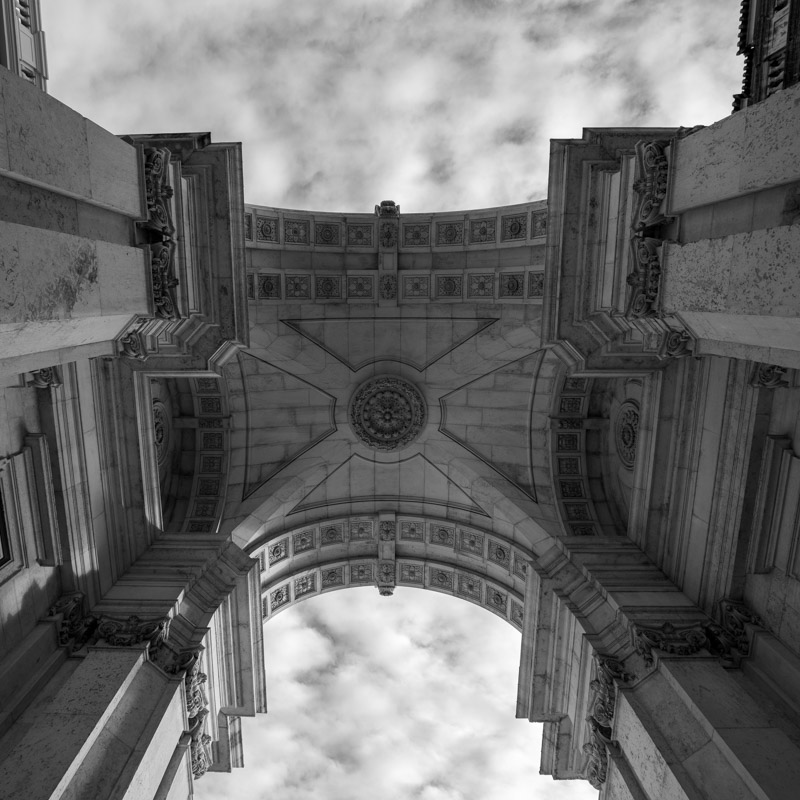
From an architectural point of view, the arch was designed as the closing element of Praça do Comércio and as the formal entrance to Rua Augusta. It is a monument in lioz limestone ashlar, arranged in three bodies, with the central section rising higher and opened by a large round arch. The composition is strengthened by Composite-order columns and by dense sculptural decoration, meant to be read both from afar and at close range. At the top, Célestin Anatole Calmels created the allegorical group in which Glory crowns Genius and Valour, accompanied by a Latin inscription that recalls the virtues of past generations. On a lower level, the sculptures by Vítor Bastos represent figures linked to the history of Portugal, including the Marquis of Pombal, Vasco da Gama, Viriato and Nuno Álvares Pereira. At the ends there are also allegories of the Tagus and Douro rivers, placing the arch within a symbolic programme of national scope. This classical vocabulary reinforces the monumentality of the whole.

More context

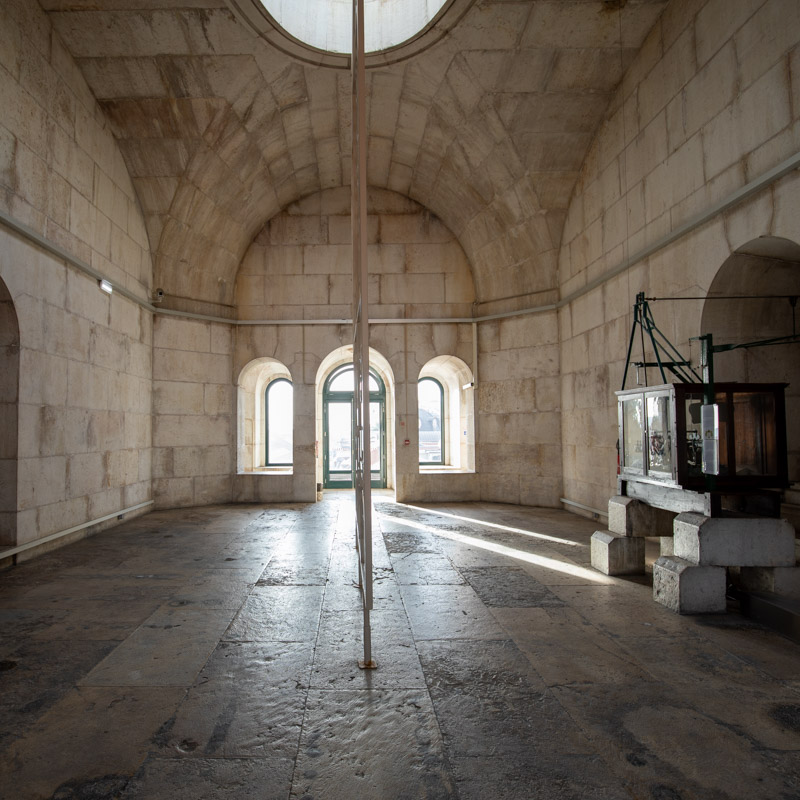
During a visit, it is worth looking first at the monument’s urban setting, because the arch was designed to connect the great riverside square with the commercial axis of the Baixa. Then move closer to the façade and notice the depth of the vault, the heraldic reliefs and the clock facing Rua Augusta, elements that give rhythm and scale to the passage below. The sculptures deserve special attention, especially the group at the top and the historical figures placed on lower levels, which turn the monument into a visual synthesis of historical and symbolic memory. Inside, the Clock Room helps explain the long construction of the arch and its evolution over time. At the top, open to the public since 2013, the viewpoint offers a very clear reading of the Pombaline Baixa. From there you can distinguish Praça do Comércio, the regular street layout, the Cathedral, São Jorge Castle and the Tagus, in one of the clearest views of the relationship between Lisbon and its waterfront.

Gallery

Arco Triunfal da Rua Augusta 1
Arco Triunfal da Rua Augusta 2
Arco Triunfal da Rua Augusta 3
Arco Triunfal da Rua Augusta 4
Arco Triunfal da Rua Augusta 5

Nearby places

View all