Lisboa · Lisboa
Lisboa Story Centre
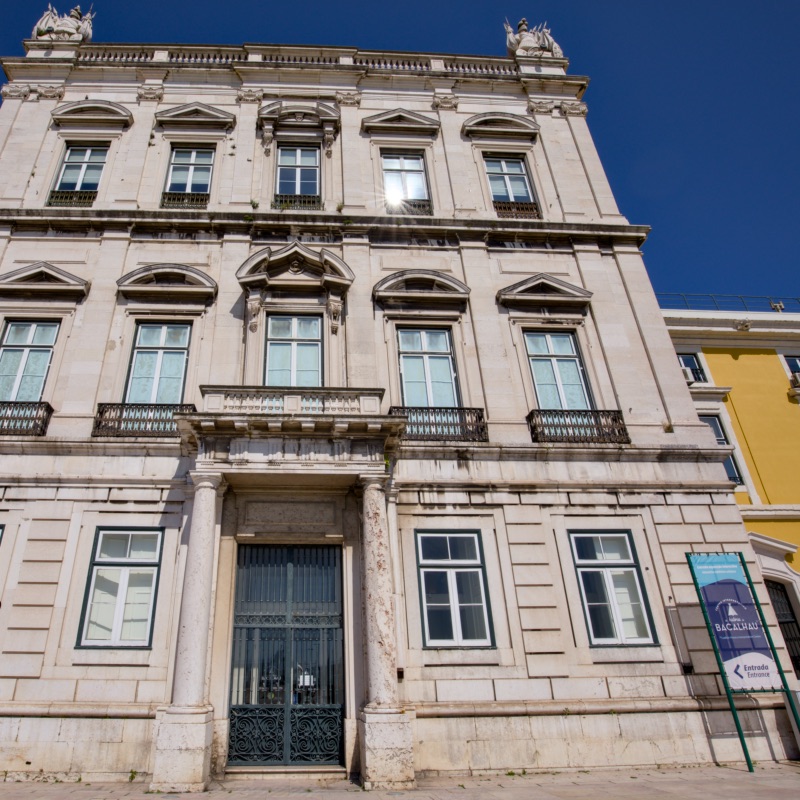
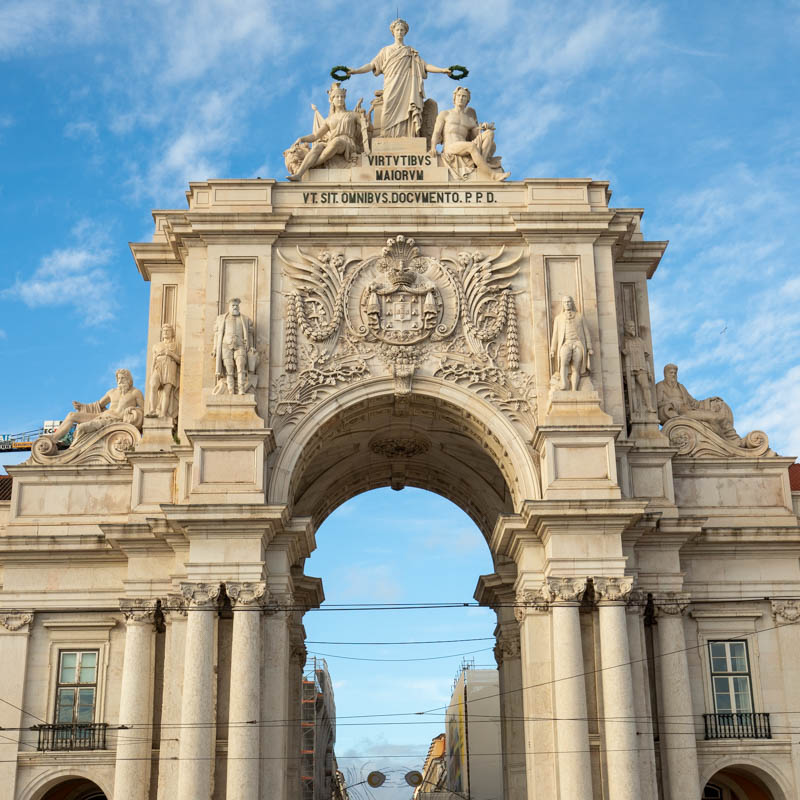
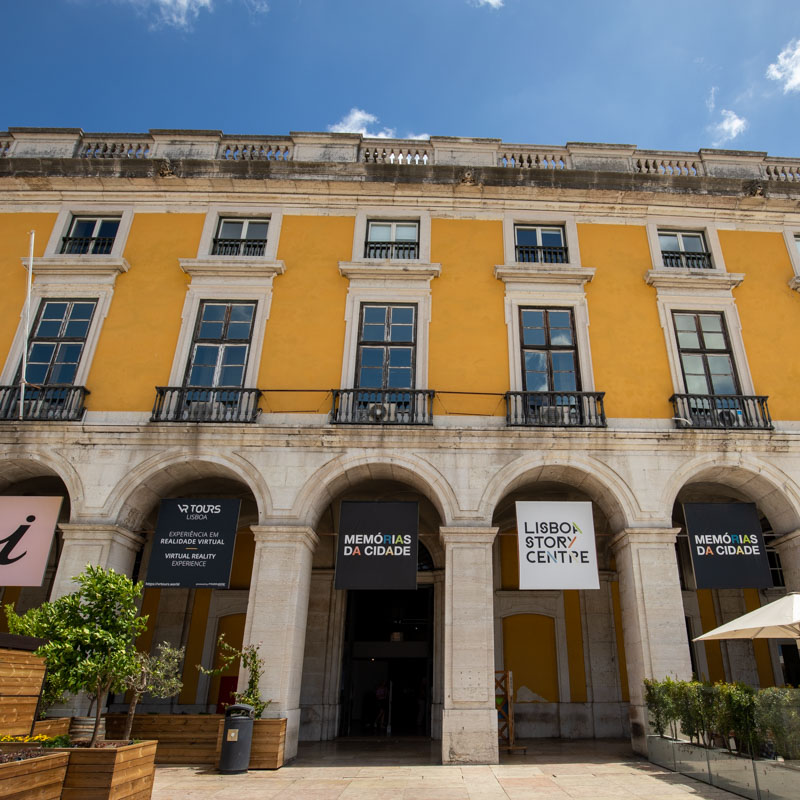
In Terreiro do Paço, Lisboa Story Centre tells the story of the city without display cases or excessive solemnity: here, Lisbon appears as a living narrative. The visit, organised into six areas and seventeen chapters, follows the city from its founding myths and early peoples to global Lisbon, the earthquake of 1755 and the Pombaline rebuilding, all guided through audio and scenic, visual and sensory devices. Its most striking moment is usually the immersive experience devoted to the earthquake, which gives visitors a sense of the shock’s violence and the scale of the destruction. But the centre is not confined to catastrophe. Ending beside Praça do Comércio, it recalls that this square was a stage for power, trade and public life, and that the city itself was shaped by successive layers of destruction, reinvention and memory. More than displaying objects, Lisboa Story Centre stages the biography of Lisbon.
Why it matters
In Terreiro do Paço, Lisboa Story Centre – Memórias da Cidade presents the history of the capital in a place directly connected with the rebuilding of the Baixa after the 1755 earthquake. It opened in September 2012 and was conceived as an interpretation centre, not as a collection museum. Its purpose is to help visitors organise episodes, places and figures from Lisbon, from mythical origins to the contemporary city. The route gives special attention to the city’s relationship with the river, the walls, the cosmopolitan Lisbon of maritime expansion, the catastrophe of 1 November 1755 and the urban planning associated with the Pombaline reconstruction. The centre’s importance lies in this synthesis: before or after walking through the Baixa, it helps explain why Praça do Comércio and the grid-patterned streets around it are central pieces of Lisbon’s memory.
Architecture and history
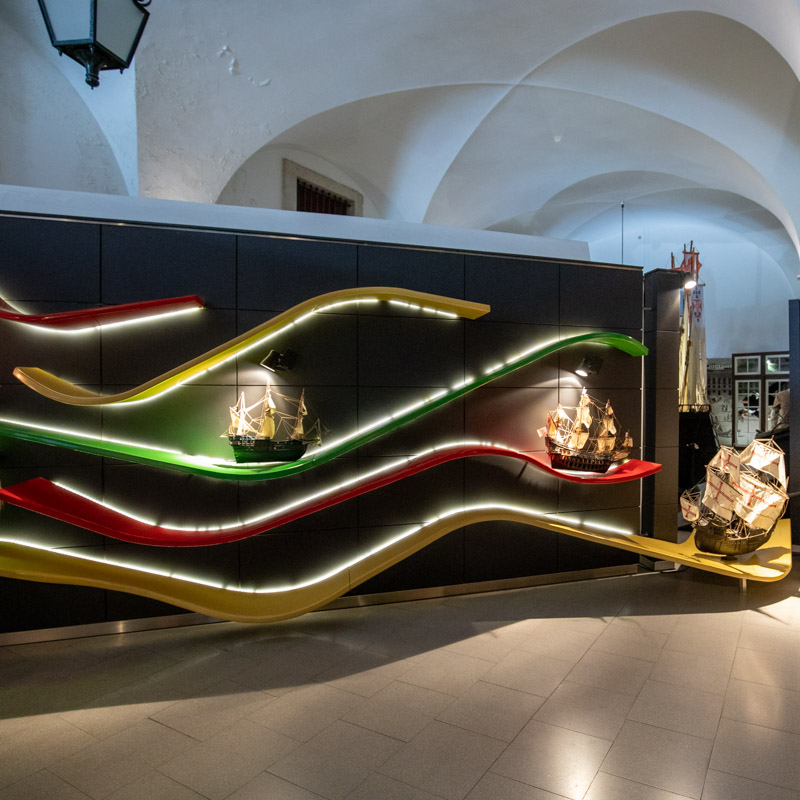
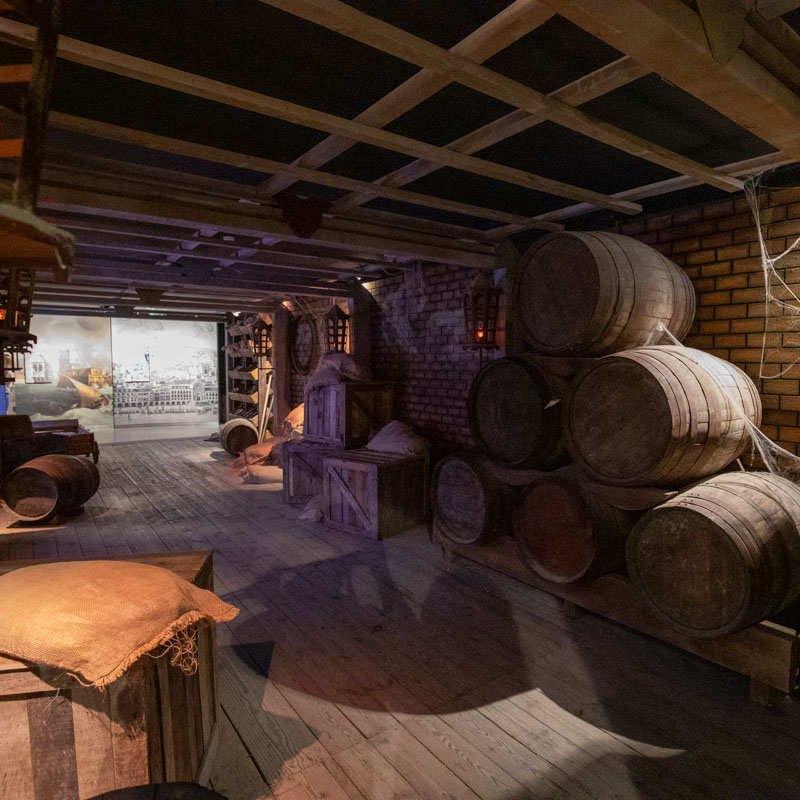
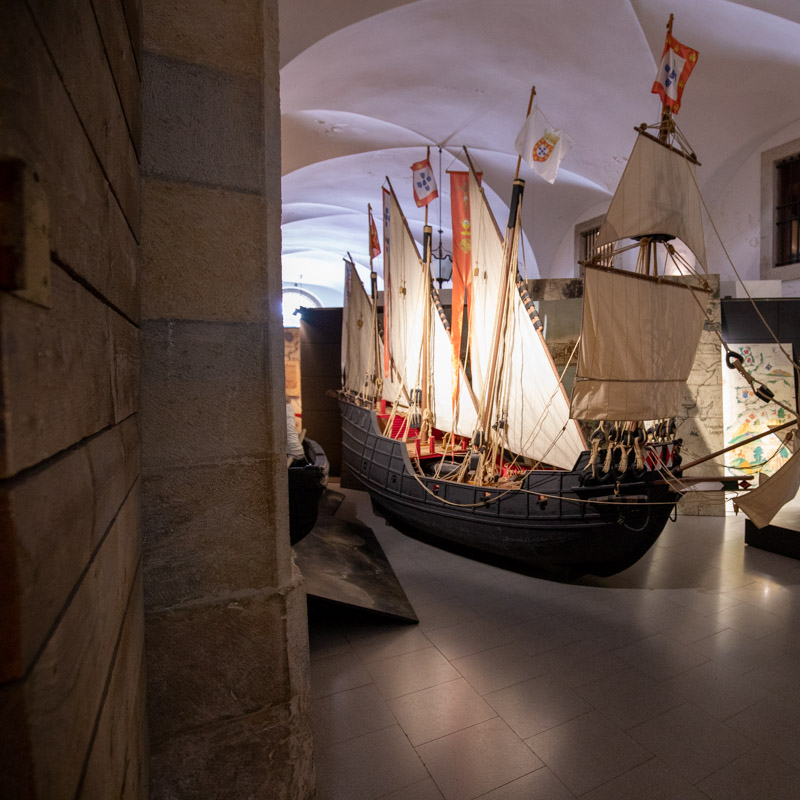
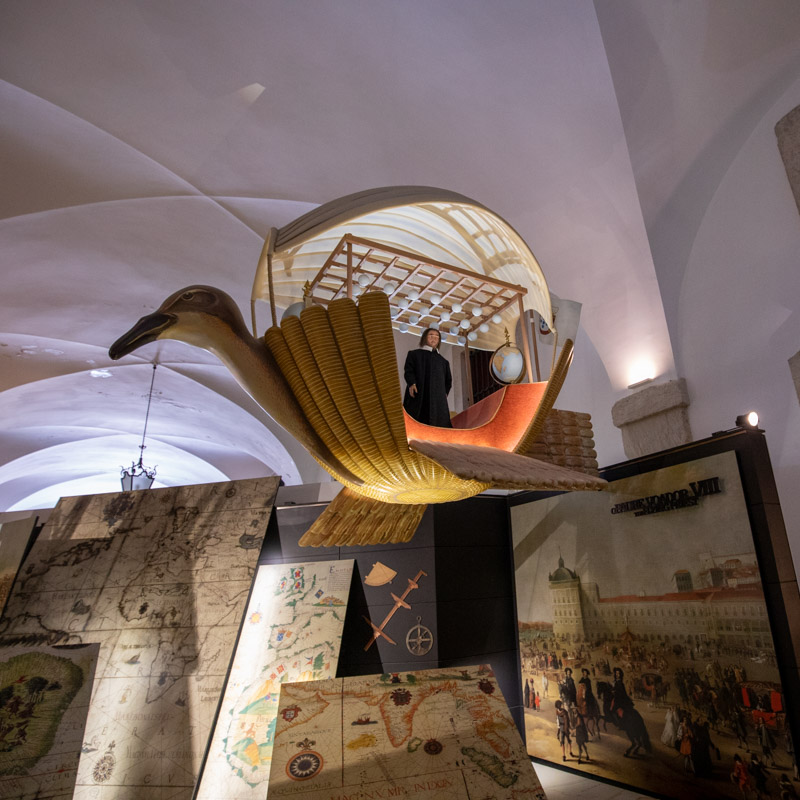
The exhibition route is arranged in six areas and seventeen chapters, with most of the visit on the ground floor and a complementary area on the first floor. The interior architecture works as a narrative setting: it does not try to recreate an entire Lisbon, but to build environments that help situate each period. Visitors encounter film units, virtual animations, physical reconstructions, replicas of vessels and architectural structures, large-format images and projections. The automatic audioguide organises the experience at each person’s pace, linking sound, image and space. This choice makes the building less dependent on traditional display cases and closer to a historical theatre. The section devoted to the earthquake uses an immersive experience to explain the destruction of the city, while the area about Pombal presents the planning logic that shaped the modern Baixa.
More context
The sequence of the areas is the key to the visit. Begin by noticing how the river, land, sea and walls are presented as the foundations of the city, before Lisbon appears as a port open to contacts and goods. In the section devoted to 16th-century Lisbon, observe how the scenography brings together trade, navigation and urban life. The room about 1755 should be read in connection with the outside: when you step out into Terreiro do Paço, the square is no longer just a monumental image, but can be understood as the result of loss, political decision and reconstruction. On the first floor, the interactive model of the Baixa helps locate events in the real space of the city. This is one of the centre’s most useful points: it turns names and dates into places that can later be recognised while walking through Lisbon.
Gallery