Places

Cultural places in Portugal

Browse LxDiscover places across monuments, museums, palaces, viewpoints, gardens, churches and historic sites. Use this hub to start planning, then open the app for map-based routes, saved places and short cultural audio guides.

203 places

Featured cultural places

Explore on the map
Arco Triunfal da Rua Augusta4.7

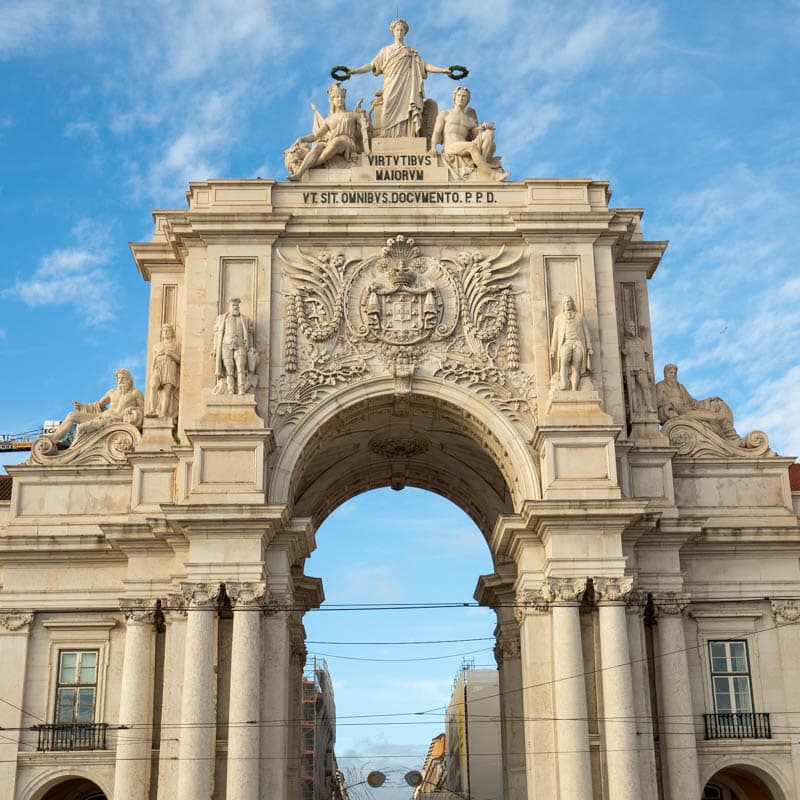
Arco Triunfal da Rua Augusta

Arch • Lisboa, Lisboa

More than a monumental entrance, the Rua Augusta Triumphal Arch is the great symbolic gateway to the Lisbon that rose again after the 1755 earthquake. Conceived in the context of the Pombaline reconstruction, it took more than a century to reach its final form, and that delay says much about the city’s slow reinvention. At the top, Glory crowns Genius and Valour; below, figures such as Vasco da Gama, Viriato, Nuno Álvares Pereira and the Marquis of Pombal turn the monument into a statement of memory and power. It is also worth noticing the Latin inscription, dedicated to the virtues of the ancients, and the way the arch frames the Baixa, Praça do Comércio and the Tagus. Seen up close, it impresses with its scale and sculptural relief; seen from above, it offers one of the clearest readings of the Pombaline plan and of Lisbon’s deep bond with the river.
Estádio do Dragão4.7

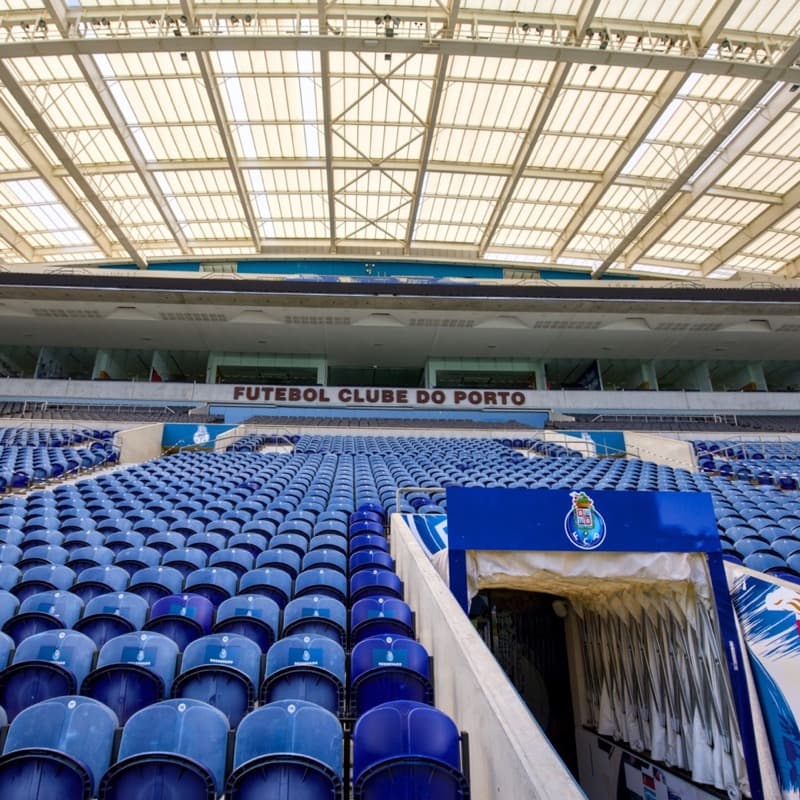
Estádio do Dragão

Stadium • Porto, Porto

Estádio do Dragão rises in the eastern part of Porto as the home of Futebol Clube do Porto since 2003. Inaugurated on 16 November that year, with a match between FC Porto and FC Barcelona, it replaced the former Estádio das Antas and came to hold 50,033 spectators. Designed by the architect Manuel Salgado, it was built in the context of Euro 2004 and hosted the competition’s opening ceremony. Its architecture combines structural clarity and large scale: the roof over the stands uses a metal structure covered with polycarbonate sheets, a solution distinguished in 2005 with the European award for steel and mixed construction. More than a sports venue, the Dragão functions as a multifunctional space, prepared for a variety of events. Inside it, the FC Porto Museum adds to the stadium experience a reading of memory, trophies and collective identity.

Palácio Nacional de Sintra4.5

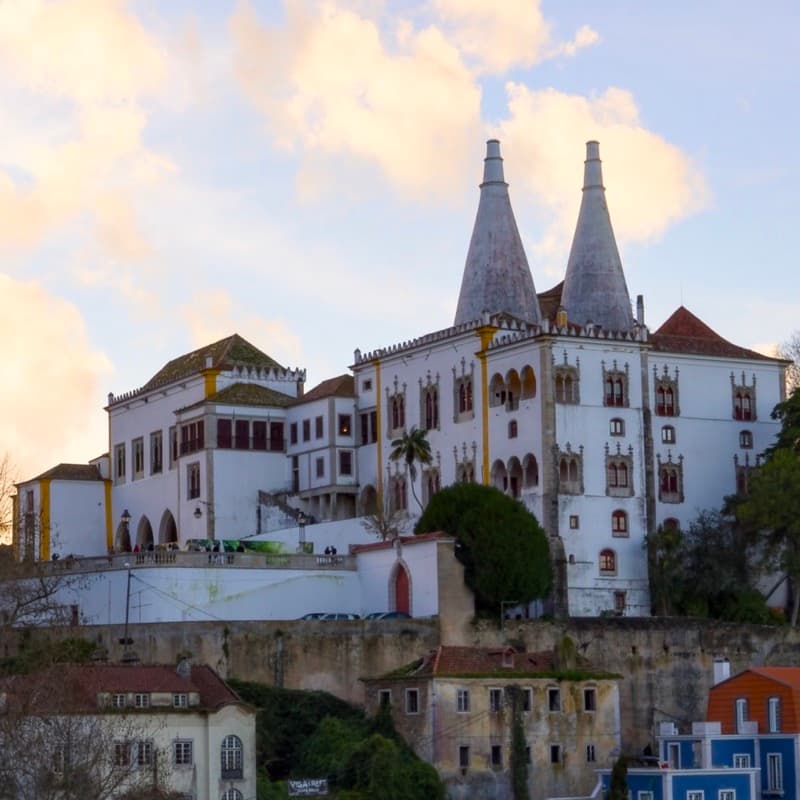
Palácio Nacional de Sintra

Palace • Sintra, Lisboa

The National Palace of Sintra seems to rise out of the town itself, with its two white chimneys announcing a place where royal history has remained intact. With a thousand years of life behind it, and as the only Portuguese medieval royal palace preserved in its entirety, it was inhabited by almost all the kings and queens of Portugal, who left behind layers of Gothic, Manueline and Mudéjar architecture. Inside, the palace surprises less through its façade than through the intimacy of its rooms and the ceilings that speak of power, taste and memory. It is worth lingering in the Hall of Coats of Arms, where Manuel the First places himself at the centre of a noble order represented by seventy-two heraldic shields, and in the famous Hall of Magpies, whose painted ceiling of one hundred and thirty-six birds still provokes questions, because its exact meaning remains unknown. Visiting this palace is like entering a royal house still inhabited by ceremony and secrecy.

Cristo Rei4.6

Cristo Rei

Monument • Almada, Setúbal

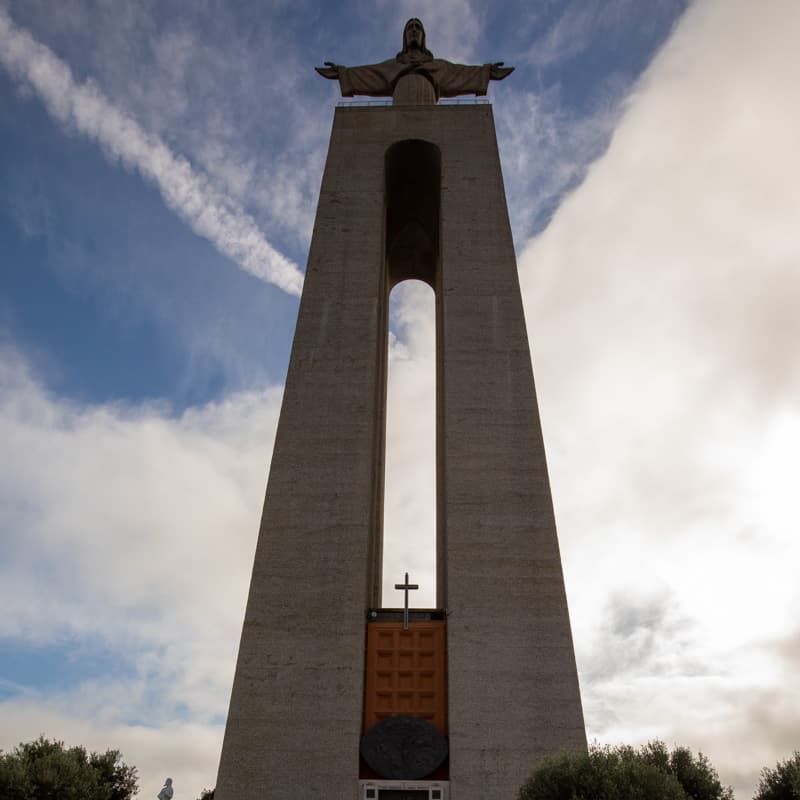
High above Pragal, with arms open over the Tagus, Cristo Rei has become one of the most striking shapes in Lisbon’s skyline, although it already belongs to Almada. The idea was born when Cardinal Cerejeira saw Christ the Redeemer in Rio de Janeiro, yet the monument gained its deepest meaning in the vow made by the Portuguese bishops in 1940: if the country were spared from the Second World War, a great sign of gratitude and peace would be raised here. Inaugurated in 1959, with a design by António Lino and sculpture by Francisco Franco, the ensemble joins the solemn scale of a sanctuary to the simple force of a figure turned towards the city. It is worth noticing the void between the four pillars and letting your eyes rise to the open arms before lingering at the viewpoint, where the Tagus and Lisbon seem to unfold in a single breath.

Casa-Museu de Santa Maria4.5

Casa-Museu de Santa Maria

Museum • Cascais, Lisboa

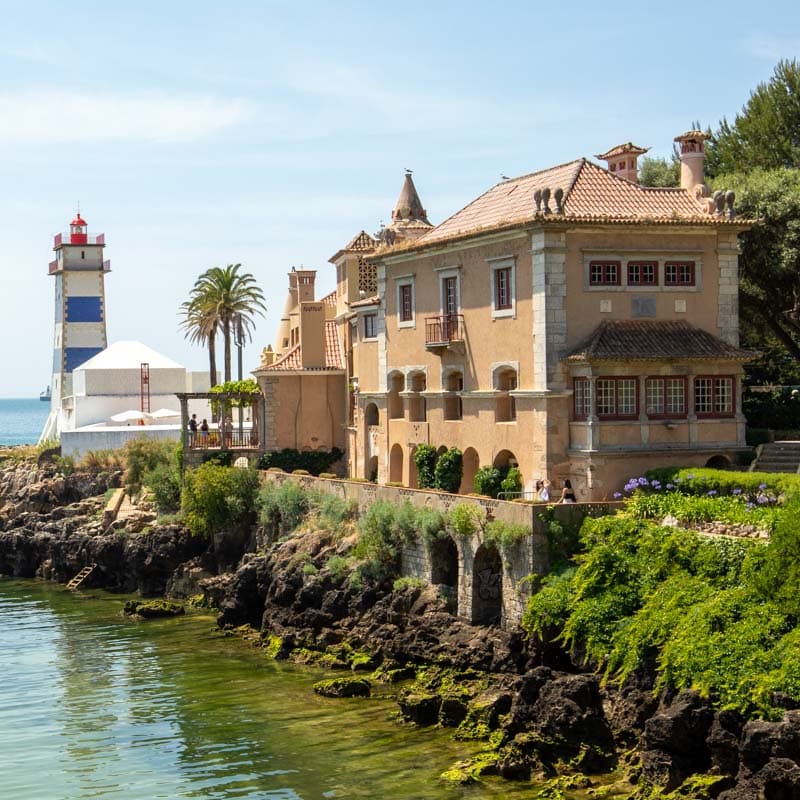
In Cascais, almost above the Santa Marta cove, the Casa-Museu de Santa Maria seems to rise from the rock and the light of the sea. Raul Lino designed it in 1902 for Jorge O’Neill, as a gift for his daughter Maria Teresa, in one of the earliest moments of a body of work that already suggests his idea of the Portuguese house, with Mediterranean and Moorish echoes. For about a century it remained a private residence; today, as part of the Museum Quarter, it still keeps that intimate character, more like a lived-in house than a small palace. The interior surprises with its decorative richness: the Hall of Arches, the terrace facing the water, the tiles designed by the architect and, above all, the late seventeenth-century panels brought from a chapel in Frielas give the whole place a quiet and very distinctive beauty. Between windows open to the Atlantic, painted wood and silence, one senses that this house was not meant to dominate the landscape, but to converse with it.

Castelo de Sesimbra4.6

Castelo de Sesimbra

Castle • Sesimbra, Setúbal

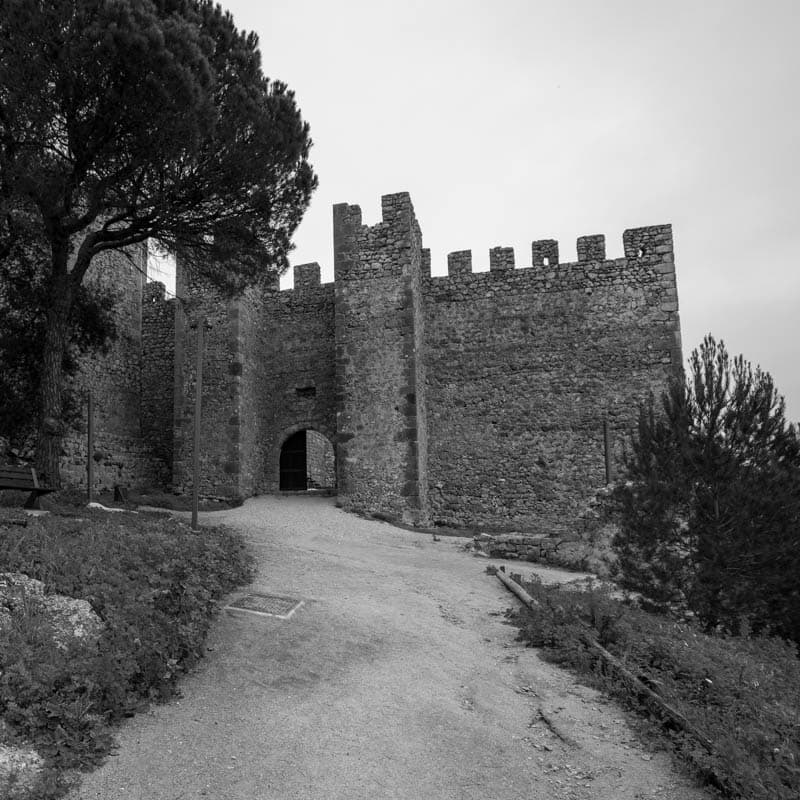
Perched above the bay, Sesimbra Castle is the last Portuguese castle over the sea to preserve its medieval layout, and that singular quality is felt at once in its walls opening towards the horizon. Of Islamic origin, it passed through conquest and reconquest until it was definitively secured on the Christian side at the beginning of the thirteenth century, when the town received its charter; soon afterwards, it was entrusted to the Order of Santiago, which strengthened the enclosure and its defensive role. Throughout the Middle Ages, it was a key stronghold in guarding the coast, but from the fifteenth century onwards the population gradually moved down towards the bay, drawn by fishing and shipbuilding. Today, as you walk through the alcáçova, the keep, the wall walk and the church within the ramparts, that long shift of centre and outlook becomes clear. Above all, linger over the view: between the town and the sea, Sesimbra seems to tell its whole story at once.

Galeria Municipal do Banco de Portugal4.3

Galeria Municipal do Banco de Portugal

Museum • Setúbal, Setúbal

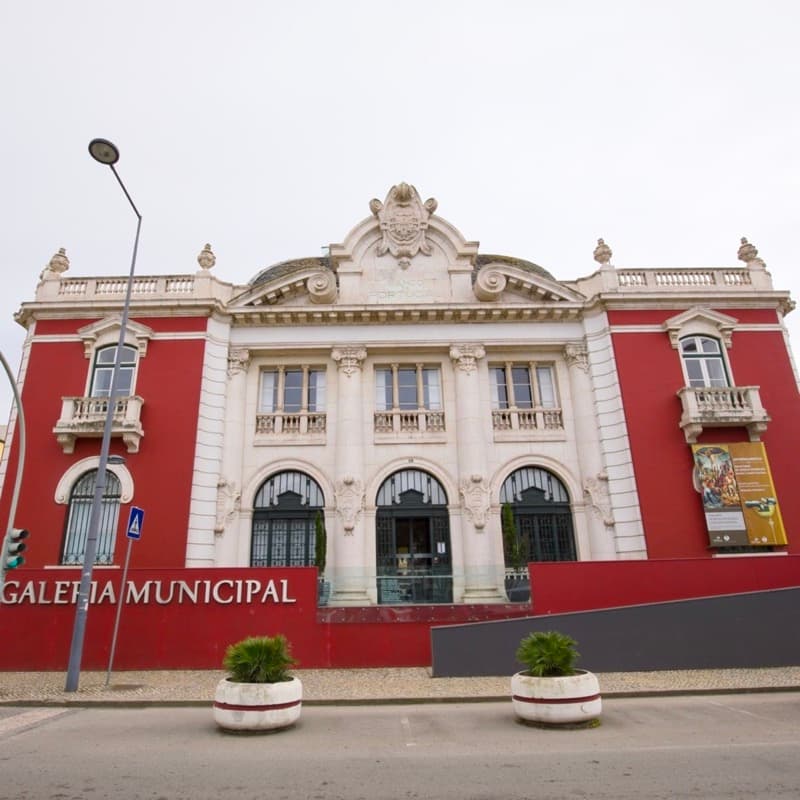
On Avenida Luísa Todi, the Banco de Portugal Municipal Gallery shows just how well Setúbal has reused its urban memory. Designed by Arnaldo Adães Bermudes in the early decades of the twentieth century, the building served for a long time as the local branch of the Bank of Portugal and still retains the solemn air of a former banking house. The two stone columns at the entrance, the eclectic composition and the revivalist echoes, with discreet Art Nouveau touches, give it a sober yet distinctive presence. In 2013, the property began a new life as a municipal gallery and started hosting exhibitions from the Museum of Setúbal. Among them was the celebrated altarpiece from the Convent of Jesus, one of the great works of sixteenth-century Portuguese painting. It is worth studying the building closely before you even step inside: few transformations tell the story of a city so well, turning a place once meant to guard wealth into one that preserves and shares heritage.

Palácio Nacional de Mafra4.6

Palácio Nacional de Mafra

Palace • Mafra, Lisboa

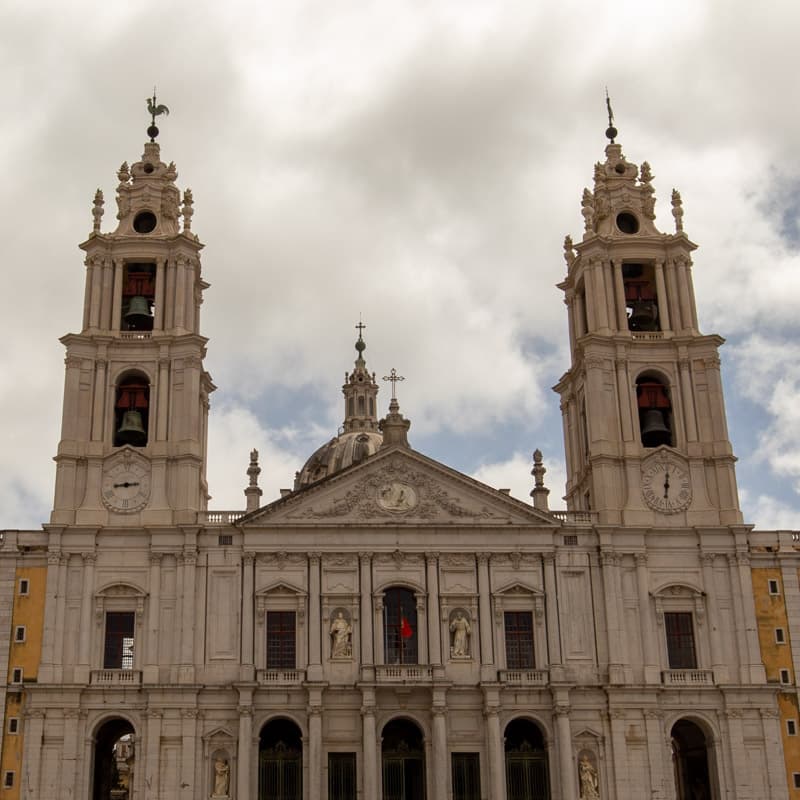
In Mafra, the scale of the palace seems to have been conceived to turn a royal vow into a spectacle of power. Commissioned by King João V and begun in 1717, the complex brings together palace, basilica, convent, Cerco Garden and Tapada in a Baroque composition of rare ambition. The basilica, the two carillons and the six historic organs remind us that music and liturgy were also part of this grand display. Yet there is one space that captivates in a different way: the library, a luminous nave of stone and wood that holds tens of thousands of volumes and remains one of Mafra’s most striking images. The building changed its role over time — royal residence, military quarters, monument — and it was from here that King Manuel II left for exile in 1910. A World Heritage Site since 2019, Mafra is remarkable for the way it brings devotion, knowledge and authority together in a single body.

Castelo de Elvas4.3

Castelo de Elvas

Castle • Elvas, Portalegre

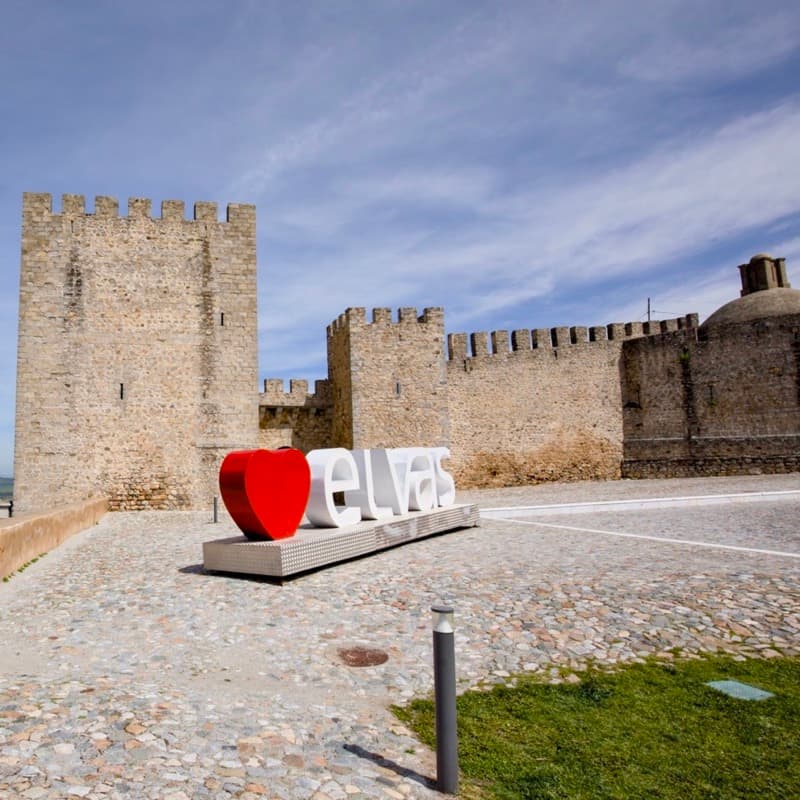
At the highest point of Elvas, the Castle dominates the border city and sums up centuries of defence of Portuguese territory. The fortification stands on a Muslim structure, was rebuilt after the definitive conquest of Elvas in 1226 and completed in 1228, during the reign of King Sancho II. In the following centuries it received extensions and adaptations, including interventions associated with King Dinis, King João II and King Manuel I, until it acquired, in the 16th century, much of the appearance recognised today. It was the residence of the town governor and the setting for events linked to diplomacy and royal life, such as peace treaties, exchanges of princesses and royal wedding banquets. Without a military function from the second half of the 19th century, it reached the 20th century in ruins before being valued as heritage. Classified in 1906, it is described by the municipality as the first Portuguese National Monument. It forms part of the Garrison Border Town of Elvas and its Fortifications, inscribed by UNESCO in 2012.

Aquário Vasco da Gama4.6

Aquário Vasco da Gama

Aquarium • Oeiras, Lisboa

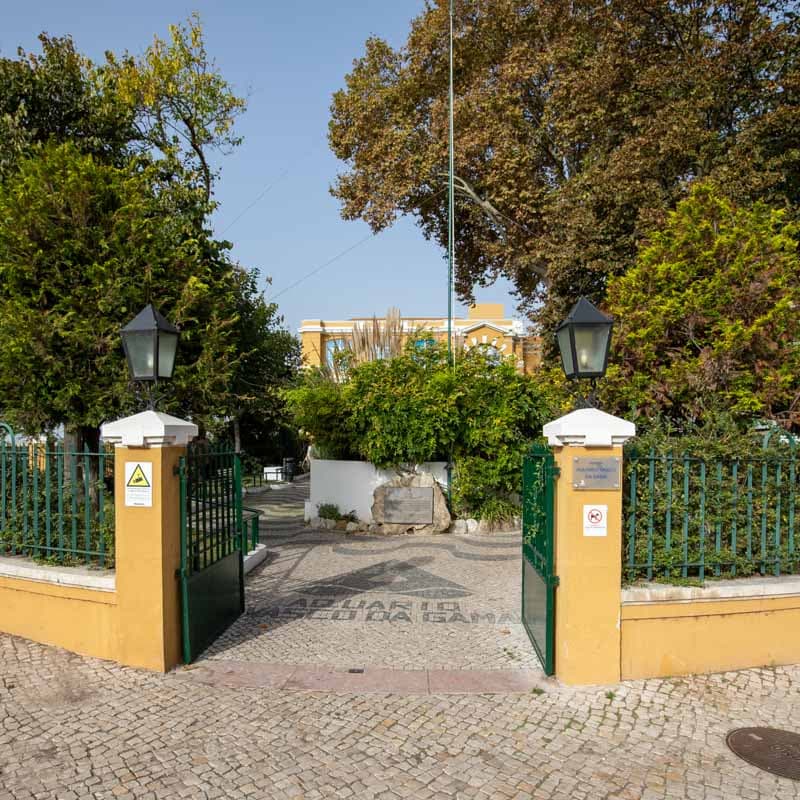
By the Tagus, in Dafundo, the Vasco da Gama Aquarium preserves something rare: the memory of a time when discovering the sea also meant learning how to observe it. Opened in 1898, during the celebrations of the fourth centenary of Vasco da Gama’s departure for India and under the patronage of King Carlos the First, it was one of the world’s earliest public aquariums and became a landmark in the popularisation of science in Portugal. The building retains the charm of a historic aquarium, yet what sets it apart most is its link to the oceanographer king: part of the Oceanographic Museum of King Carlos the First has been housed here since 1935. During a visit, it is worth noticing both the tanks and living species and the museum rooms, where science, curiosity and maritime tradition meet with natural ease. Today, now listed as a Monument of Public Interest, it still brings together wonder, memory and knowledge in a place of almost intimate scale.

Castelo de Palmela4.7

Castelo de Palmela

Castle • Palmela, Setúbal

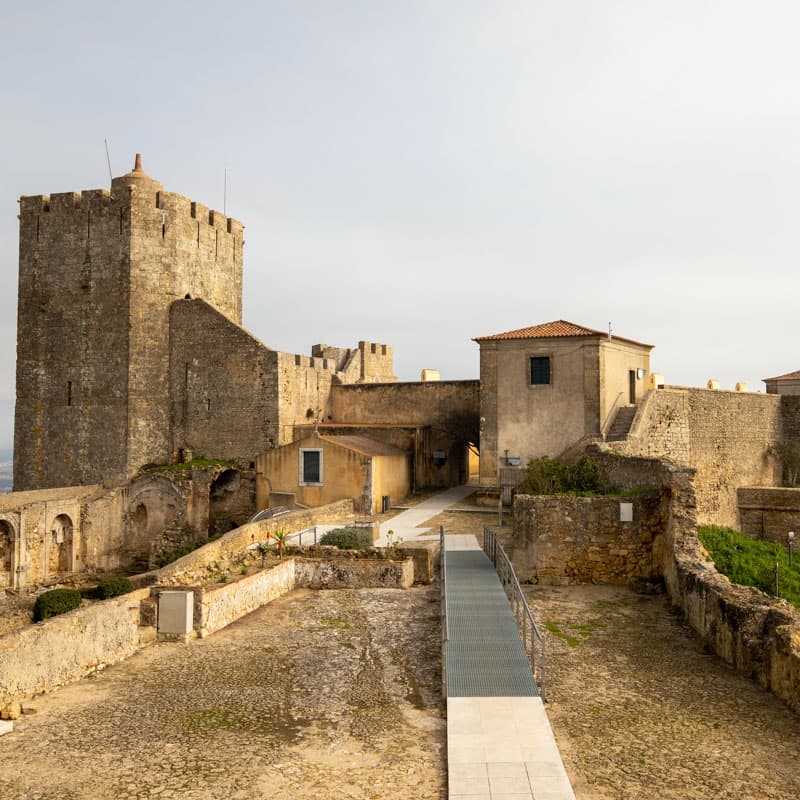
From the top of the hill, Palmela Castle commands one of the widest views in the region, between Arrábida, the Tagus and the Sado. Archaeological excavations have confirmed its Islamic origin, between the eighth and ninth centuries, before the successive captures and recaptures of the Christian Reconquest. Granted to the Knights of Santiago at the end of the twelfth century and linked to the Order for centuries, it became a military, religious and political centre that was crucial to the organisation of the territory. Even now, the keep, the ruins of Santa Maria and the austere Church of Santiago reveal that layering of periods and powers. It is worth climbing slowly and lingering on the walls: from there, it becomes clear why Palmela was such a strategic lookout. One episode is especially memorable — from here, great warning fires were lit to announce the approach of the troops of D. Nuno Álvares Pereira.

Castelo de Óbidos4.7

Castelo de Óbidos

Castle • Óbidos, Leiria

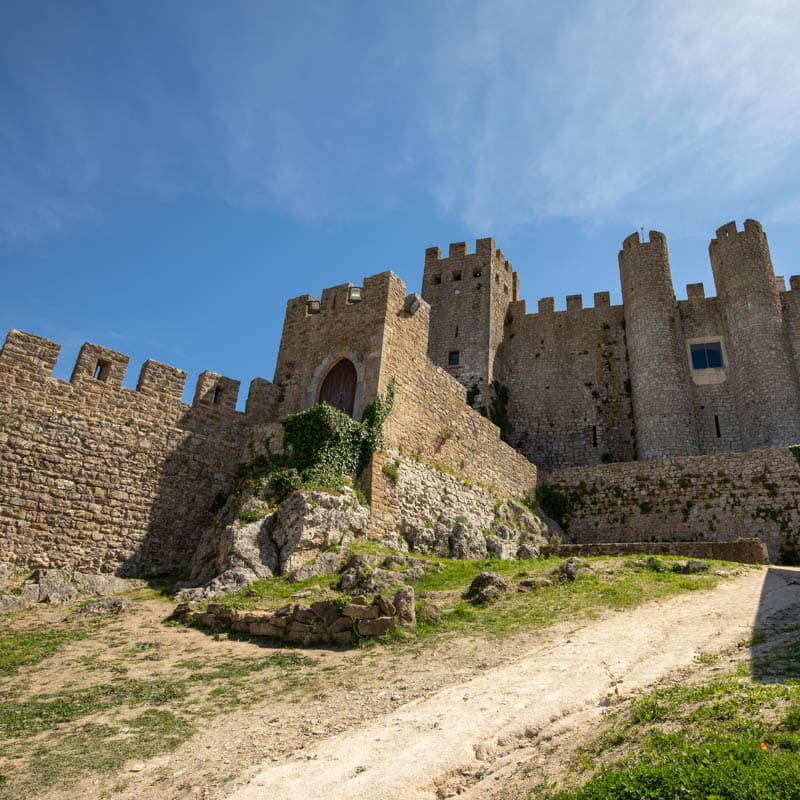
In Óbidos, the castle does not merely dominate the town: it almost merges with it. Raised on an ancient fortified site, consolidated in the Muslim period and taken by the Christians in 1148, it was enlarged by several kings, above all Dinis and Fernando, until it gained the ring of walls that still shapes the skyline today. In 1210, the town passed to the House of the Queens, and the castle also became a residence sought by the court, leaving Óbidos with a very distinctive royal memory. In the Paço dos Alcaides, the Manueline windows recall that palatial dimension, while the ramparts reveal how fortress and houses form a single body. There is, however, a less obvious detail: part of the medieval image that captivates visitors today was also fixed by twentieth-century restorations. Perhaps that is why Óbidos is so striking: it seems untouched, yet it is also a patient construction of memory.

Convento de Cristo4.7

Convento de Cristo

Convent • Tomar, Santarém

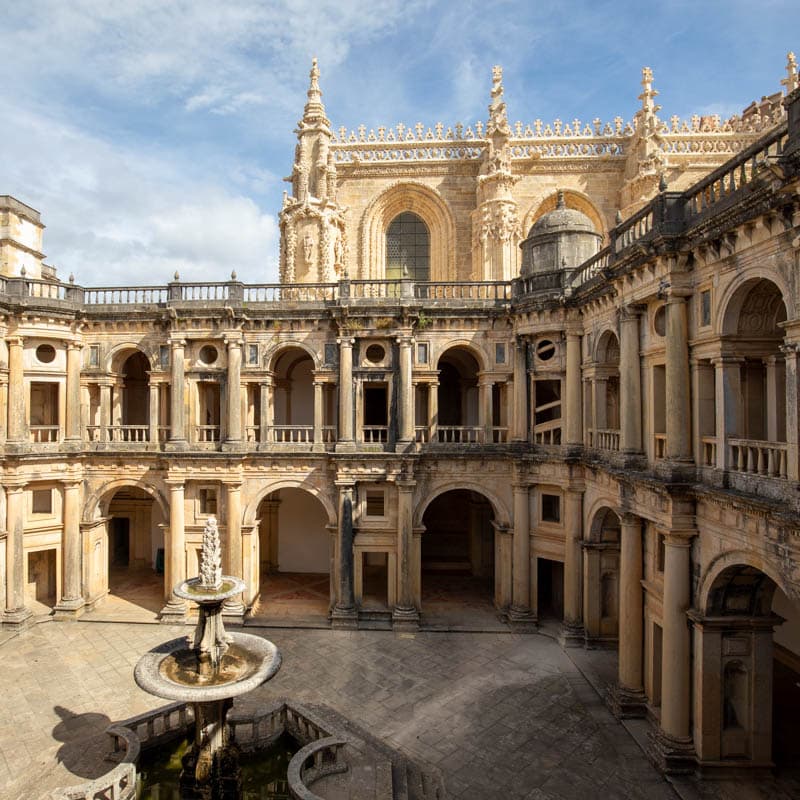
On a hilltop overlooking Tomar, the Convent of Christ brings together the former Templar Castle, the convent of the Order of Christ and other spaces connected with its historic enclosure. Its history begins in 1160, with the foundation of the castle by the Templars. At its centre stands the Charola, a Romanesque oratory inspired by the Holy Sepulchre in Jerusalem, later enriched with painting, sculpture and gilded woodcarving. After the extinction of the Templars, the Order of Christ received this heritage; under Prince Henry the Navigator new cloisters were built, and King Manuel I enlarged the convent church, where the celebrated Chapter House Window stands out. Built over several centuries, the complex brings together Romanesque, Gothic, Manueline, Renaissance, Mannerist and Baroque elements. Inscribed on the UNESCO World Heritage List in 1983, it remains a monumental reading of Portuguese history.

Castelo e Paço dos Condes de Ourém4.5

Castelo e Paço dos Condes de Ourém

Castle • Ourém, Santarém

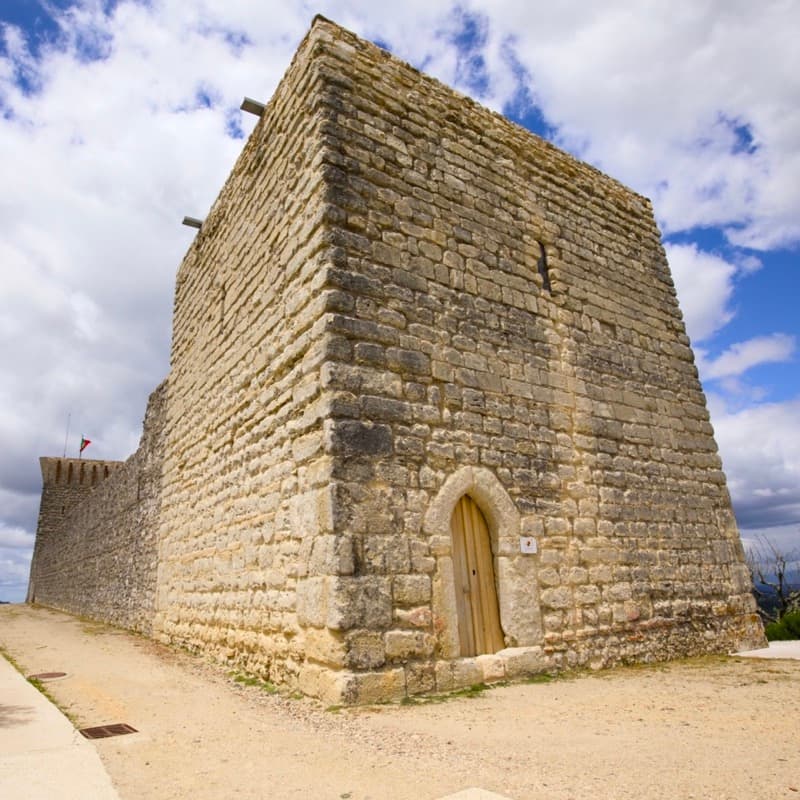
At the top of the Medieval Village of Ourém, the Castle and the Palace of the Counts bring together different centuries in a single silhouette of stone. The castle, associated with the Christian reconquest of the region by King Afonso Henriques in 1136, was built between the 12th and 13th centuries. Its triangular enclosure, marked by three quadrangular towers, preserves at its centre a cistern that recalls the site’s defensive role. In the 15th century, Afonso, 4th Count of Ourém, had the Palace of the Counts and the towers built as his official residence. The central residential tower, flanked to the south by two defensive towers, shows a seigneurial assertion that is rare in the Portuguese landscape. The complex suffered major destruction in the 1755 earthquake and deteriorated again during the French Invasions. Classified as a National Monument since 1910, it continues to mark, at the top of the hill, the military and comital memory of Ourém.

Castelo de Silves4.4

Castelo de Silves

Castle • Silves, Faro

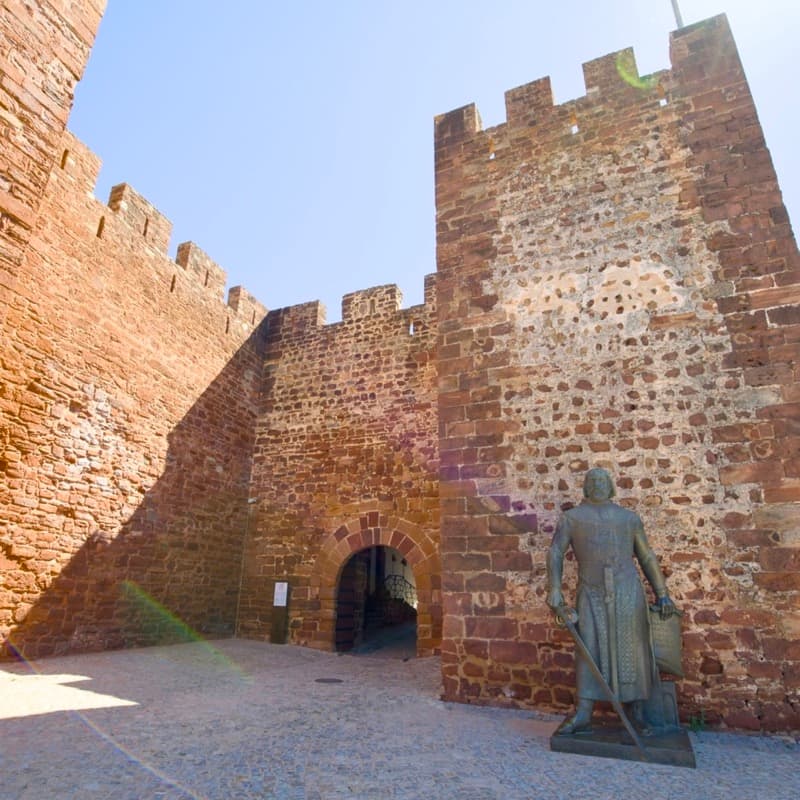
At the top of Silves, the Castle preserves the most visible presence of the former Islamic city. Classified as a National Monument since 1910, it is presented by Património Cultural as one of the principal Muslim fortifications in Portuguese territory. Its construction dates back to the beginnings of Islamic rule in the Peninsula, with archaeological finds dated to the 8th and 9th centuries; in the 11th century, when Silves gained great importance and was the capital of a taifa under Al-Mutamid, the general layout of the enclosure was established. The alcazaba, built in military rammed earth faced with Silves sandstone, has an irregular plan and eleven quadrangular towers, two of them albarrã towers. Inside, the Cisterna da Moura, dated to the 11th century, stands out for its scale: it covers around 820 square metres and rises to a height of ten metres. The reddish walls, wall-walks and archaeological remains allow medieval Silves to be read in stone.

Museu Municipal de Faro4.3

Museu Municipal de Faro

Museum • Faro, Faro

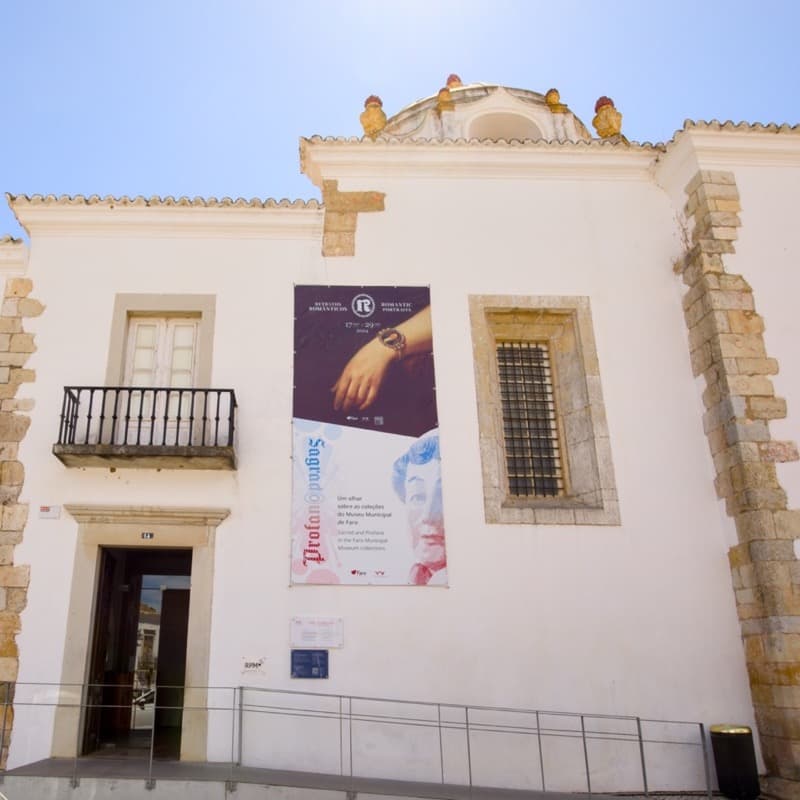
In Faro’s Vila-Adentro, the Museu Municipal de Faro occupies the former Convent of Nossa Senhora da Assunção, classified as a National Monument. The convent was founded by D. Leonor, wife of King João II, and construction began in 1519, continuing until the cloister was completed in 1550. After the extinction of the religious orders, the building had several uses and even housed a cork factory. In 1960, the Municipal Council acquired it to install the Museu Arqueológico e Lapidar Infante D. Henrique, which had operated in the Town Hall since 1894. Today, the quadrangular cloister, with its boxwood garden, organises a route between convent architecture and urban memory. The collection highlights archaeological materials from prehistory to the Roman and medieval periods, including the Ocean Mosaic, from the 2nd/3rd centuries, busts of Hadrian and Agrippina, inscriptions from Ossonoba, Islamic art and painting from the 16th to the 19th centuries.

Brickopolis4.4

Brickopolis

Theme Park • Lourinhã, Lisboa

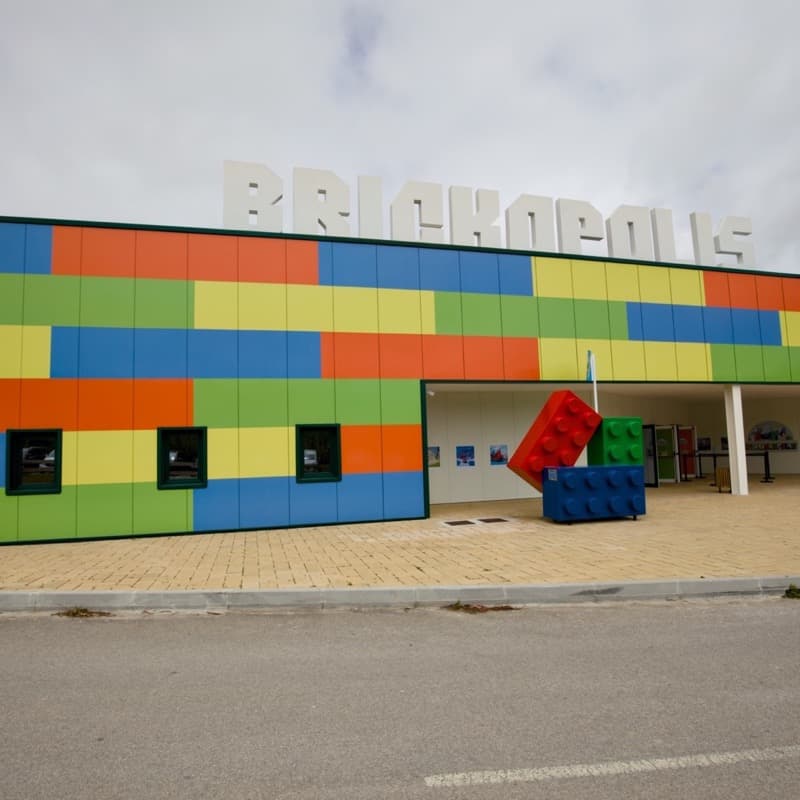
Brickopolis Lourinhã, in Abelheira, transforms LEGO® bricks into a playful and meticulous reading of Portugal in miniature. The permanent exhibition includes the LEGO® brick diorama recognised by Guinness World Records as the largest in the world: a 70.614-square-metre construction, achieved on 3 April 2025 by Brickopolis Lourinhã, from PDL — Parque dos Dinossauros da Lourinhã. The ensemble features Portuguese places and references, such as the great wave of Nazaré, Lisbon Airport in the 1950s, the houses of Costa Nova and Dino Parque Lourinhã. Its scale impresses through detail: the record registered by Guinness identifies 239,444 bricks, 366 vehicles, 176 trees and 2,328 flowers. Among streets, buildings, figures and successive scenes, Brickopolis presents creativity as a way of observing the territory.

Mosteiro da Batalha4.7

Mosteiro da Batalha

Monastery • Batalha, Leiria

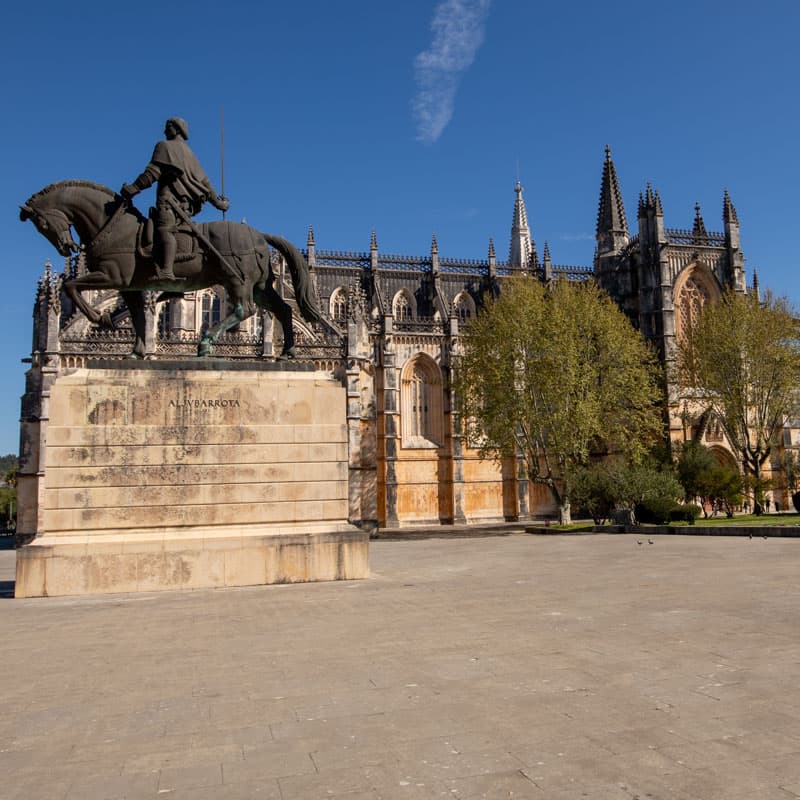
At the Monastery of Batalha, the memory of a victory was turned into stone. King João I ordered it to be built in fulfilment of the vow he made after Aljubarrota, and what began as an act of thanksgiving became, for more than a century and a half, the great building site of the Portuguese monarchy. Here the late Gothic and the Manueline styles took shape, yet the place impresses as much for its history as for its form: the soaring nave, the lace-like Royal Cloister and the Unfinished Chapels give the whole complex a solemn, restless beauty. In the Founder’s Chapel, the tomb of João I and Philippa of Lancaster, surrounded by the tombs of their children, also makes the monastery the symbolic heart of the Avis dynasty. Between convent silence, filtered light and golden stone, one understands why this monument is at once a memory of independence, a royal pantheon and one of the most striking creations of Portuguese art.

Mosteiro de Alcobaça4.6

Mosteiro de Alcobaça

Monastery • Alcobaça, Leiria

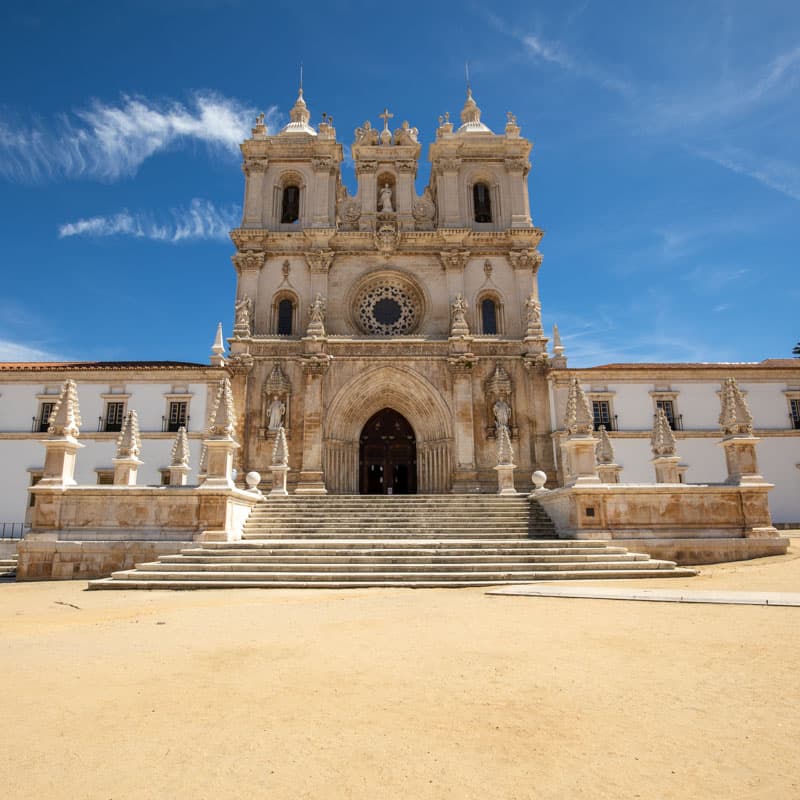
In Alcobaça, monumental scale rises from an ideal of discipline and silence. Founded in 1153 by King Afonso Henriques and entrusted to the Cistercians, the monastery became the order’s main house in Portugal and one of the most remarkable monastic complexes in Europe. Building began in 1178, and the church introduced the new Gothic language here with an almost severe clarity, faithful to the spirit of Cister. That austerity takes on another intensity before the tombs of King Pedro and Inês de Castro, fourteenth-century masterpieces in which love, death and Christian hope were carved with rare symbolic force. The monastery is also a complete organism, made up of cloister, refectory, chapter house and the famous eighteenth-century kitchen, where one senses how monastic life joined prayer, study and work. Between luminous stone and the order of its spaces, Alcobaça preserves the ambition of turning daily life into a form of eternity.

Castelo de Porto de Mós4.4

Castelo de Porto de Mós

Castle • Porto de Mós, Leiria

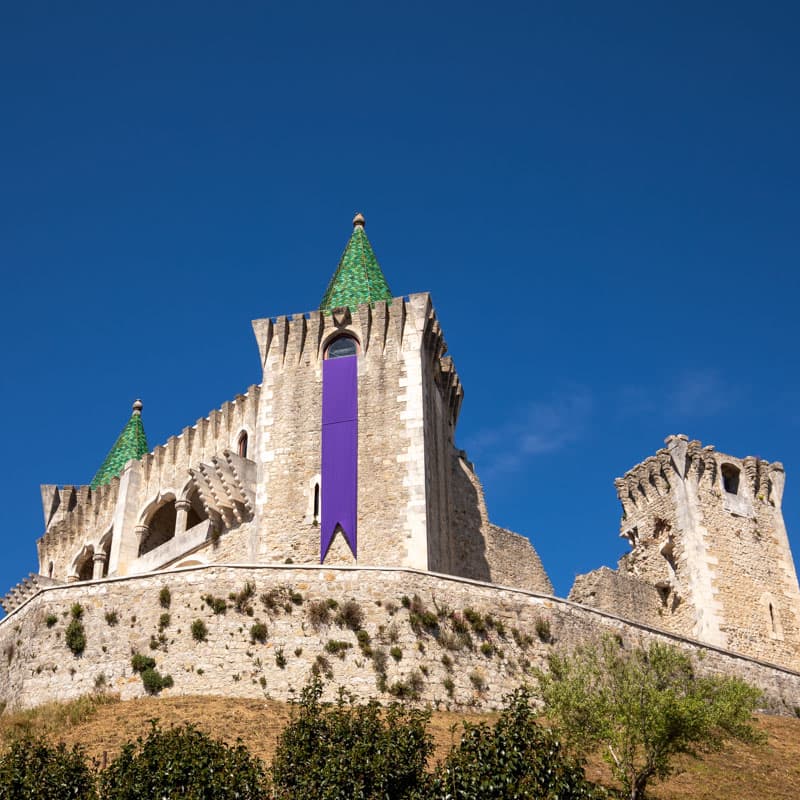
In Porto de Mós, the castle is recognised from afar by the green spires that give it an almost theatrical silhouette. The fortress began under the initiative of Portugal’s first kings and was enlarged by King Dinis, but it gained its most distinctive profile in the fifteenth century, when Afonso, Count of Ourém, added a palace-like residence with a panoramic loggia and a pentagonal plan of unusual clarity. On the eve of Aljubarrota, it housed the Portuguese army; afterwards, it moved away from war and closer to comfort and display. Abandonment and earthquakes, above all the one in 1755, left it in ruins, until twentieth-century restorations gave the town back its most emblematic image. From the top of the hill, between pale stone and balconies open to the landscape, one understands why this castle seems to bring together two natures: a medieval fortress and a dreamed palace.

Castelo de Bragança4.6

Castelo de Bragança

Castle • Bragança, Bragança

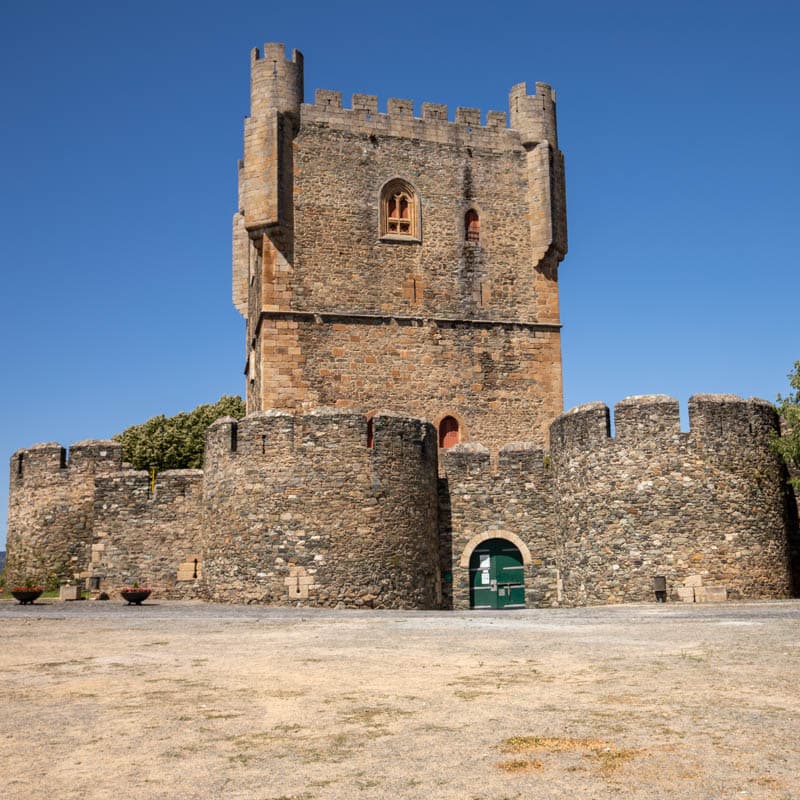
In Bragança, the castle does more than crown the city: within its walls it shelters a small citadel where medieval life still seems to retain a human scale. The story begins with King Sancho I, who in 1187 granted a charter to the new settlement and ordered its first walls to be built in order to secure the Trás-os-Montes frontier; King Dinis strengthened the enclosure and, in the fifteenth century, João I began the fortress that can still be recognised today, dominated by the powerful keep completed under Afonso V. From the top, the view opens over Portuguese mountains and Leonese lands, recalling that this was for centuries a place of watchfulness. Yet Bragança is also distinguished by what it contains within the walls: the Domus Municipalis, a singular example of Romanesque civil architecture in the Iberian Peninsula, gives the whole site a rare character, somewhere between fortified town, civic memory and frontier castle.

Fundação da Casa de Mateus4.3

Fundação da Casa de Mateus

Historic House • Vila Real, Vila Real

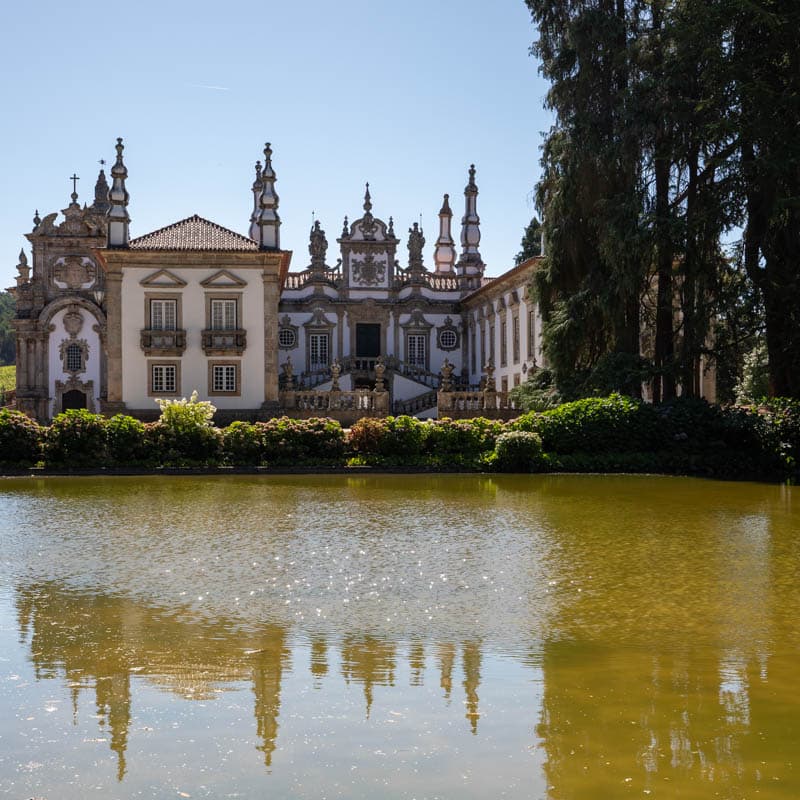
In Vila Real, the Casa de Mateus Foundation shows how a manor house can become a living cultural centre without losing the memory of the family that lived there. Created in 1970 by D. Francisco de Sousa Botelho de Albuquerque, it was born from the donation for public service of the House, Chapel, Winery, gardens, orchards, vineyards, woodland and a vast archive, library and museum collection. The setting helps explain the power of the place: the Baroque house, completed in 1744 and linked to the name of Nicolau Nasoni, is reflected in its famous water mirror and opens onto boxwood gardens, a rose garden and parkland. Inside, the reception rooms, chapel and library extend centuries of domestic and artistic life; among rare books and materials connected with the 1817 edition of The Lusiads, one understands that Mateus preserves not only a palace, but an enduring way of linking heritage, landscape and cultural creation.

Sé Catedral da Guarda4.6

Sé Catedral da Guarda

Church • Guarda, Guarda

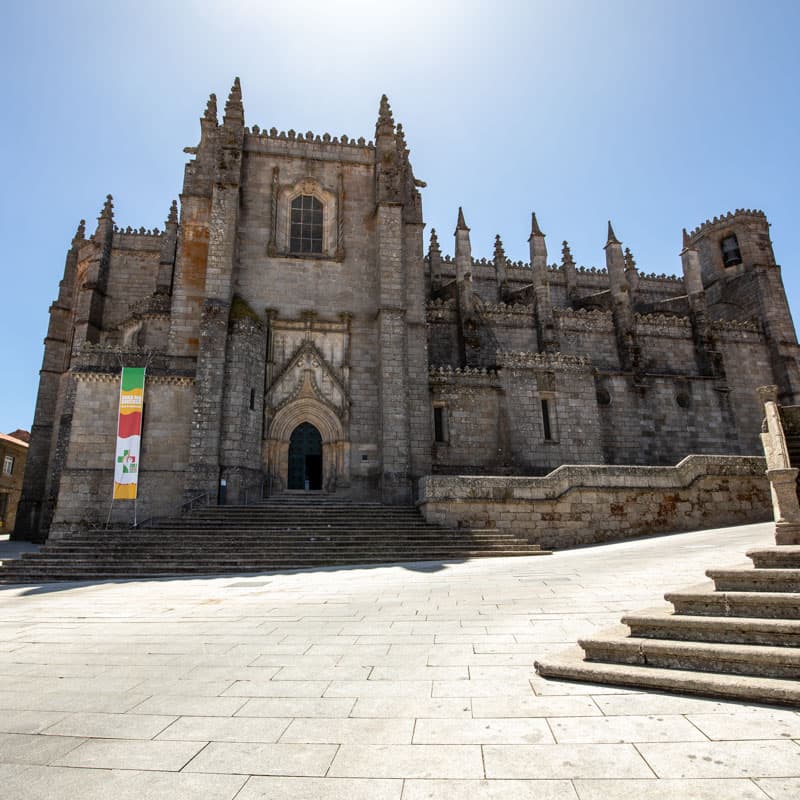
In the heart of Portugal’s highest city, Guarda Cathedral stands with the luminous severity of granite. Work began around 1390, in the reign of King John I, on the initiative of Bishop Vasco de Lamego, and continued for about a century and a half; from that long process came a building where Gothic and Manueline forms live together with remarkable ease. On the outside, its massive volumes, buttresses, octagonal towers and lace-like outline give it an almost military air, well suited to an old frontier city. Inside, the surprise is different: twisted columns, the vaulting and above all the great altarpiece in Ançã stone, made by João de Ruão in the sixteenth century, bring an unexpected richness of form. The cathedral is not striking only because of its scale. It is striking because it seems to gather, in one single body, the harshness of the mountain, the ambition of a royal building site and the patient faith of several generations.

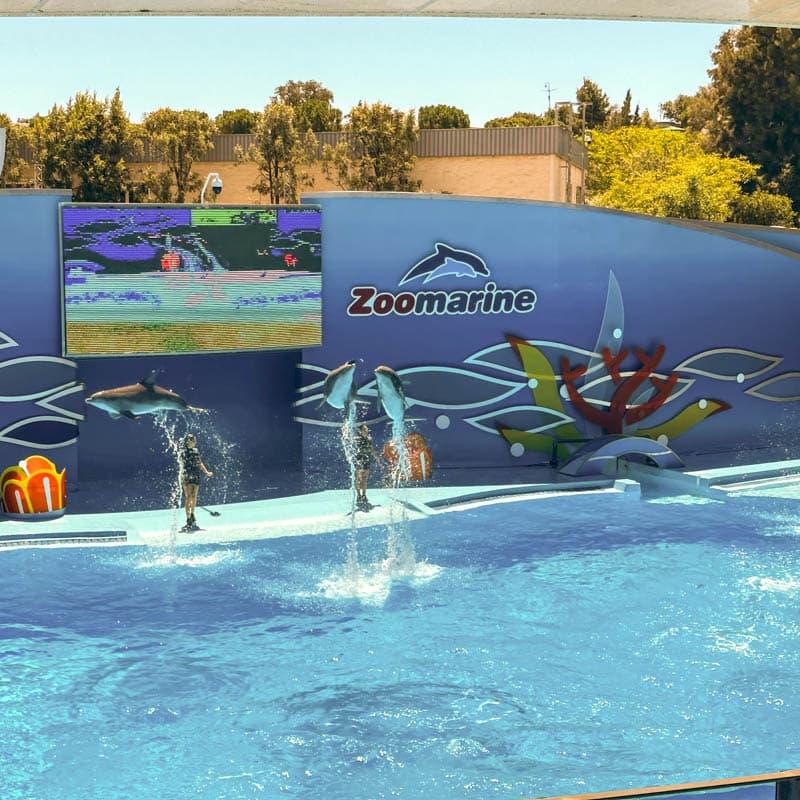
Zoomarine4.6

Zoomarine

Theme Park • Guia, Faro

In Guia, near Albufeira, Zoomarine opened in 1991 as a theme park devoted to the marine world, but over time it has taken on a broader meaning. Through zoological presentations, aquariums, habitats and water attractions, the site brings together entertainment and environmental awareness, seeking to draw visitors closer to ocean life. That mission becomes especially tangible at Porto d’Abrigo, created in 2002: it was the first Marine Species Rehabilitation Centre in Portugal and it continues to rescue, treat and return animals to the wild in partnership with ICNF. During a visit, the contrast between the park’s lively atmosphere and this quieter conservation work gives the place a distinctive identity. More than a leisure venue, Zoomarine shows how curiosity, when guided well, can turn into knowledge and care for the sea.

Showing 24 places. Use the filters or map to continue exploring.

Get the app

Take LxDiscover with you

Explore Portugal with a cultural guide for monuments, museums, gardens, palaces, viewpoints, and historic places in Lisbon, Porto, Sintra, and other regions.

Use the map, follow cultural routes, read editorial context, save places, and track your visits with the visit passport.

Free features

  • Interactive map to discover places of interest
  • Detailed information about monuments, museums, and cultural sites
  • Favorites for the places you want to visit
  • Selected routes to start exploring

Premium subscription

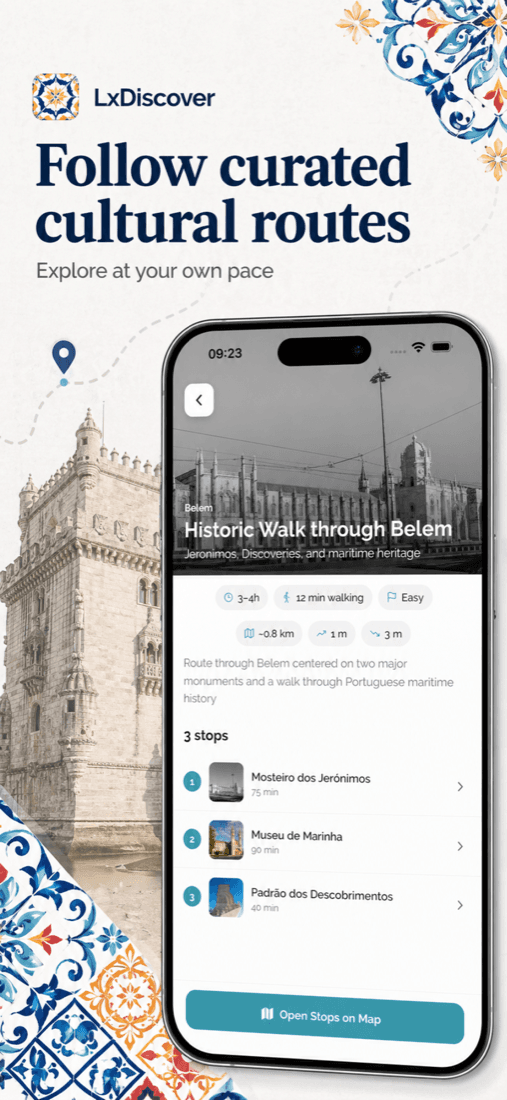
  • Curated routes with ordered stops, duration, and difficulty
  • Thematic collections with editorial context for each area
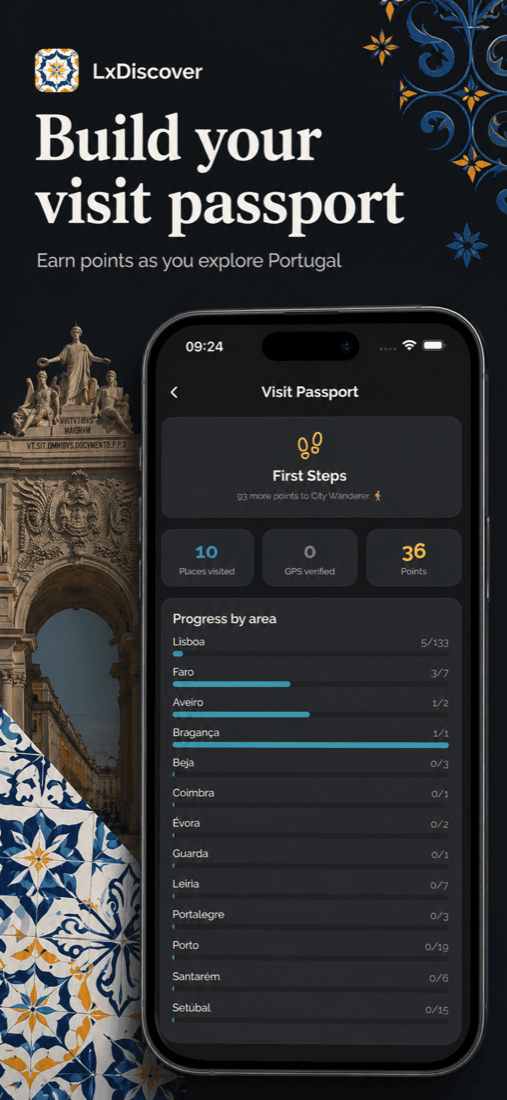
  • Visit passport for progress, visited places, and achievements
  • Advanced map, planning, and proximity alert tools
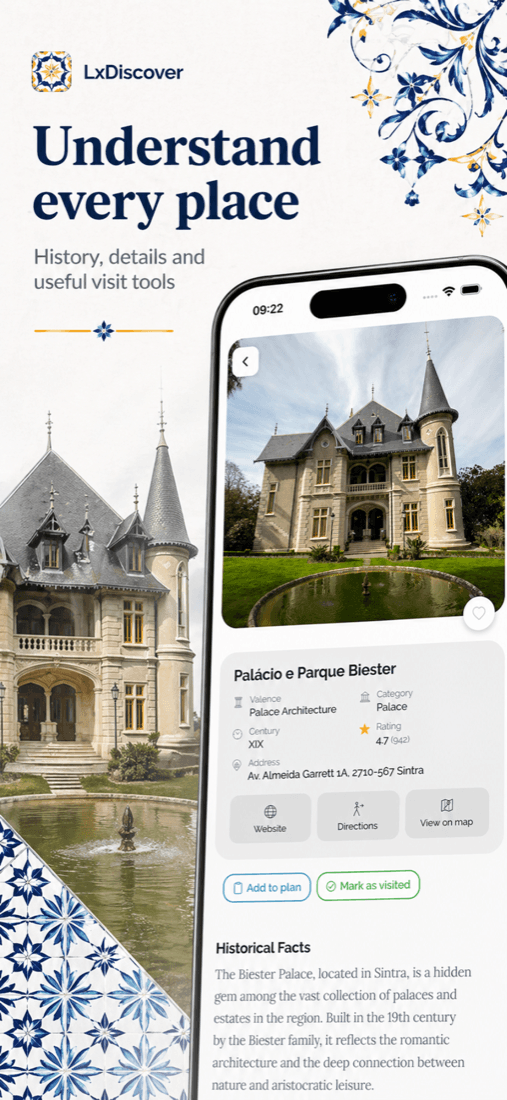
LxDiscover map screen
LxDiscover routes screen
LxDiscover visit passport screen