

Sintra · Lisboa
Palácio Nacional de Sintra
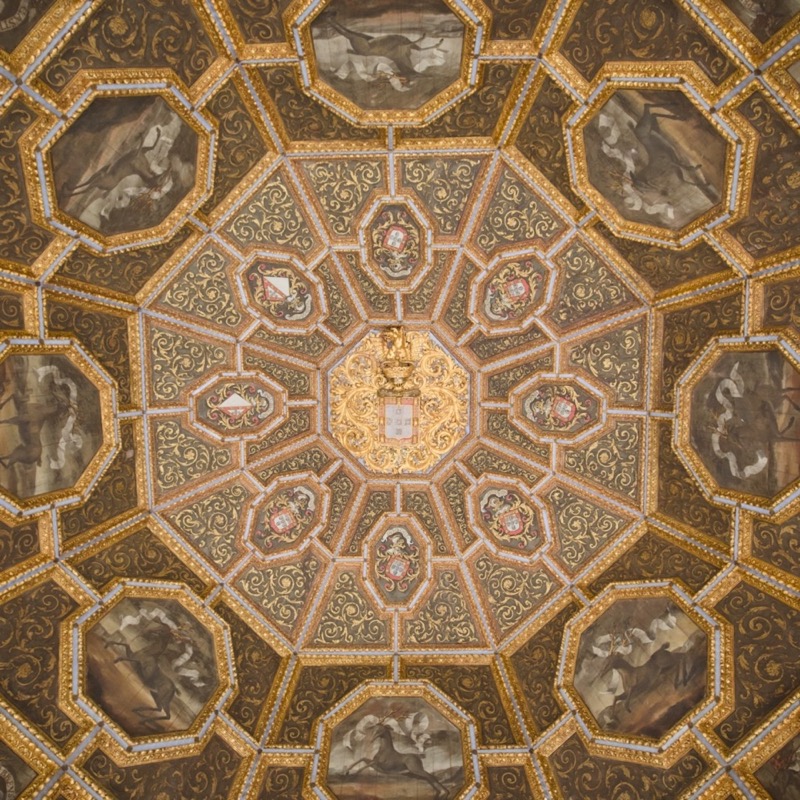
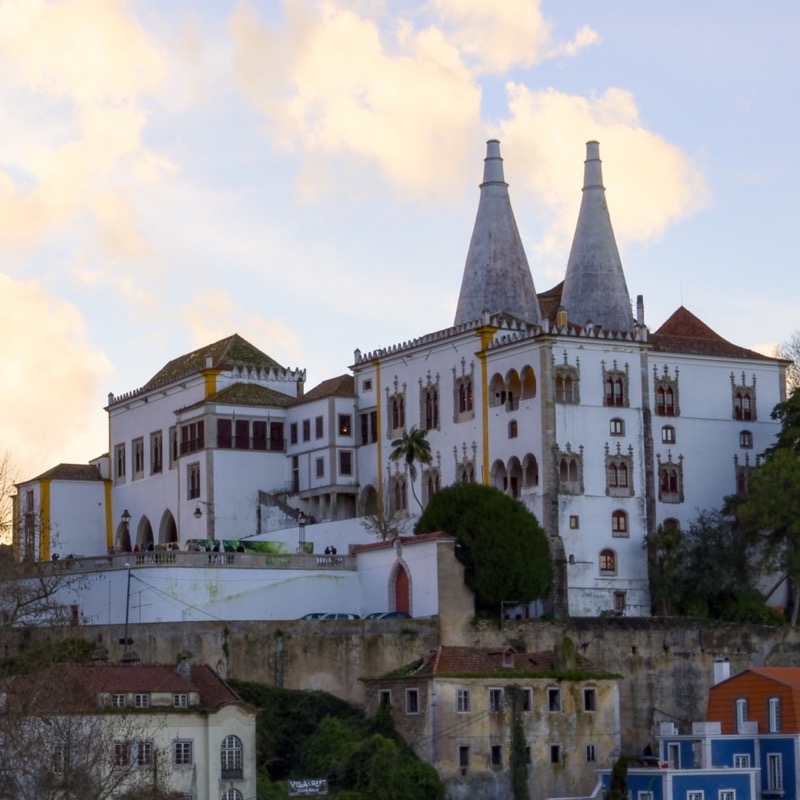
The National Palace of Sintra seems to rise out of the town itself, with its two white chimneys announcing a place where royal history has remained intact. With a thousand years of life behind it, and as the only Portuguese medieval royal palace preserved in its entirety, it was inhabited by almost all the kings and queens of Portugal, who left behind layers of Gothic, Manueline and Mudéjar architecture. Inside, the palace surprises less through its façade than through the intimacy of its rooms and the ceilings that speak of power, taste and memory. It is worth lingering in the Hall of Coats of Arms, where Manuel the First places himself at the centre of a noble order represented by seventy-two heraldic shields, and in the famous Hall of Magpies, whose painted ceiling of one hundred and thirty-six birds still provokes questions, because its exact meaning remains unknown. Visiting this palace is like entering a royal house still inhabited by ceremony and secrecy.
Why it matters
In the historic centre of Sintra, the palace preserves a history that began in an Islamic context. Medieval sources refer to a palace in the area known as Chão da Oliva and, after the surrender of Sintra in 1147, the building passed to the Portuguese Crown. The earliest known document proving its existence dates from 1281, during the reign of King Dinis. From that period onwards, Sintra became closely linked to the Queens’ Household, and the palace became an important seasonal residence of the monarchy. The most decisive building campaigns took place between the thirteenth and sixteenth centuries, especially under Kings Dinis, João I, Manuel I and João III, shaping the form still recognised today. In the seventeenth century, the palace acquired a darker chapter with the imprisonment of King Afonso VI in the chamber that still bears his name. After the 1755 earthquake, it was rebuilt without losing the silhouette established in the sixteenth century. In 1910 it was classified as a National Monument and it forms part of the Cultural Landscape of Sintra, inscribed by UNESCO in 1995.
Architecture and history
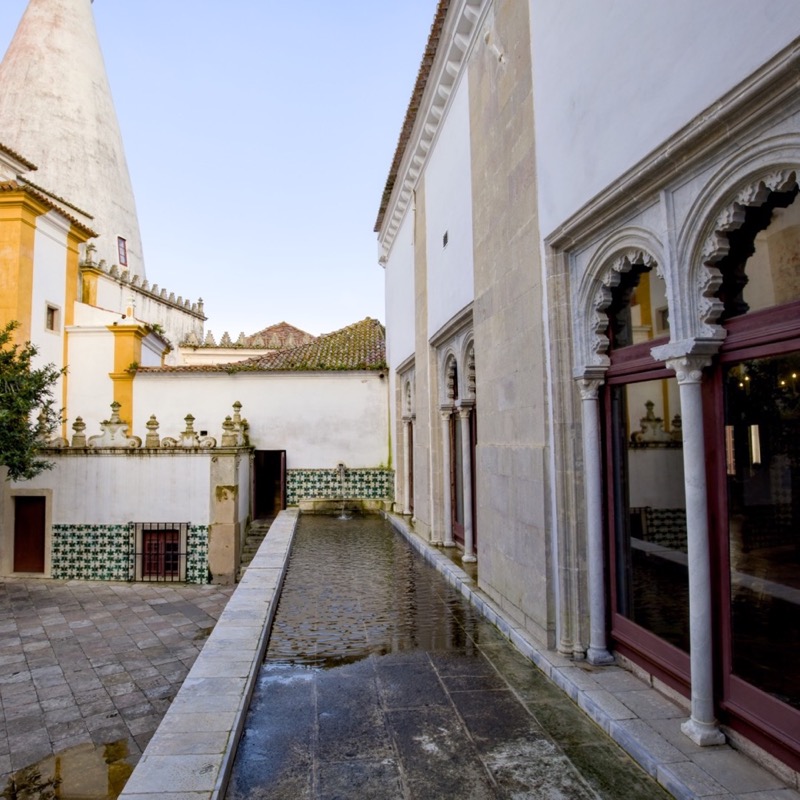
The architecture of the National Palace of Sintra is the result of layers of periods and functions, yet the ensemble remains coherent. Its elevated layout follows the terrain and is organised through wings, courtyards and circulation routes that connect ceremonial rooms, private quarters and service areas. Outside, the most striking image is that of the two conical kitchen chimneys, 33 metres high, which dominate the town and became the monument’s visual emblem. Inside, Gothic and Manueline features stand out, but the most distinctive quality is the strong Mudéjar presence. That legacy appears in carved timber ceilings, horseshoe arches, ceramic floors and Hispano-Moresque tile revetments with geometric patterns and varied techniques. The Palatine Chapel preserves one of the finest surviving Mudéjar ceilings in Portugal, while rooms such as the Swan Room, the Magpie Room and the Hall of Coats of Arms show how decoration was used to assert power, lineage and memory. The palace is therefore also a visual archive of Portuguese court culture.
More context
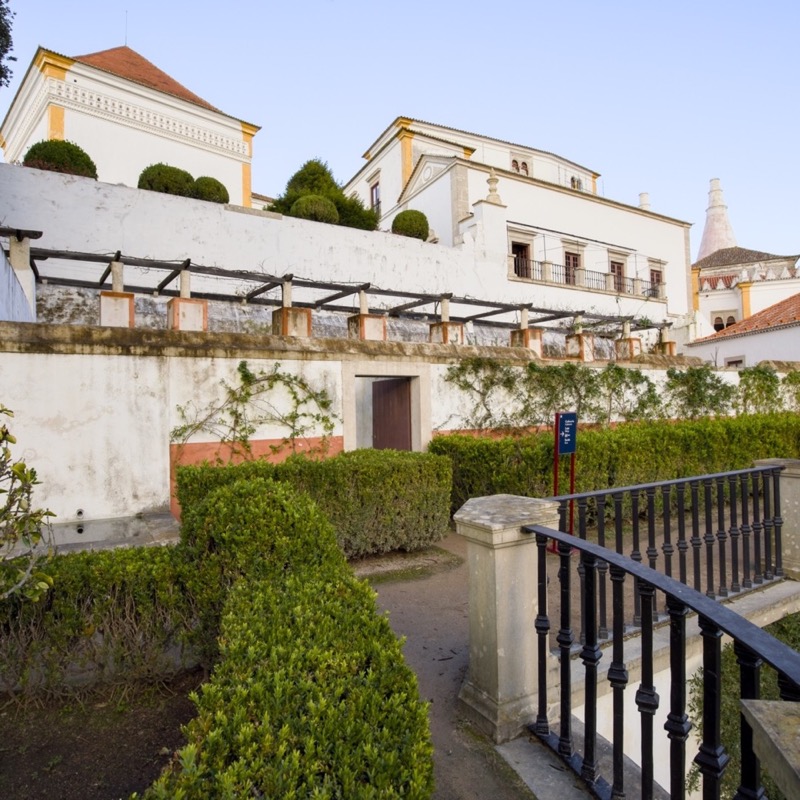
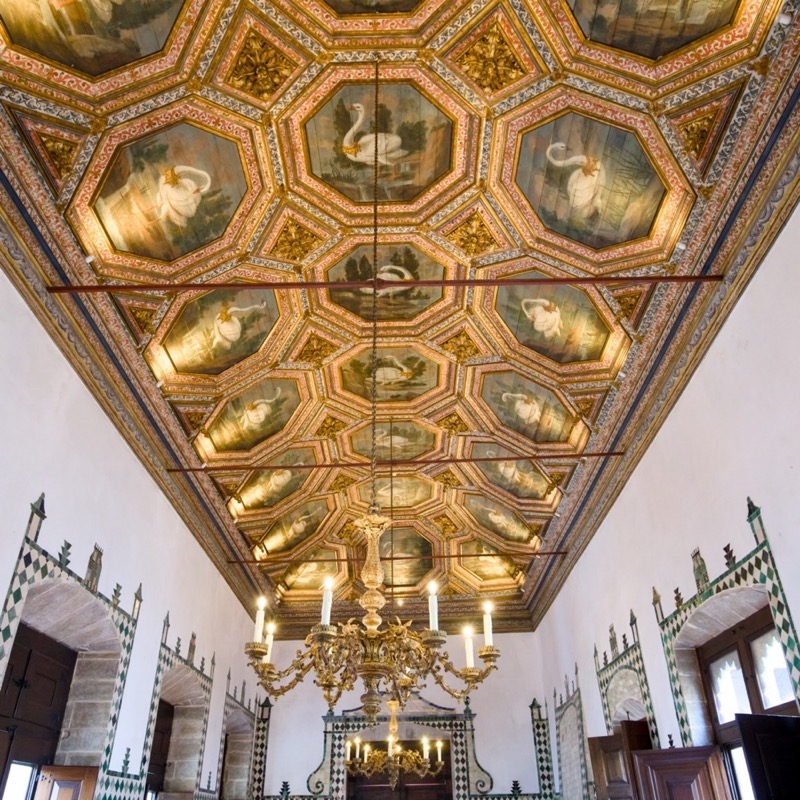
The Hall of Coats of Arms brings together one of the palace’s most eloquent images. In its dome, the coat of arms of King Manuel I appears surrounded by the arms of his children and of seventy-two noble families, creating a clear staging of the hierarchy of the kingdom. In the Magpie Room, look up at the ceiling with 136 birds and the motto por bem, one of the oldest painted decorations in the building. The Swan Room deserves the same attention for its timber ceiling with 27 painted coffers. Another essential point is the Palatine Chapel, where the Mudéjar timber lattice ceiling, the ceramic floor and the frescoes of doves of the Holy Spirit preserve a rare core of medieval palace art. In the kitchen, notice the scale of the space and the function of the monumental chimneys, created to serve the banquets of a large court. It is also worth pausing in the Chamber of Afonso VI, the oldest nucleus of the complex, and in the terraced gardens to the west, especially the Jardim da Preta, which opens onto a natural viewpoint over the hills and the historic centre.
Routes
Explore this place in a cultural route
Gallery