Castelo de Palmela

Palmela · Setúbal

Castelo de Palmela

CastleVIIIMilitary Architecture
Av. dos Cavaleiros de Santiago e Espada, 2950-317 Palmela4.7 Rating · 6,31565 min

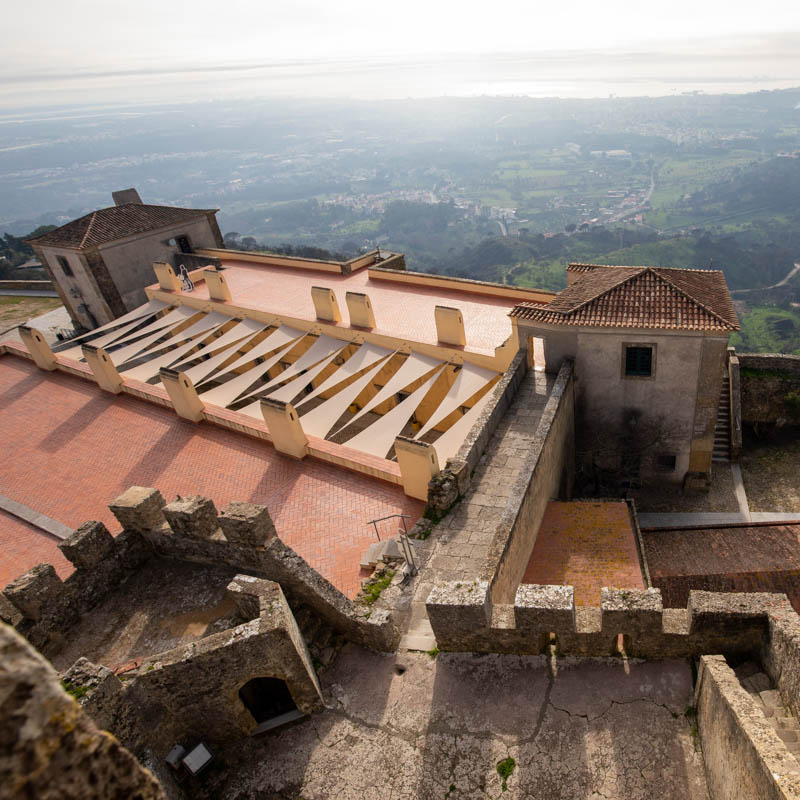
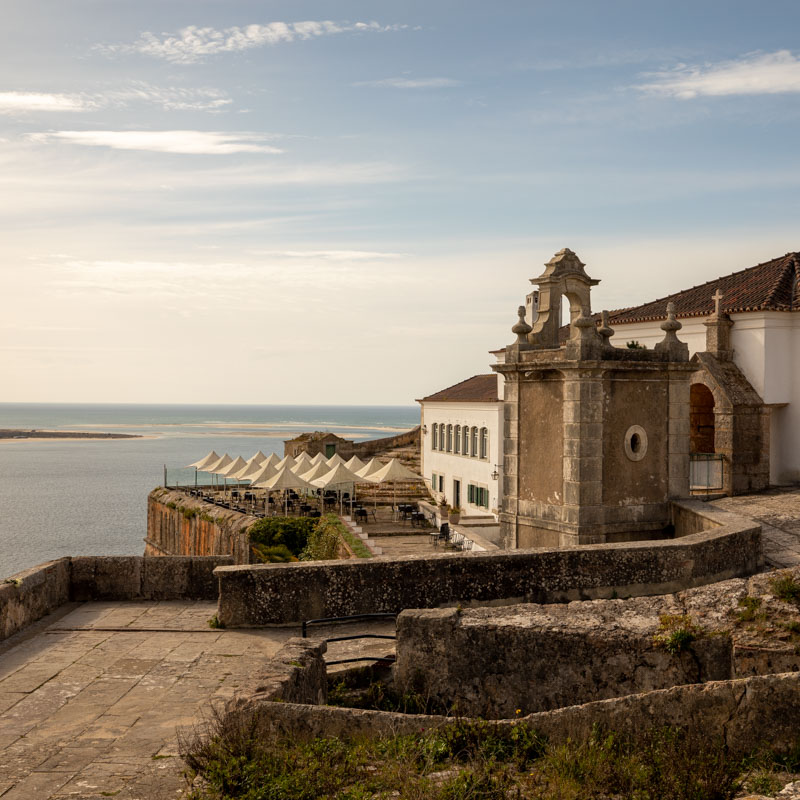
From the top of the hill, Palmela Castle commands one of the widest views in the region, between Arrábida, the Tagus and the Sado. Archaeological excavations have confirmed its Islamic origin, between the eighth and ninth centuries, before the successive captures and recaptures of the Christian Reconquest. Granted to the Knights of Santiago at the end of the twelfth century and linked to the Order for centuries, it became a military, religious and political centre that was crucial to the organisation of the territory. Even now, the keep, the ruins of Santa Maria and the austere Church of Santiago reveal that layering of periods and powers. It is worth climbing slowly and lingering on the walls: from there, it becomes clear why Palmela was such a strategic lookout. One episode is especially memorable — from here, great warning fires were lit to announce the approach of the troops of D. Nuno Álvares Pereira.

Why it matters

Set on a strategic hill between the Tagus and Sado estuaries, Palmela Castle was a key point of control from the period of Islamic occupation, documented between the eighth and twelfth centuries. It was taken by Afonso Henriques in 1147, yet the site remained contested and only came definitively under Christian rule in the reign of Sancho I. In 1185, the king granted a charter to the settlement and gave the castle to the Knights of Santiago, beginning a connection that would shape local history in lasting ways. From 1443 onwards, the fortress became the permanent seat of the Order of Santiago of the Sword, keeping that role until the extinction of the religious orders in 1834. After that, the enclosure acquired new military and administrative uses without losing its symbolic importance. In 1910, the castle was classified as a National Monument. Today, the complex brings together several layers of Portuguese history, from the medieval frontier to the memory of the Order of Santiago and the heritage recognition of the twentieth and twenty-first centuries in Portugal.

Architecture and history

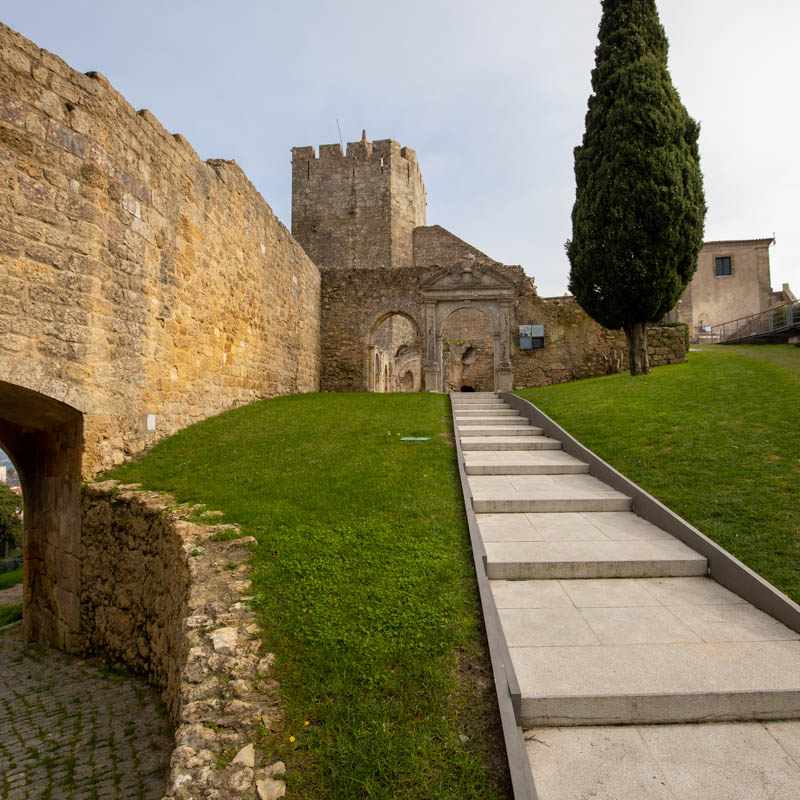
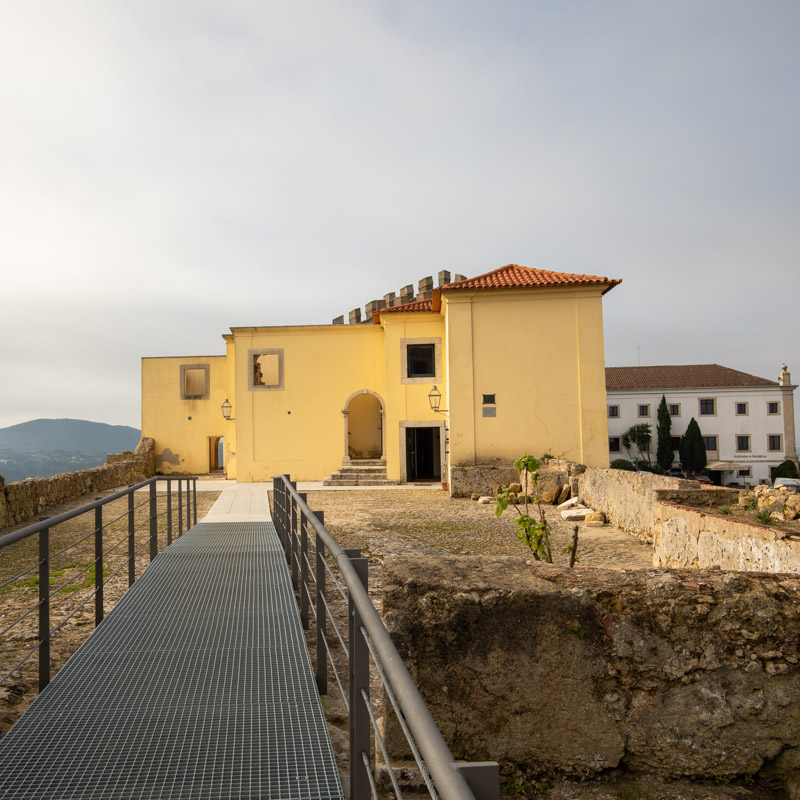
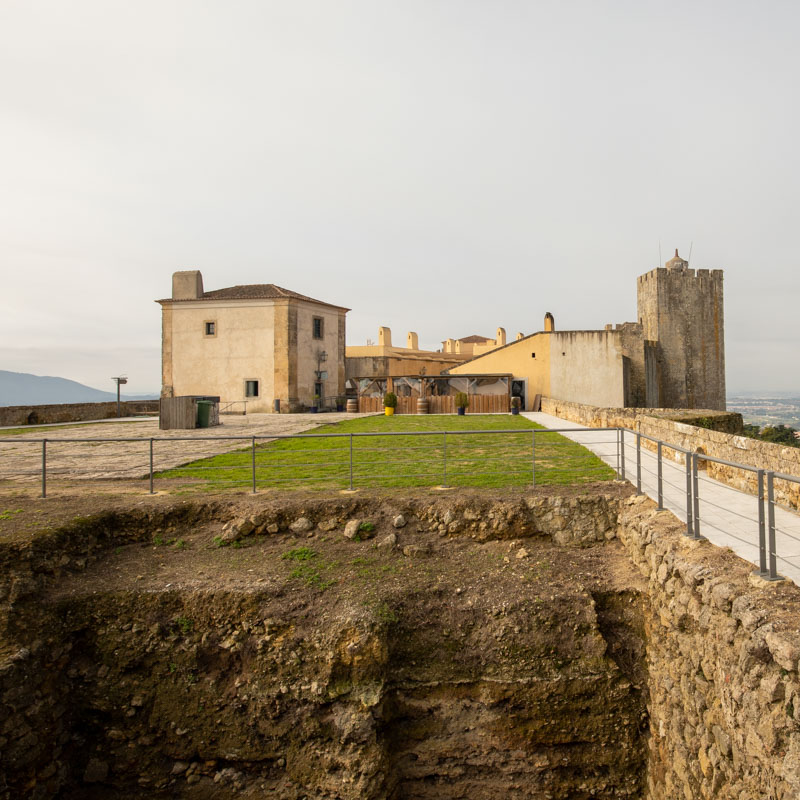
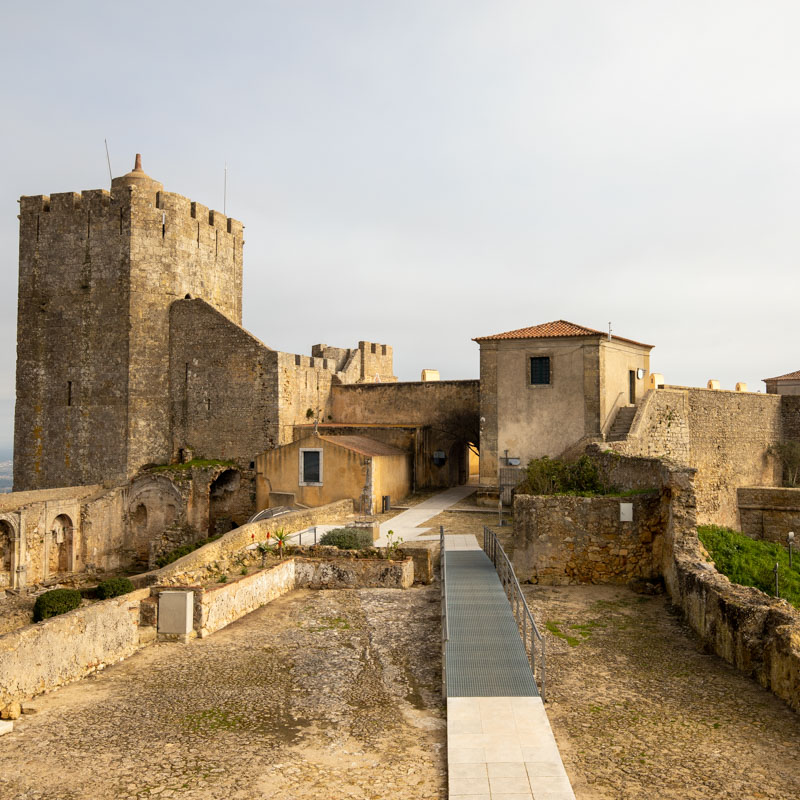
The complex brings together military, religious and convent architecture, shaped by building campaigns from different periods. The medieval walls trace an enclosure adapted to the hill, reinforced by cubelos and towers, while the pentagonal keep, associated with the reign of Dinis, dominates the highest point of the site. The presence of the Order of Santiago left decisive marks. The Church of Santiago, built in the second half of the fifteenth century for the knights of the Order, is a late Gothic building of great austerity, with little decoration and restrained light, forming a striking contrast with the defensive power of the walls. Beside it stands the former convent of the Order, a seventeenth and eighteenth-century building now adapted as a historic hotel, showing how the castle also became a religious and command centre. The ruins of the Church of Santa Maria add another chronological layer. They belong to Palmela’s first parish church, probably dating from the twelfth century, and preserve a medieval Gothic doorway, a Renaissance portal in Sesimbra limestone and traces of seventeenth-century tiles.

More context

The Church of Santiago gathers some of the clearest signs of the Santiago presence within the castle. Its austere interior, the breccia ossuary chest from Arrábida attributed to D. Jorge, and the seventeenth and eighteenth-century tiles help explain how the fortress also served as a place of devotion, representation and memory. When accessible, the Visitable Sculpture Reserve of Saint James extends that reading through fifteenth to seventeenth-century images linked to the patron saint of the Order. The keep deserves close attention for its commanding position and for the small evocation of the almenara episode of 1384, when Nuno Álvares Pereira ordered signal fires to be lit to warn Lisbon that help was near. In the ruins of the Church of Santa Maria, look for the medieval doorway, the Renaissance portal bearing the sword-cross of the Order of Santiago and the traces of the former cemetery. The Military Communications Space recalls yet another chapter, begun in 1885 with a heliograph. The view over Arrábida, the Sado, Troia and the Tagus completes the sense of the site’s strategic role.

Gallery

Castelo de Palmela 1
Castelo de Palmela 2
Castelo de Palmela 3
Castelo de Palmela 4
Castelo de Palmela 5

Nearby places

View all