Museu de Setúbal/Convento de Jesus

Setúbal · Setúbal

Museu de Setúbal/Convento de Jesus

ConventXVReligious Architecture
Largo Jesus, 2900-261 Setúbal4.6 Rating · 15975 min

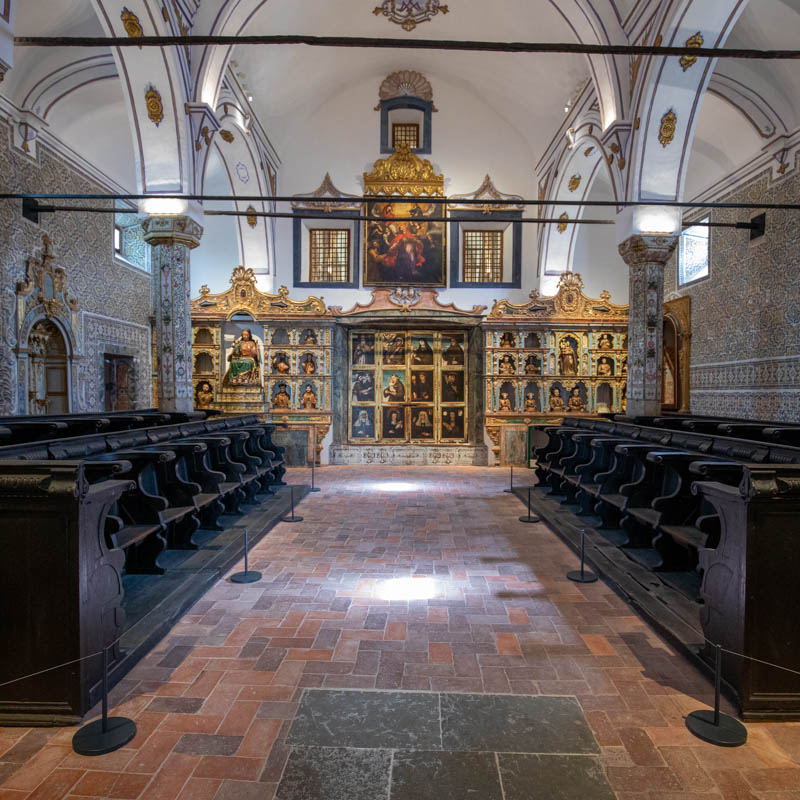
In the heart of Setúbal, the Convent of Jesus reveals a decisive moment in Portuguese art. Founded in 1490 by Justa Rodrigues Pereira and enlarged under the patronage of King John II, it was entrusted to Diogo Boitaca, who carried out his first work in Portugal here. The church is seen as a landmark in the beginnings of the Manueline style: its three vaulted aisles at the same height create a rare, bright and continuous space, supported by twisted columns that stay in the memory. Over the centuries, the complex changed its life: a convent for Poor Clare nuns, later a hospital, and since 1961 the city museum. Today, moving between the cloister, the Chapter House, the Upper Choir and the Gallery of 16th-century Art, one senses how the building preserves very different layers of time. Among them, the fourteen panels of the former altarpiece, attributed to Jorge Afonso’s workshop, stand out as a treasure linking Setúbal to the great cycle of Portuguese Renaissance painting.

Why it matters

The Setúbal Museum/Convent of Jesus offers access to one of the places where the city’s religious, artistic and urban history comes together. The convent began to be built in 1490, on the initiative of Justa Rodrigues Pereira, to house Poor Clare nuns. The project is attributed to Diogo de Boitaca, and Manueline royal patronage led to the reformulation of the church and the enlargement of the convent buildings. After centuries of convent life, the building had other uses: the municipal page records that it functioned as the Hospital of the Holy Spirit from 1893. The museum was founded on 5 February 1961, then as the City Museum, bringing together artistic heritage that was already on display in the Paços do Concelho. The rehabilitation completed in 2024 restored an integrated reading of the building, the collections and the Church of Jesus, without separating convent memory from museum function.

Architecture and history

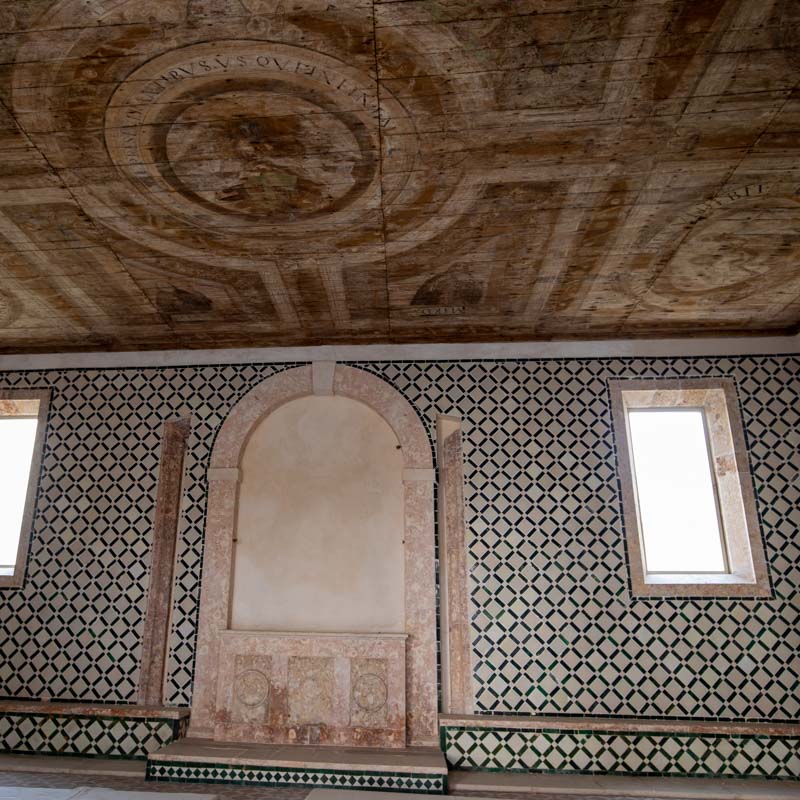
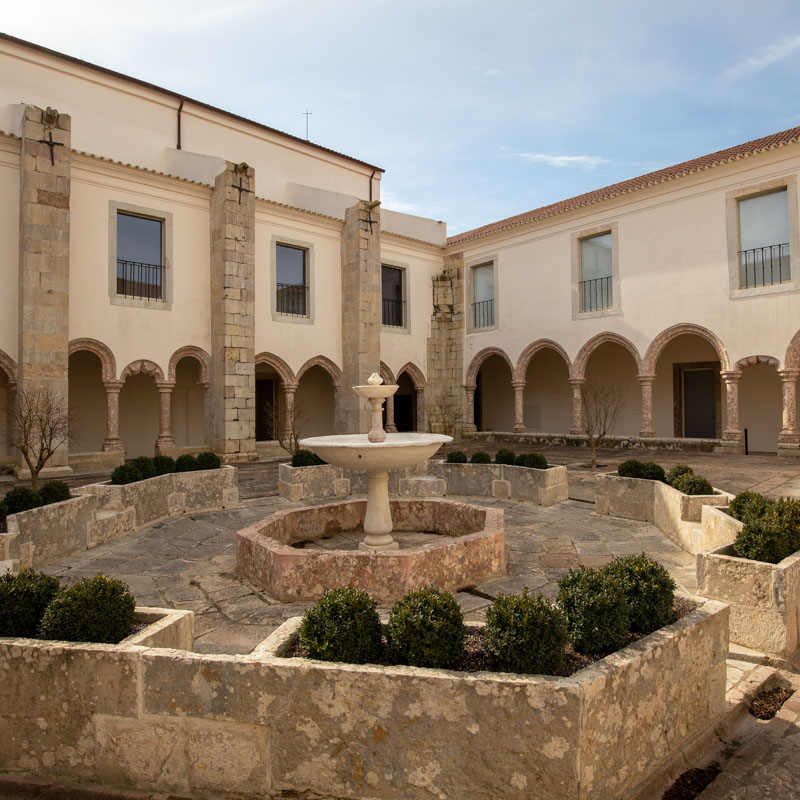
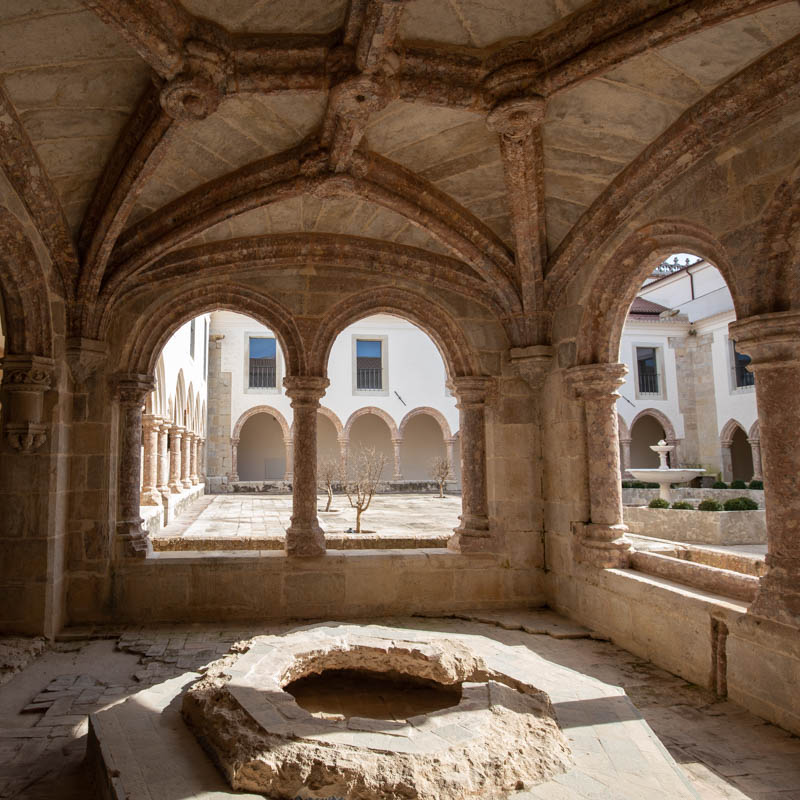
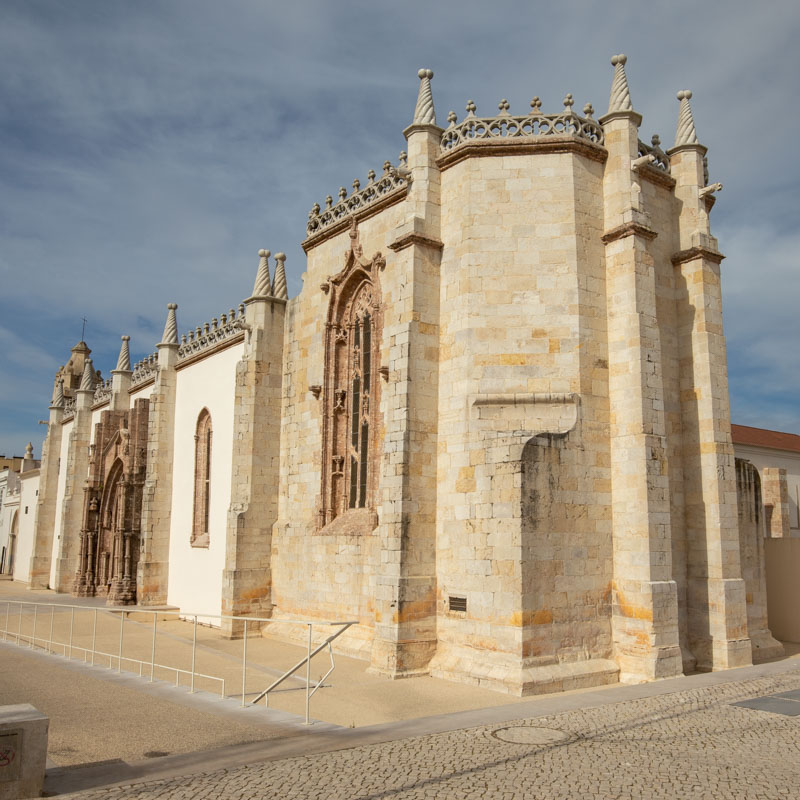
The church presents a low, robust and buttressed structure, designed to support the stone vault that replaced the initial plan for a wooden ceiling. On the south façade, the portal set within a gablet and the large openings of the nave and chancel give variety to a very restrained exterior. The interior is more surprising: three vaulted naves of the same height create uniform lighting, close to the hall-church model. The columns formed by three twisted rolls lead the eye towards the vault ribs and help reveal the decorative invention of early Manueline architecture. The higher chancel is covered by a star-shaped vault in two bays. In the square cloister, the 17th-century central fountain and the windows opened on the upper floor recall later adaptations of the convent. The Chapter Room and the High Choir complete this reading, showing spaces of decision, prayer and separation within convent life.

More context

The high-altarpiece is a central work in the museum. Its 14 panels, dated to 1517/19–1530 and attributed to the workshop of Jorge Afonso, organise narratives of the Passion of Christ, the Childhood of Jesus, the Joys of the Virgin and Franciscan saints. Notice how sacred painting dialogues with the architecture that received it: the vertical scale of the church, the vaults and the uniform light help visitors imagine its former liturgical setting. In the museum rooms, the art, archaeology and Palácio Cabedo tile collections show a Setúbal broader than the convent itself, made up of urban life, devotion and collecting. The High Choir deserves attention for its original function: it allowed the nuns to attend Mass without contact with the rest of the community. In the cloister, the slow circulation between arcades gives meaning to the enclosed rhythm of former convent life and quiet observation.

Gallery

Museu de Setúbal/Convento de Jesus 1
Museu de Setúbal/Convento de Jesus 2
Museu de Setúbal/Convento de Jesus 3
Museu de Setúbal/Convento de Jesus 4
Museu de Setúbal/Convento de Jesus 5

Nearby places

View all