Setúbal · Setúbal
Forte de São Filipe
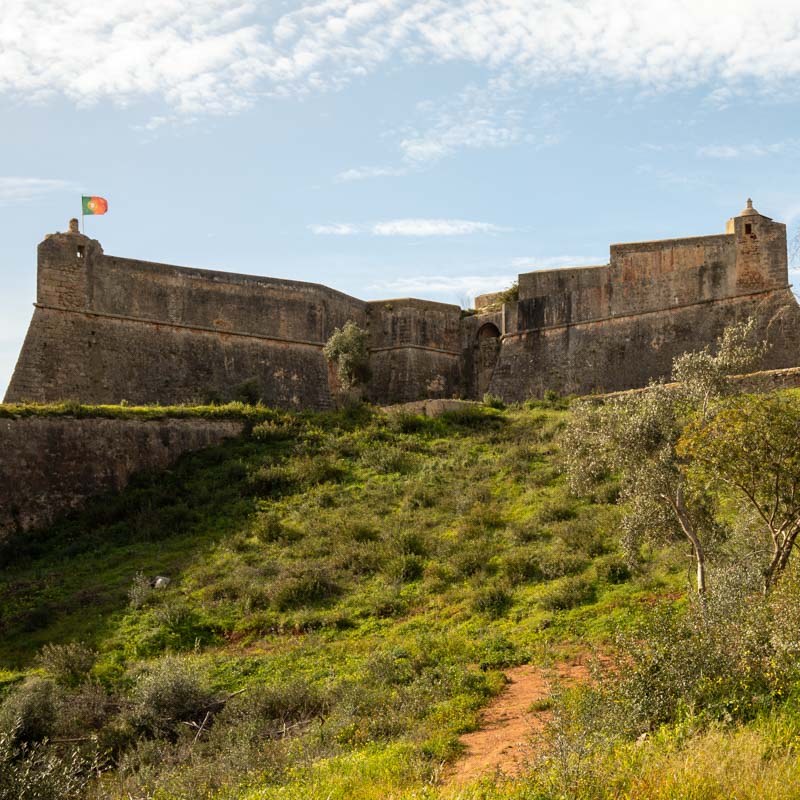
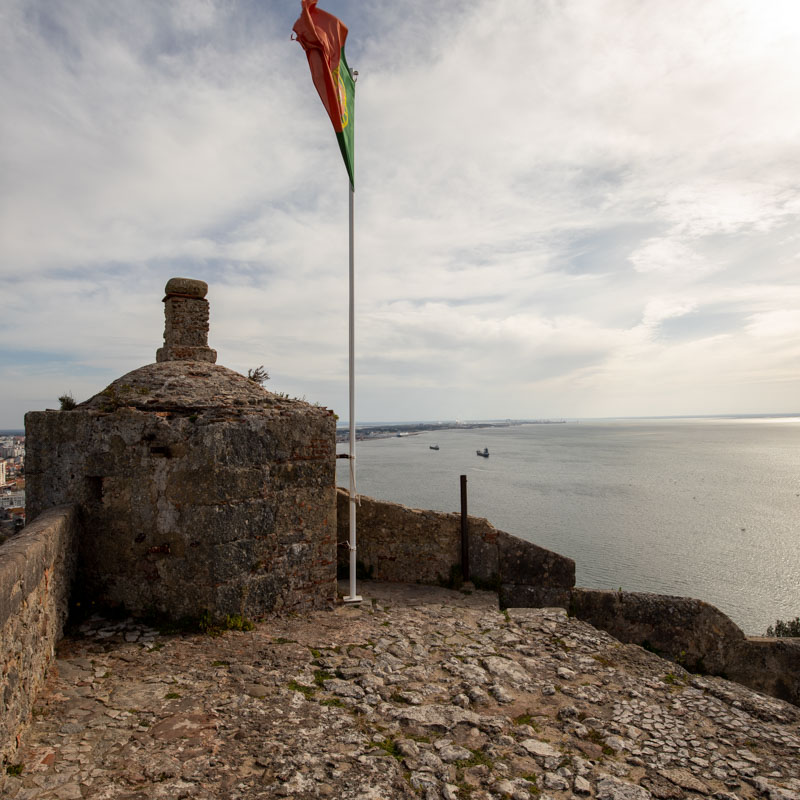
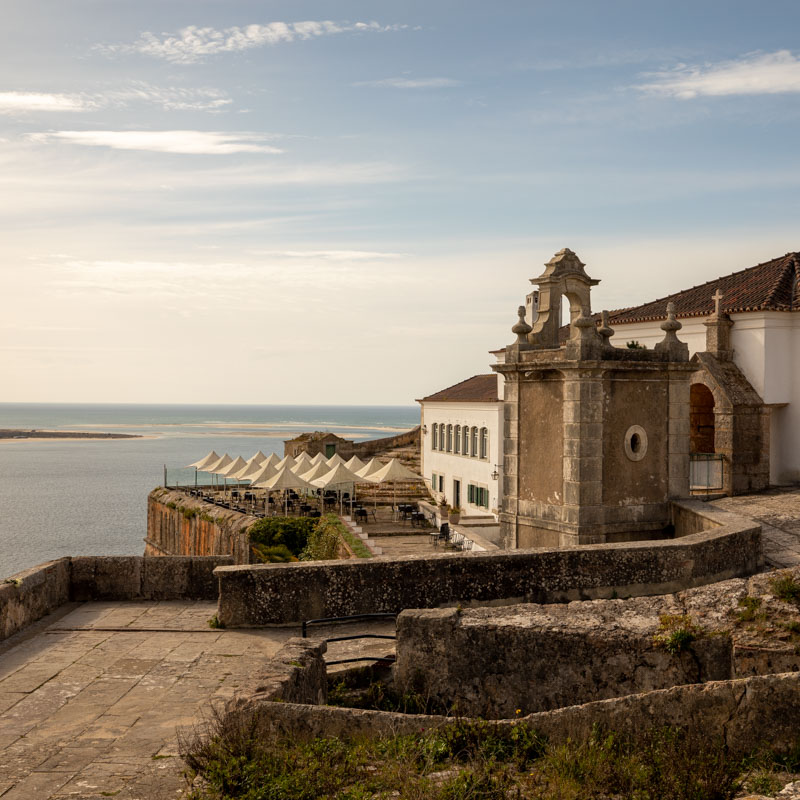
Perched on the hill above Setúbal, the Fort of São Filipe watches over both the Sado estuary and the city it was meant to keep under guard for centuries. It was commissioned by Philip I in the aftermath of the crisis of 1580, when the weakness of the town’s defences had become clear and control over Setúbal had gained new political importance. Its six-pointed star plan, fitted to the steep terrain, gives it the stern character of military architecture designed to deter. After the Restoration, the fort took on a different meaning and even served as a prison. Today, beyond the sweeping view over Setúbal, Tróia and the Arrábida hills, one detail deserves special attention: the small Baroque chapel, lined with blue-and-white tiles by Policarpo de Oliveira Bernardes, showing scenes from the life of Saint Philip. Few places reveal so clearly how war, power and landscape meet in a single setting.
Why it matters
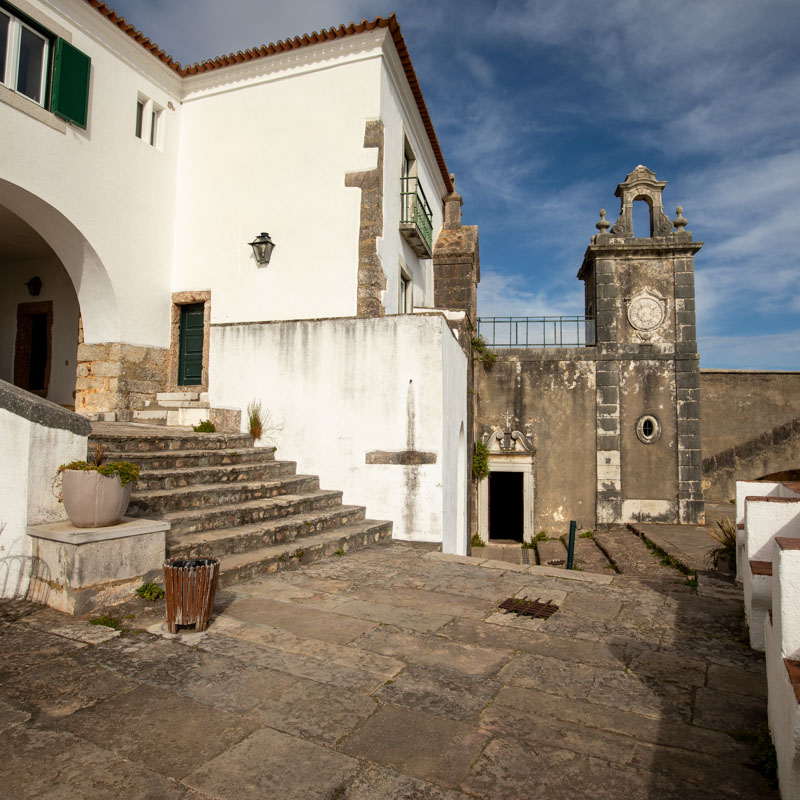
The Fort of São Filipe stands on a hill above Setúbal, the mouth of the Sado and the visual link with Tróia. Its construction began in 1582, by order of Philip I, at a time when the city and its port needed defence against attacks from the sea and political surveillance in a territory recently integrated into the Philippine monarchy. The heritage record attributes the 1583 design to Captain Fratino, although the building has had different readings and attributions over time. More than a simple coastal structure, the fortress asserted authority over the city and over the entrance to the river. After a fire in 1868, much of the inner structures was destroyed. In the 20th century, the enclosure was adapted as a pousada, but it preserved the military reading of the ensemble and the small Baroque chapel.
Architecture and history
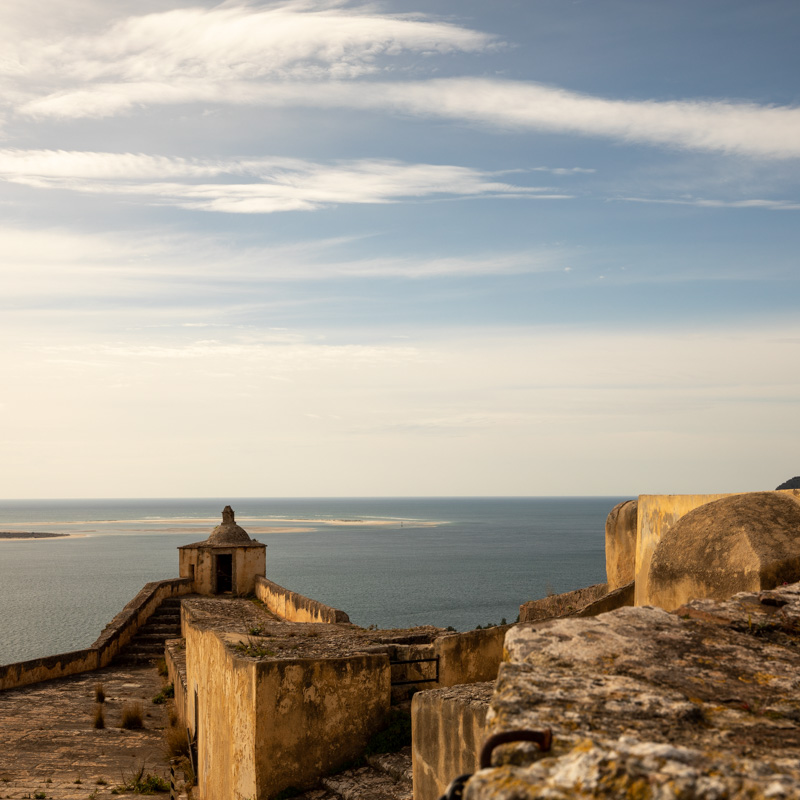
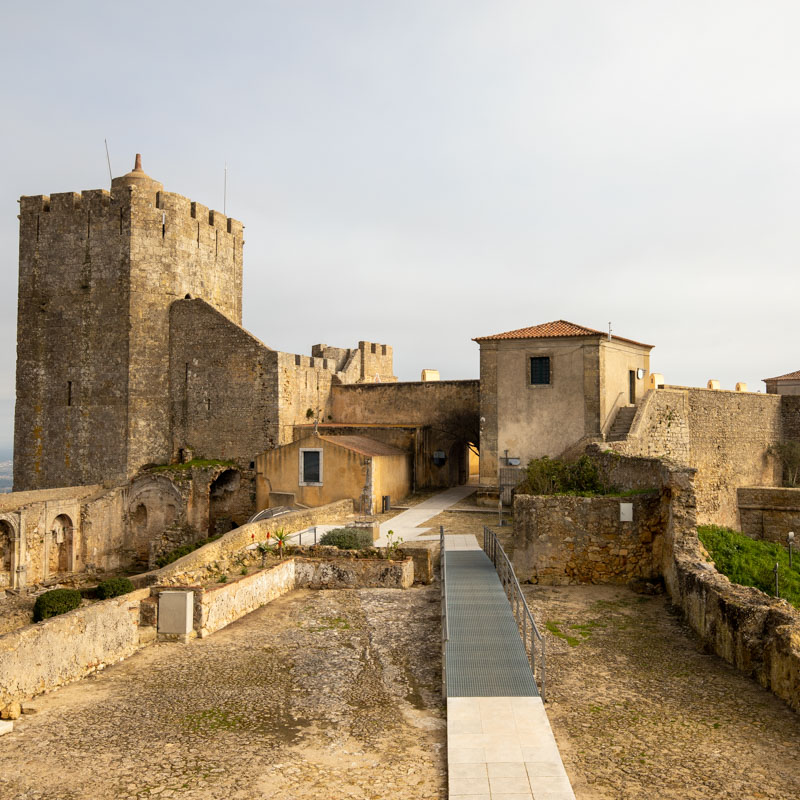
The six-pointed star plan results from an irregular polygonal form, adjusted to the sloping ground. Six bastions mark the angles and give the ensemble a clear defensive silhouette. On the north side, a second walled line reinforced the protection of the enclosure. The thick walls, austere entrances and sentry boxes explain, without lengthy discourse, the military function of the place: to control access, resist enemy fire and maintain observation over the river mouth. Inside the fortress, the chapel preserves a small, almost withdrawn scale, in contrast with the hardness of the stone masses. Its walls and vault are covered with blue-and-white tiles. Some panels narrate episodes from the life of Saint Philip; in the chancel, small Marian panels dated 1736 are signed by Policarpo de Oliveira Bernardes.
More context
The outer bastions are the best point from which to understand the site’s strategy: the city, the Sado mouth, the sea and the Tróia peninsula appear connected by the same defensive line. Notice how the plan does not seem regular as you walk along the walls; this irregularity comes from its adaptation to the hill and helps explain the fort’s visual strength. The sentry boxes and entrances should be seen as control features, not merely picturesque elements. The chapel deserves attention of its own, because it brings into a military architecture a very different religious and decorative language. The tile covering turns the small space into a Baroque document, with narrative, devotion and royal affirmation. The former adaptation as a pousada is also legible in the inner buildings and shows how the fortress continued to be reused after losing its original function.
Gallery