

Batalha · Leiria
Mosteiro da Batalha
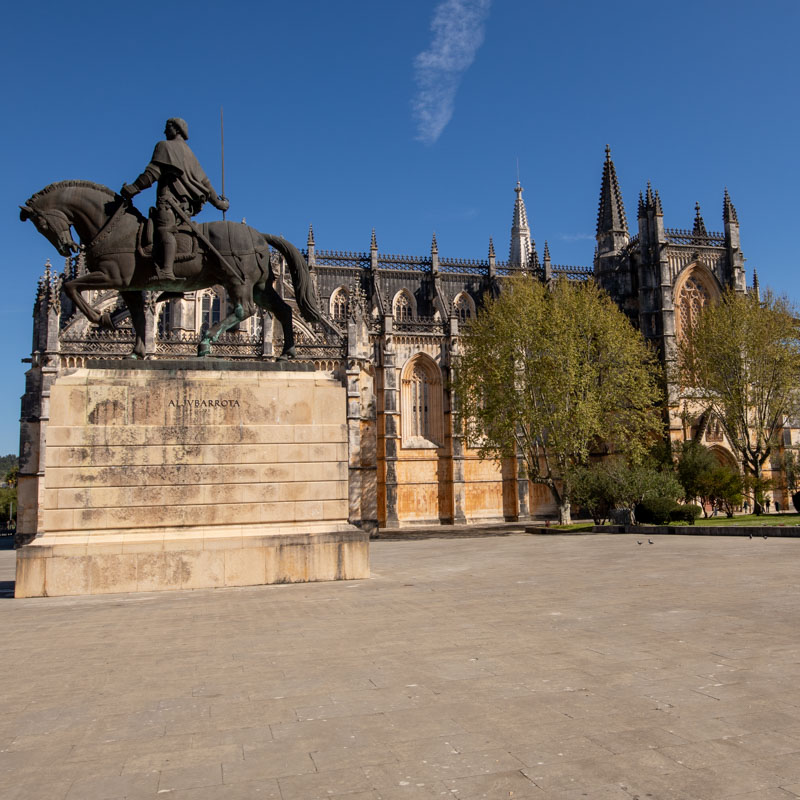
At the Monastery of Batalha, the memory of a victory was turned into stone. King João I ordered it to be built in fulfilment of the vow he made after Aljubarrota, and what began as an act of thanksgiving became, for more than a century and a half, the great building site of the Portuguese monarchy. Here the late Gothic and the Manueline styles took shape, yet the place impresses as much for its history as for its form: the soaring nave, the lace-like Royal Cloister and the Unfinished Chapels give the whole complex a solemn, restless beauty. In the Founder’s Chapel, the tomb of João I and Philippa of Lancaster, surrounded by the tombs of their children, also makes the monastery the symbolic heart of the Avis dynasty. Between convent silence, filtered light and golden stone, one understands why this monument is at once a memory of independence, a royal pantheon and one of the most striking creations of Portuguese art.
Why it matters
In the centre of the town of Batalha, the Monastery of Santa Maria da Vitória was born from a vow linked to Portuguese independence. After the victory of Aljubarrota, on 14 August 1385, King João I ordered the construction of a monastery dedicated to Saint Mary of Victory, with works beginning in 1388. The ensemble was given to the Dominicans and became, at the same time, a political memorial, a religious house and a royal pantheon. Construction continued for more than 150 years, which explains the transition from early Gothic to Manueline solutions and a few Renaissance details. The Founder’s Chapel and the Unfinished Chapels preserve the funerary memory of the Avis dynasty. Inscribed on the UNESCO World Heritage List in 1983, the monastery remains a place where national history can be read in stone, scale and silence.
Architecture and history
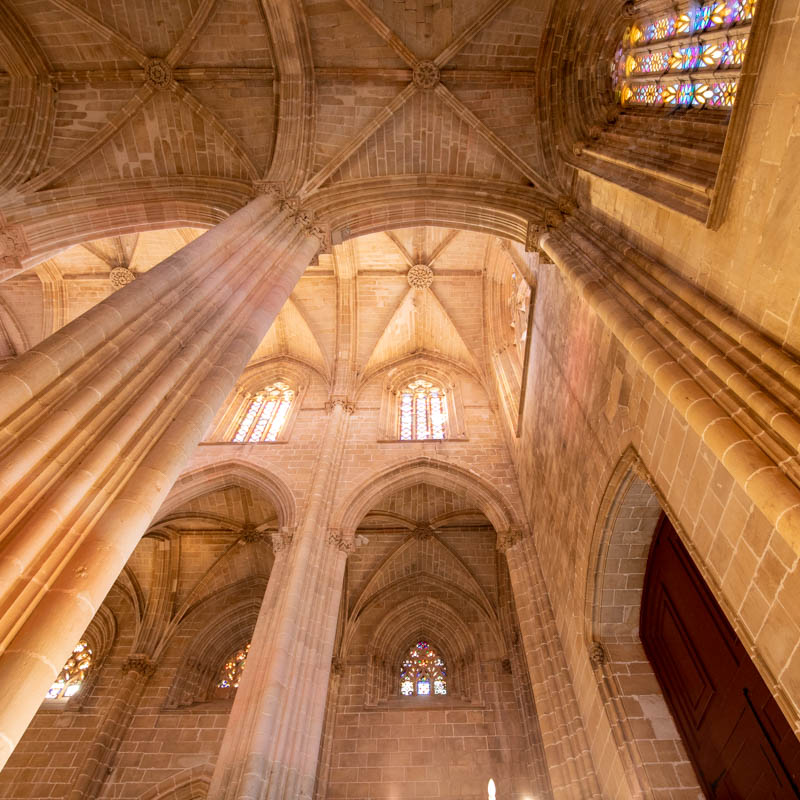
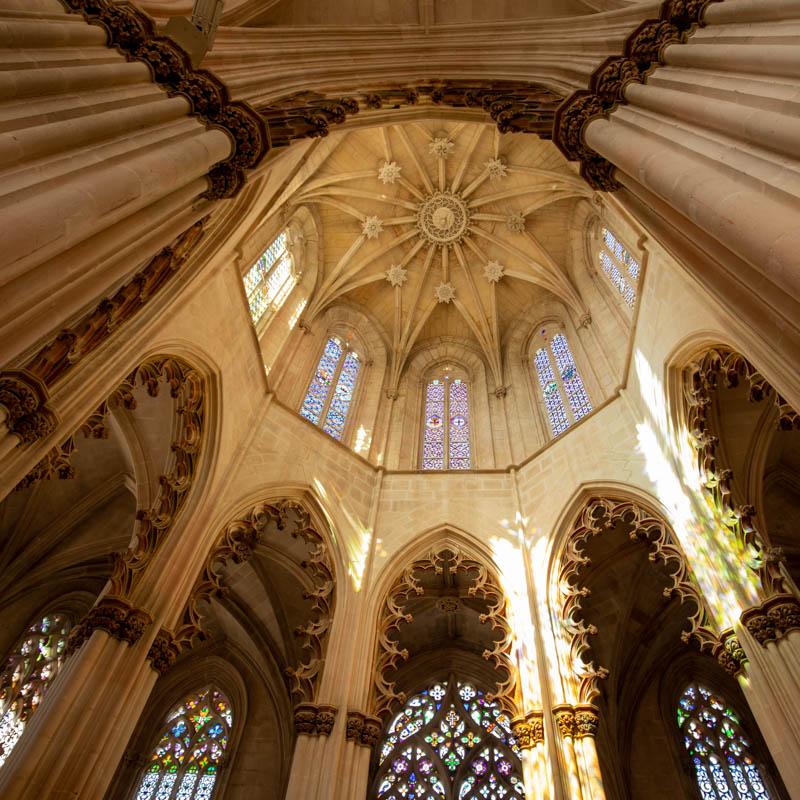
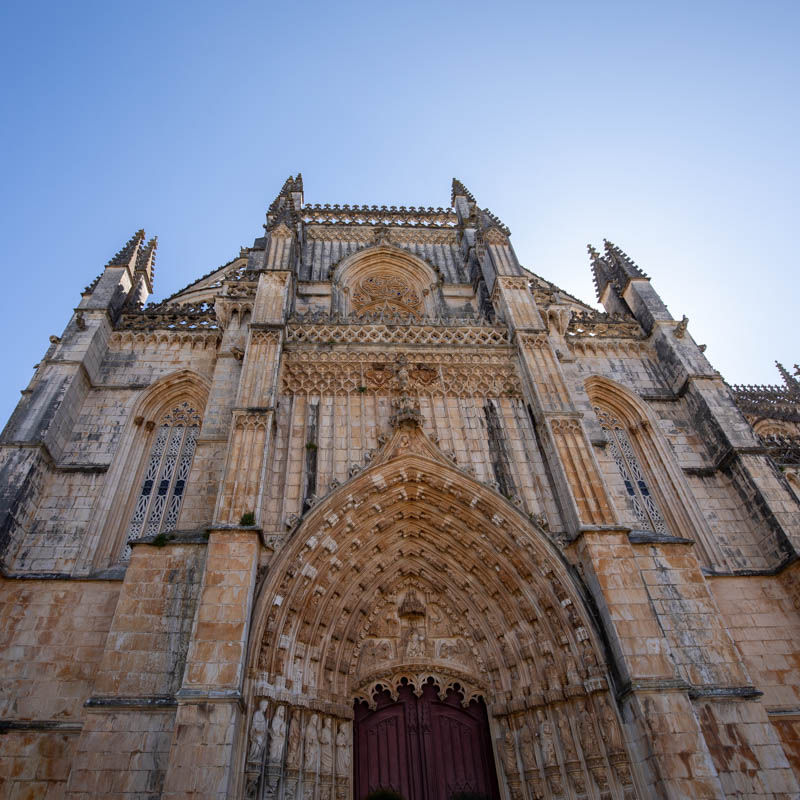
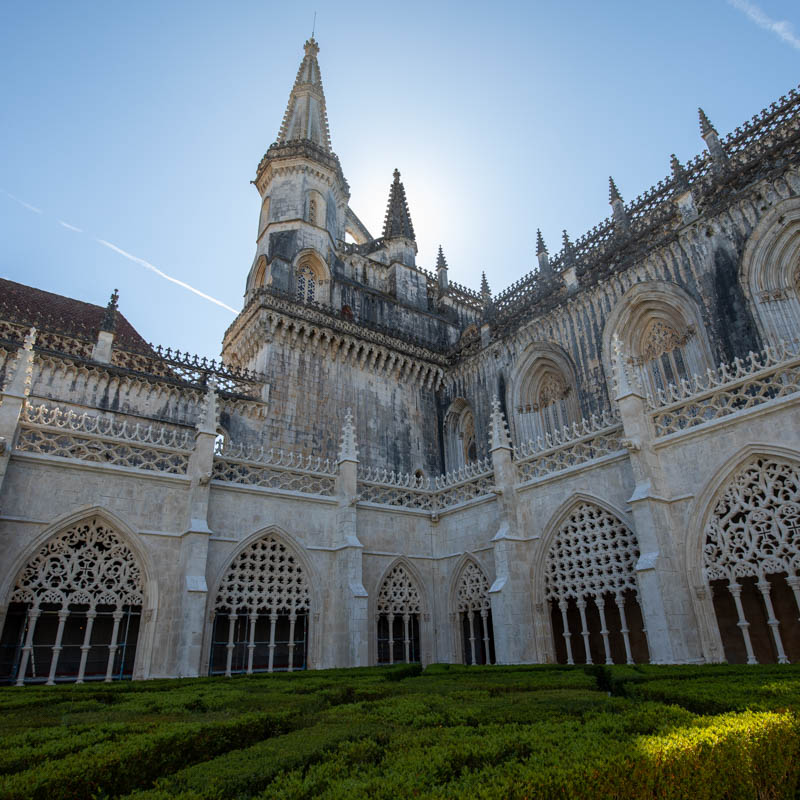
The church impresses through its high nave, broad arches and light filtered through the large windows. The Latin-cross plan and Gothic verticality lead the eye towards the chevet, while the west façade concentrates a rich sculptural programme, with apostles, Christ in Majesty, biblical figures and the Coronation of the Virgin. The Royal Cloister reveals another phase of the work: its lace-like arches, already marked by Manueline language, make the stone seem light. The Founder’s Chapel combines a square plan with a central octagonal space, where the tomb of King João I and Queen Philippa of Lancaster stands. In the Unfinished Chapels, begun as the pantheon of King Duarte, the absence of the great central roof makes the interrupted ambition of the project visible.
More context
The main portal prepares the reading of the monument: before entering, observe the sculpture as a kind of catechism in stone. In the Founder’s Chapel, notice how the tombs stand at the centre of the architecture, showing that this monastery was also conceived as dynastic memory. The Royal Cloister deserves a slow circuit, because light passes through the tracery and reveals the precision of the stonework. The Chapter House adds a more recent layer of national memory: since 1921, it has housed the evocation of the Unknown Soldier, lit by the Flame of the Homeland. In the Unfinished Chapels, look upwards and towards the outline open to the sky. This incompletion does not lessen the place; it helps explain the duration, ambition and changing priorities that marked the monastery’s construction.
Gallery