
Mosteiro de Alcobaça

Alcobaça · Leiria

Mosteiro de Alcobaça

MonasteryXIIReligious Architecture
Praça 25 de Abril, 2460-018 Alcobaça4.6 Rating · 17,14490 min

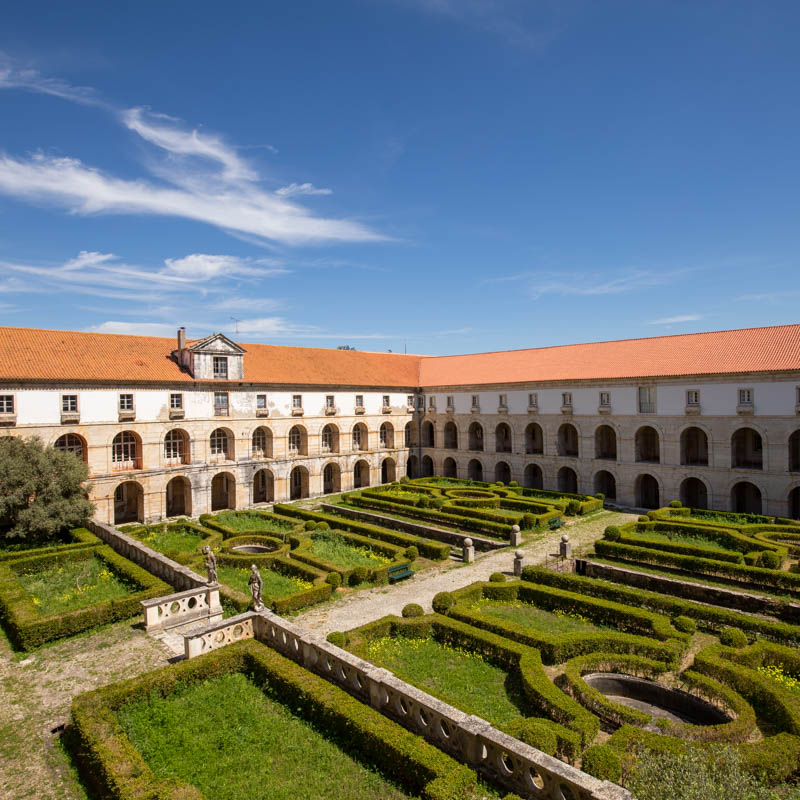
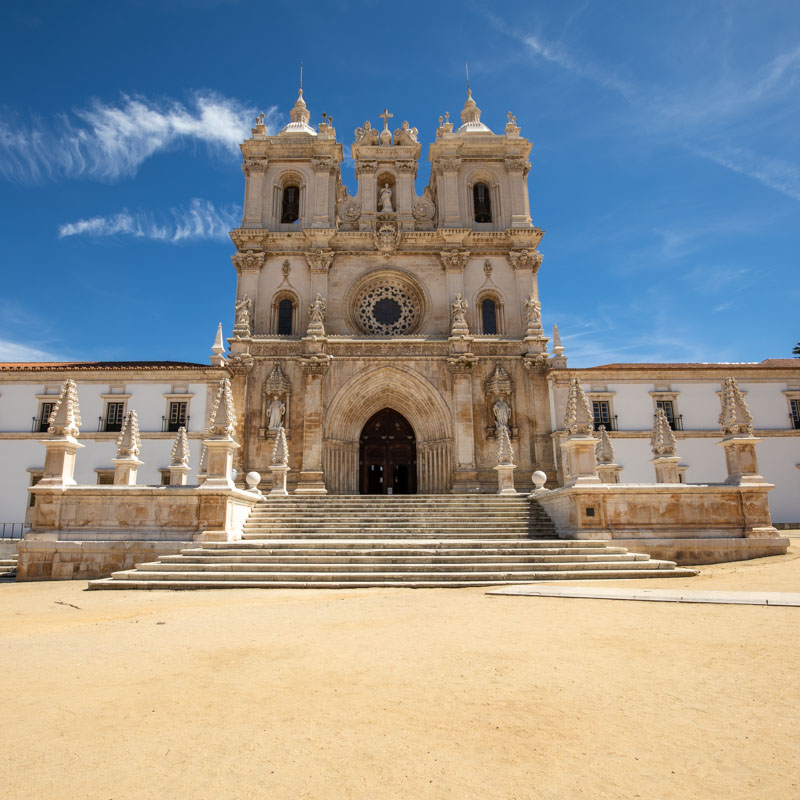
In Alcobaça, monumental scale rises from an ideal of discipline and silence. Founded in 1153 by King Afonso Henriques and entrusted to the Cistercians, the monastery became the order’s main house in Portugal and one of the most remarkable monastic complexes in Europe. Building began in 1178, and the church introduced the new Gothic language here with an almost severe clarity, faithful to the spirit of Cister. That austerity takes on another intensity before the tombs of King Pedro and Inês de Castro, fourteenth-century masterpieces in which love, death and Christian hope were carved with rare symbolic force. The monastery is also a complete organism, made up of cloister, refectory, chapter house and the famous eighteenth-century kitchen, where one senses how monastic life joined prayer, study and work. Between luminous stone and the order of its spaces, Alcobaça preserves the ambition of turning daily life into a form of eternity.

Why it matters

In Alcobaça, the Monastery of Santa Maria de Alcobaça was born in connection with the formation of the Portuguese kingdom. Its foundation dates from 1153, through the initiative of King Afonso Henriques and a donation to the Cistercian Order. Works began in 1178 and made the monastery one of the great Cistercian houses in Portugal, with strong royal protection and an important role in the settlement and organisation of the territory. The monastic community lived according to ideals of austerity, work, prayer and discipline, values that can still be sensed in the clarity of the spaces. The ensemble grew over centuries, receiving medieval dependencies and later constructions until the 18th century. Inscribed on the UNESCO World Heritage List in 1989, the monastery is now essential for understanding the relationship between royal power, religious life and architecture in Portugal.

Architecture and history

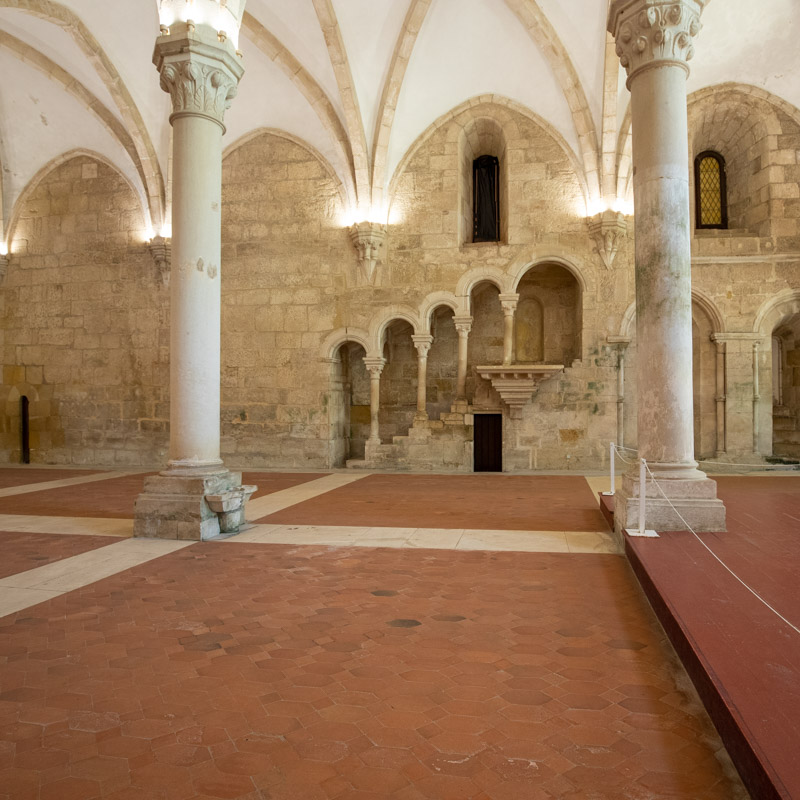
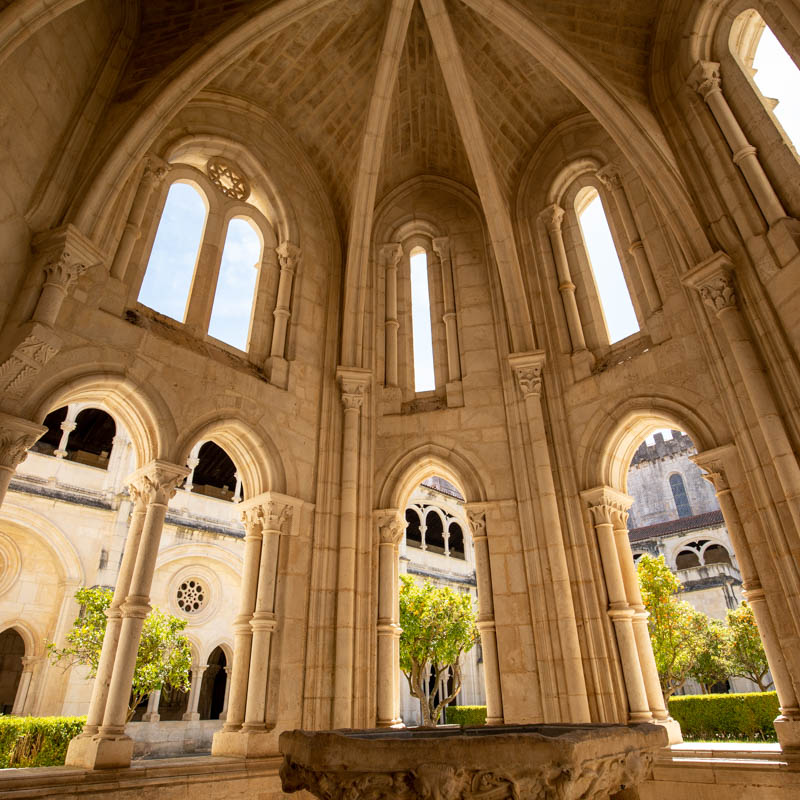
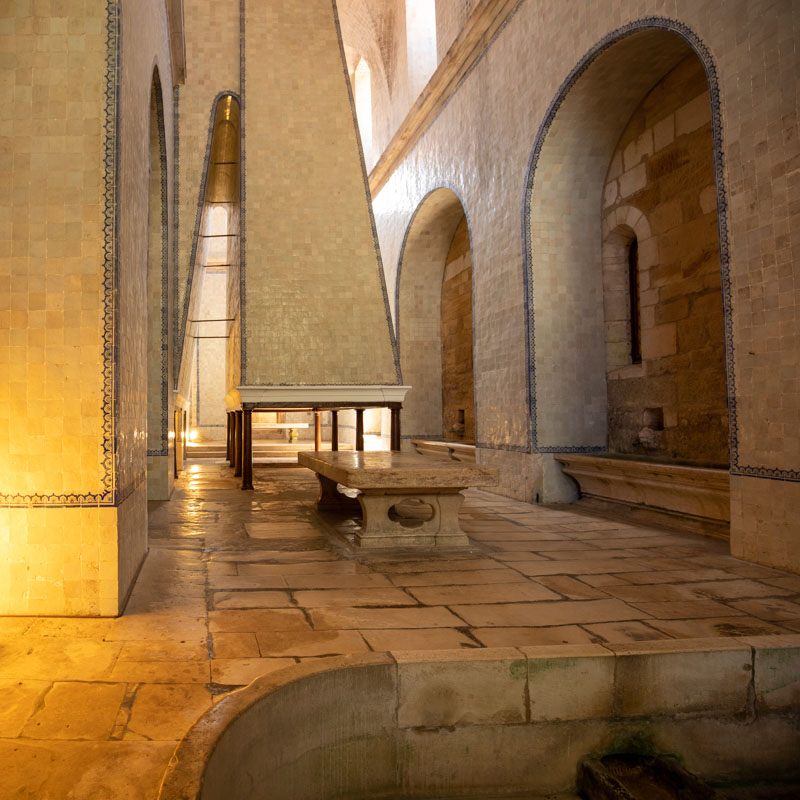
The nave of the church impresses through its height, pale stone and sense of rigour. The architecture follows the Cistercian spirit: few decorative distractions, clean lines and a scale that leads the eye towards the chevet. The works introduced into Portugal a Gothic language that was still new, visible in the pointed arches, the vaults and the luminous organisation of the space. The present façade combines elements from different periods, but the interior preserves the medieval sobriety more strongly. In the monastic dependencies, the cloister, chapter house, refectory, dormitory and kitchen show that the monastery was also a machine of collective life, organised for prayer, study, work, cooking, storage and hospitality. This functional dimension helps explain the grandeur of the ensemble beyond the church.

More context

The tombs of King Pedro I and Inês de Castro are the best-known point, but they deserve slow observation. Dating from the 14th century, they stand out for their Gothic sculpture and symbolic programme: on Inês’s tomb, look for the Last Judgement; on Pedro’s, the Wheel of Life. Their face-to-face placement reinforces the funerary and memorial reading. Then cross the church while paying attention to the light, the height of the naves and the contrast between austerity and monumentality. In the cloister, observe how circulation organises monastic life. The chapter house recalls the space of community decision-making. The refectory and the great 18th-century kitchen show the practical scale of the community. In Alcobaça, each room helps turn architecture into understandable everyday life.

Gallery

Mosteiro de Alcobaça 1
Mosteiro de Alcobaça 2
Mosteiro de Alcobaça 3
Mosteiro de Alcobaça 4
Mosteiro de Alcobaça 5

Nearby places

View all