Almada · Setúbal
Cristo Rei
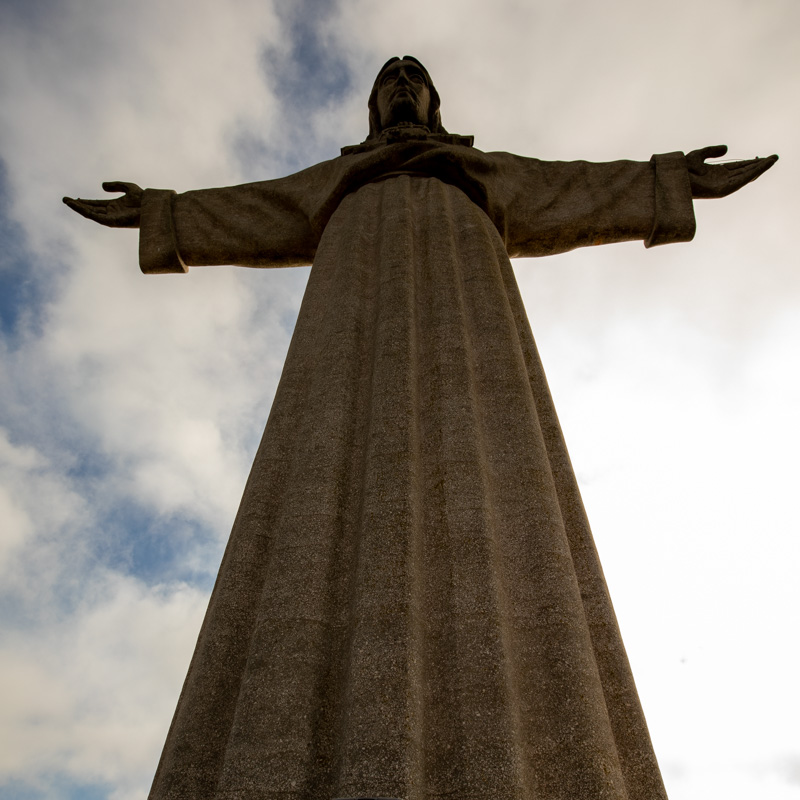
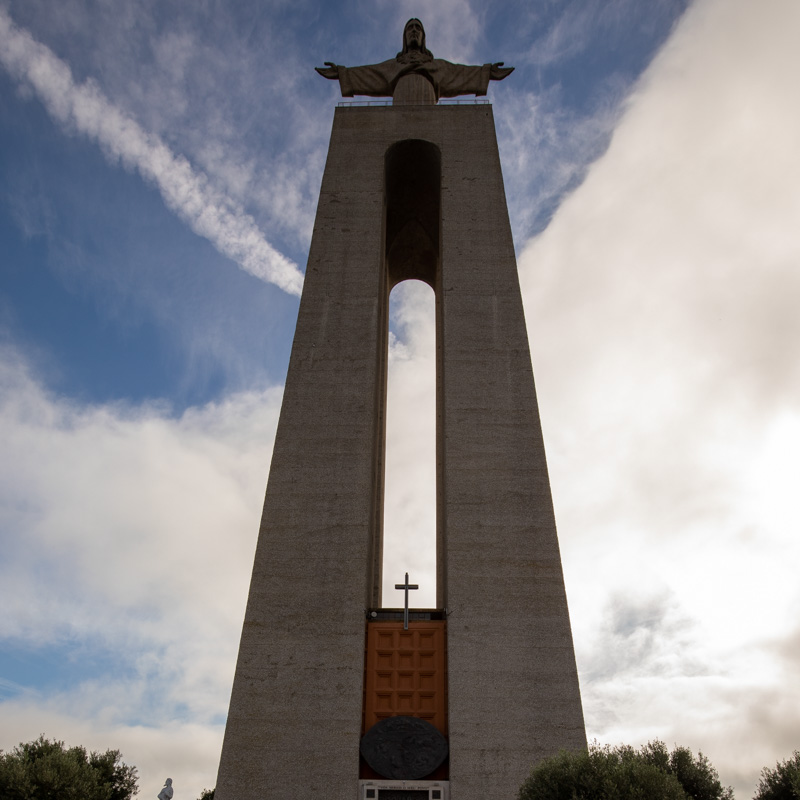
High above Pragal, with arms open over the Tagus, Cristo Rei has become one of the most striking shapes in Lisbon’s skyline, although it already belongs to Almada. The idea was born when Cardinal Cerejeira saw Christ the Redeemer in Rio de Janeiro, yet the monument gained its deepest meaning in the vow made by the Portuguese bishops in 1940: if the country were spared from the Second World War, a great sign of gratitude and peace would be raised here. Inaugurated in 1959, with a design by António Lino and sculpture by Francisco Franco, the ensemble joins the solemn scale of a sanctuary to the simple force of a figure turned towards the city. It is worth noticing the void between the four pillars and letting your eyes rise to the open arms before lingering at the viewpoint, where the Tagus and Lisbon seem to unfold in a single breath.
Why it matters
Christ the King rises above Pragal, in Almada, and grew from an idea that matured over several decades. In 1934, while flying over Rio de Janeiro, Cardinal-Patriarch Manuel Gonçalves Cerejeira was deeply impressed by Christ the Redeemer on Corcovado and conceived the wish to build, opposite Lisbon, a monument dedicated to the Sacred Heart of Jesus. The proposal gained national scope in 1937 and took on renewed meaning during the Second World War. In April 1940, the Portuguese bishops gathered in Fátima made a vow to build the monument if Portugal were spared the conflict. A long national fundraising campaign followed, the land was acquired in 1941, the foundation stone was laid in December 1949 and construction advanced throughout the 1950s. The monument was inaugurated on 17 May 1959 and has since stood as a religious sign, a memorial of gratitude for peace and a dominant image of the south bank of the Tagus.
Architecture and history
Architecturally, the complex is striking for its formal clarity and scale. The monument was designed by the architect António Lino, with engineering by D. Francisco de Mello e Castro, and the figure of Christ is the work of the sculptor Francisco Franco. Built in reinforced concrete, the whole structure rises to 110 metres, of which 82 belong to the pedestal and 28 to the statue. The base measures 25 metres on each side and rests on a great portico formed by four pillars linked by arches, a solution that strengthens the vertical thrust and gives the ensemble a highly recognisable monumental presence. The figure of Christ opens its arms over the Tagus in a gesture that is both symbolic and visually effective, designed to stand out on the horizon. Inside the four pillars lies the Chapel of Our Lady of Peace, conceived as the spiritual core of the monument. The language of the whole is austere, modern and monumental, without decorative excess, which adds to the isolated force of its silhouette above the landscape.
More context
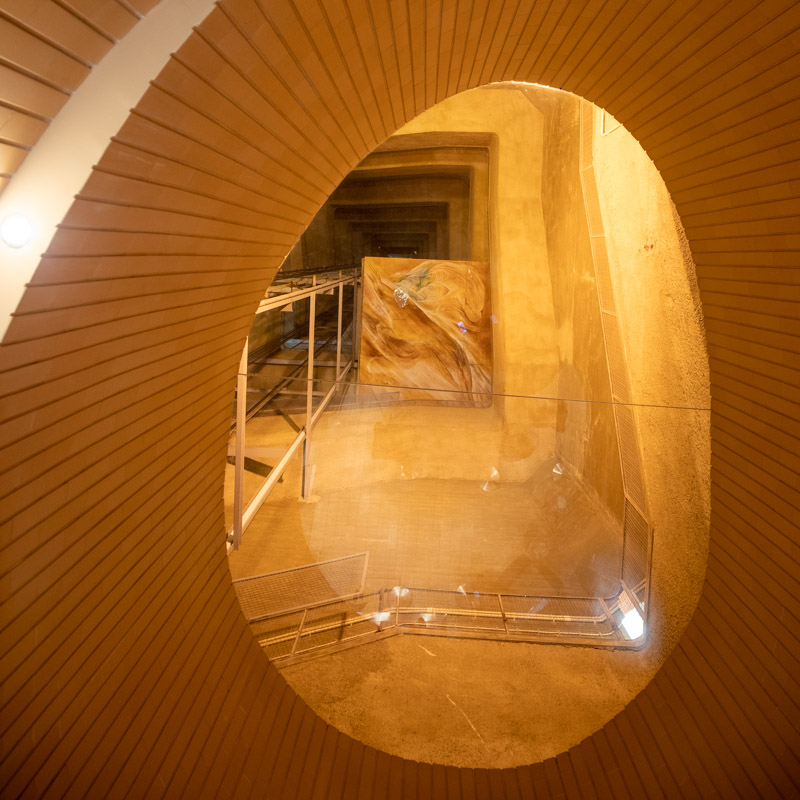
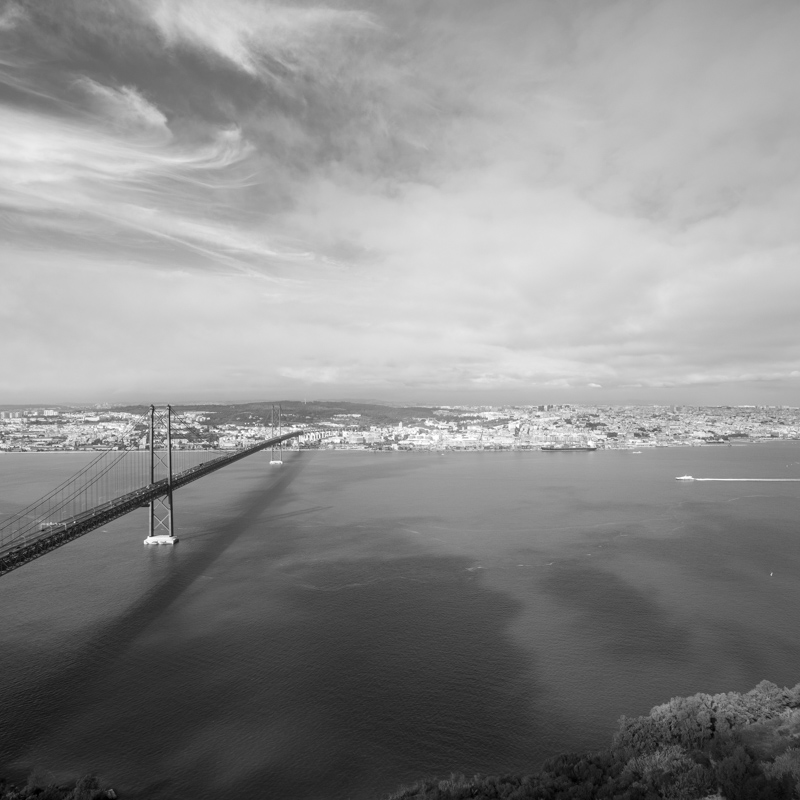
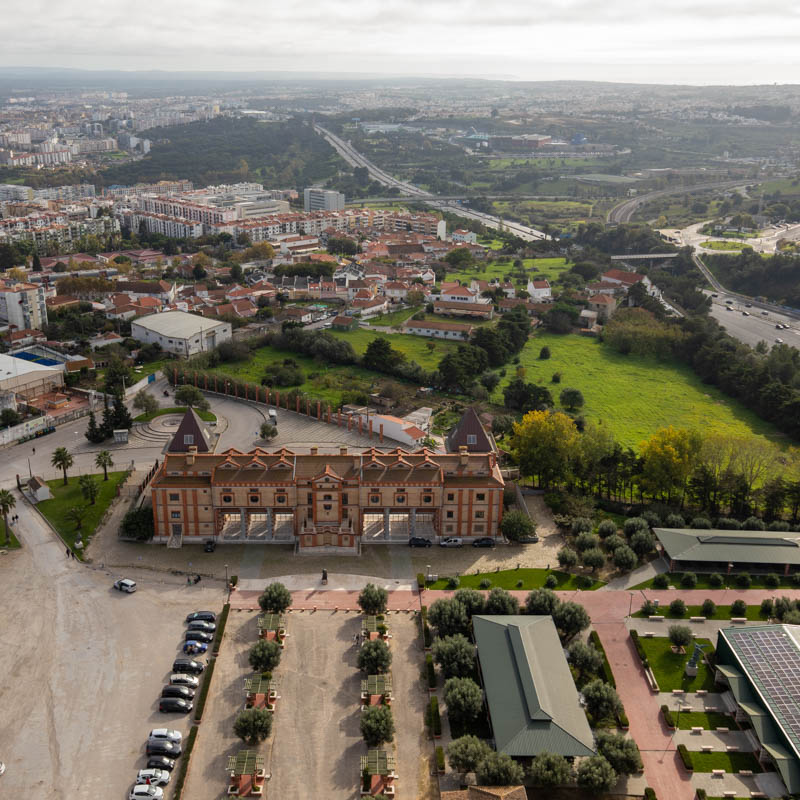
During a visit, it is worth beginning in the forecourt, because that is where the monument’s position on the hill and its relationship with Lisbon become clearest. In front of the pedestal stands the sculpture of the Immaculate Heart of Mary, and along the viewpoint runs a Way of the Cross marked by iron crosses and bronze reliefs. Inside, the Chapel of Our Lady of Peace deserves attention for its quiet atmosphere and for the artistic programme that reinforces the shrine’s devotional meaning. The ascent then leads to a circular space and, higher up, to the Chapel of the Confidants of the Sacred Heart of Jesus, inaugurated in 2008. The upper terrace, at 84 metres in height, is the decisive point of the visit. From there, the geography of the region opens up with unusual clarity, bringing Lisbon, the Tagus, the 25 April Bridge, the Sintra hills, Arrábida and Cape Espichel into the same horizon. It is this union of monument, landscape and religious symbolism that makes Christ the King so distinctive.
Gallery