Almada · Setúbal
Fragata D. Fernando II e Glória
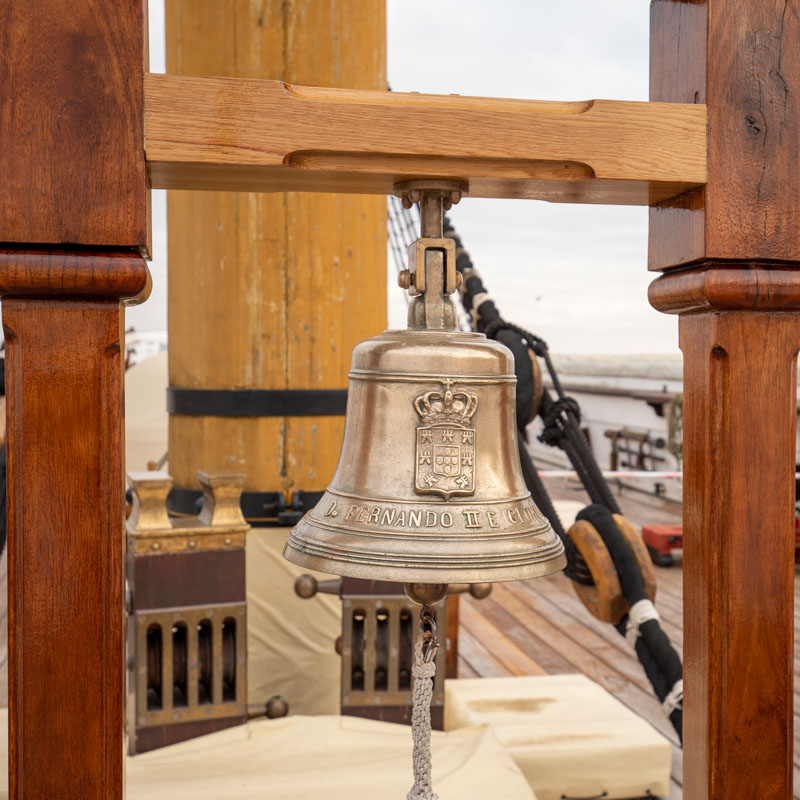
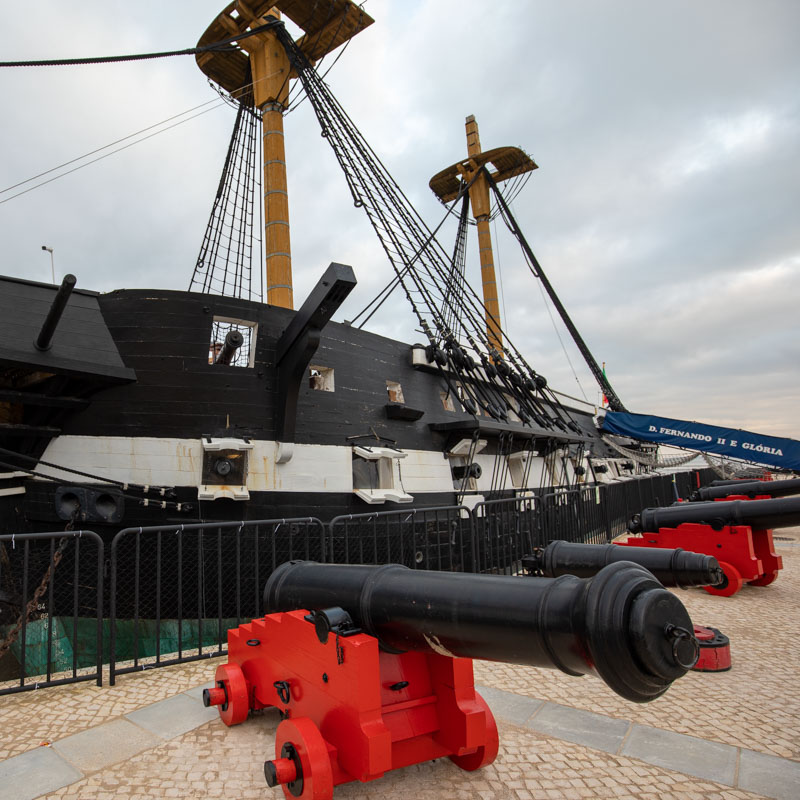
Some ships seem to contain an entire empire within them, and the frigate D. Fernando II e Glória is one of them. Built in Daman and launched in 1843, it was the last great ship of the Portuguese Navy to sail entirely under canvas and the last to serve the India Run. Over 33 years it covered more than 100,000 nautical miles in a succession of voyages linking Lisbon to Portugal’s overseas world. It later served as the Naval Artillery School, housed a social institution for disadvantaged boys and, in 1963, was nearly lost in a fire that left it half-submerged. Restored and opened to the public in 1998, it returned as a museum ship. During a visit, it is worth lingering on the main deck, the gun deck and the cabins: among the masts, the teak wood and the cramped spaces, the hardship and scale of life on board become easier to grasp. Remarkably, it never entered combat.
Why it matters
The origins of the frigate D. Fernando II e Glória go back to 1821, when Admiral Garcez Palha proposed to King João VI the construction of a new frigate. Approval came in 1824, and work moved forward in the royal yards of Daman, with funding linked to tobacco revenues and subsidies from the government of Macau. Built in teak from Nagar-Aveli, she was launched on 22 October 1843 and towed to Goa, where she was fitted out and armed. Her maiden voyage, between Goa and Lisbon, took place in 1845. This ship was the last major vessel built in Daman, the last ship of the Portuguese Navy to sail exclusively under canvas, and the final vessel of the India Run. Her name joins King Ferdinand II with the reference to Glory, associated both with Queen Maria II’s name and with the devotion to Our Lady of Glory in Goa. Between 1845 and 1878 she sailed more than 100,000 nautical miles, served in transport missions and later functioned as the Naval Artillery School. After the fire of 1963, she was restored between 1992 and 1998 and became a museum ship.
Architecture and history
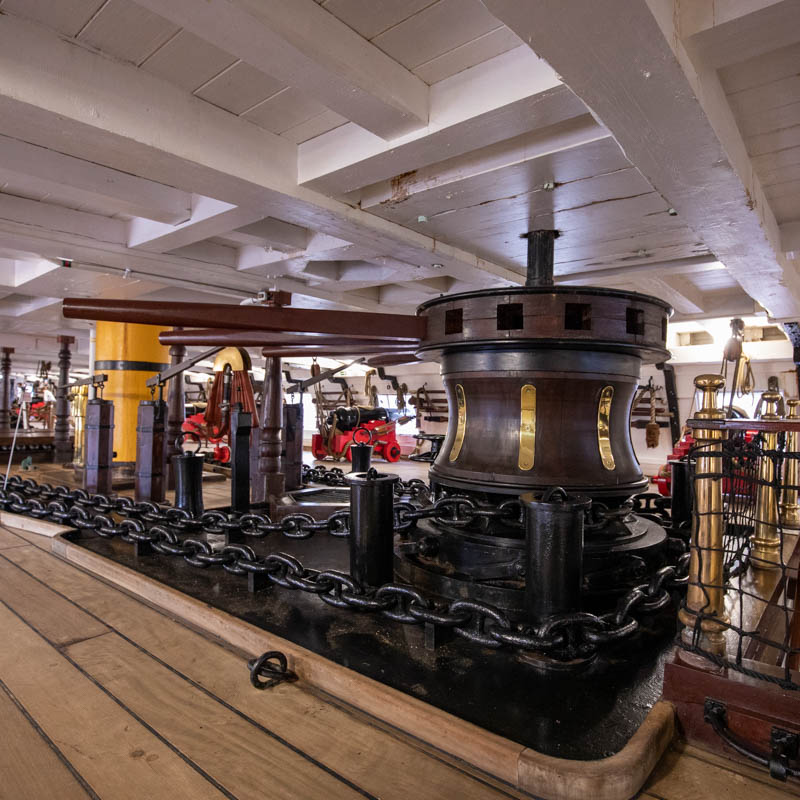
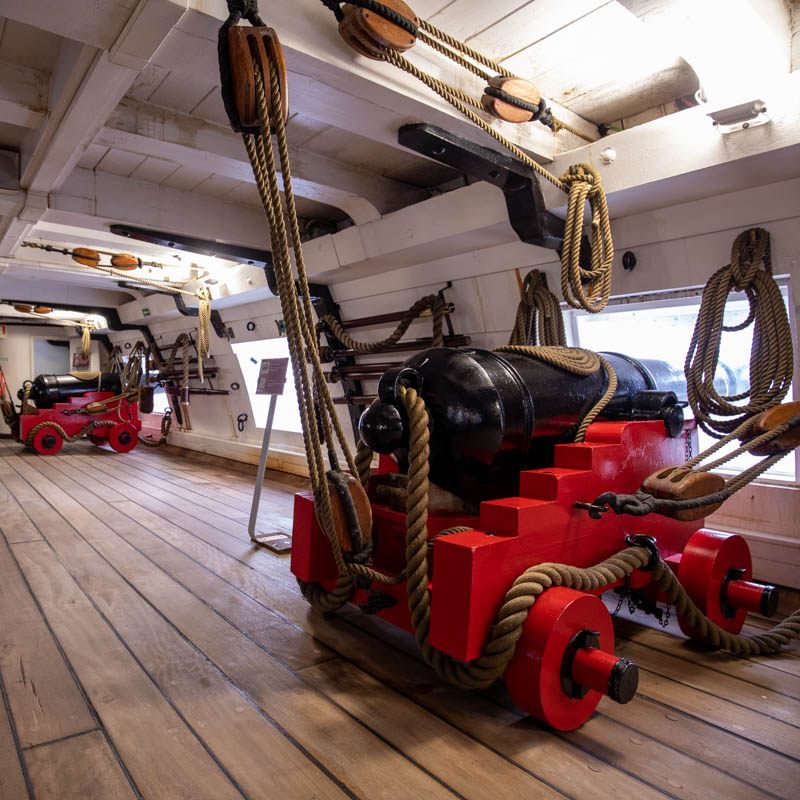
The frigate’s architectural singularity lies in her naval engineering. Rigged as a full-rigged sailing ship, she presents a long and balanced profile shaped by the bowsprit, the foremast, the mainmast and the after mast known as the gata. She measures 83.4 metres in overall length, 12.8 metres in beam at deck level, and exceeds 1,849 tonnes. Her hull had a copper-sheathed bottom, an important solution for protecting the timber and improving performance on long voyages. The internal structure is arranged over four levels with distinct functions. On the upper deck, manoeuvre and navigation took place. The battery deck held the heavier artillery and the commander’s quarters. The lower deck included the officers’ mess, the dining area and the sleeping spaces for crew and passengers. The hold stored cargo, water, fuel, gunpowder and provisions. Built to carry 50 guns, with 28 on the battery deck and 22 on the upper deck, the frigate combines the military logic of a warship with the practical adaptation required for missions that were mainly concerned with transport.
More context
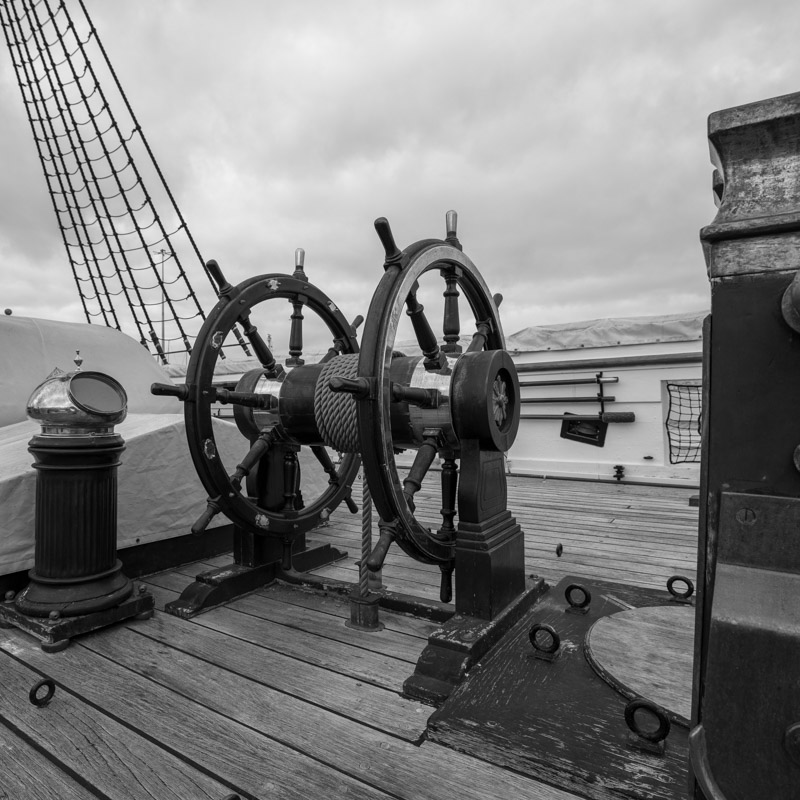
The upper deck immediately reveals the scale of the ship and the complexity of sailing navigation. From there, the alignment of the masts, the web of ropes and the longitudinal organisation that gave coherence to every manoeuvre become especially clear. The battery deck deserves close attention because it shows where the heavier artillery was placed and where the commander’s quarters were also installed, bringing military function and command together on the same level. The lower deck helps visitors imagine everyday life on board, with the officers’ mess and the spaces used as dining room and sleeping quarters for passengers and crew. The hold recalls the frigate’s logistical role, essential for carrying cargo, water, fuel, gunpowder and provisions on long voyages. Outside, the length of the hull, the height of the sides and the projecting bow reveal the vessel’s ocean-going character. The fact that she is now preserved in dry dock, in Cacilhas, makes the volume and structure of this rare witness to the Portuguese nineteenth-century navy even easier to read.
Gallery