Lourinhã · Lisboa
Brickopolis
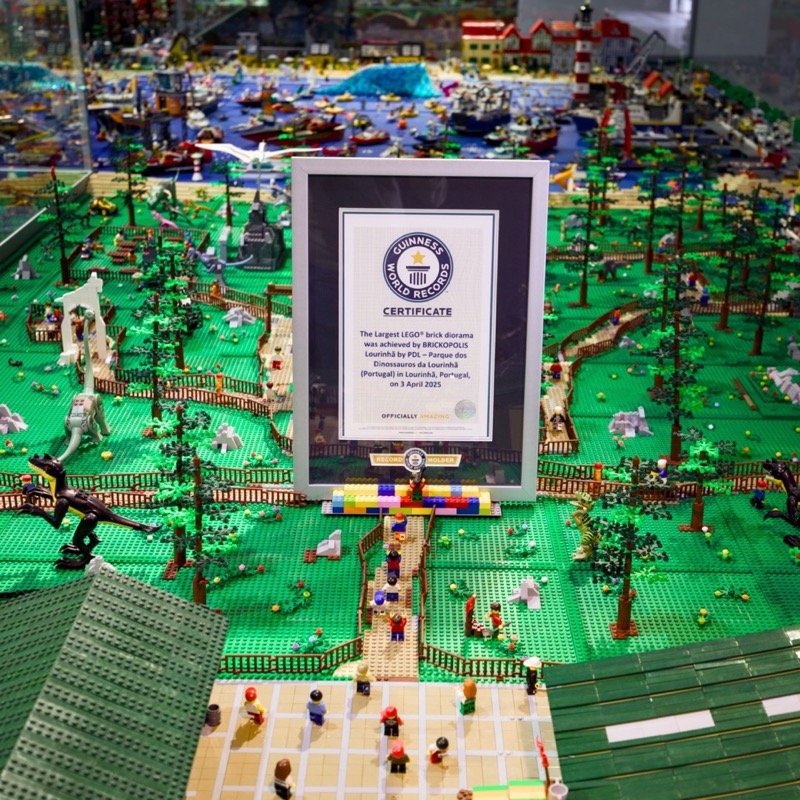
Brickopolis Lourinhã, in Abelheira, transforms LEGO® bricks into a playful and meticulous reading of Portugal in miniature. The permanent exhibition includes the LEGO® brick diorama recognised by Guinness World Records as the largest in the world: a 70.614-square-metre construction, achieved on 3 April 2025 by Brickopolis Lourinhã, from PDL — Parque dos Dinossauros da Lourinhã. The ensemble features Portuguese places and references, such as the great wave of Nazaré, Lisbon Airport in the 1950s, the houses of Costa Nova and Dino Parque Lourinhã. Its scale impresses through detail: the record registered by Guinness identifies 239,444 bricks, 366 vehicles, 176 trees and 2,328 flowers. Among streets, buildings, figures and successive scenes, Brickopolis presents creativity as a way of observing the territory.
Why it matters
Brickopolis is a miniature city built with millions of LEGO® bricks, housed in a covered pavilion next to Dino Parque Lourinhã, in western Portugal. Opened in May 2024, it grew out of the desire to transform a vast private construction-brick collection into a permanent exhibition accessible to all. The central idea is to place visitors "inside" a miniature city, walking through streets, squares, beaches and fields recreated brick by brick. The project was conceived as an immersive building-block experience, with around five million pieces occupying roughly 700 m² of exhibition space, of which more than 120 m² correspond to the continuous city itself. Along the route, visitors encounter urban scenes, rural landscapes, industrial zones, leisure spaces and several emblematic Portuguese locations, combining imagination with close observation of everyday life. From the outset, Brickopolis has also had an educational dimension, bringing topics such as urban planning, mobility, energy and citizenship closer to school audiences. In April 2025 the exhibition gained international visibility when it received the Guinness World Records certificate for the largest LEGO® diorama in the world, measuring 70.614 m² devoted to a detailed representation of Portugal. This achievement consolidated Brickopolis as one of the largest construction-brick minicities currently in existence and reinforced Lourinhã’s role as a family destination, complementing a visit to Dino Parque.
Architecture and history
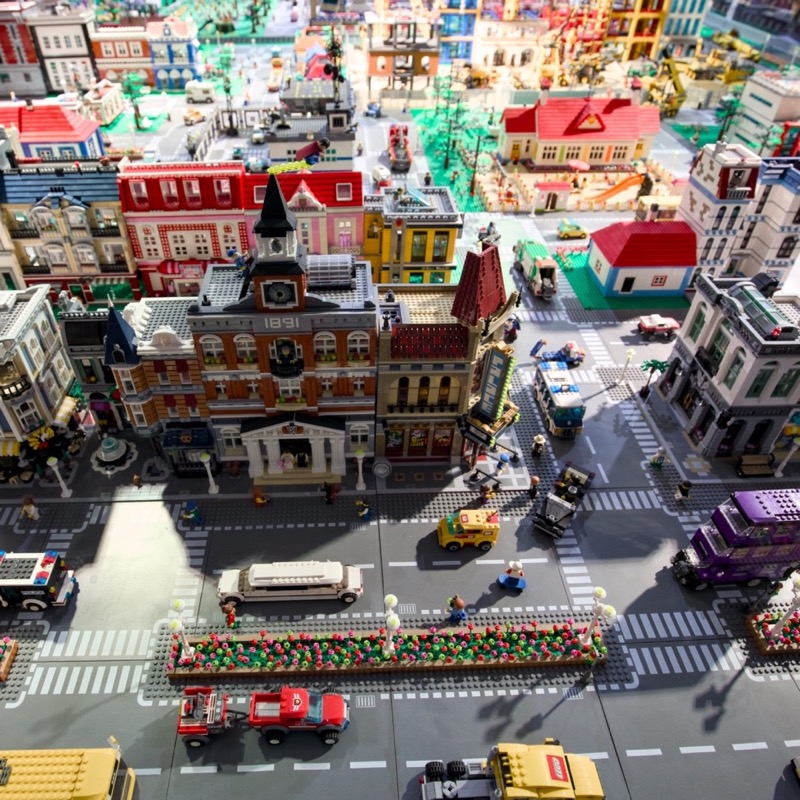
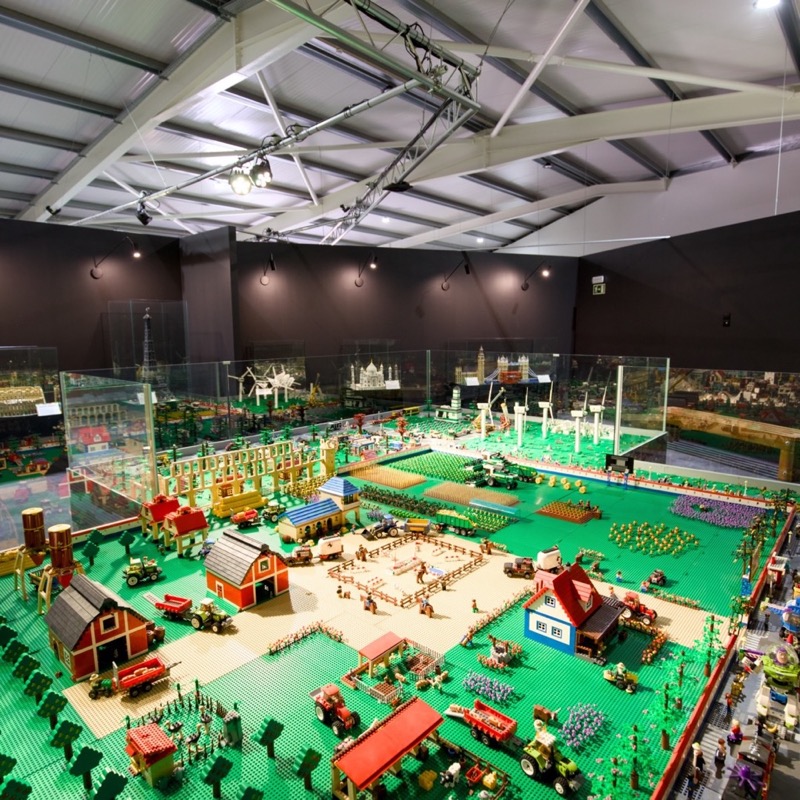
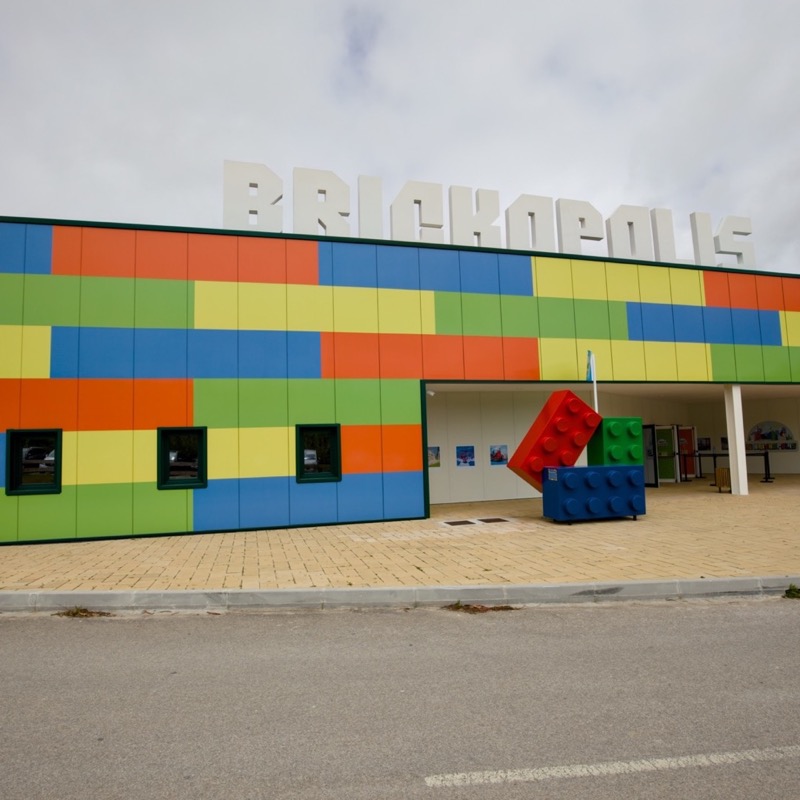
Brickopolis occupies a large pavilion with a simple rectangular floor plan, whose exterior cladding in coloured panels immediately evokes the LEGO® universe. The facades, covered with bright horizontal "bricks", stand out from the surrounding landscape and function as a visual calling card for the venue. The "Brickopolis" name is visible from afar on the roofline, while access is via landscaped areas and walkways linking the pavilion to the rest of the Dino Parque complex. Inside, the route is organised as a continuous circuit through several sections. The main miniature city is laid out on platforms at eye level, allowing visitors to examine in detail blocks of buildings, junctions, squares and railway lines. The built surface, with over 120 m², is structured into an urban grid, coastal zones with beach and harbour, agricultural areas and leisure spaces, with hundreds of different buildings, thousands of minifigures and a multitude of vehicles. Lighting systems, sound and moving elements create a sense of day and night, traffic and ongoing activities. Around the city, other areas complete the exhibition: rooms with large models of engineering and architecture, such as bridges and historical monuments, and sections devoted to "imaginary worlds" inspired by fantasy, science-fiction or pirate themes. The Playzone Brickopolis, with building tables, tracks for custom-built cars and challenge areas, extends the idea of a "factory of imagination", allowing visitors to experience directly the principles of construction and creativity that underpin the exhibition.
More context
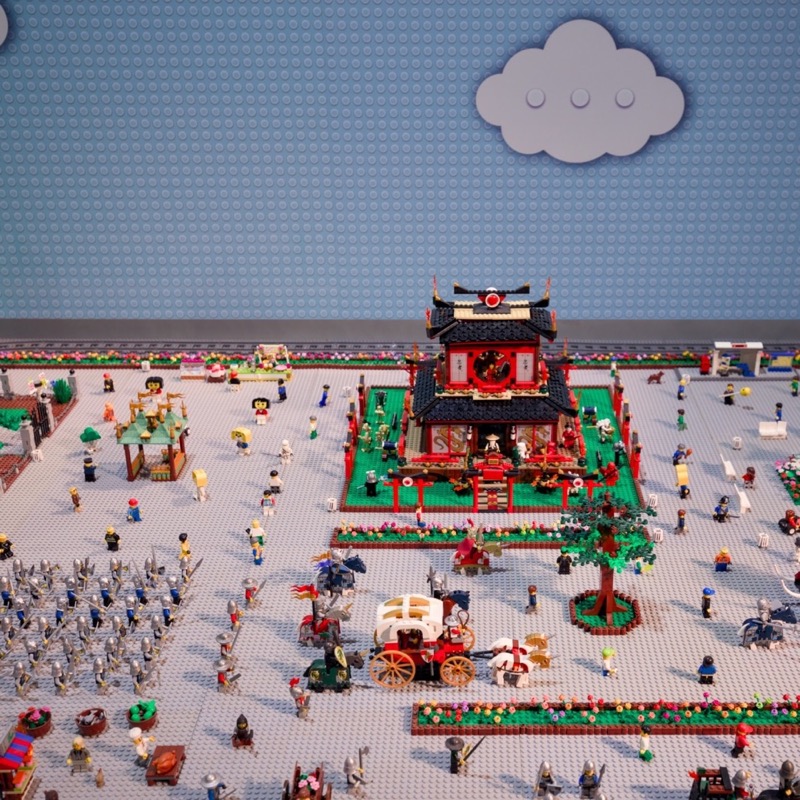
A visit usually starts with an overall view of the Brickopolis city, where it is worth spending a few minutes to understand how the space is organised: residential neighbourhoods, historic centre, commercial districts, funfair, beach, harbour and farmland. Among the many details, the large diorama dedicated to Portugal stands out, and it was this section that earned the exhibition its world record. Here visitors can look for miniatures of places such as Dino Parque Lourinhã, the giant wave of Nazaré, the striped houses of Costa Nova, medieval re-enactments or Lisbon airport in the 1950s. Next, it is worth exploring the thematic sections at a slower pace. In the rooms devoted to "imaginary worlds" there are scenes inspired by film sagas, futuristic cities, pirate bays or Wild West settings, showing other building possibilities using the same bricks. In the areas focused on major monuments, models of iconic structures from several countries are displayed, such as suspension bridges, temples and palaces, offering an almost "encyclopaedic" overview of architecture in miniature form. Finally, the Playzone Brickopolis deserves time in its own right, especially for families and school groups. Here, building tables, simple engineering challenges, tracks for visitor-built cars and free-play areas encourage experimentation and the re-creation, on a small scale, of elements seen in the exhibition. In educational contexts, guided activities often use the miniature city to explore ideas of urban planning, sustainable mobility or resource management, making Brickopolis both a leisure venue and a practical teaching tool.
Gallery