Castelo de Óbidos

Óbidos · Leiria

Castelo de Óbidos

CastleXIIMilitary Architecture
Rua Josefa de Óbidos, 2510-001 Óbidos4.7 Rating · 40,087120 min

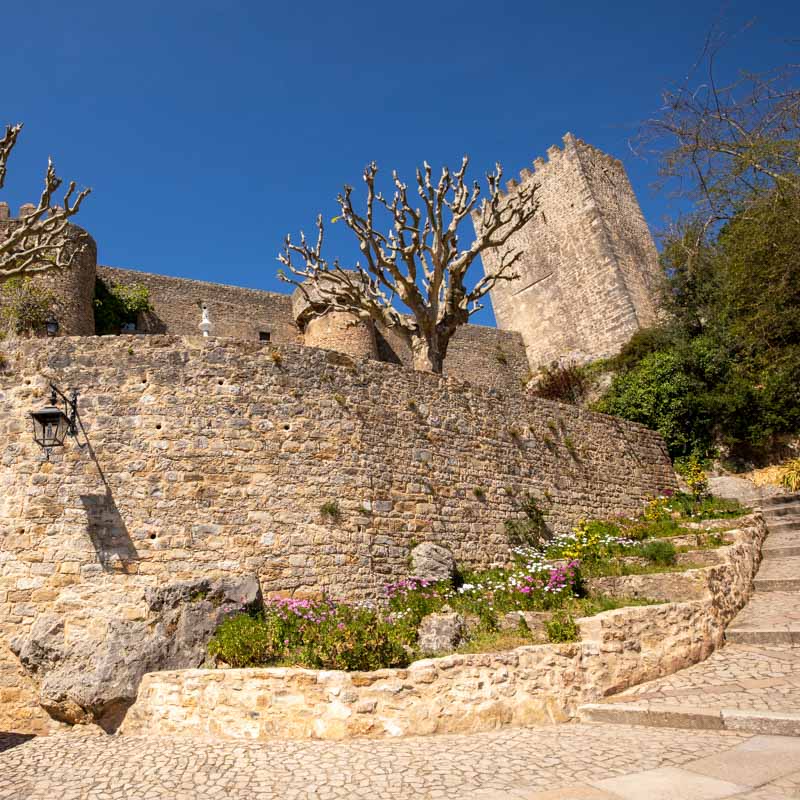
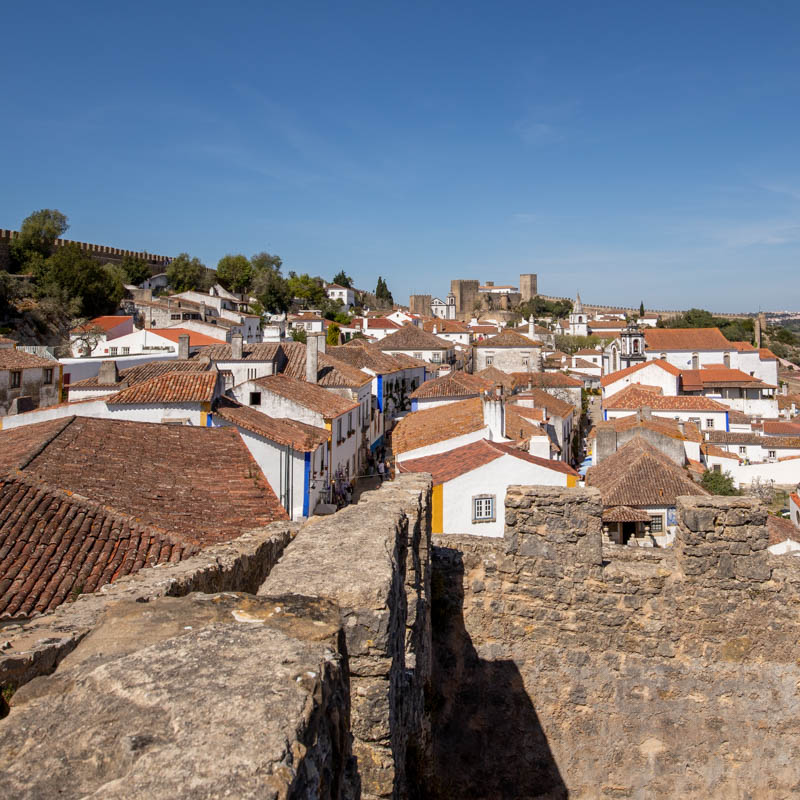
In Óbidos, the castle does not merely dominate the town: it almost merges with it. Raised on an ancient fortified site, consolidated in the Muslim period and taken by the Christians in 1148, it was enlarged by several kings, above all Dinis and Fernando, until it gained the ring of walls that still shapes the skyline today. In 1210, the town passed to the House of the Queens, and the castle also became a residence sought by the court, leaving Óbidos with a very distinctive royal memory. In the Paço dos Alcaides, the Manueline windows recall that palatial dimension, while the ramparts reveal how fortress and houses form a single body. There is, however, a less obvious detail: part of the medieval image that captivates visitors today was also fixed by twentieth-century restorations. Perhaps that is why Óbidos is so striking: it seems untouched, yet it is also a patient construction of memory.

Why it matters

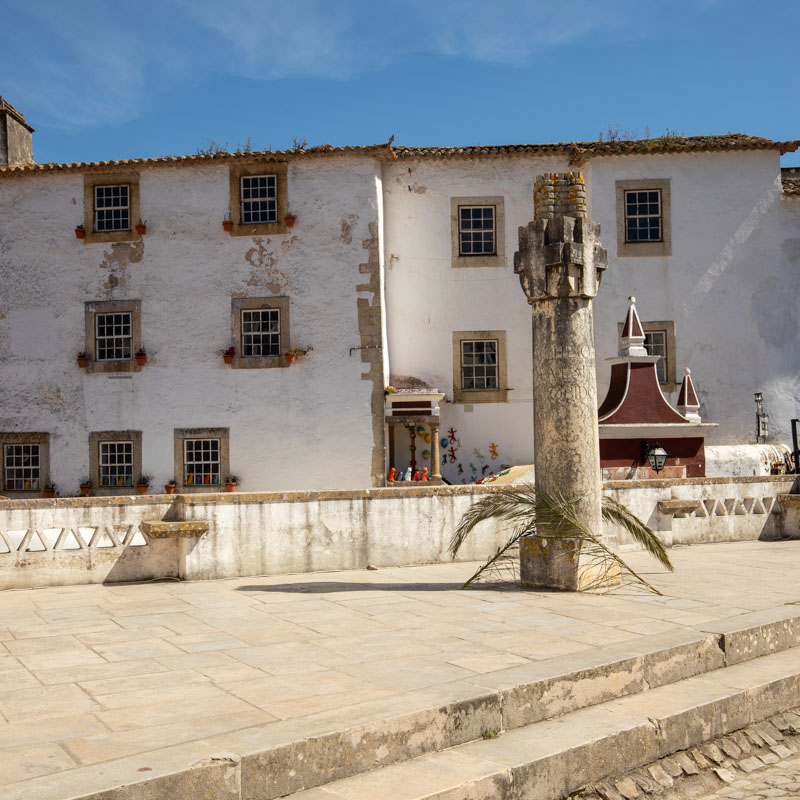
In Óbidos, the castle cannot be understood apart from the town it protects. The fortress dominates the hill and forms part of a walled complex shaped by centuries of defence, habitation and royal presence. After the conquests of Santarém and Lisbon, the town passed into the possession of D. Afonso Henriques. In 1210, it was granted to the queens, becoming linked to the house of the national sovereigns and to a history of royal stays, building works and artistic enrichment. The medieval layout gained new importance around the turn of the 14th century, when the town expanded and the defensive system was remodelled. In the 16th century, D. João de Noronha rebuilt the Paço dos Alcaides. Damaged by the 1755 earthquake, this palace reached the 20th century in ruins and was restored to house a historic pousada, opened in 1950.

Architecture and history

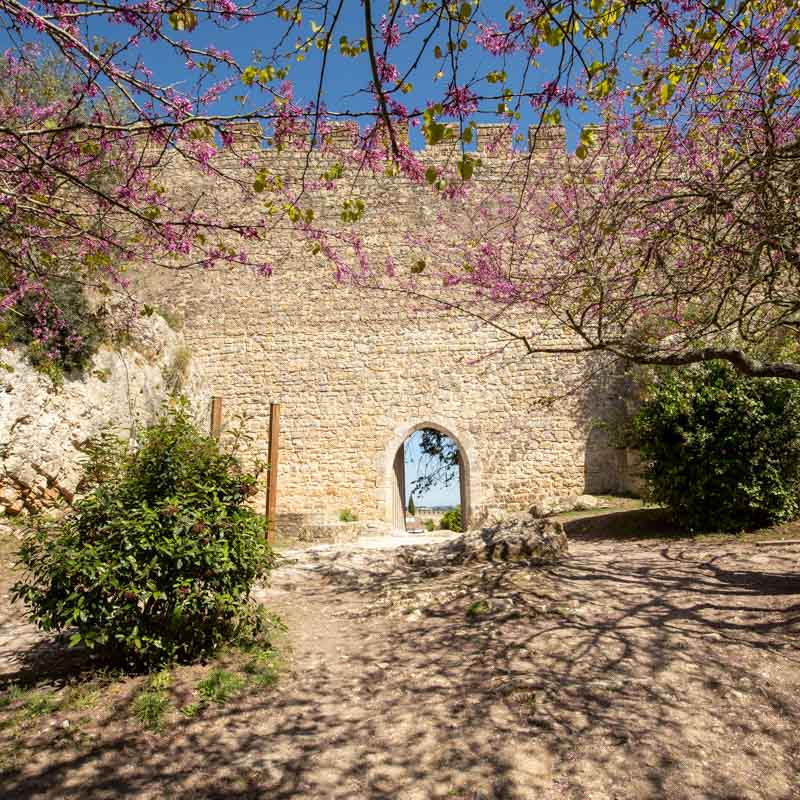
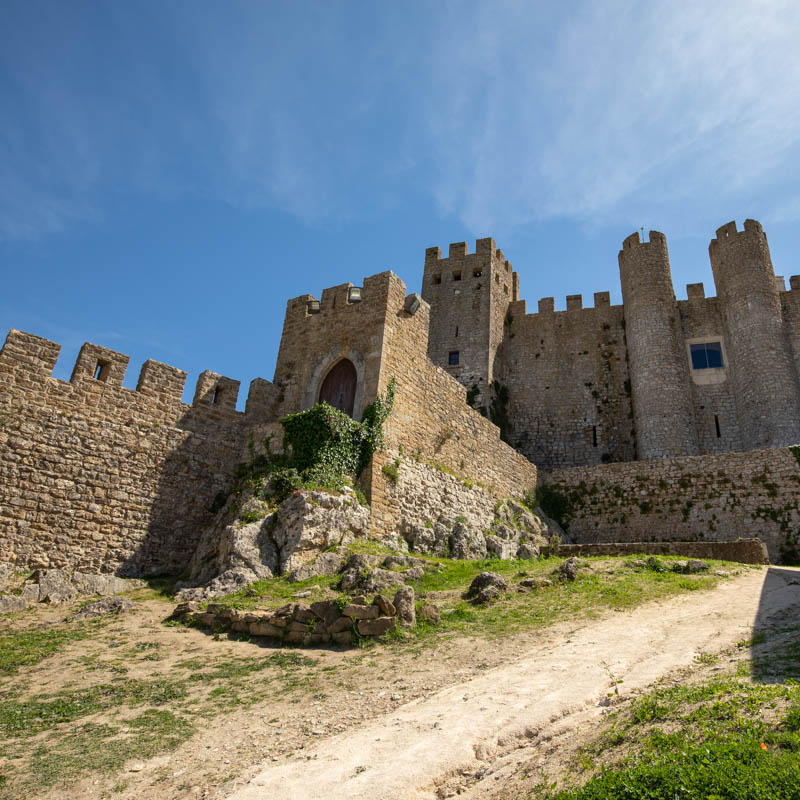
The walls follow the irregular topography of the hill, so the castle seems to grow out of the ground rather than sit on a perfect plan. The complex is organised between the small castle enclosure to the north and the walled town, linked by Rua Direita to Porta da Vila in the south. Square and semicircular towers, barbicans, battlements and wall-walks help explain the defensive logic: to watch, circulate, protect the entrances and double the obstacles beside the walls. The Paço dos Alcaides adds a more residential reading, with Manueline windows opening onto the courtyard and a portal bearing royal arms, the Noronha family arms and armillary spheres. The present image also tells a modern story: in the 1930s, restoration works rebuilt towers, ruined stretches and many crenellated parapets.

More context

The relationship between the castle, Rua Direita and Porta da Vila shows how defence and urban life fitted together. The main route crosses the walled town and reveals that the fortress was not an isolated structure, but the highest point of an inhabited system. On the stretches of wall, notice the alternation of towers and the wall-walk, which explain how the landscape was watched and the accesses defended. In the castle enclosure, the Manueline windows of the Paço dos Alcaides recall the shift from a military function to a residential one. Also look at the battlements and the strongly “medieval” appearance of the whole complex: part of that reading results from 20th-century works, making the castle a testimony to several periods, not only to the Middle Ages.

Gallery

Castelo de Óbidos 1
Castelo de Óbidos 2
Castelo de Óbidos 3
Castelo de Óbidos 4
Castelo de Óbidos 5

Nearby places

View all