Places

Cultural places in Portugal

Browse LxDiscover places across monuments, museums, palaces, viewpoints, gardens, churches and historic sites. Use this hub to start planning, then open the app for map-based routes, saved places and short cultural audio guides.

6 places

Places in Cascais

Explore on the map
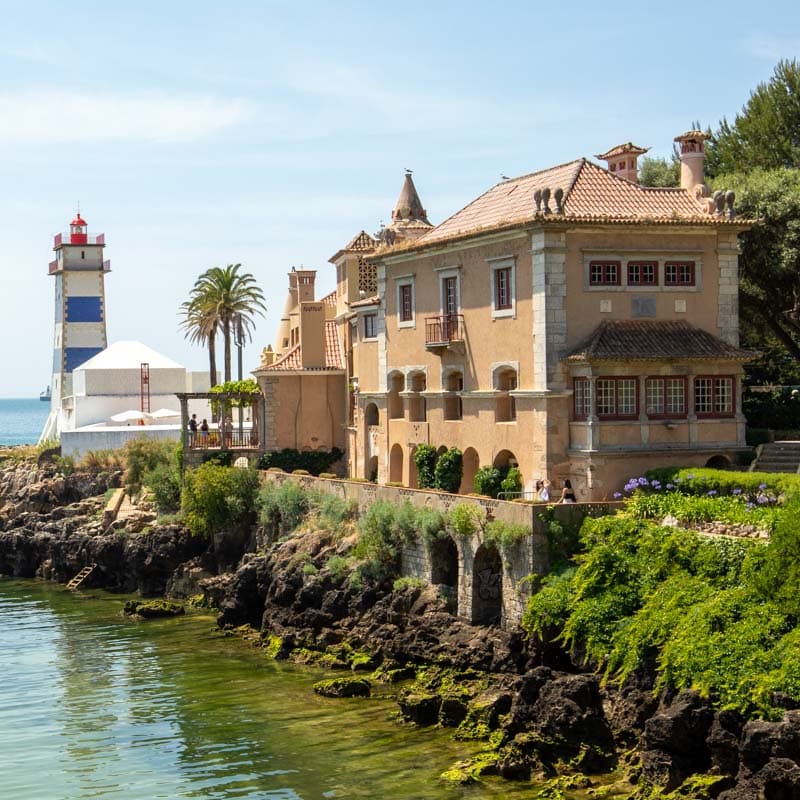
Casa-Museu de Santa Maria4.5

Casa-Museu de Santa Maria

Museum • Cascais, Lisboa

In Cascais, almost above the Santa Marta cove, the Casa-Museu de Santa Maria seems to rise from the rock and the light of the sea. Raul Lino designed it in 1902 for Jorge O’Neill, as a gift for his daughter Maria Teresa, in one of the earliest moments of a body of work that already suggests his idea of the Portuguese house, with Mediterranean and Moorish echoes. For about a century it remained a private residence; today, as part of the Museum Quarter, it still keeps that intimate character, more like a lived-in house than a small palace. The interior surprises with its decorative richness: the Hall of Arches, the terrace facing the water, the tiles designed by the architect and, above all, the late seventeenth-century panels brought from a chapel in Frielas give the whole place a quiet and very distinctive beauty. Between windows open to the Atlantic, painted wood and silence, one senses that this house was not meant to dominate the landscape, but to converse with it.
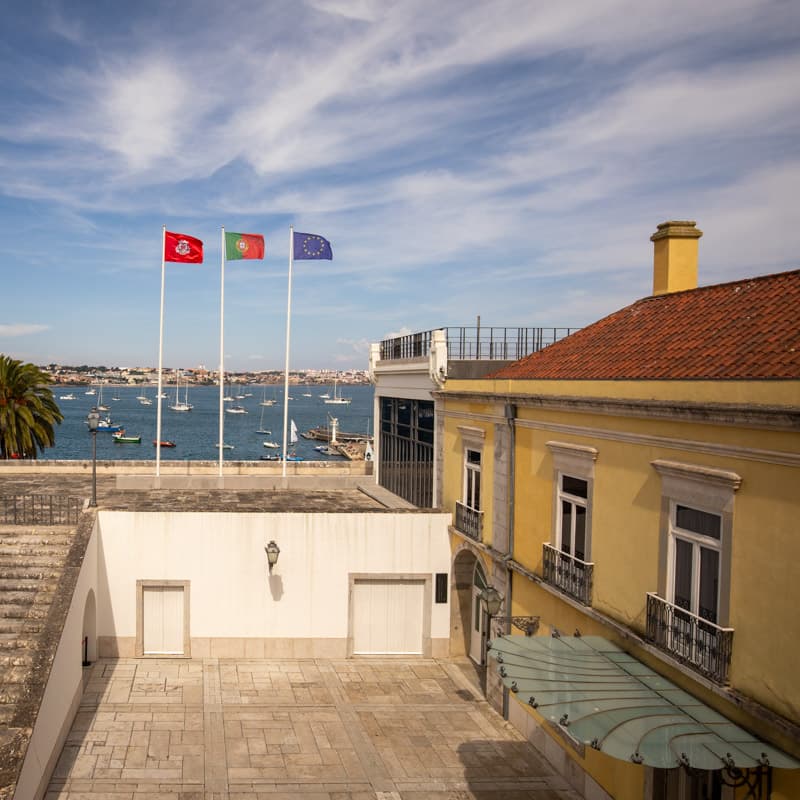
Palácio da Cidadela de Cascais4.6

Palácio da Cidadela de Cascais

Palace • Cascais, Lisboa

In the Citadel of Cascais, the palace shows how a place of maritime defence was transformed into a royal summer residence and later into a site of state memory. The former governor’s house of the fortress, part of a complex whose story begins in 1488, was adapted by King Luís in 1870 for the royal family. From then on, Cascais changed in scale: the court began to spend time in the town, King Carlos deepened its bond with the sea and, in 1878, one of Portugal’s earliest experiments with electric light illuminated the palace battery. Even today, between the courtyard of honour, the view over the bay, the Arab Room inspired by the Alhambra and the wood panelling from the time of Carlos, one senses that unusual blend of fortress, palace and lived residence. After the proclamation of the Republic, the building passed to the Presidency and, after rehabilitation in the twenty-first century, finally opened to the public.

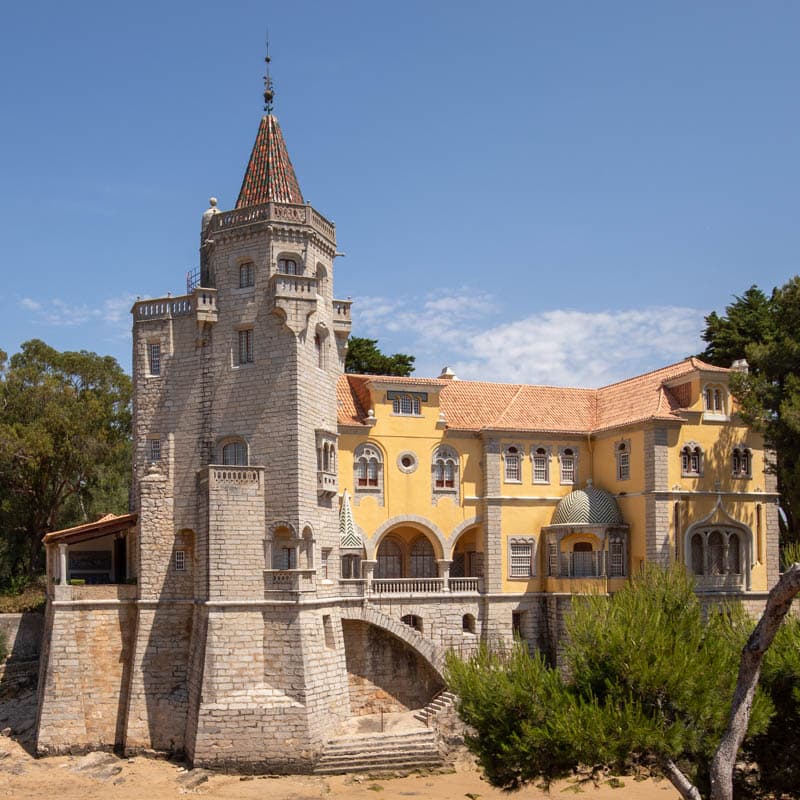
Museu dos Condes Castro Guimarães4.6

Museu dos Condes Castro Guimarães

Museum • Cascais, Lisboa

In Cascais, almost above the Santa Marta cove, the Condes de Castro Guimarães Museum shows how a summer residence can become public memory without losing its private charm. The former Tower of São Sebastião was built between 1897 and 1900 on the initiative of Jorge O’Neill, and it became a museum thanks to the legacy of Manuel Inácio de Castro Guimarães, who left the house, the books and its artistic contents to the town for public use. Opened on 12 July 1931, the ensemble preserves a rare atmosphere: rooms with painting, Oriental porcelain, furniture, silver and an organ installed for the Counts’ musical gatherings coexist with the theatrical quality of a revivalist architecture shaped by Neo-Romanesque, Neo-Gothic and Neo-Manueline echoes. The library also holds a quiet treasure: the Chronicle of Afonso Henriques, an illuminated manuscript from 1505 with one of the earliest known representations of Lisbon.

Farol Museu de Santa Marta4.4

Farol Museu de Santa Marta

Lighthouse • Cascais, Lisboa

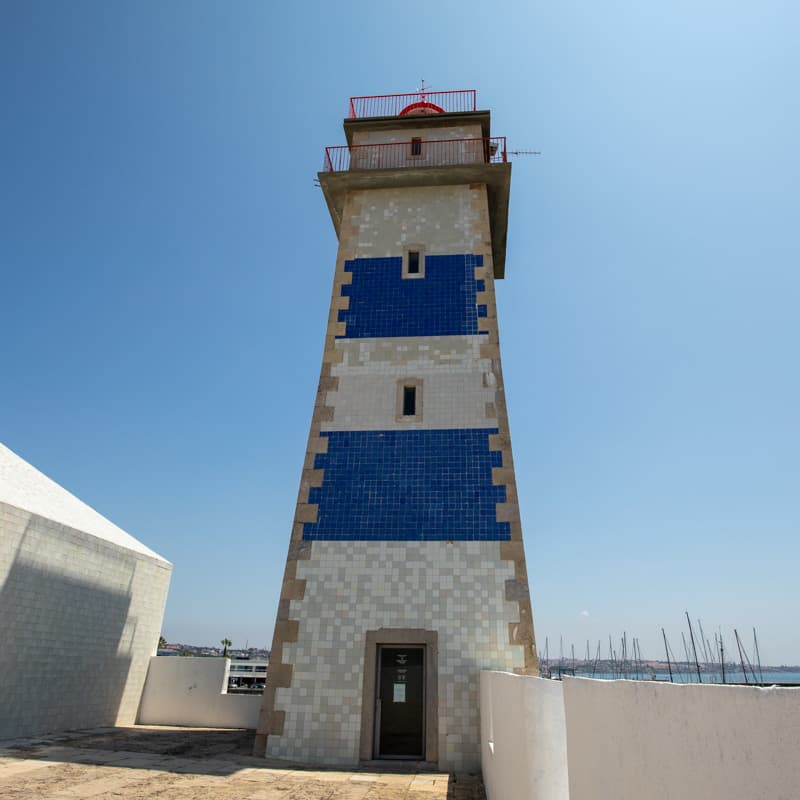
On the edge of Cascais Bay, the Santa Marta Lighthouse Museum shows how a former place of defence and maritime signalling could gain a second life without losing its original function. The fort that houses it probably dates back to the seventeenth century; after being deactivated for military purposes, it received a lighthouse established in 1868 and enlarged in 1936 to respond better to navigation. Restored through a protocol between the municipality and the Portuguese Navy, it opened as a museum in July 2007 and became a rare case in Portugal: it still guides the coast while presenting the history, technology and heritage of Portuguese lighthouses. In the former keepers’ houses, nautical objects, optical devices and memories of the trade help one understand that the light at sea also has a human story. Between the blue bands of the tower, the rock and the Atlantic, the place preserves the practical elegance of a site always turned towards the horizon.

Casa Sommer4.6

Casa Sommer

Museum • Cascais, Lisboa

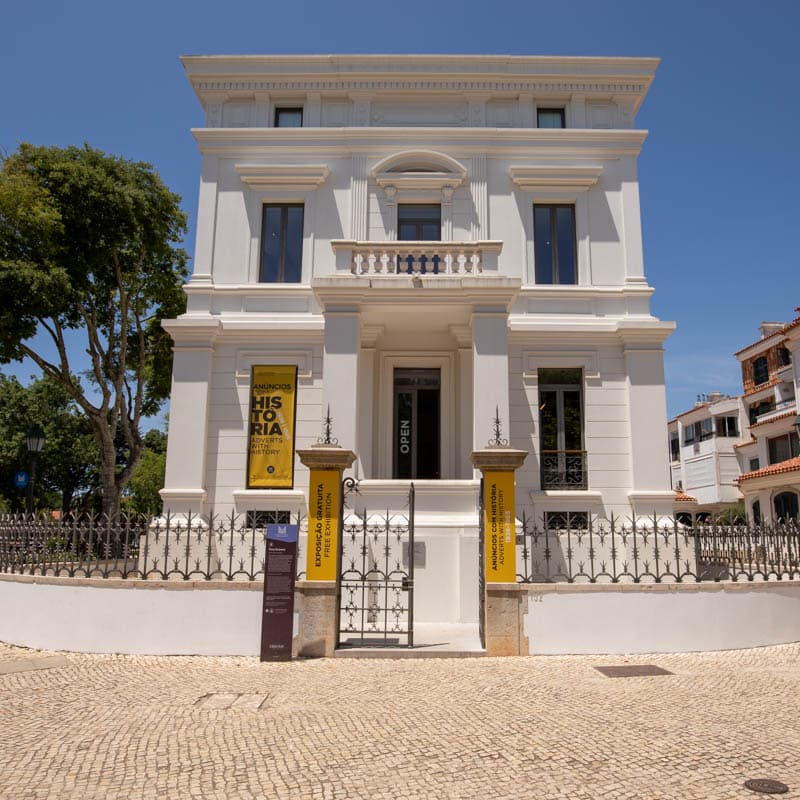
In Cascais, Casa Sommer reveals a side of the town that is less maritime and more urban, shaped by the elegance of the late nineteenth century. Commissioned by Henrique Sommer, this Neoclassical house with a square plan is described by the municipality as the most refined example of a private residence of its kind in Cascais, with symmetrical façades, pilasters, pediments and a noble balcony that give it an almost palatial dignity. For decades it remained a private home; later, it fell into neglect, until a major rehabilitation restored it, also incorporating the former stables and a new underground structure. Since 2016, it has housed the Municipal Historical Archive and the Municipal Bookshop, becoming not just a recovered building but a true centre of local memory. That transformation is what strikes most deeply: a house once meant to express social standing now preserves documents, stories and traces of centuries of municipal life, as if the architecture had found a second vocation in time itself.

Museu do Mar Rei Dom Carlos I4.4

Museu do Mar Rei Dom Carlos I

Museum • Cascais, Lisboa

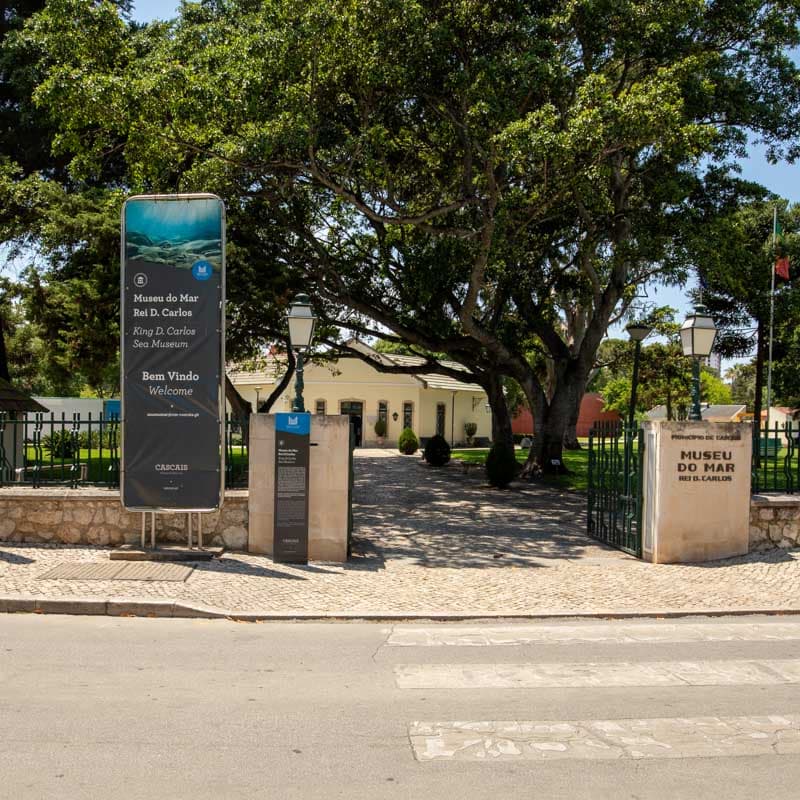
In Cascais, the King D. Carlos Sea Museum tells the story of the town through what shaped it most deeply: the sea. Housed in the former Sporting Club de Cascaes, founded in 1879 on the initiative of the then Prince Carlos, the museum was created in 1976 and opened to the public in 1992, turning a nineteenth-century leisure venue into a place of maritime memory. Its name is more than a tribute: it recalls the king who made Cascais the base for his oceanographic campaigns and helped bring science closer to the observation of the ocean. Inside, the old Octagonal Room stands alongside collections of natural history, underwater archaeology, fishing ethnography and navigation, forming a broad portrait of a town of kings and fishermen. More than gathering shells, boats or nets, this museum shows how the sea was labour, knowledge, risk and imagination, and how it still defines the identity of Cascais.

Get the app

Take LxDiscover with you

Explore Portugal with a cultural guide for monuments, museums, gardens, palaces, viewpoints, and historic places in Lisbon, Porto, Sintra, and other regions.

Use the map, follow cultural routes, read editorial context, save places, and track your visits with the visit passport.

Free features

  • Interactive map to discover places of interest
  • Detailed information about monuments, museums, and cultural sites
  • Favorites for the places you want to visit
  • Selected routes to start exploring

Premium subscription

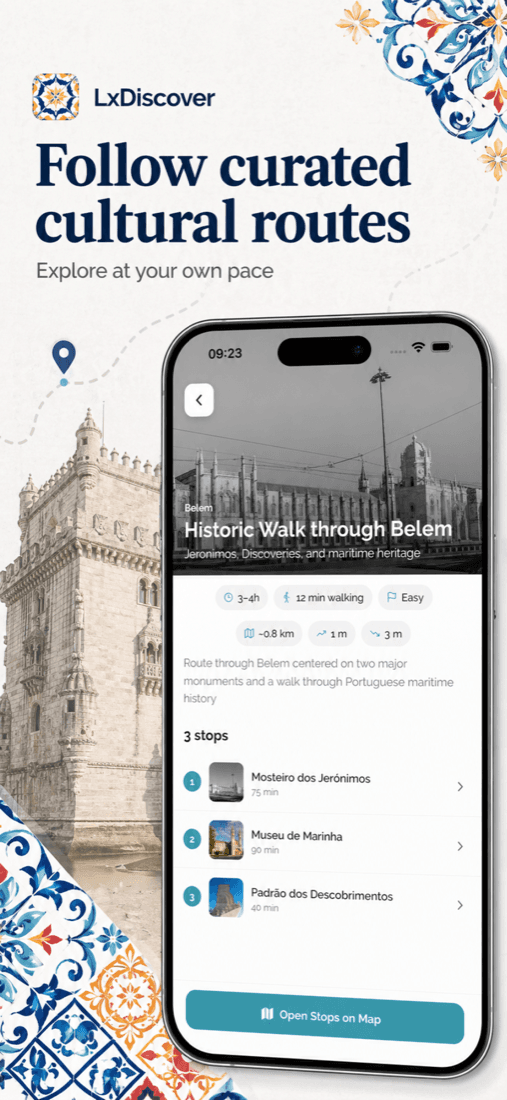
  • Curated routes with ordered stops, duration, and difficulty
  • Thematic collections with editorial context for each area
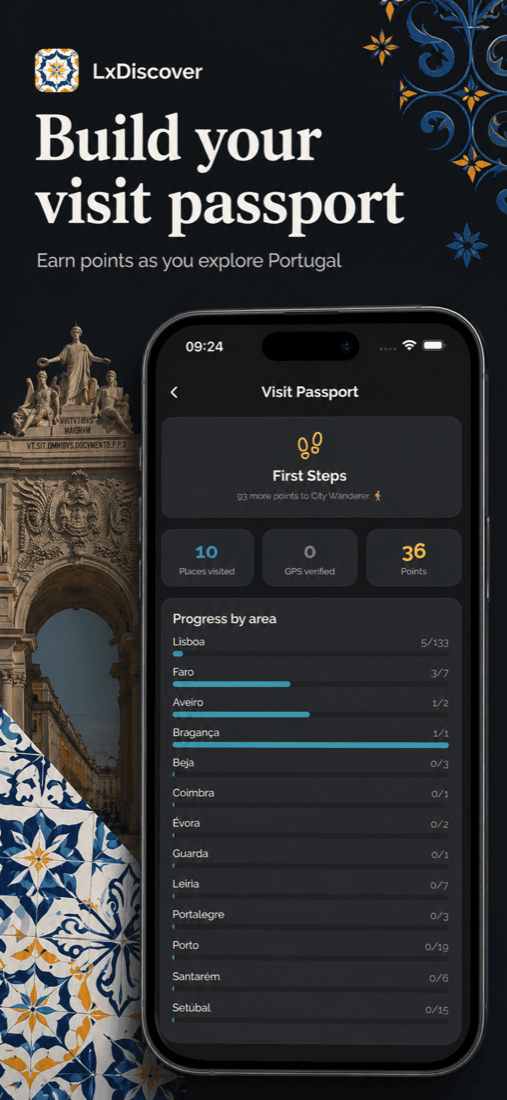
  • Visit passport for progress, visited places, and achievements
  • Advanced map, planning, and proximity alert tools
LxDiscover map screen
LxDiscover routes screen
LxDiscover visit passport screen