Cascais · Lisboa
Museu dos Condes Castro Guimarães
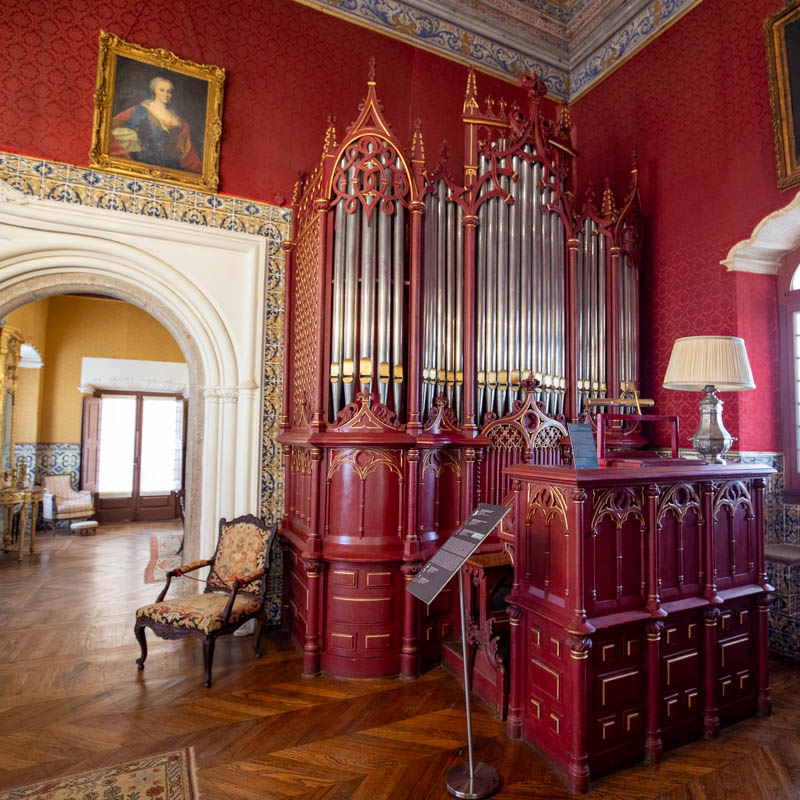
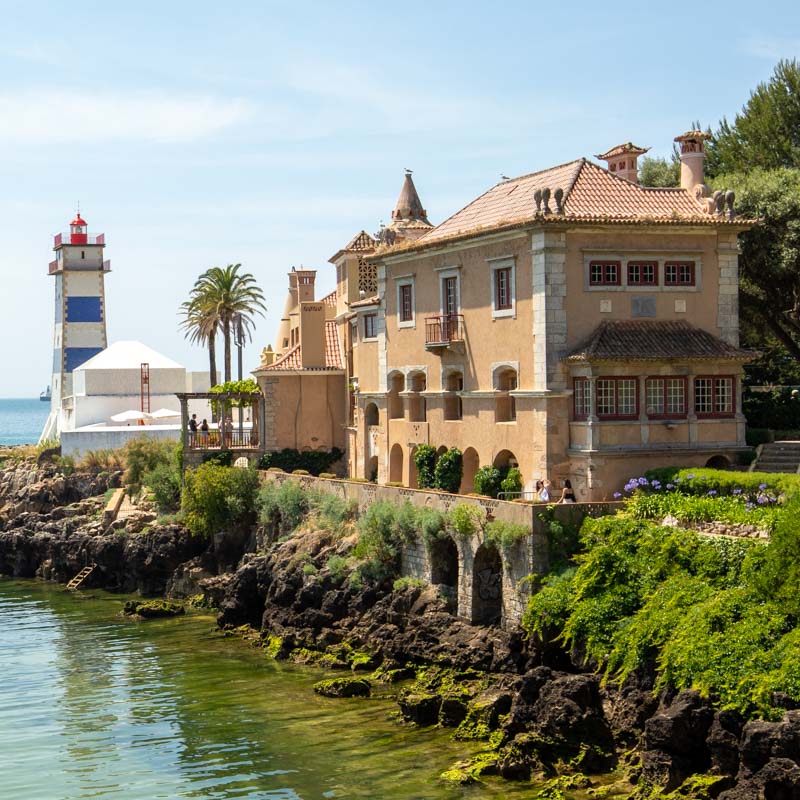
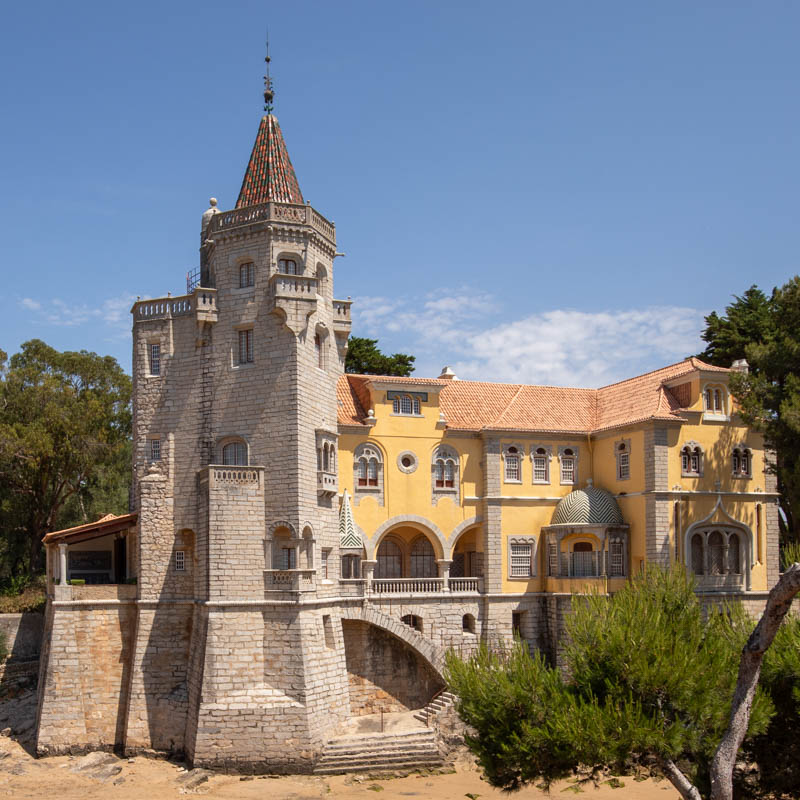
In Cascais, almost above the Santa Marta cove, the Condes de Castro Guimarães Museum shows how a summer residence can become public memory without losing its private charm. The former Tower of São Sebastião was built between 1897 and 1900 on the initiative of Jorge O’Neill, and it became a museum thanks to the legacy of Manuel Inácio de Castro Guimarães, who left the house, the books and its artistic contents to the town for public use. Opened on 12 July 1931, the ensemble preserves a rare atmosphere: rooms with painting, Oriental porcelain, furniture, silver and an organ installed for the Counts’ musical gatherings coexist with the theatrical quality of a revivalist architecture shaped by Neo-Romanesque, Neo-Gothic and Neo-Manueline echoes. The library also holds a quiet treasure: the Chronicle of Afonso Henriques, an illuminated manuscript from 1505 with one of the earliest known representations of Lisbon.
Why it matters
The Museu Condes de Castro Guimarães occupies the former Torre de São Sebastião, beside the Santa Marta cove, now part of Parque Marechal Carmona. The building was erected between 1897 and 1900 on the initiative of Jorge O’Neill, at a time when Cascais was asserting itself as a place of aristocratic and bourgeois summer residence. The house later passed to Manuel Inácio de Castro Guimarães, who received the title of Count of Castro Guimarães in 1909. In his will, in 1924, he left the house, its artistic contents and the library to the town of Cascais, so that a municipal museum and public library could be created there in connection with the park. The museum opened on 12 July 1931. Its importance lies in this rare combination: summer residence, private collection and public space created for the cultural life of the town.
Architecture and history
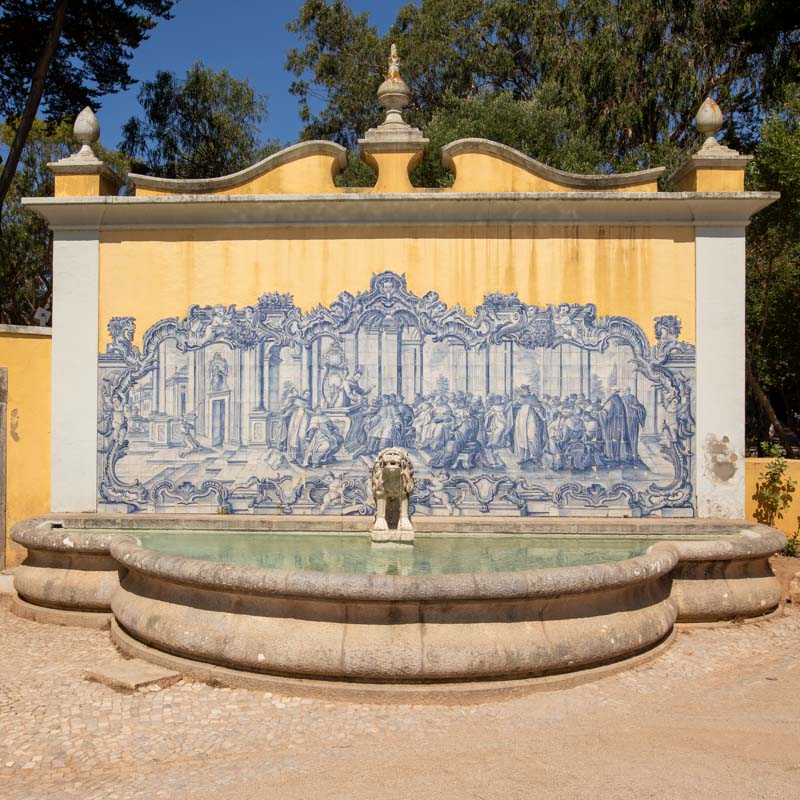
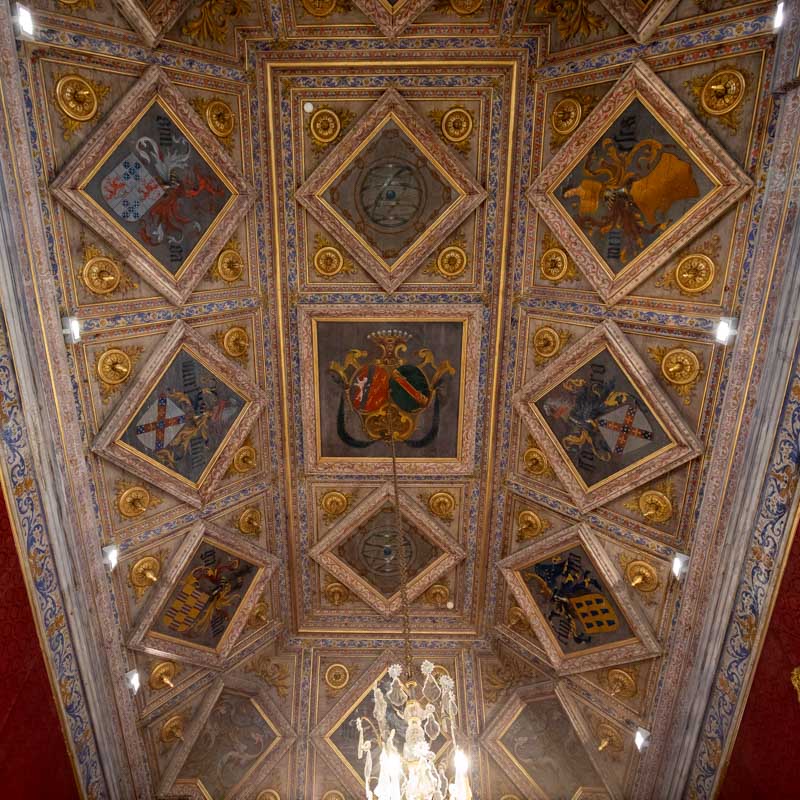
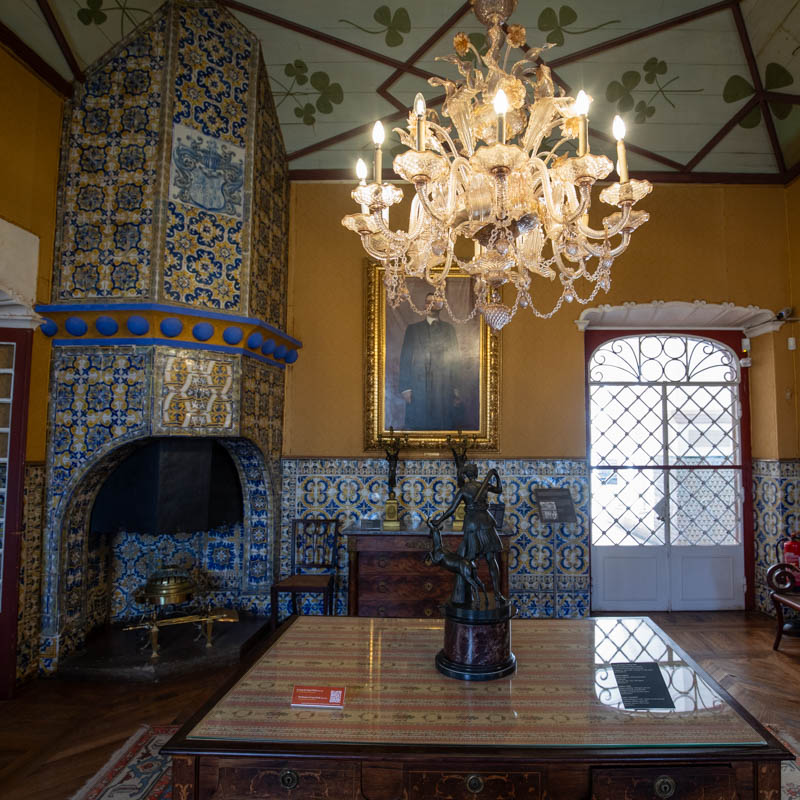
The tower by the sea gives the building a scenic, almost theatrical presence, without separating it from the coastal landscape. The palace brings together medieval, Moorish, Manueline and Renaissance references, typical of the revivalist and eclectic taste of the late 19th century. The irregular plan, varied volumes, large windows, balconies, covered porches and tile panels make the house seem built in parts, as though each area offered a new view or a new decorative episode. Inside, rooms such as the Sala dos Trevos, the Music Room and the Neo-Gothic Room preserve coverings, painted ceilings, furniture, portraits and decorative pieces that extend the original domestic atmosphere. The garden and the Chapel of São Sebastião complete the reading of the ensemble, showing how house, park, devotion and sea view were designed in direct relation to one another.
More context
The Sala dos Trevos recalls the Irish origin of Jorge O’Neill’s ancestors through the shamrocks painted on the ceiling. The Music Room preserves tiles of different 17th-century patterns, walls covered in red damask and a pneumatic tubular organ, made in Braga in 1912, with 1170 pipes. In the Neo-Gothic Room, notice the ribbed vaulted ceiling, the Manueline-inspired elements and the large windows opening onto the veranda. The Library holds the illuminated manuscript Chronicle of King Afonso Henriques, by Duarte Galvão, dated 1505, where the first known representation of the city of Lisbon is found. Along the route, painting, sculpture, furniture, oriental porcelain, silverware, tiles and Indo-Portuguese pieces show the taste of a collection formed to be lived with inside a home.
Routes
Explore this place in a cultural route
Gallery