Cascais · Lisboa
Farol Museu de Santa Marta
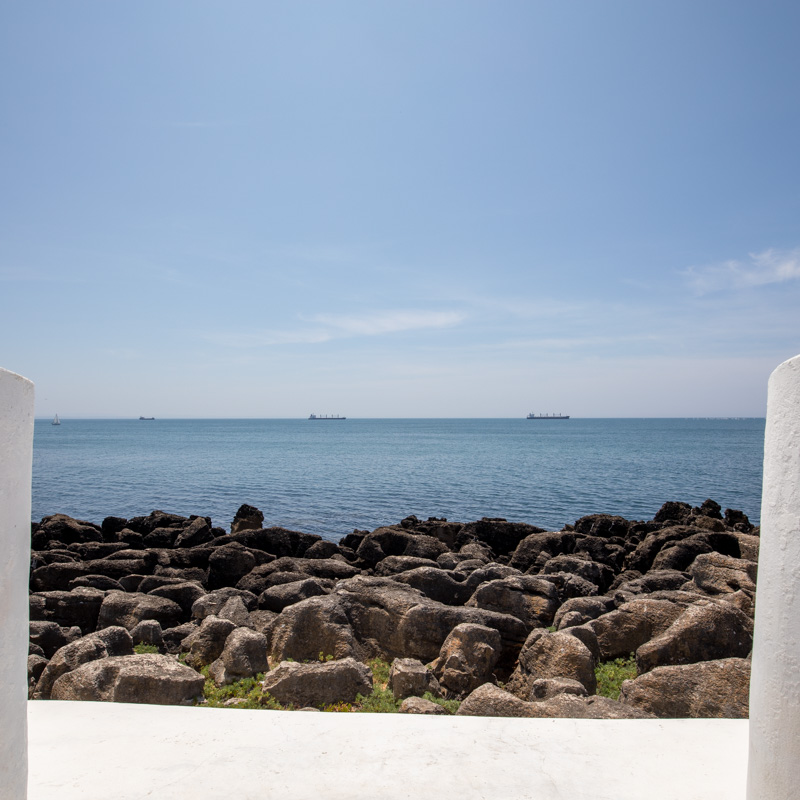
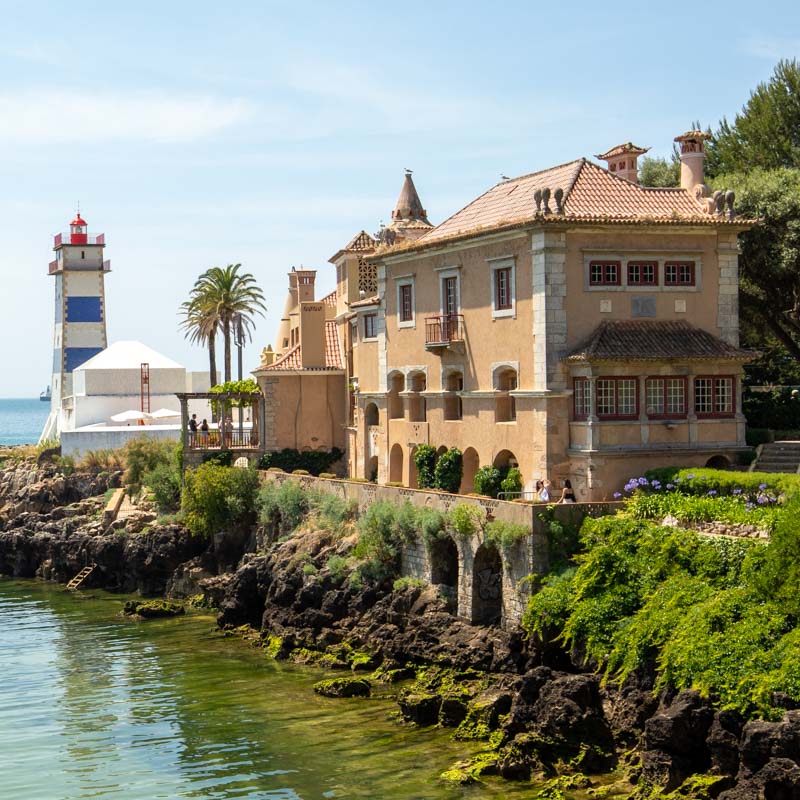
On the edge of Cascais Bay, the Santa Marta Lighthouse Museum shows how a former place of defence and maritime signalling could gain a second life without losing its original function. The fort that houses it probably dates back to the seventeenth century; after being deactivated for military purposes, it received a lighthouse established in 1868 and enlarged in 1936 to respond better to navigation. Restored through a protocol between the municipality and the Portuguese Navy, it opened as a museum in July 2007 and became a rare case in Portugal: it still guides the coast while presenting the history, technology and heritage of Portuguese lighthouses. In the former keepers’ houses, nautical objects, optical devices and memories of the trade help one understand that the light at sea also has a human story. Between the blue bands of the tower, the rock and the Atlantic, the place preserves the practical elegance of a site always turned towards the horizon.
Why it matters
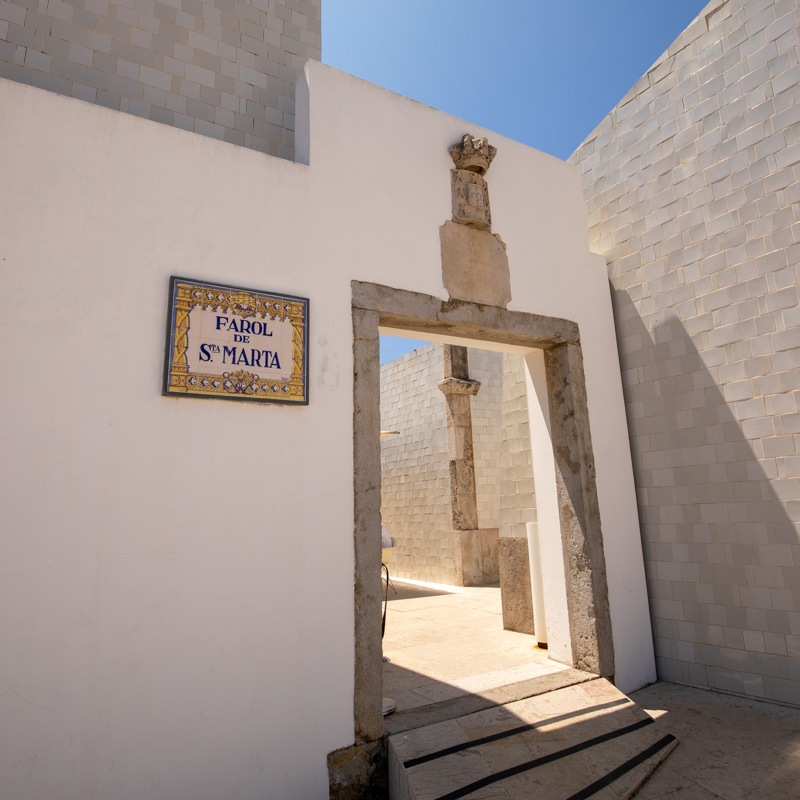
The Farol Museu de Santa Marta brings together two coastal histories of Cascais: the defence of the Tagus bar and the safety of navigation. The site began as the Forte de Santa Marta, beside the Ponta de Santa Marta or Salmodo, in a position useful for watching the approach of vessels to the bay. After losing its military function, the fort received a new mission. In 1864, the construction of a lighthouse on the site was decided, designed by Francisco Pereira da Silva; the tower was completed in 1867 and the light was first lit on 1 March 1868. From then on, Santa Marta worked with other coastal signals, including the Guia Lighthouse. In July 2007 it opened as the Farol Museu de Santa Marta, keeping its active coastal signalling function while adding a museum reading of Portuguese lighthouses.
Architecture and history
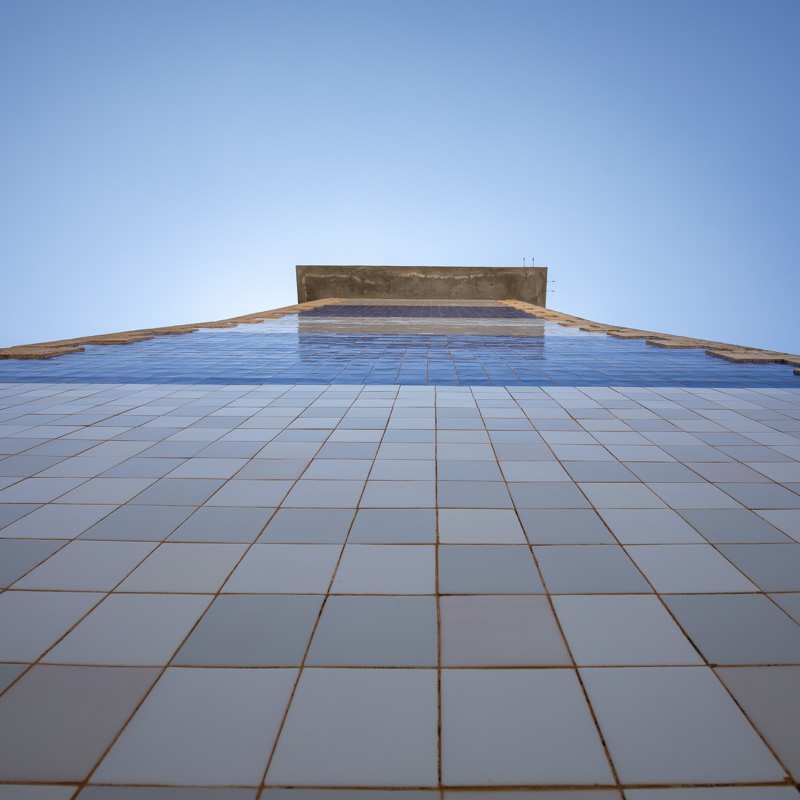
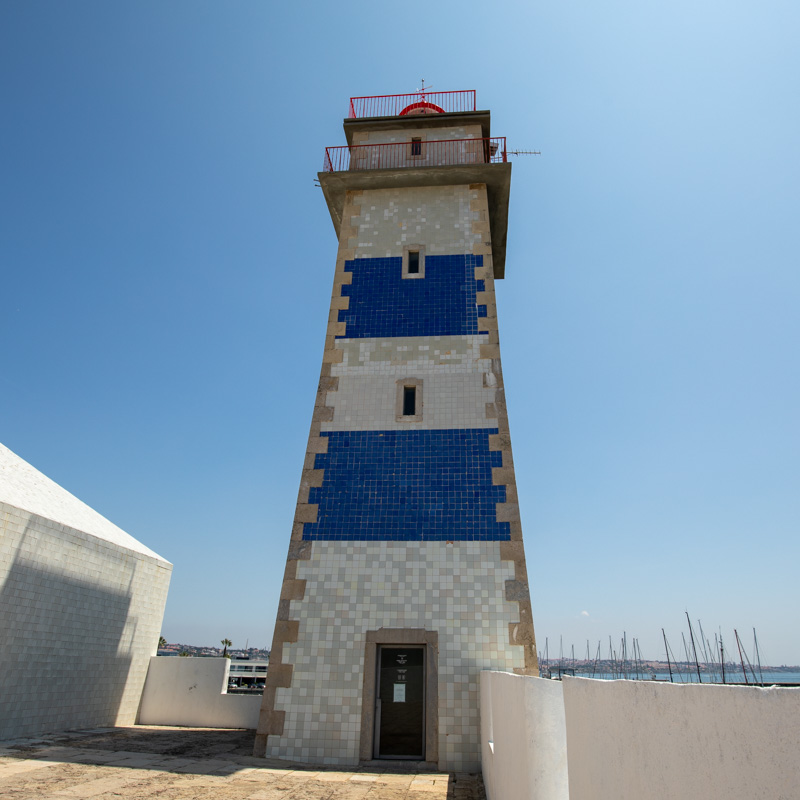
The square tower, white and blue, is now the most recognisable element of the ensemble. The first lighthouse was eight metres high and rose above the old battery of the fort; in 1936, the tower was raised because nearby buildings were making the light harder for navigation to see. The Directorate of Lighthouses now gives its height as 20 metres and its altitude as 25 metres. The contemporary rehabilitation preserved the reading of the fort and adapted the former lighthouse keepers’ residences as exhibition spaces. The architectural project was by Francisco and Manuel Aires Mateus, with a museum programme by Joaquim Boiça. The intervention is interesting because it did not turn the lighthouse only into memory: the building continues to fulfil its maritime function while showing visitors the technology, work and material culture of coastal signalling.
More context
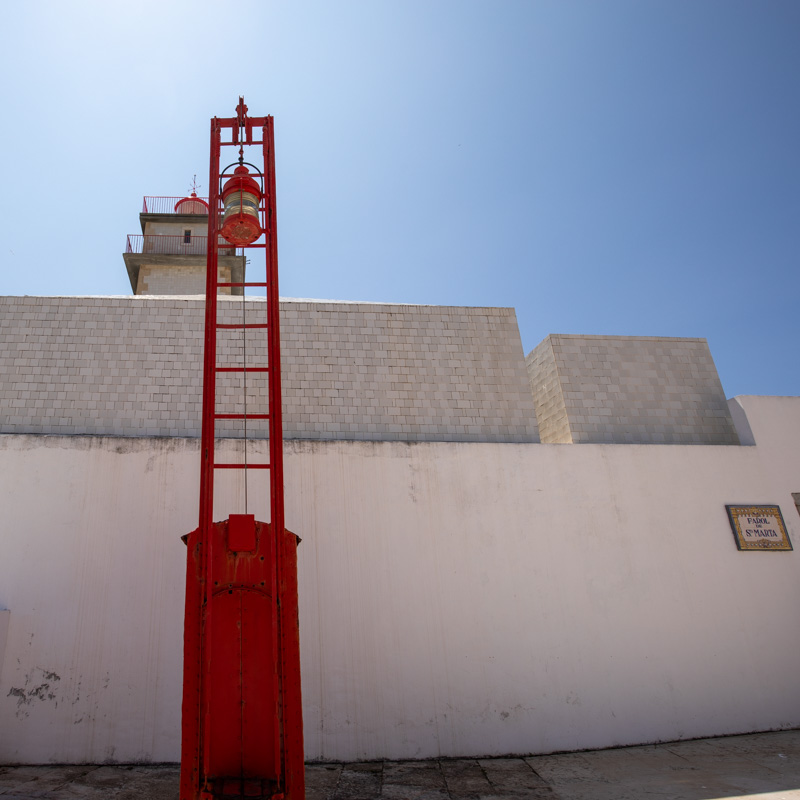
The former lighthouse keepers’ residences guide the visit through two main sections. The first, dedicated to Portuguese lighthouses, presents technology and history, including large Fresnel lenses and the optical-apparatus panel from the Berlengas Lighthouse, 3.70 metres high. The second section focuses on Santa Marta’s passage from fort to lighthouse and on the lighthouse keeper’s craft. There, the keeper’s diary helps visitors understand the daily attention paid to fog, light and events at sea. Also notice the cannonball found during archaeological excavations in the enclosure, as it recalls the military phase of the site. Outside, observe the relationship between the tower, the old battery, Casa de Santa Maria and the cove: it is this overlap of defence, navigation, architecture and landscape that makes Santa Marta so clear for understanding maritime Cascais.
Routes
Explore this place in a cultural route
Gallery