Places

Cultural places in Portugal

Browse LxDiscover places across monuments, museums, palaces, viewpoints, gardens, churches and historic sites. Use this hub to start planning, then open the app for map-based routes, saved places and short cultural audio guides.

3 places

Places in Setúbal

Explore on the map
Galeria Municipal do Banco de Portugal4.3

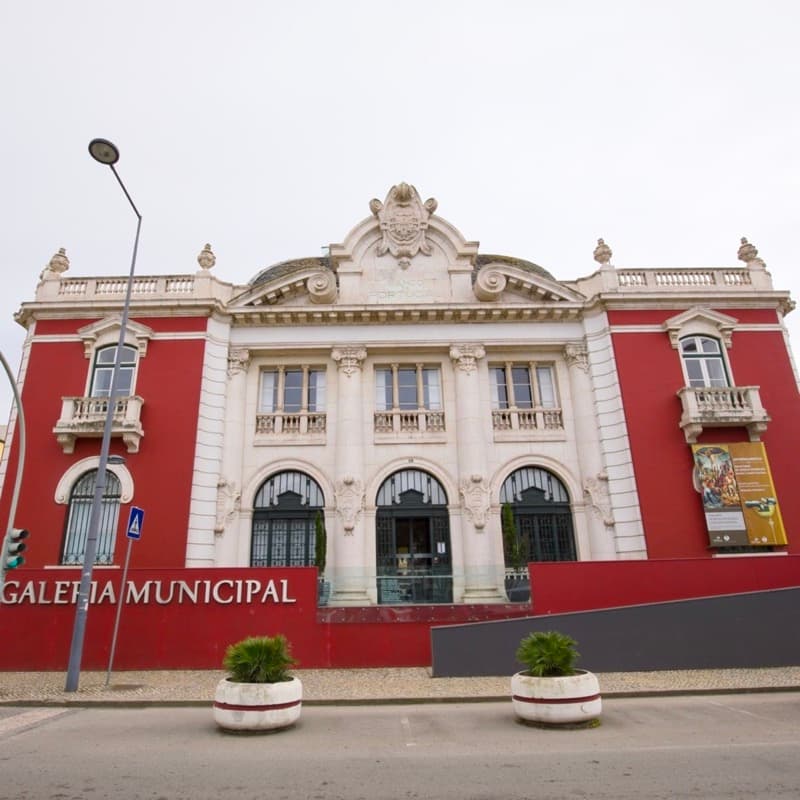
Galeria Municipal do Banco de Portugal

Museum • Setúbal, Setúbal

On Avenida Luísa Todi, the Banco de Portugal Municipal Gallery shows just how well Setúbal has reused its urban memory. Designed by Arnaldo Adães Bermudes in the early decades of the twentieth century, the building served for a long time as the local branch of the Bank of Portugal and still retains the solemn air of a former banking house. The two stone columns at the entrance, the eclectic composition and the revivalist echoes, with discreet Art Nouveau touches, give it a sober yet distinctive presence. In 2013, the property began a new life as a municipal gallery and started hosting exhibitions from the Museum of Setúbal. Among them was the celebrated altarpiece from the Convent of Jesus, one of the great works of sixteenth-century Portuguese painting. It is worth studying the building closely before you even step inside: few transformations tell the story of a city so well, turning a place once meant to guard wealth into one that preserves and shares heritage.
Forte de São Filipe4.6

Forte de São Filipe

Fort • Setúbal, Setúbal

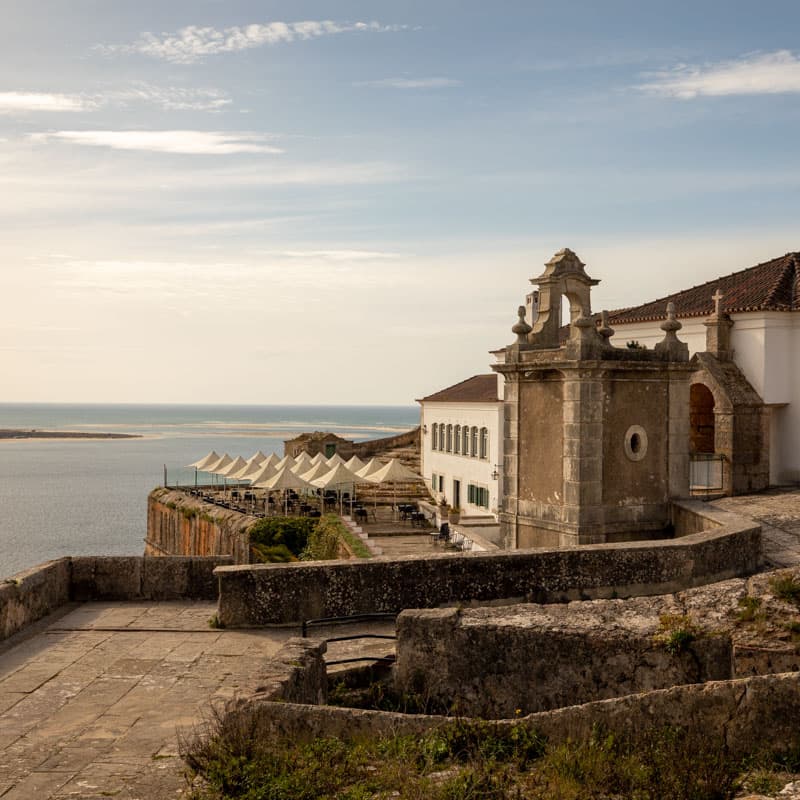
Perched on the hill above Setúbal, the Fort of São Filipe watches over both the Sado estuary and the city it was meant to keep under guard for centuries. It was commissioned by Philip I in the aftermath of the crisis of 1580, when the weakness of the town’s defences had become clear and control over Setúbal had gained new political importance. Its six-pointed star plan, fitted to the steep terrain, gives it the stern character of military architecture designed to deter. After the Restoration, the fort took on a different meaning and even served as a prison. Today, beyond the sweeping view over Setúbal, Tróia and the Arrábida hills, one detail deserves special attention: the small Baroque chapel, lined with blue-and-white tiles by Policarpo de Oliveira Bernardes, showing scenes from the life of Saint Philip. Few places reveal so clearly how war, power and landscape meet in a single setting.

Museu de Setúbal/Convento de Jesus4.6

Museu de Setúbal/Convento de Jesus

Convent • Setúbal, Setúbal

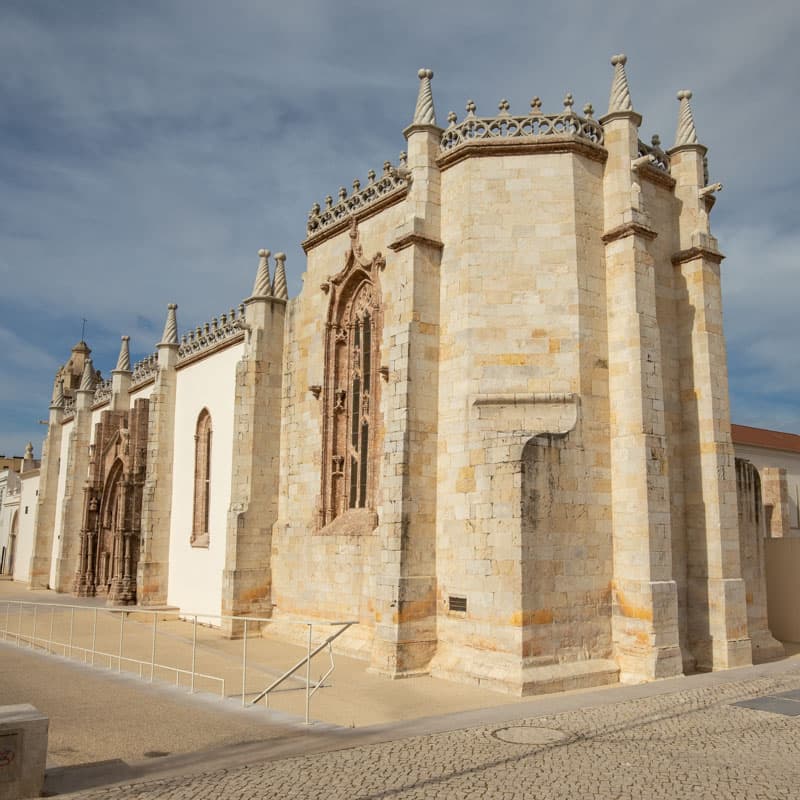
In the heart of Setúbal, the Convent of Jesus reveals a decisive moment in Portuguese art. Founded in 1490 by Justa Rodrigues Pereira and enlarged under the patronage of King John II, it was entrusted to Diogo Boitaca, who carried out his first work in Portugal here. The church is seen as a landmark in the beginnings of the Manueline style: its three vaulted aisles at the same height create a rare, bright and continuous space, supported by twisted columns that stay in the memory. Over the centuries, the complex changed its life: a convent for Poor Clare nuns, later a hospital, and since 1961 the city museum. Today, moving between the cloister, the Chapter House, the Upper Choir and the Gallery of 16th-century Art, one senses how the building preserves very different layers of time. Among them, the fourteen panels of the former altarpiece, attributed to Jorge Afonso’s workshop, stand out as a treasure linking Setúbal to the great cycle of Portuguese Renaissance painting.

Get the app

Take LxDiscover with you

Explore Portugal with a cultural guide for monuments, museums, gardens, palaces, viewpoints, and historic places in Lisbon, Porto, Sintra, and other regions.

Use the map, follow cultural routes, read editorial context, save places, and track your visits with the visit passport.

Free features

  • Interactive map to discover places of interest
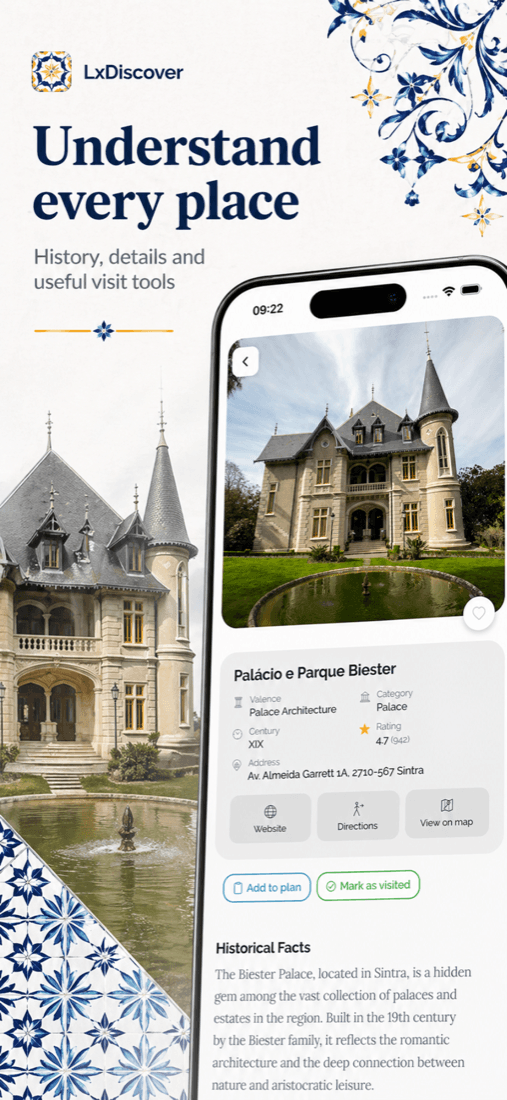
  • Detailed information about monuments, museums, and cultural sites
  • Favorites for the places you want to visit
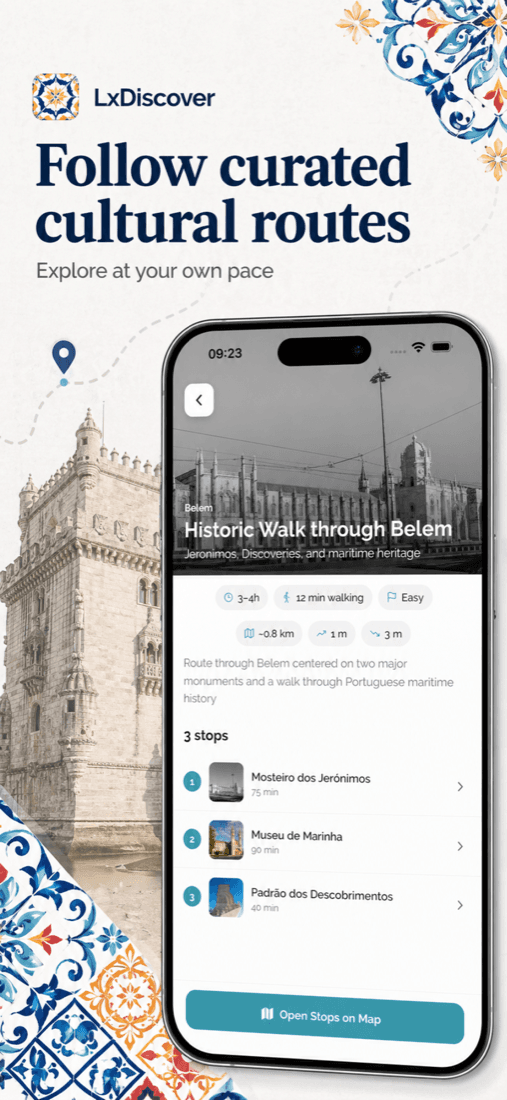
  • Selected routes to start exploring

Premium subscription

  • Curated routes with ordered stops, duration, and difficulty
  • Thematic collections with editorial context for each area
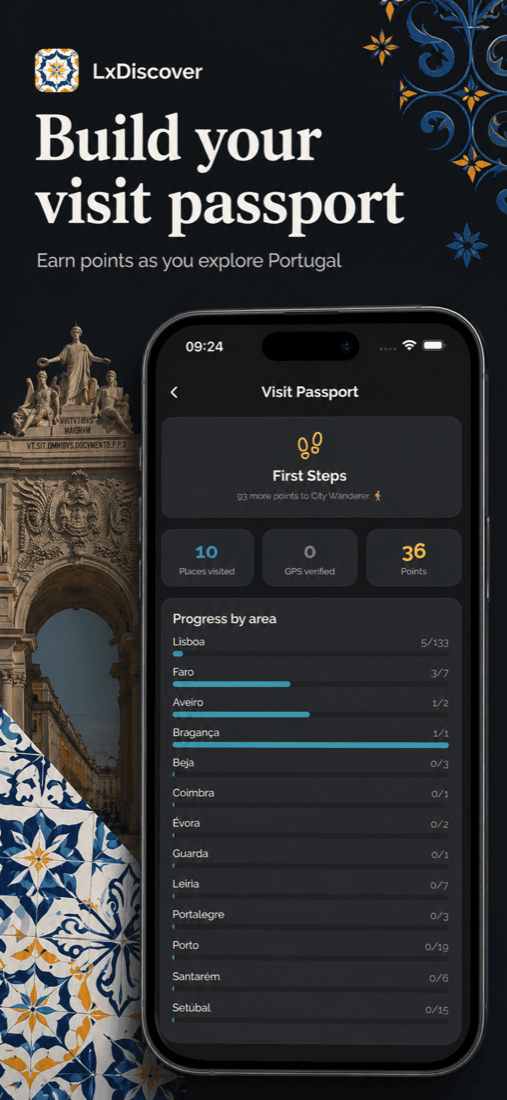
  • Visit passport for progress, visited places, and achievements
  • Advanced map, planning, and proximity alert tools
LxDiscover map screen
LxDiscover routes screen
LxDiscover visit passport screen