Places

Cultural places in Portugal

Browse LxDiscover places across monuments, museums, palaces, viewpoints, gardens, churches and historic sites. Use this hub to start planning, then open the app for map-based routes, saved places and short cultural audio guides.

110 places

Places in Lisboa

Explore on the map
Arco Triunfal da Rua Augusta4.7

Arco Triunfal da Rua Augusta

Arch • Lisboa, Lisboa

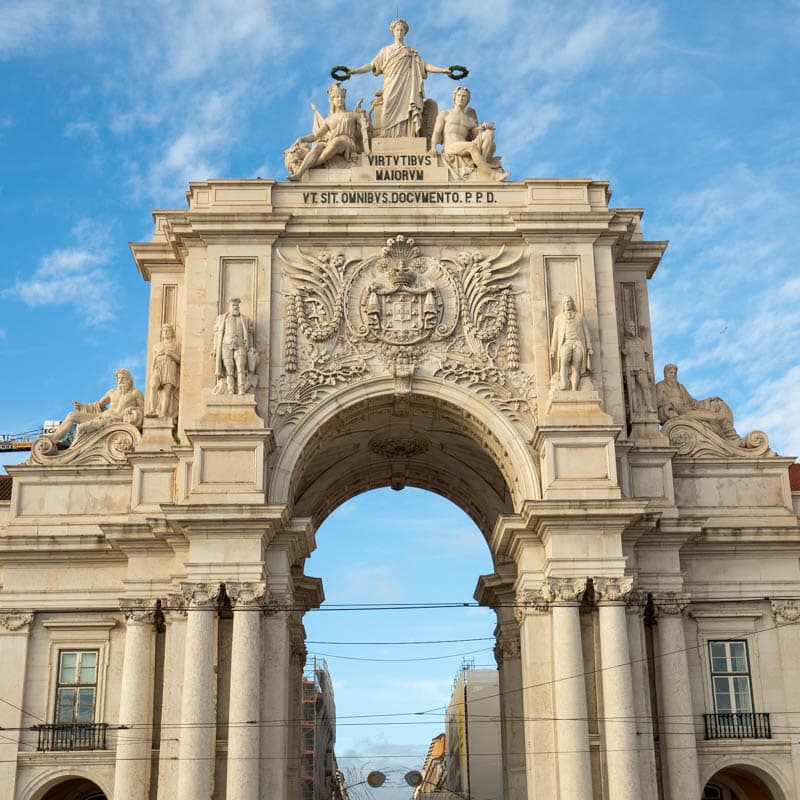
More than a monumental entrance, the Rua Augusta Triumphal Arch is the great symbolic gateway to the Lisbon that rose again after the 1755 earthquake. Conceived in the context of the Pombaline reconstruction, it took more than a century to reach its final form, and that delay says much about the city’s slow reinvention. At the top, Glory crowns Genius and Valour; below, figures such as Vasco da Gama, Viriato, Nuno Álvares Pereira and the Marquis of Pombal turn the monument into a statement of memory and power. It is also worth noticing the Latin inscription, dedicated to the virtues of the ancients, and the way the arch frames the Baixa, Praça do Comércio and the Tagus. Seen up close, it impresses with its scale and sculptural relief; seen from above, it offers one of the clearest readings of the Pombaline plan and of Lisbon’s deep bond with the river.
Praça de Touros do Campo Pequeno4.2

Praça de Touros do Campo Pequeno

Commercial Space • Lisboa, Lisboa

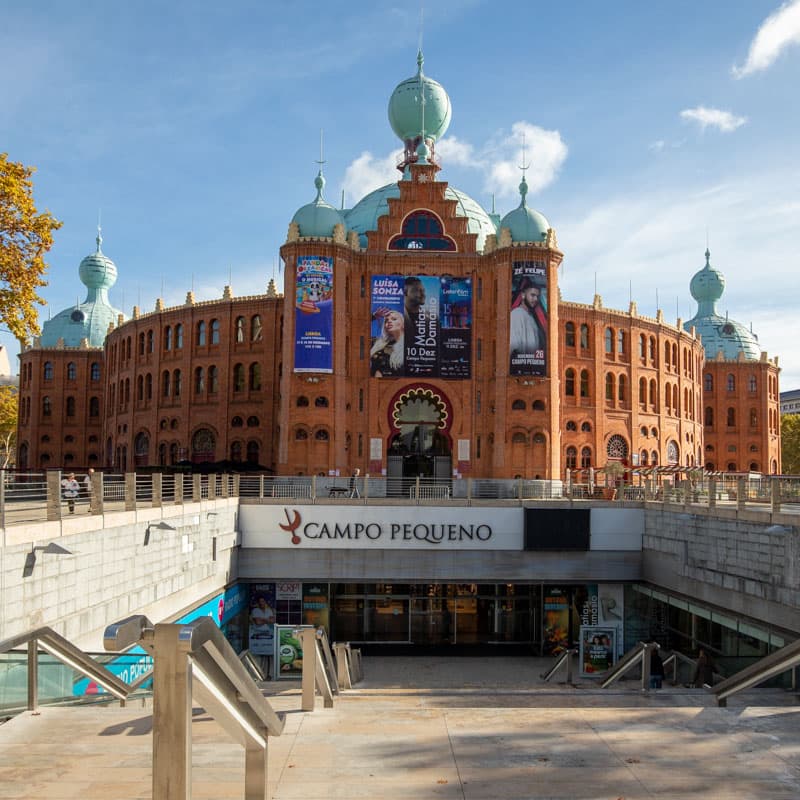
With its red-brick silhouette and neo-Moorish domes, Campo Pequeno seems to bring an unexpected imaginary world into Lisbon, yet its real strength lies in the way it gathers more than a century of urban life into one place. Opened in 1892 and designed by Dias da Silva, it was created as a bullring and soon became one of the city’s social stages, hosting a royal bullfight at the start of the twentieth century, rallies under the Estado Novo and, after the Carnation Revolution, major democratic gatherings. The renovation completed in 2006 preserved the building’s character and gave it a new life as a multi-purpose venue. It is worth noticing the arches, the exposed brick and the turrets, restored to their original turquoise blue. Today, between memory, tradition and reinvention, Campo Pequeno still shows how Lisbon changes without completely erasing its earlier traces.

Castelo de S. Jorge4.5

Castelo de S. Jorge

Castle • Lisboa, Lisboa

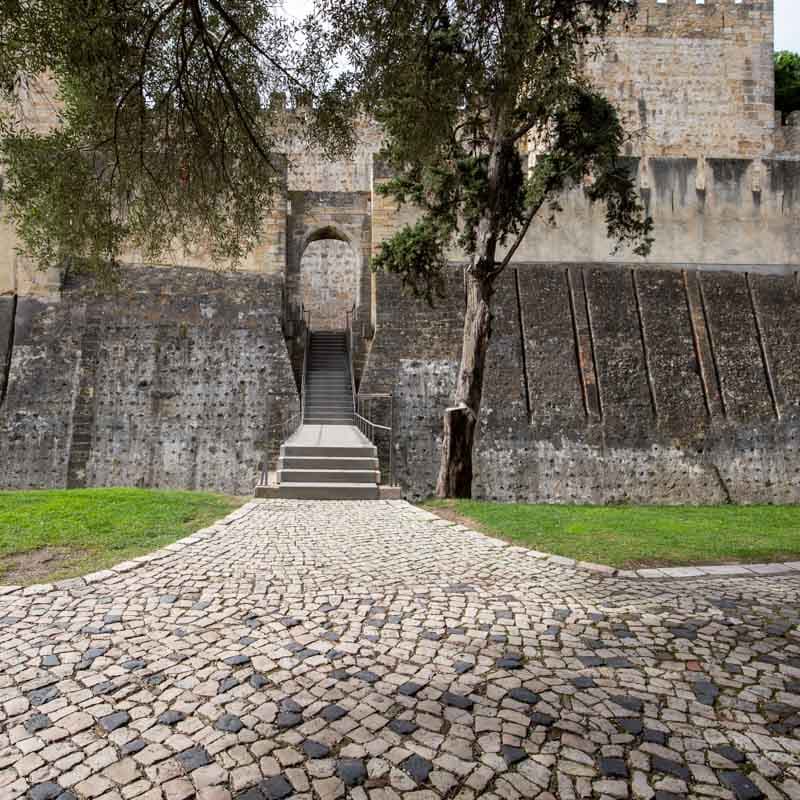
Rising from the highest point of old Lisbon, São Jorge Castle seems to gather almost the whole biography of the city into one place. The hill had been occupied since very early times, but the fortification we recognise today took shape in the Islamic period, as the last defensive stronghold of the citadel. After the conquest of 1147 by Afonso Henriques, the castle entered its brightest age: it became a royal palace, housed the court, the royal archive and major ceremonies, and from here the city’s rooftops, estuary and gateways could be watched over. When the royal residence moved down to the riverside, the complex lost its central role, was turned to military use and suffered after the 1755 earthquake, before being rediscovered in the great restoration campaigns of the twentieth century. Today, among walls, archaeological remains and the Camera Obscura in the Tower of Ulysses, it remains a rare place to understand Lisbon in layers, between stone, memory and horizon.

Mosteiro dos Jerónimos4.5

Mosteiro dos Jerónimos

Monastery • Lisboa, Lisboa

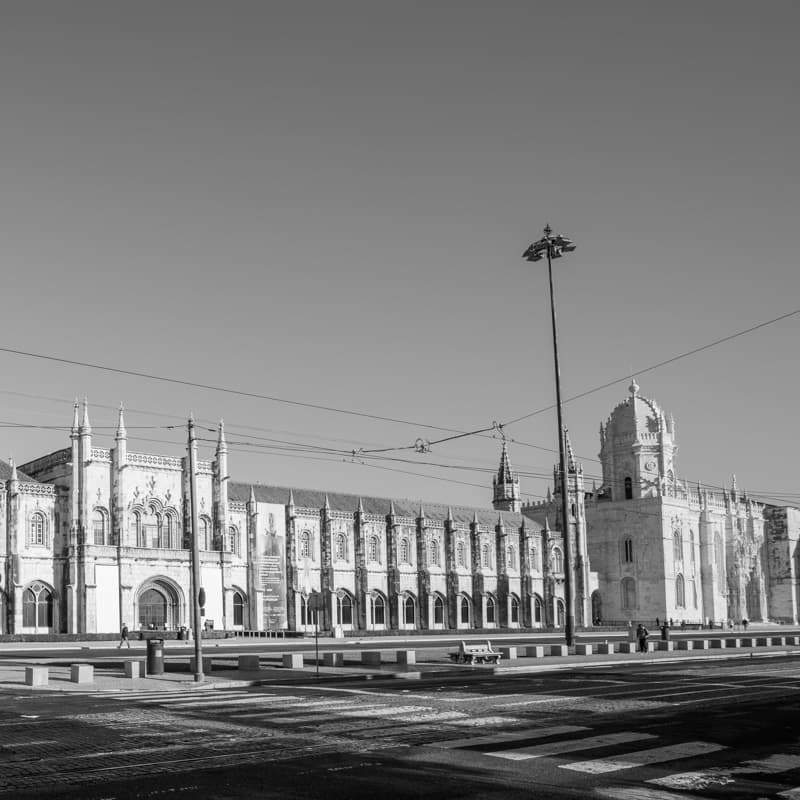
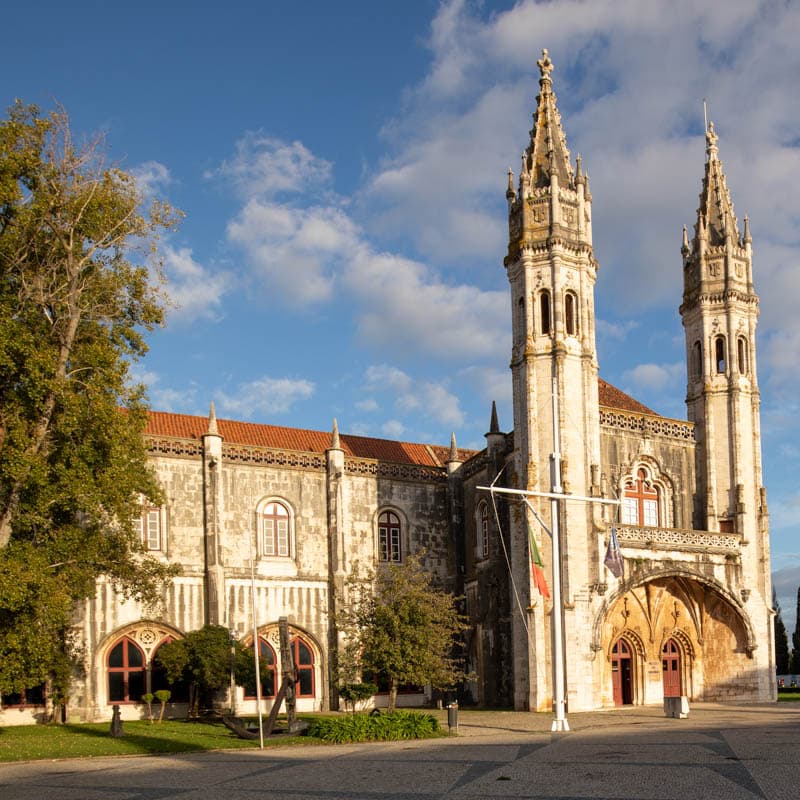
On the edge of the Tagus, Jerónimos Monastery seems to turn into stone the moment when Lisbon opened itself to the world. Commissioned by King Manuel the First at the end of the fifteenth century, beside Restelo, where ships and caravels set out, it was entrusted to the monks of Saint Jerome, who were meant to pray for the king and offer spiritual support to navigators. Work began in fifteen hundred and one and continued for about a century, leaving one of the finest examples of the Manueline style, exuberant yet precise, filled with royal, Christian and natural symbols. During a visit, it is worth slowing down in the sixteenth-century cloister and before the south portal, where the sculpture seems almost like lace in stone. In the church lie Vasco da Gama and Luís de Camões, a detail that deepens the monument’s bond with the country’s maritime and literary memory. Few places tell Portugal’s story with such clarity and beauty.

Palácio Nacional da Ajuda4.7

Palácio Nacional da Ajuda

Palace • Lisboa, Lisboa

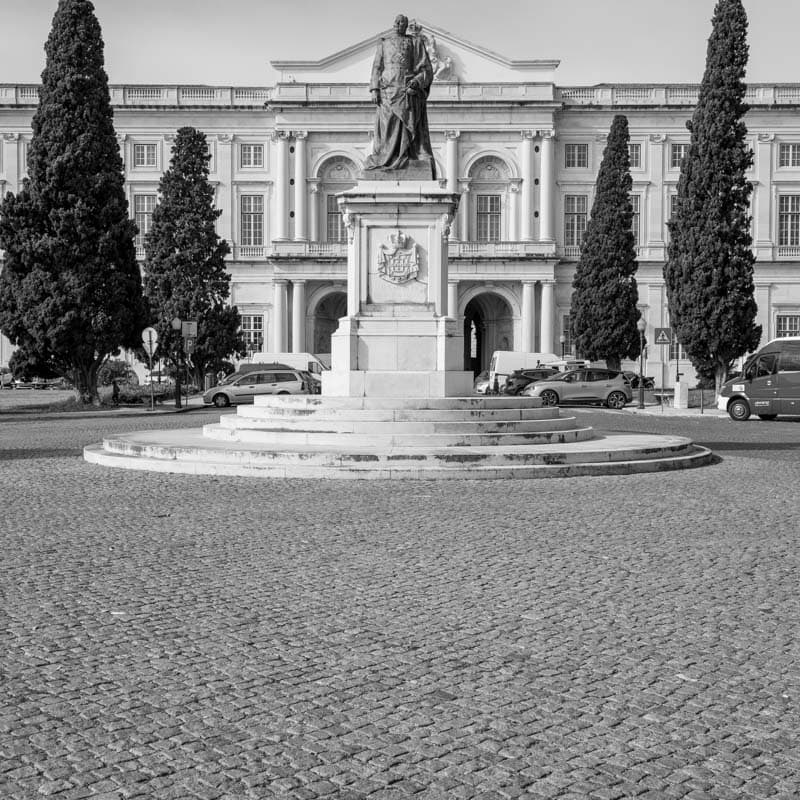
High on Ajuda hill, this neoclassical palace speaks less of completed triumph than of ambition, interruption and endurance. Conceived at the start of the nineteenth century to replace the wooden Real Barraca built after the earthquake, it was never fully finished, held back by the court’s departure to Brazil and by repeated financial difficulties. Even so, it became the royal family’s official residence from the reign of King Luís the First, and it was under Queen Maria Pia that it gained the domestic and ceremonial brilliance still felt in its interiors today. During a visit, it is worth lingering in the Throne Room, the state salons and the private apartments, because few places in Lisbon preserve so authentically the taste and protocol of nineteenth-century court life. Between its view over the Tagus, its splendour and its intimacy, Ajuda National Palace leaves the rare impression of a royal home suspended in time, made even more compelling by the fact that it was never entirely completed.

Planetário de Marinha3.8

Planetário de Marinha

Science Centre • Lisboa, Lisboa

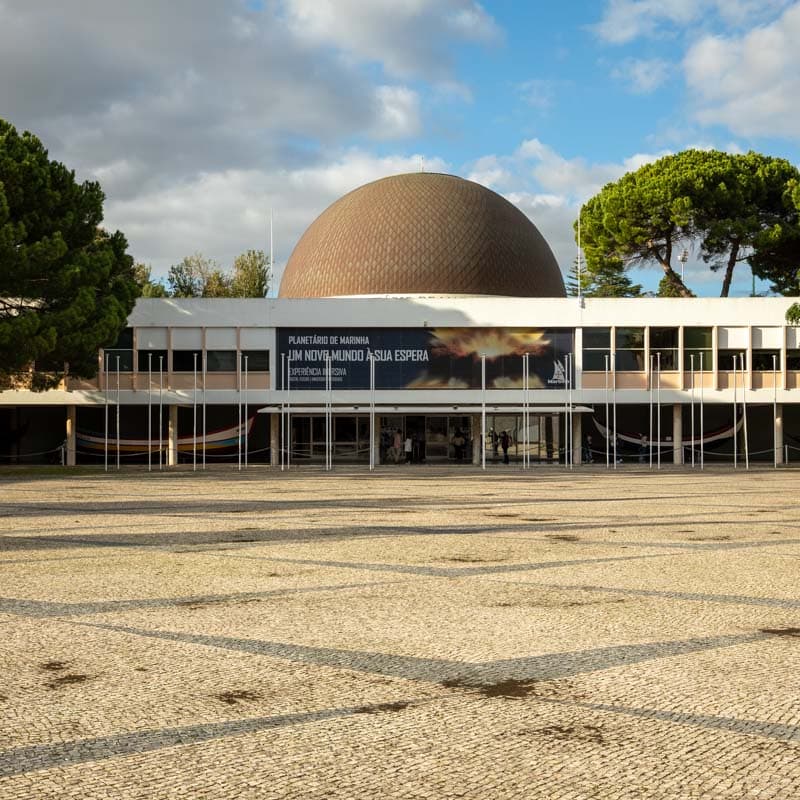
Beside the Jerónimos Monastery, the Navy Planetarium has the rare grace of places that still teach us to look up. Opened in 1965, from an idea by Commander Eugénio Conceição Silva and designed by the architect Frederico George, it was born from the meeting of scientific purpose, naval tradition and the support of the Calouste Gulbenkian Foundation. Its great dome turned it into a true theatre of the sky, where generations of visitors discovered constellations, nebulae and the old art of guiding a journey by the stars. The renovation at the start of the twenty-first century strengthened that immersive experience without erasing the building’s character. It is worth noticing the contrast between the sober exterior and the sense of scale inside the auditorium, where Lisbon seems to disappear for a while. In Belém, among monuments linked to the sea, this planetarium reminds us that navigation has always depended on reading the heavens.

Praça do Comércio e Cais das Colunas4.7

Praça do Comércio e Cais das Colunas

Square • Lisboa, Lisboa

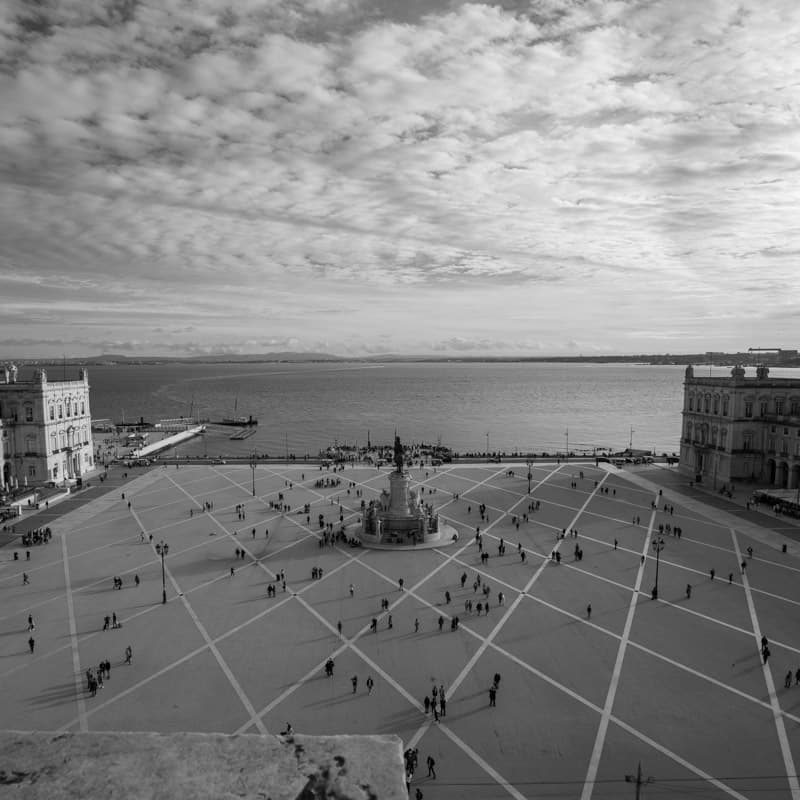
Few places explain Lisbon as clearly as Praça do Comércio and Cais das Colunas. Before the 1755 earthquake, the Ribeira Palace stood here; after the catastrophe, the Pombaline reconstruction turned the old Terreiro do Paço into a regular square open to the Tagus, expressing the capital’s new commercial and political role. The long arcades, the towers and the equestrian statue of King José the First give the whole ensemble the solemnity of a great urban stage, yet it is by the river that the place gains a different intensity. Cais das Colunas, conceived within this new bond between city and water, served as Lisbon’s ceremonial landing place for those arriving by river. Today, between the square’s luminous geometry, the broad horizon of the estuary and the steps that almost touch the Tagus, this ensemble still shows that Lisbon has always understood itself best when facing the river.
Centro Cultural de Belém4.6

Centro Cultural de Belém

Cultural Centre • Lisboa, Lisboa

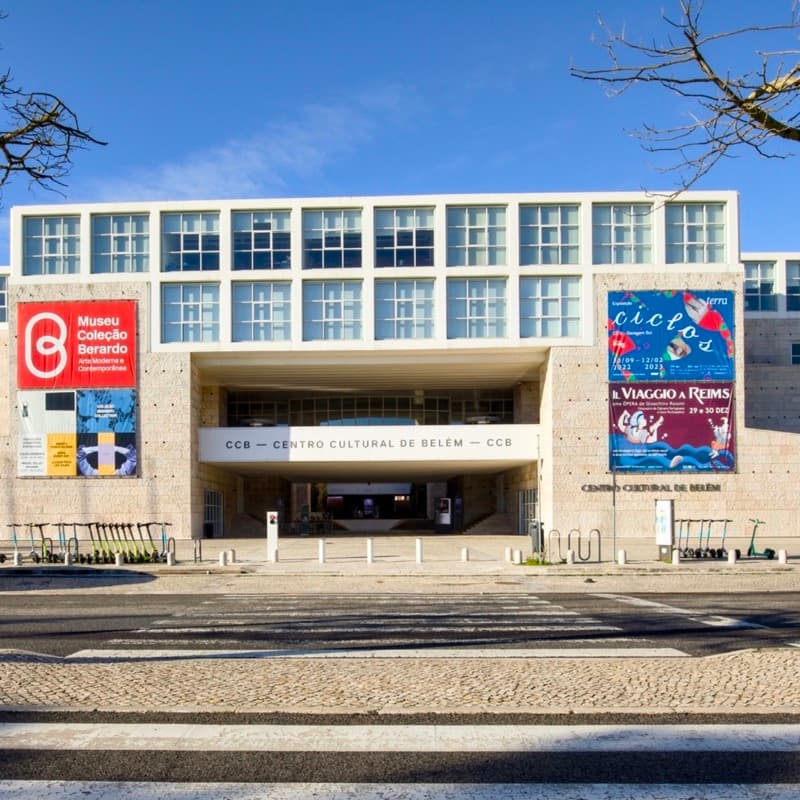
Among Belém’s great historic symbols, the Belém Cultural Centre marks the moment when Lisbon decided to inscribe its modernity too into the city’s monumental landscape. Its construction was decided in 1988, in the context of Portugal’s European presidency in 1992, and the project by Vittorio Gregotti and Manuel Salgado imagined a kind of open city, made of buildings, streets, squares and bridges, in dialogue with Praça do Império, the Jerónimos Monastery and the Tagus. During a visit, it is worth exploring the outdoor spaces as much as the auditoriums and exhibition rooms, because the CCB is not understood only from within: it also lives in the light, the voids and the relationship between pale stone and the river. Today, listed as a Monument of Public Interest, it remains one of the places where Lisbon shows, with remarkable ease, that contemporary architecture can also create memory.

Museu do Dinheiro4.6

Museu do Dinheiro

Museum • Lisboa, Lisboa

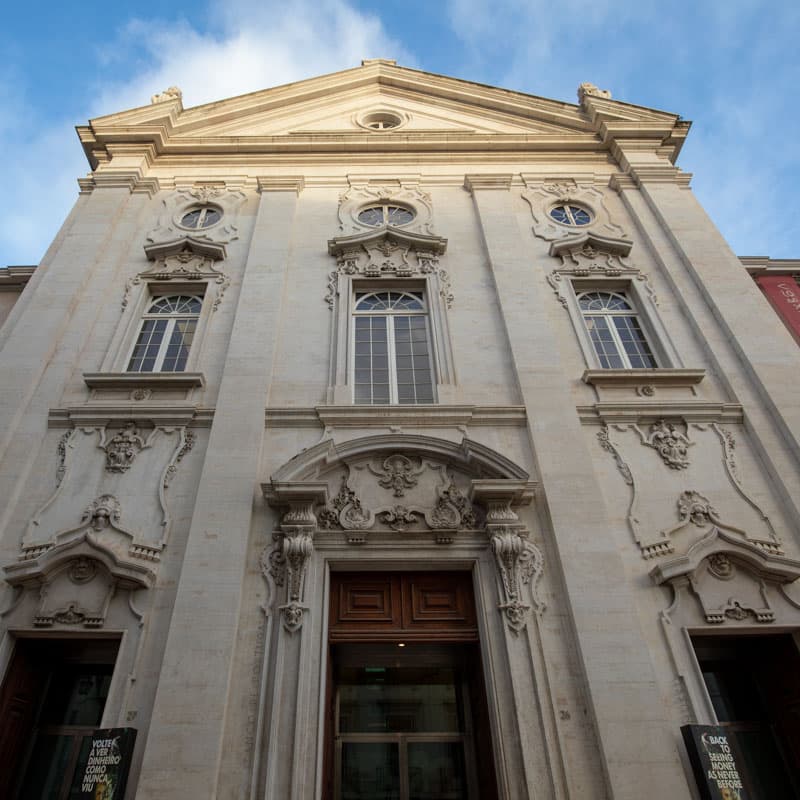
Set inside the former church of Saint Julian, the Money Museum is one of those places where Lisbon reveals itself in layers. Open to the public since 2016, it occupies a building restored as part of the rehabilitation of the Bank of Portugal’s headquarters, and that long biography gives depth to a museum devoted to money, its history and the ways people exchange value. Along the route, coins, banknotes, machines and multimedia displays show how money has shaped trade, power and everyday life, without losing sight of the human scale. Yet two details make the visit especially memorable: the Wall of King Dinis, preserved within the museum, and the gold bar that visitors can touch. Between medieval remains, the old nave of Saint Julian and contemporary museography, the place achieves something rare: it speaks about economics without coldness and shows that behind every coin there is always a story of city, power and imagination.

Museu da Marioneta4.6

Museu da Marioneta

Museum • Lisboa, Lisboa

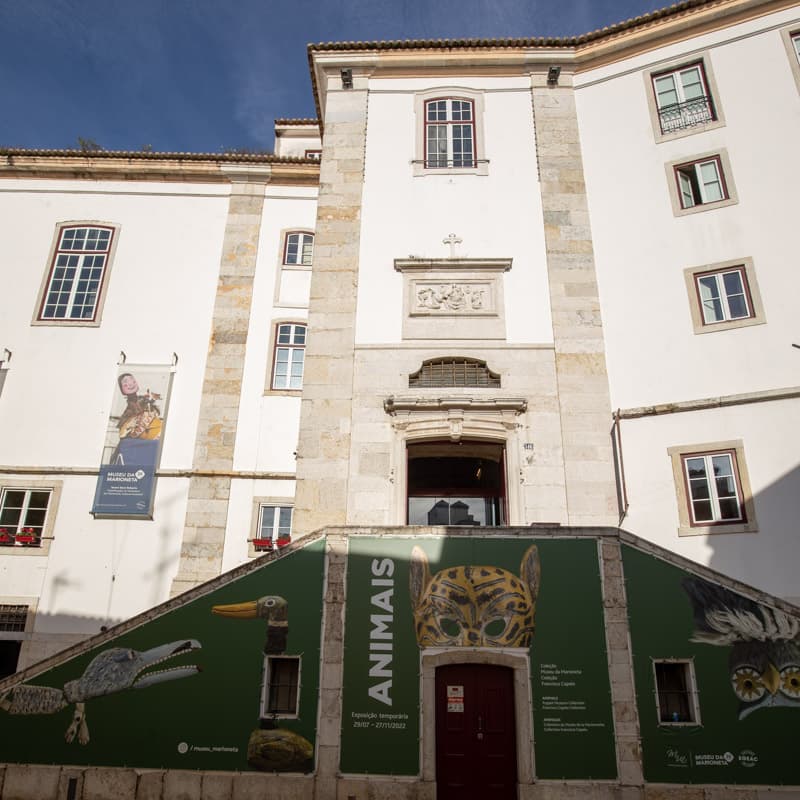
In the Convento das Bernardas, in Madragoa, the Puppet Museum shows how a small object can hold an entire world. Founded in 1987, it was the first museum in Portugal entirely devoted to puppetry and, since 2001, it has been housed in this former seventeenth-century convent, almost destroyed by the 1755 earthquake and later rebuilt. The collection brings together more than 3,000 pieces across different places, techniques and periods, yet the heart of the visit beats most strongly in the Portuguese traditions, from the Robertos to the Bonecos de Santo Aleixo. Along the way appear shadow puppets, string puppets, rod puppets, African and Asian masks, and even a section linked to animation cinema. It is also worth slowing down to feel the building itself: the cloister, the adapted former church and the atmosphere suspended between theatre and retreat. It is a museum that speaks of childhood, certainly, but also of memory, artifice and the old human desire to give soul to things.

Museu Nacional de Arte Antiga4.6

Museu Nacional de Arte Antiga

Museum • Lisboa, Lisboa

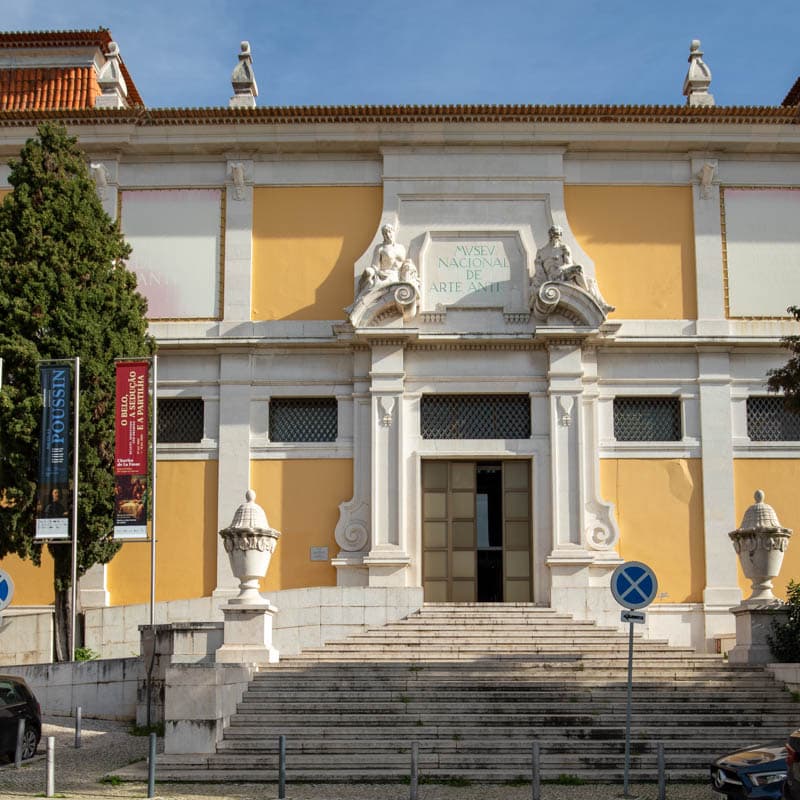
High on Rua das Janelas Verdes, the National Museum of Ancient Art is one of those places where Portugal seems to tell its own story with unusual clarity. Opened in 1884, to give a home to many works that came from convents and monasteries after the extinction of the religious orders, it was installed in the former Palace of the Counts of Alvor and became the country’s great house of ancient art. Its collection crosses centuries and geographies, from painting to goldsmithing, from sculpture to works from Europe, Africa and the East, yet some encounters ask for real pause: the Panels of Saint Vincent, the Belém Monstrance, the Namban screens. During a visit, it is also worth slowing down in the garden facing the Tagus, where the city seems to breathe differently. Between palace, collection and horizon, the museum leaves a rare impression: that history, when well kept, remains alive.

Padrão dos Descobrimentos4.6

Padrão dos Descobrimentos

Monument • Lisboa, Lisboa

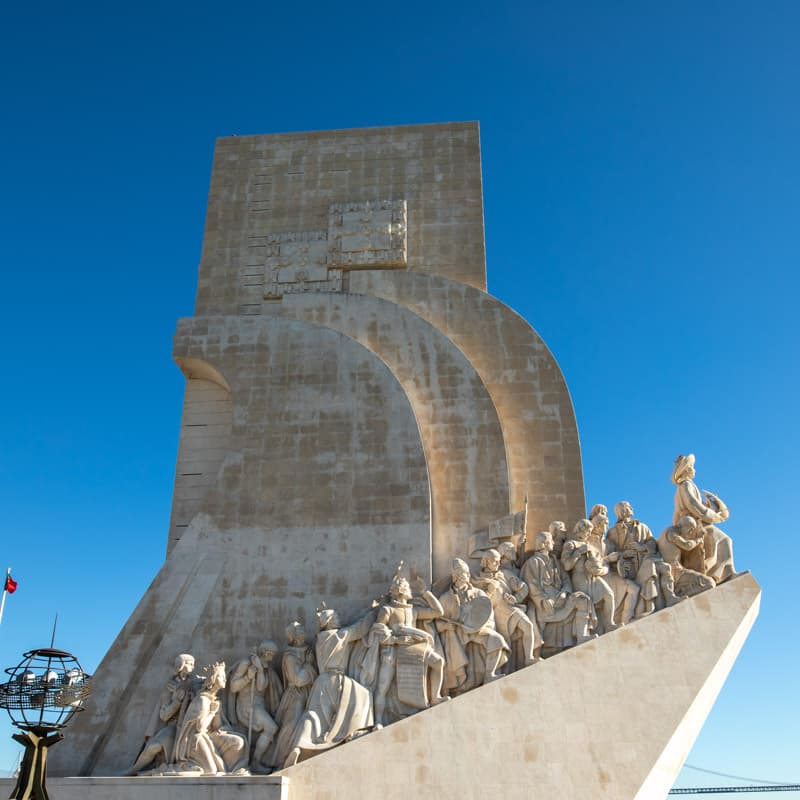
Facing the Tagus, the Monument to the Discoveries has the theatrical force of a ship ready to depart, yet it speaks as much about Portuguese memory in the twentieth century as about the voyages of the fifteenth and sixteenth centuries. It was first built as an ephemeral structure for the Portuguese World Exhibition of 1940 and rebuilt in 1960, for the fifth centenary of the death of Prince Henry the Navigator, the figure who advances at the prow of this stone caravel. Behind him come navigators, cartographers, missionaries and men of culture, in a sculptural procession conceived by Cottinelli Telmo and Leopoldo de Almeida. It is worth seeing the monument from a distance, to feel its scale and forward thrust, and then noticing the Compass Rose on the ground, a gift from South Africa. From the viewpoint, the panorama over Belém, the Tagus and the monumental riverfront helps explain why this is a place where landscape, history and memory meet with rare clarity.

Museu do Oriente4.5

Museu do Oriente

Museum • Lisboa, Lisboa

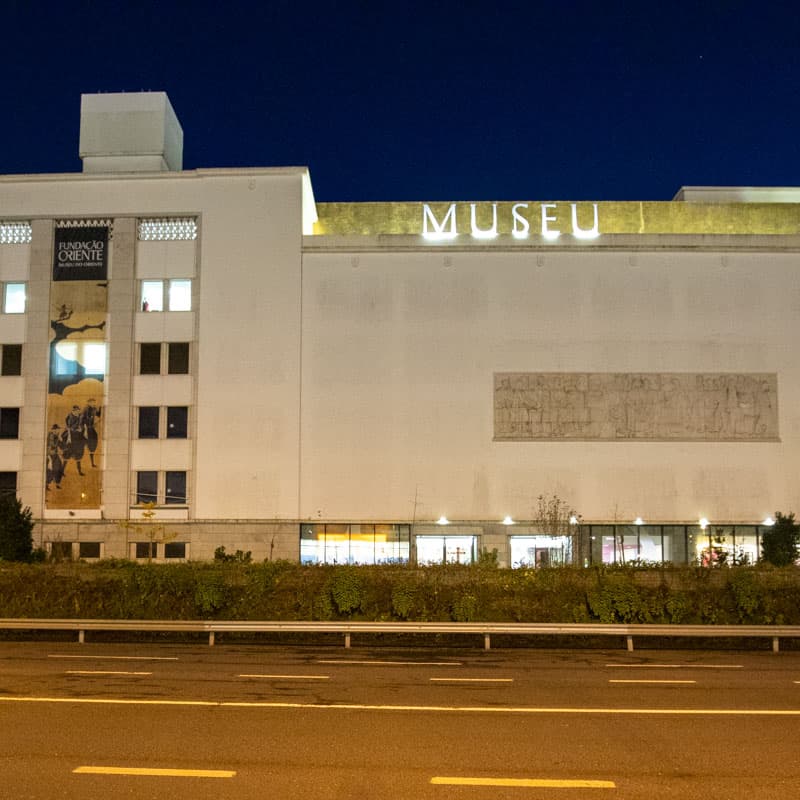
On Alcântara’s waterfront, the Orient Museum shows how a former dockside warehouse can become a place where worlds meet. Opened in 2008 inside the modernist building of the former refrigerated cod warehouses, designed from 1939 onwards, it holds two collections that define its character with unusual clarity. On one side, Portuguese Presence in Asia brings together thousands of objects and reveals the fascination, exchange and curiosity that shaped the relationship between Portugal and the East. On the other, the Kwok On collection, regarded as one of the most representative of its kind in Europe, opens a path into the performing arts, rituals and popular religions of a much wider Asia. During a visit, it is worth noticing the contrast between the building’s industrial sobriety and the richness of puppets, masks, folding screens, ivories and ritual objects. Few museums in Lisbon manage to feel at once so calm, so layered and so open to dialogue.

Museu da Carris4.5

Museu da Carris

Museum • Lisboa, Lisboa

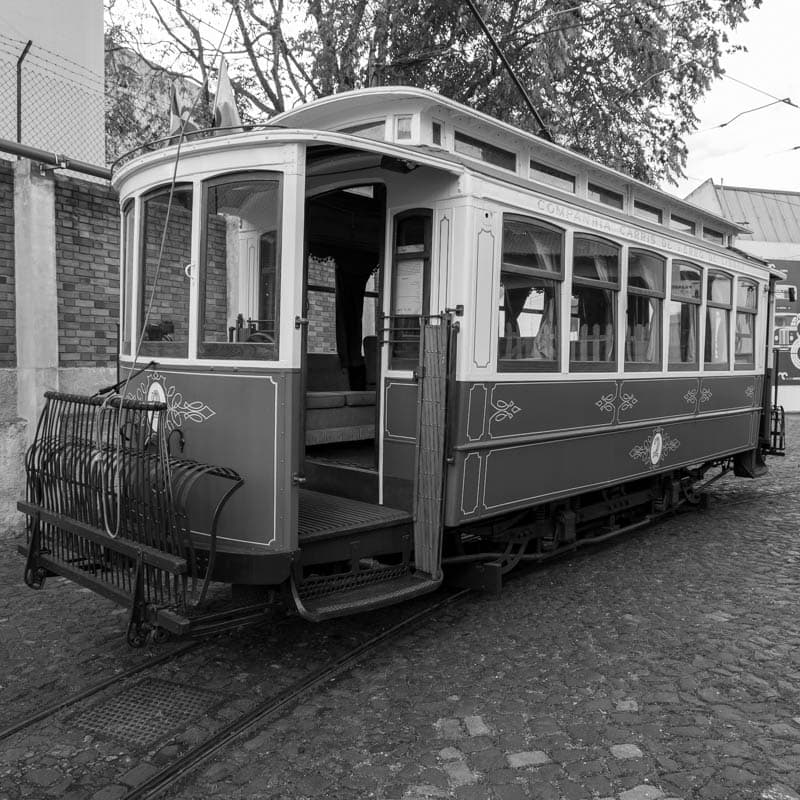
Stepping into the Carris Museum is like understanding Lisbon in motion. Housed in Santo Amaro Station, Carris’s first station, the museum preserves the memory of a company founded in 1872, intriguingly in Rio de Janeiro, before it transformed the way the capital expanded and overcame its hills. Here, the history of public transport meets the history of the city itself: from horse-drawn streetcars to the funiculars, from the electrification of the network to twentieth-century buses. Among photographs, uniforms, tickets, machinery and historic vehicles, visitors follow the technical, social and urban changes that shaped everyday life in Lisbon. One of the most memorable moments is the journey between the two exhibition areas on a tram from 1901, which gives the visit a rare sense of authenticity. More than a transport museum, this is a place where Lisbon can be seen growing along its rails.

Basílica da Estrela4.6

Basílica da Estrela

Church • Lisboa, Lisboa

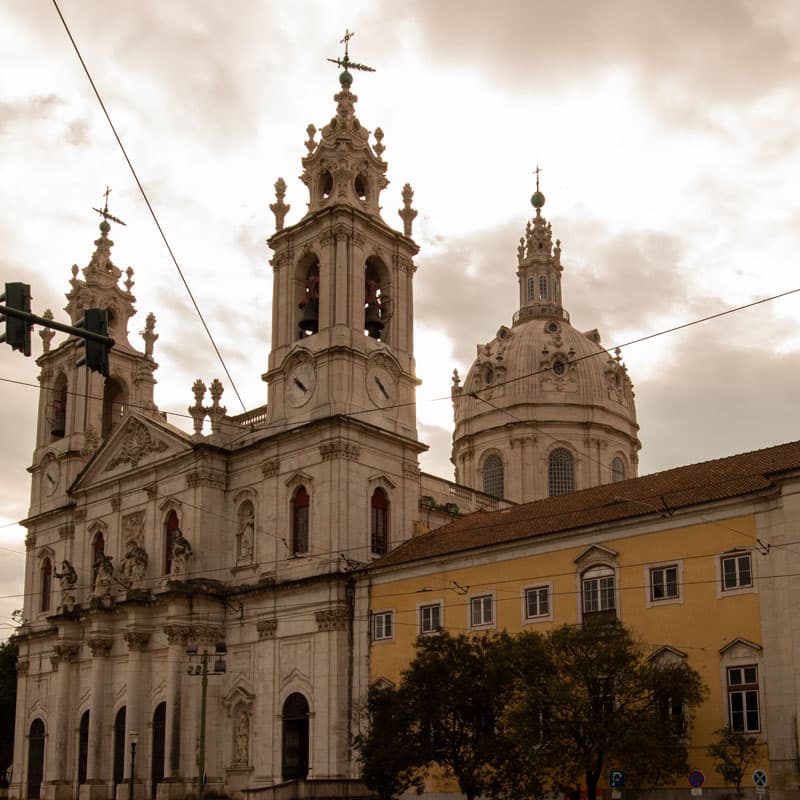
The Basilica da Estrela rises above the hill as a serene, luminous presence, one of those places that seem to shape Lisbon’s skyline. Born from a vow made by Queen Maria the First in the late eighteenth century, it became the first church in the world dedicated to the Sacred Heart of Jesus. Inside, its grandeur never feels heavy: the coloured marbles, the broad nave and the light falling from the dome create a clear, almost musical solemnity. It is worth pausing at the queen’s tomb and at one of the basilica’s most unexpected treasures, the nativity scene by Machado de Castro, made up of hundreds of terracotta and cork figures, where the sacred and everyday life meet with remarkable delicacy. And if you climb to the dome, the visit takes on another scale: Lisbon opens out all around you, as if the whole city were answering the harmony of this place.

Jardim da Estrela4.6

Jardim da Estrela

Garden/Park • Lisboa, Lisboa

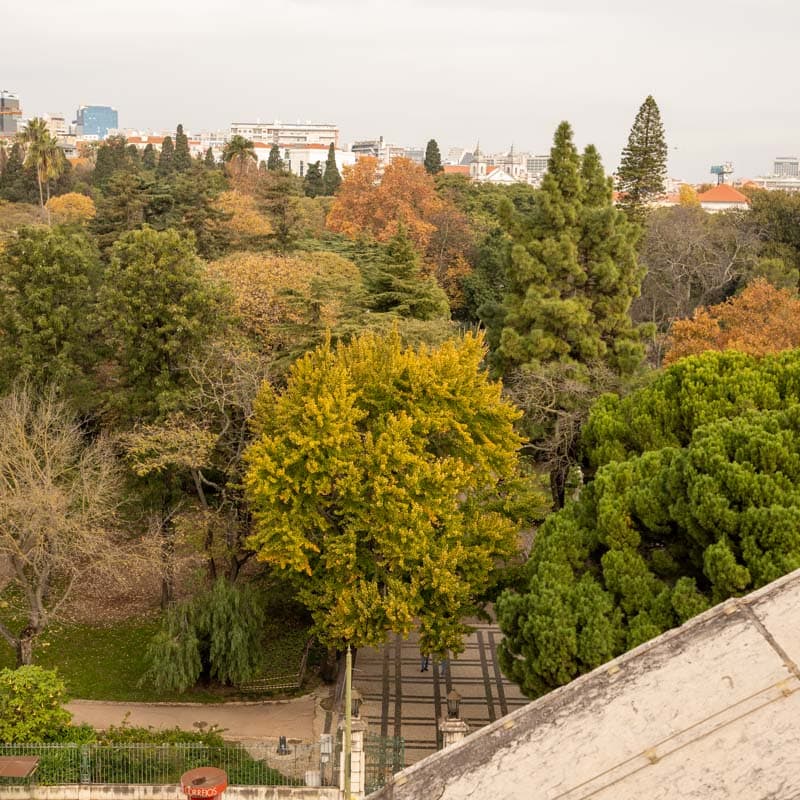
Jardim da Estrela has the rare calm of a romantic garden that still feels like the city’s living room. Commissioned in 1842 and inaugurated in 1852, opposite the basilica, it created a refuge of winding paths, lakes and shade where Lisbon also learned how to stroll. Its English-style layout, varied vegetation and wrought-iron bandstand of 1884 give it elegance, yet what lingers most is the way it brings together nature and urban life: ducks and carp on the water, readers at the library kiosk, families on the grass and concerts that restore the garden’s old public vocation. There is also a particularly charming detail: the white chalet of Casa do Jardim da Estrela, now a cultural venue, opened in 1882 as the first kindergarten in Portugal, joining nature and education in an idea far ahead of its time. To walk here is to feel Lisbon soften, almost held in suspension.

Museu de Marinha4.5

Museu de Marinha

Museum • Lisboa, Lisboa

The Maritime Museum, housed since 1962 in the wings of Jerónimos Monastery, does more than display vessels: it tells the long intimacy between Portugal and the sea. Created on the initiative of King Luís in 1863, it began with a didactic purpose, yet today the visit feels like a journey through time. Among models, charts, instruments and paintings, visitors sense how the ocean was a route for trade, science, war and imagination. The most striking moment awaits in the Barge Pavilion, built to house full-size boats. There, the Royal Brig stands out for its gilded carving, mythological figures and the Venetian mirrors in its stern cabin, but also for its story: in 1808 it carried the royal family to the squadron that sailed to Brazil and, already in the twentieth century, it returned to the water for the official visit of Queen Elizabeth the Second. Few places show so clearly how the sea helped shape Portuguese power and memory.

Museu Nacional dos Coches4.6

Museu Nacional dos Coches

Museum • Lisboa, Lisboa

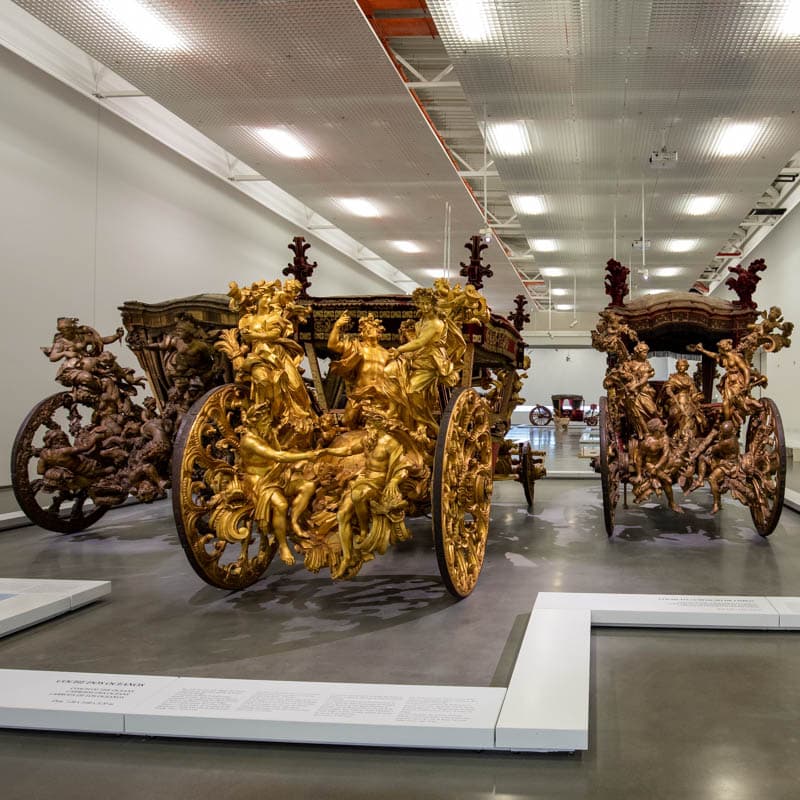
The National Coach Museum is one of those places where history seems to pass before your eyes in procession. Created on the initiative of Queen Amélia in 1905 to gather and preserve the royal vehicles scattered across different palaces, it began in the former Royal Riding School of Belém and, more than a century later, gained a new building designed by Paulo Mendes da Rocha. The collection, regarded as unique in the world, shows how power was displayed on wheels, through luxury, ceremony and diplomacy. Among coaches, berlins and litters, the eye is drawn to the celebrated Coach of the Oceans, one of the museum’s treasures, built for the embassy sent by King João the Fifth to Pope Clement the Eleventh in 1716. Its exuberant carving and allegories linked to the sea and the Discoveries reveal the grand image Portugal wished to project. Visiting this museum is like stepping into a theatre of splendour where memory moves at the solemn pace of horses.

MAAT Central4.6

MAAT Central

Museum • Lisboa, Lisboa

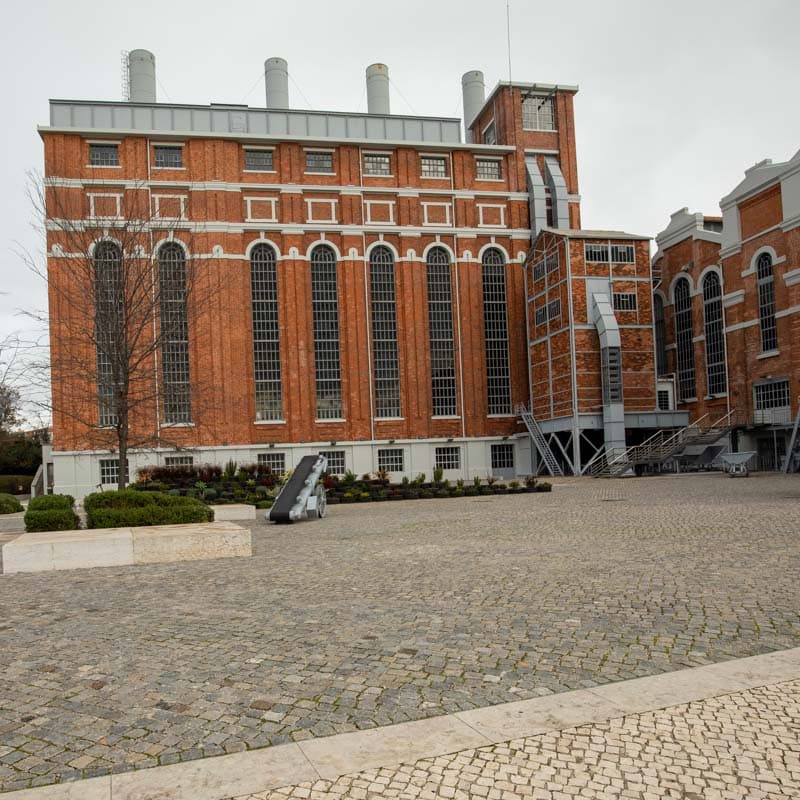
MAAT Central is one of those places where Lisbon can be understood as a modern city. Formerly the Tejo Power Station, this thermoelectric plant began operating in 1909 and supplied the capital for decades, first continuously and later as a reserve station, before being reborn as a museum space. The building, with its red brick, iron and vast windows, is one of the landmarks of Portuguese industrial architecture, yet what impresses most is stepping inside and finding the original machinery still in place. In the exhibition The Electricity Factory, boilers, turbo-alternators and walkways reveal the almost theatrical scale of energy production and recall the time when coal helped to light Lisbon. Today, as part of the MAAT campus, the former plant has gained a new life without losing its raw force. It is a rare place, where technology, memory and city still speak to one another.

Torre de Belém4.5

Torre de Belém

Monument • Lisboa, Lisboa

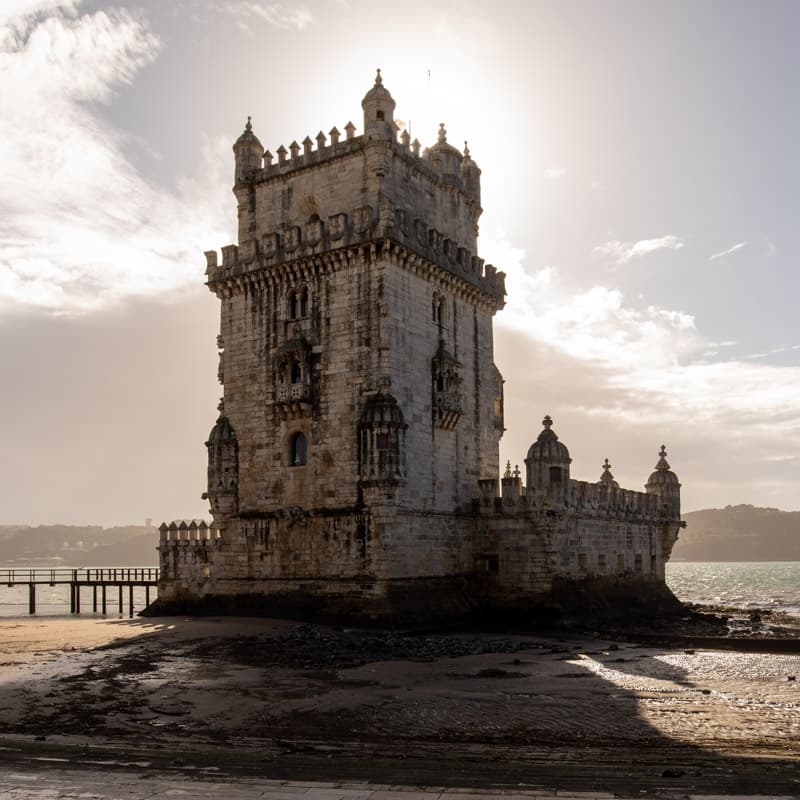
Belém Tower has the grace of a Manueline jewel and the firmness of a fortress built to guard the entrance to the Tagus. Raised in the reign of King Manuel the First, from 1514 onwards, and designed by Francisco de Arruda, it grew closely tied to the port of Lisbon, Jerónimos Monastery and the imagination of the Discoveries. Its form combines a medieval-looking tower with a modern bulwark, while the exterior is covered with ropes, knots, armillary spheres, crosses of the Order of Christ and other motifs that make the stone feel almost like lace. It is worth lingering over the balcony facing the river and one surprising detail: the small rhinoceros carved into one of the façades. From above, the Tagus and Belém come into sharper focus. It then becomes clear why this tower has become one of Lisbon’s great symbols and a UNESCO World Heritage site.

Museu Nacional de História Natural e da Ciência4.4

Museu Nacional de História Natural e da Ciência

Museum • Lisboa, Lisboa

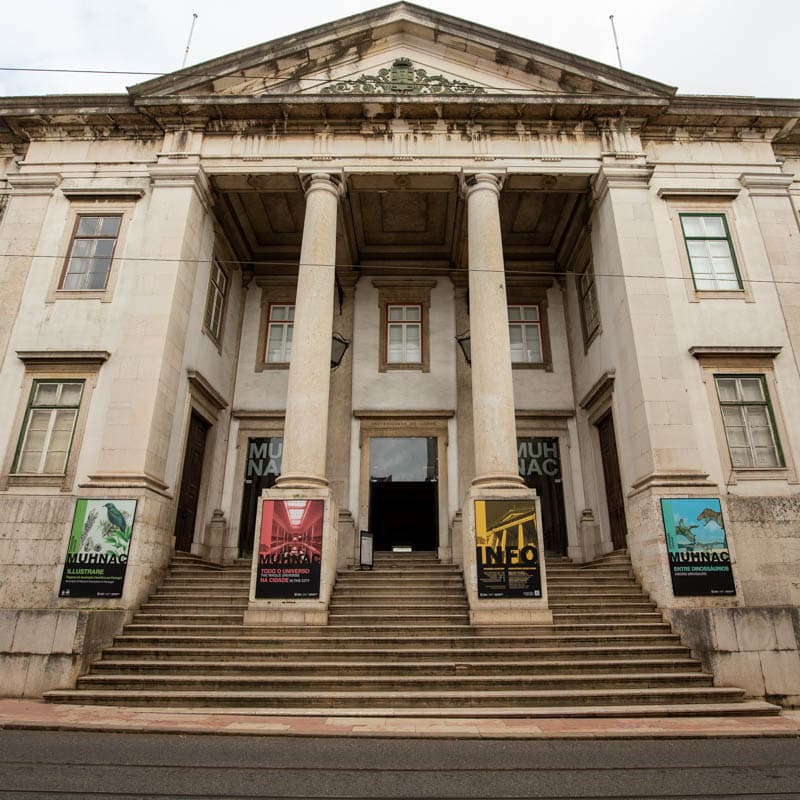
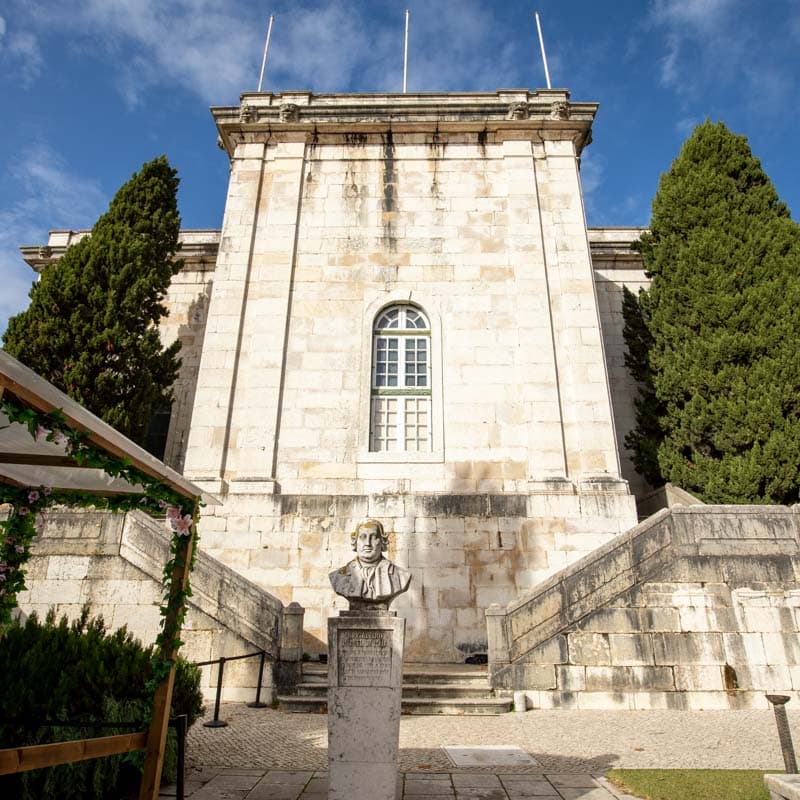
The National Museum of Natural History and Science is one of Lisbon’s most unexpected places: behind the solemn façade of the former Polytechnic School, the city opens itself to curiosity. Heir to the Royal Museum of Natural History and Botanical Garden created in the second half of the eighteenth century, the museum preserves more than 250 years of scientific activity and brings together collections with more than three million objects. Yet the visit never feels like stepping into a static archive. Between galleries, the Lisbon Botanical Garden, integrated into the complex, and the magnificent Laboratorio Chimico, you sense how knowledge was observed, classified and taught. It is worth lingering in that laboratory, a true historical and scientific jewel, where the scale of the space still makes you imagine lessons, experiments and wonder. Few museums show so clearly that science also has architecture, memory and imagination.

Jardim Botânico de Lisboa4.0

Jardim Botânico de Lisboa

Botanical Garden • Lisboa, Lisboa

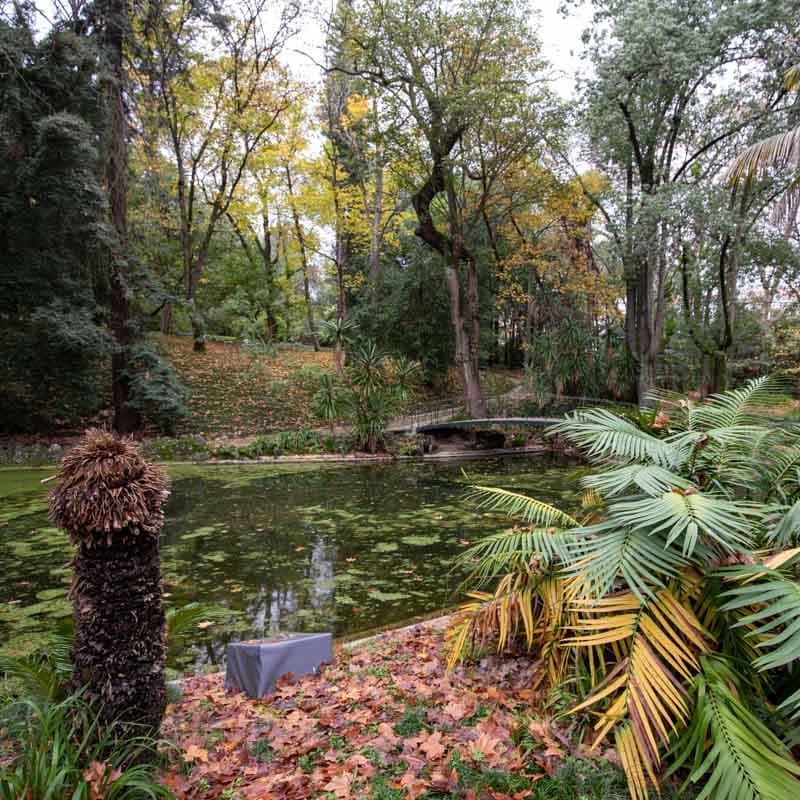
The Botanical Garden of Lisbon is an unexpected refuge in the heart of the city, yet it was born with a very clear scientific purpose. Designed in the mid nineteenth century to support the teaching and study of botany at the Polytechnic School and inaugurated in 1878, it still retains the charm of a garden created to observe, learn and wonder. The more geometric upper area, known as the Classe, opens out with order and light; then the ground falls into the Arboreto, darker and more immersive, where the Avenue of Palms deepens the feeling of stepping away from the city’s noise. Among species from many parts of the world, the collections of cycads, araucarias, palms and tropical figs deserve particular attention, giving the walk a rare botanical richness. Classified as a National Monument, it is a place where Lisbon seems to breathe more slowly.

Reservatório da Mãe d'Água das Amoreiras4.6

Reservatório da Mãe d'Água das Amoreiras

Museum • Lisboa, Lisboa

The Mãe d’Água das Amoreiras Reservoir has the silent grandeur of a place built to protect what a city depends on. At the point where the Águas Livres Aqueduct enters Lisbon, it began to be designed by Carlos Mardel in the mid eighteenth century and was only completed in the following century, which helps explain the striking blend of sobriety and scale it still conveys today. Inside, the deep tank, the four sturdy pillars, the vaults and the water falling from the mouth of a dolphin create an unexpectedly solemn space, almost like a church devoted to engineering. It is also worth noticing the Casa do Registo, where the distribution of water to fountains, convents and noble houses was controlled. And on the terrace, Lisbon opens out with rare clarity. Few places show so well how urban history is also written through water.

Estação do Rossio4.2

Estação do Rossio

Station • Lisboa, Lisboa

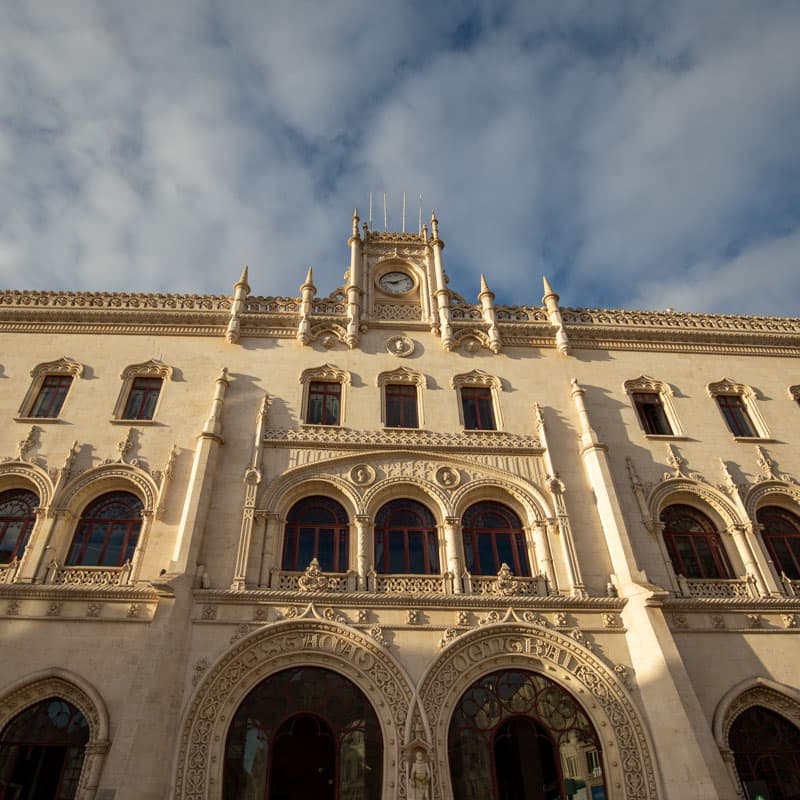
Rossio Station does something rare: it turns a train arrival into a memorable first meeting with Lisbon. Opened in 1890 to serve as the city’s Central Station, it was designed by José Luís Monteiro in the Neo-Manueline style, and one look at the façade explains why: carved arches, lace-like stonework, armillary spheres, sculpture and the clock tower give the building the solemnity of an urban palace. Yet its beauty is not only decorative. The station solved the site’s steep difference in level with great ingenuity and connects to Campolide through a tunnel more than two and a half kilometres long, a decisive work of nineteenth-century railway engineering. It is worth stepping inside and looking up at the iron-and-glass structure above the platforms, or seeking out the famous Sala do Rei. Few places show so clearly that, in Lisbon, even departure can carry grandeur, memory and imagination.

Showing 24 places. Use the filters or map to continue exploring.

Get the app

Take LxDiscover with you

Explore Portugal with a cultural guide for monuments, museums, gardens, palaces, viewpoints, and historic places in Lisbon, Porto, Sintra, and other regions.

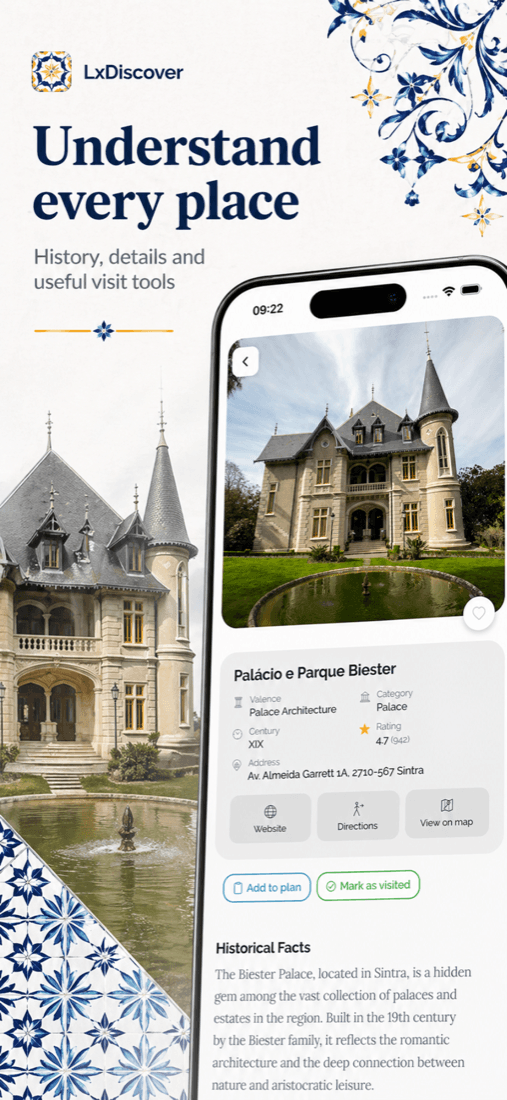
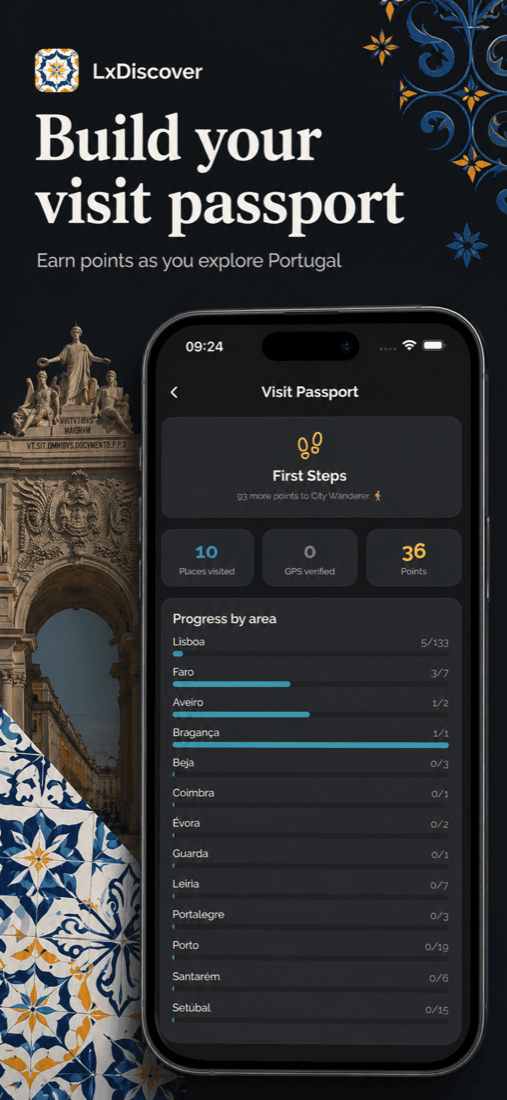
Use the map, follow cultural routes, read editorial context, save places, and track your visits with the visit passport.

Free features

  • Interactive map to discover places of interest
  • Detailed information about monuments, museums, and cultural sites
  • Favorites for the places you want to visit
  • Selected routes to start exploring

Premium subscription

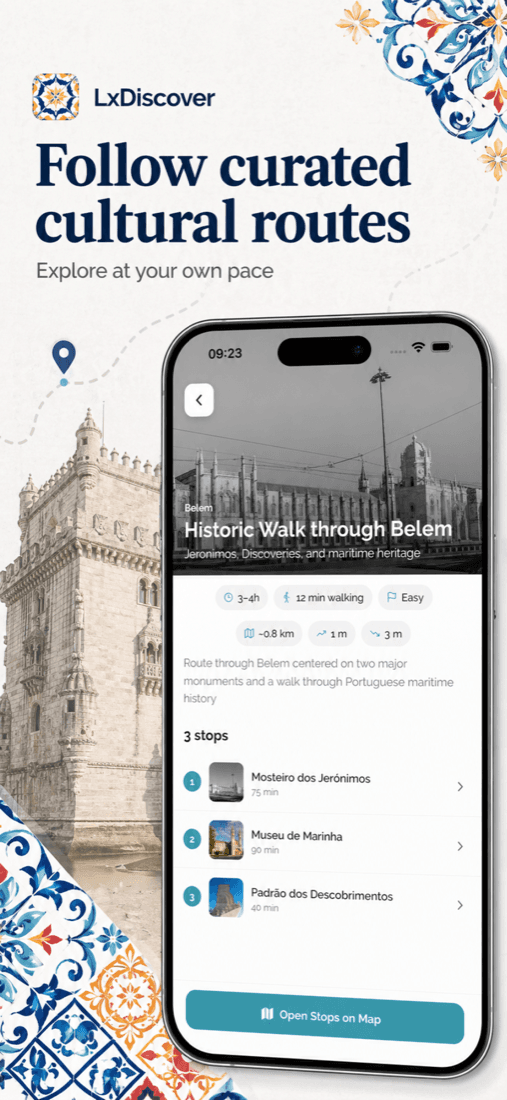
  • Curated routes with ordered stops, duration, and difficulty
  • Thematic collections with editorial context for each area
  • Visit passport for progress, visited places, and achievements
  • Advanced map, planning, and proximity alert tools
LxDiscover map screen
LxDiscover routes screen
LxDiscover visit passport screen