Basílica da Estrela

Lisboa · Lisboa

Basílica da Estrela

ChurchXVIIIReligious Architecture
Praça da Estrela 12, 1200-667 Lisboa4.6 Rating · 7,11245 min

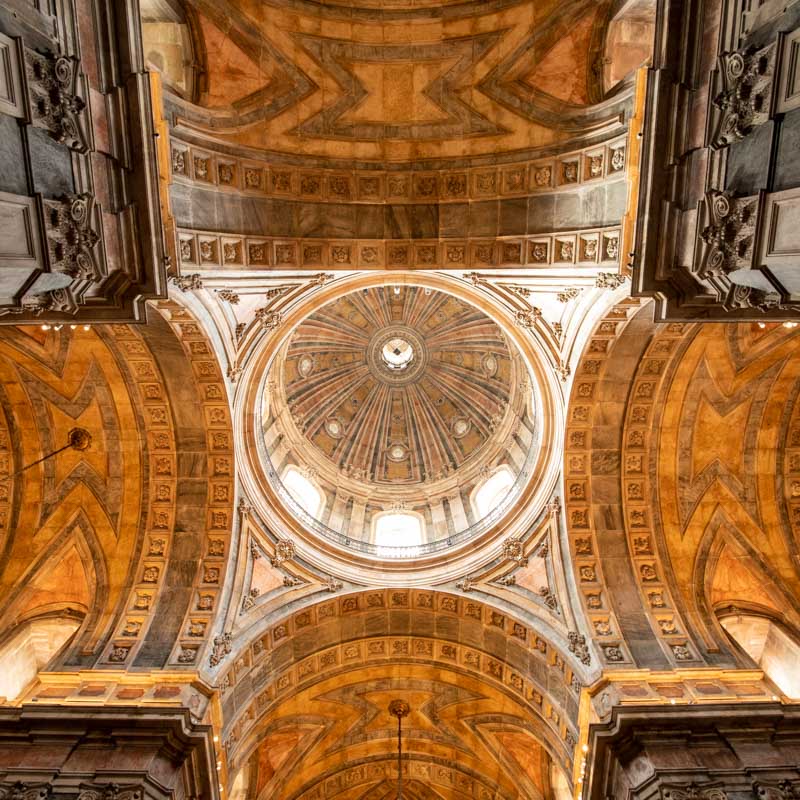
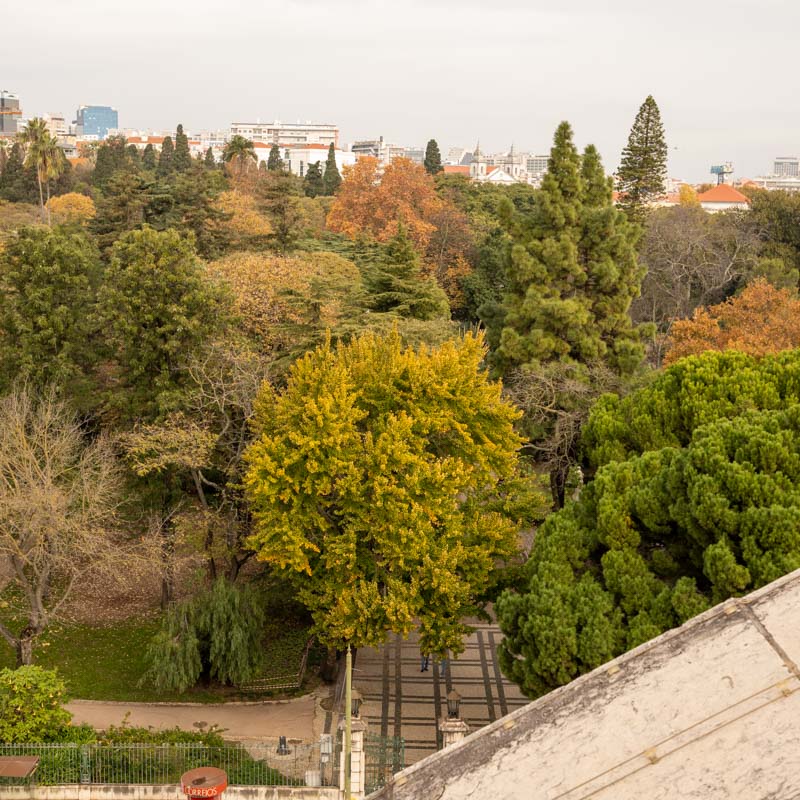
The Basilica da Estrela rises above the hill as a serene, luminous presence, one of those places that seem to shape Lisbon’s skyline. Born from a vow made by Queen Maria the First in the late eighteenth century, it became the first church in the world dedicated to the Sacred Heart of Jesus. Inside, its grandeur never feels heavy: the coloured marbles, the broad nave and the light falling from the dome create a clear, almost musical solemnity. It is worth pausing at the queen’s tomb and at one of the basilica’s most unexpected treasures, the nativity scene by Machado de Castro, made up of hundreds of terracotta and cork figures, where the sacred and everyday life meet with remarkable delicacy. And if you climb to the dome, the visit takes on another scale: Lisbon opens out all around you, as if the whole city were answering the harmony of this place.

Why it matters

The Basilica da Estrela, officially the Basilica of the Sacred Heart of Jesus, was born from a vow made by Queen Maria I, who promised to build a church if she had a male heir to secure the succession. Construction began in 1779, during the queen’s reign, and the complex was linked to a community of Discalced Carmelite nuns. The design was led by Mateus Vicente de Oliveira and, after his death, by Reinaldo Manuel, both associated with the so-called School of Mafra. The architectural works progressed through the 1780s, while the sculptural programme gained particular momentum in the final phase under Joaquim Machado de Castro. More than a convent church, the building became a landmark of eighteenth-century Lisbon, visible from afar because of its dome and its position on the hill. It remains one of the clearest expressions of late eighteenth-century religious architecture in Portugal. The basilica was classified as a National Monument in the early twentieth century, and that protection also includes the tombs of Queen Maria I and her confessor, Frei Inácio de São Caetano.

Architecture and history

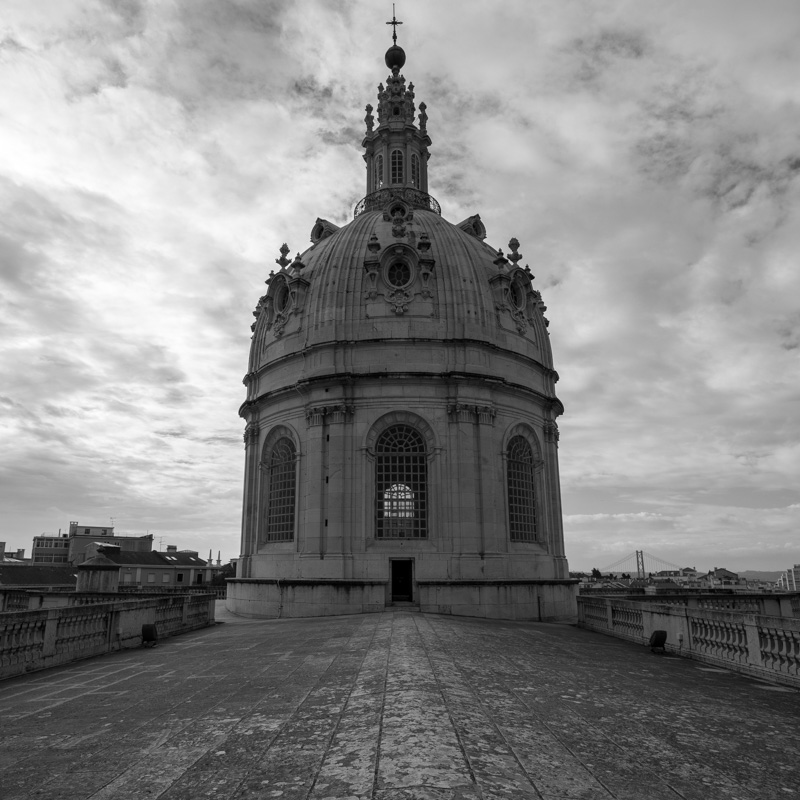
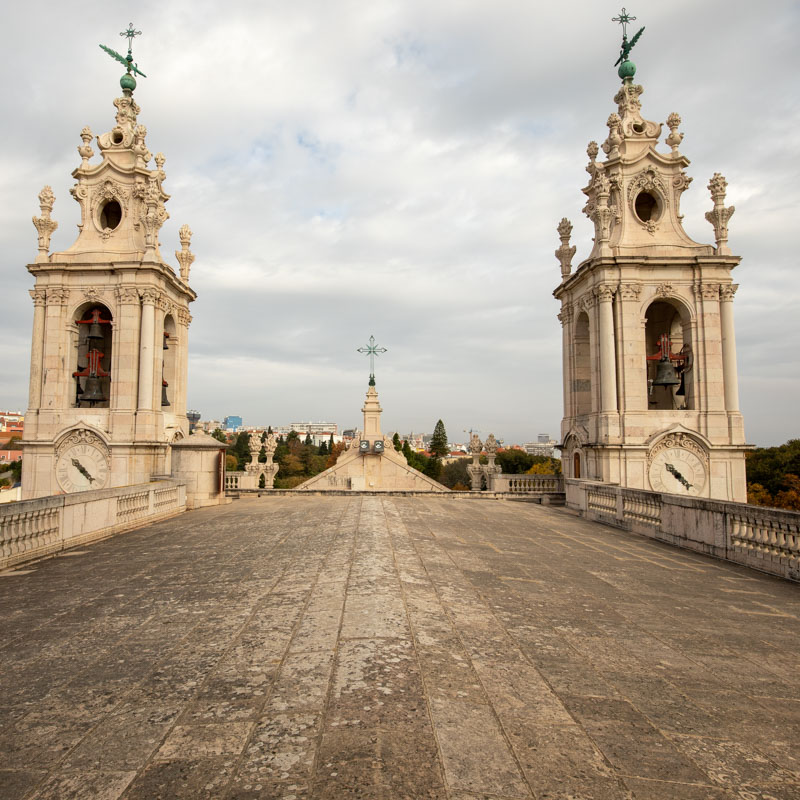
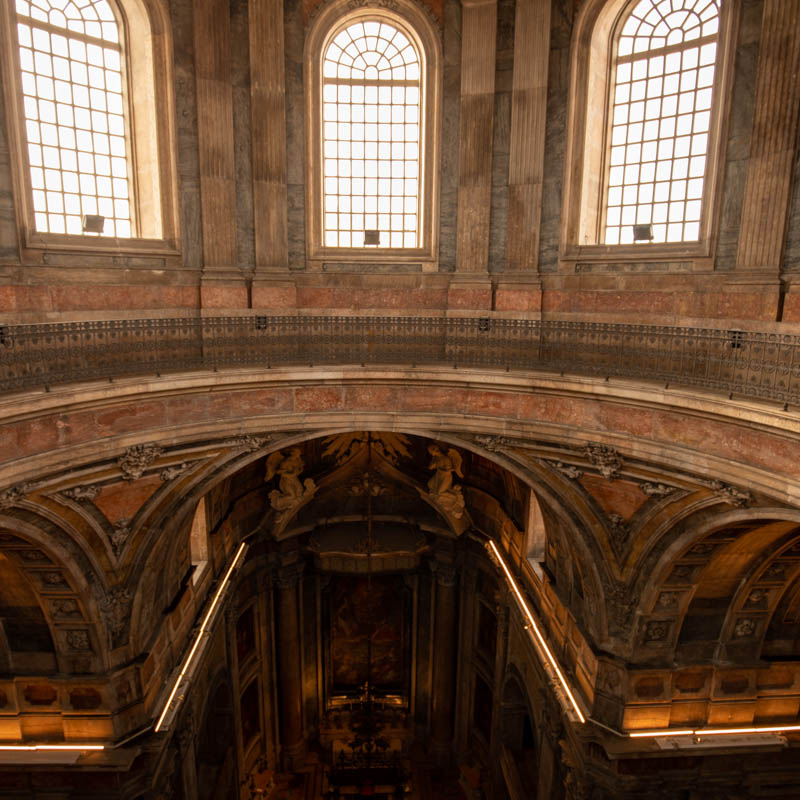
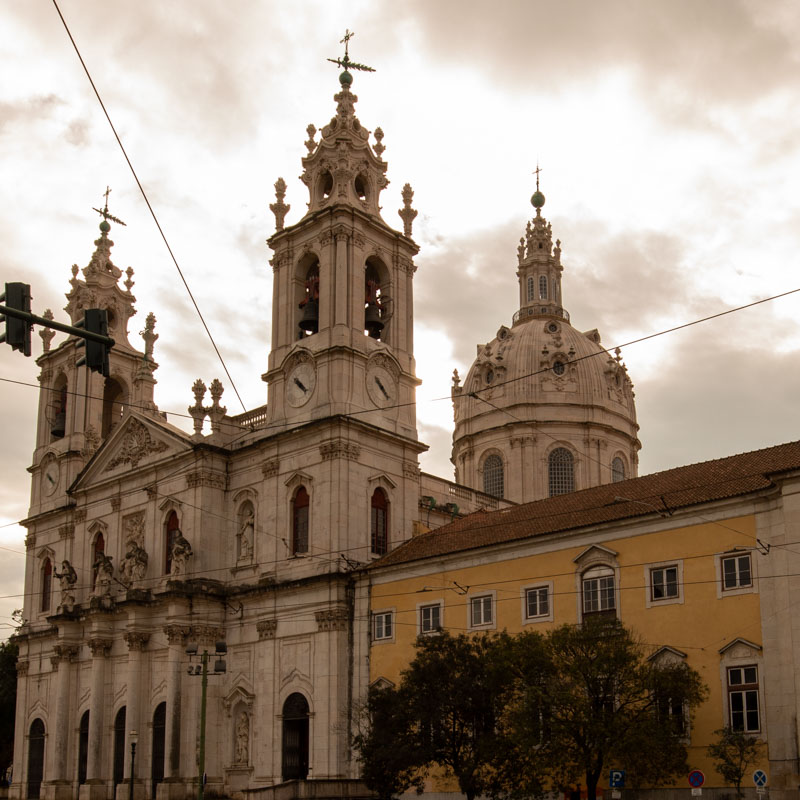
The building brings together late Baroque and Neoclassical language in a remarkably balanced composition. The church has a single nave and a Latin cross plan, with a large central dome that lights the interior and strengthens the vertical feel of the space. On the main façade, the central body is crowned by a triangular pediment and framed by two bell towers with clocks, creating a solemn image that is easy to recognise in Lisbon’s skyline. The exterior sculptural programme, linked to the theme of the Sacred Heart of Jesus, includes monumental statues and reliefs associated with Joaquim Machado de Castro and his circle. Inside, the use of marble in several colours, especially grey, pink and yellow, gives the church a clear and ceremonial atmosphere. The high chapel continues that decorative language with an altarpiece devoted to the same theme. Among the most important artistic works are also paintings by Pompeo Batoni and an important eighteenth-century nativity scene made in cork and terracotta.

More context

During a visit, the first attention should go to the façade, where it is worth observing the dialogue between the pediment, the towers and the statuary above. Inside, the effect of the light entering through the dome helps reveal the scale of the building and the way the nave leads the eye towards the high chapel. The tomb of Queen Maria I deserves a careful stop, because it preserves a direct link between the monument and its founder. It is also worth looking closely at the paintings and sculptures that shape the altars and enrich the visual route through the church. Among the most distinctive spaces is the room that houses Machado de Castro’s nativity scene, a celebrated eighteenth-century ensemble made up of around five hundred figures in cork and terracotta. At the end, it is worth stepping outside again and noticing how the white dome dominates the hill and continues to define the Lisbon skyline.

Gallery

Basílica da Estrela 1
Basílica da Estrela 2
Basílica da Estrela 3
Basílica da Estrela 4
Basílica da Estrela 5

Nearby places

View all