Lisboa · Lisboa
Jardim da Estrela
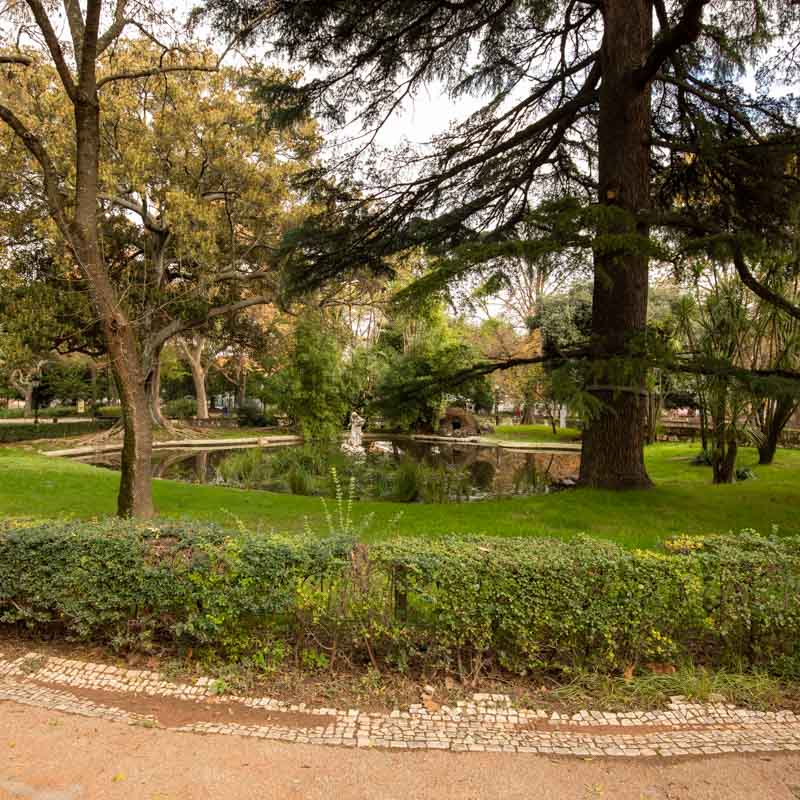
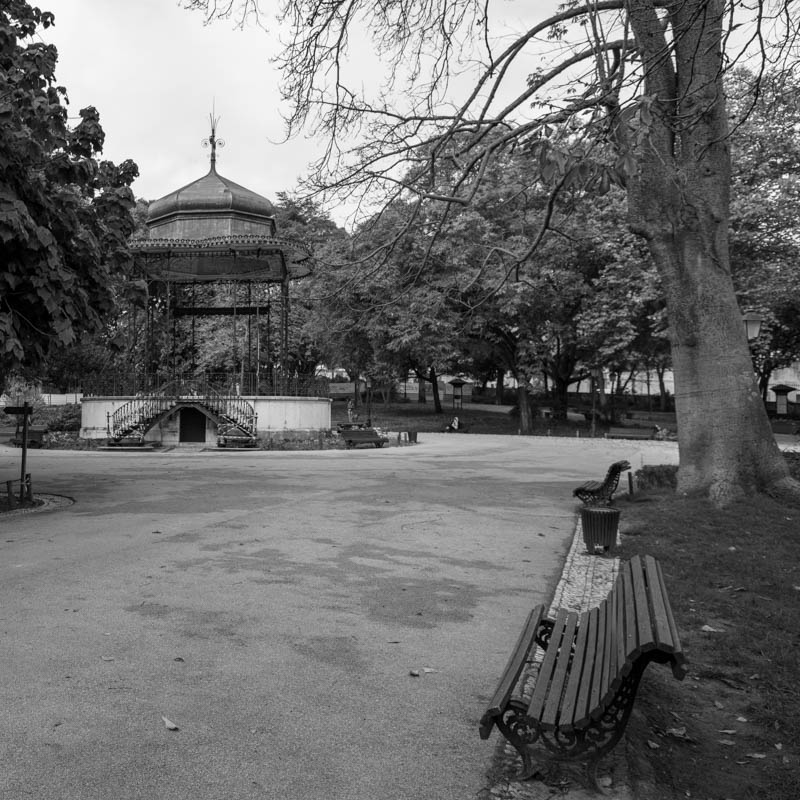
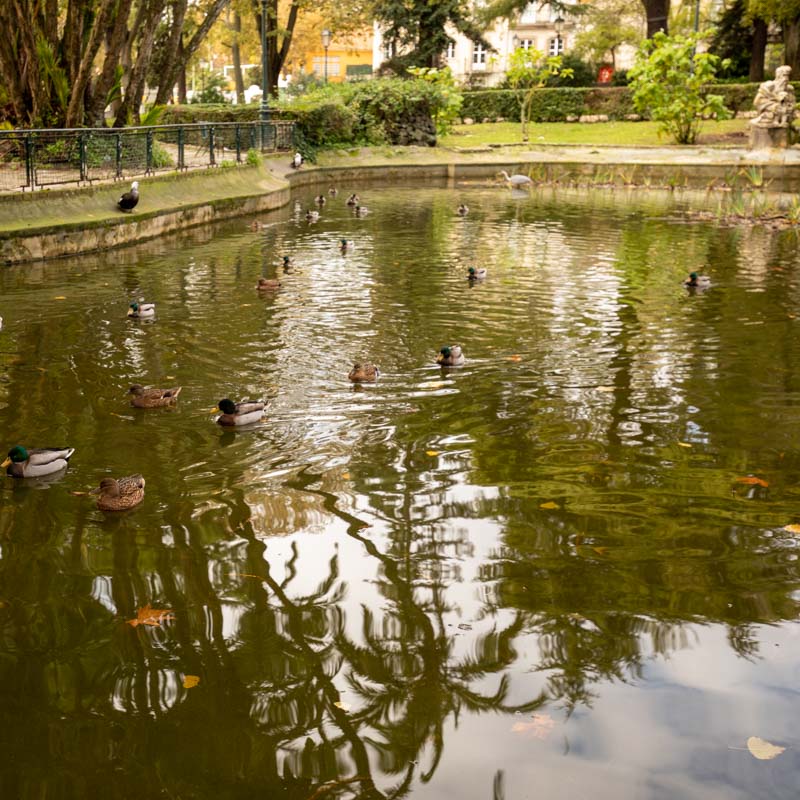
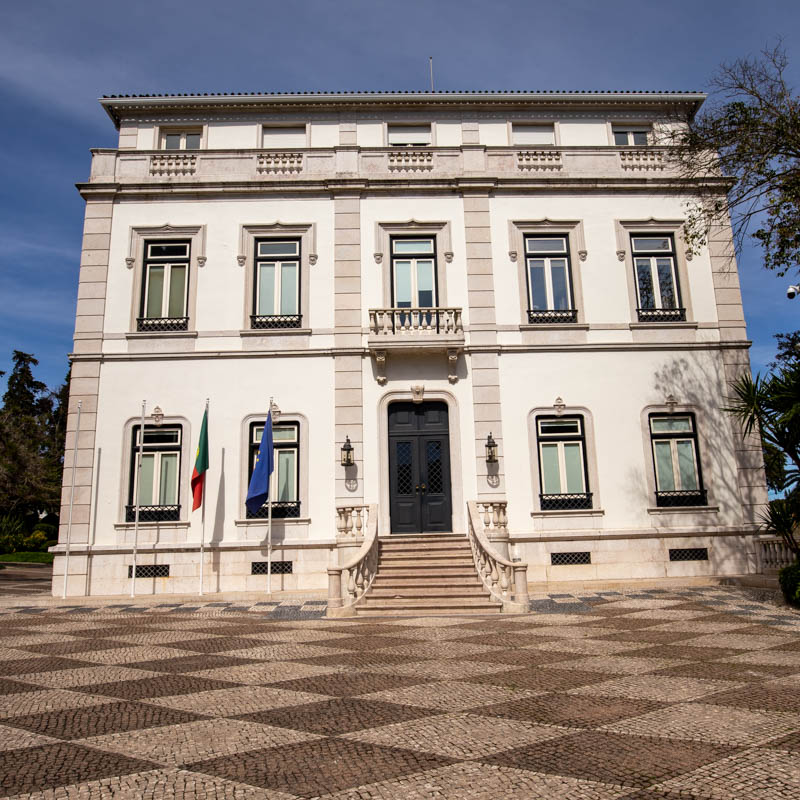
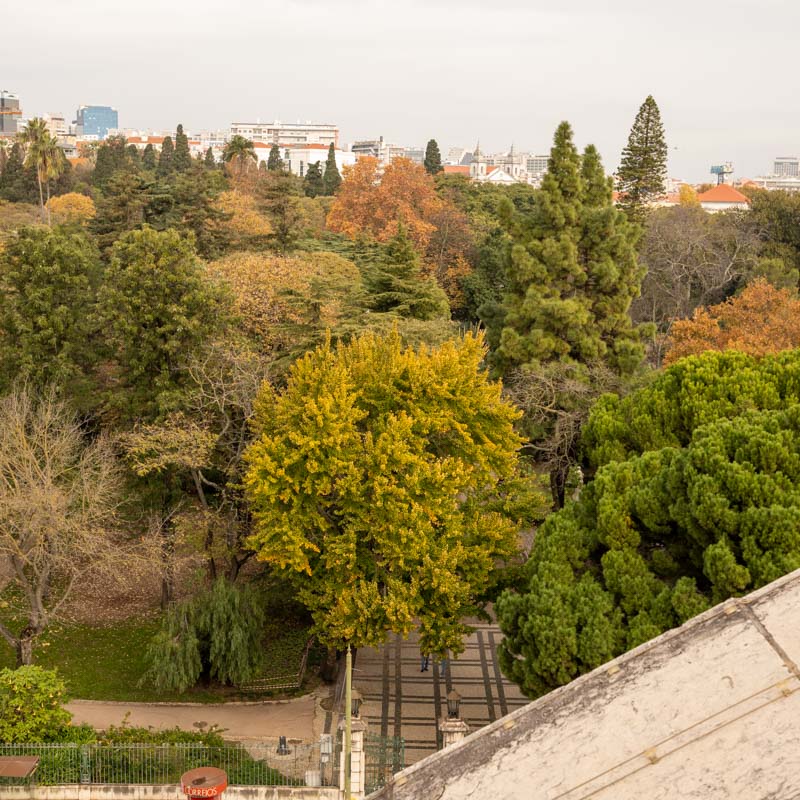
Jardim da Estrela has the rare calm of a romantic garden that still feels like the city’s living room. Commissioned in 1842 and inaugurated in 1852, opposite the basilica, it created a refuge of winding paths, lakes and shade where Lisbon also learned how to stroll. Its English-style layout, varied vegetation and wrought-iron bandstand of 1884 give it elegance, yet what lingers most is the way it brings together nature and urban life: ducks and carp on the water, readers at the library kiosk, families on the grass and concerts that restore the garden’s old public vocation. There is also a particularly charming detail: the white chalet of Casa do Jardim da Estrela, now a cultural venue, opened in 1882 as the first kindergarten in Portugal, joining nature and education in an idea far ahead of its time. To walk here is to feel Lisbon soften, almost held in suspension.
Why it matters
Jardim da Estrela, officially Jardim Guerra Junqueiro, began to be laid out in 1842 on the initiative of Bernardo da Costa Cabral, at a time when Lisbon was seeking new public spaces for walking and leisure. The works lasted a decade and the garden was inaugurated on 3 April 1852, soon becoming a landmark of romantic nineteenth-century Lisbon. Set directly opposite the Basilica da Estrela, the park was designed in the spirit of the English garden, moving away from the rigid geometry of formal layouts and favouring winding paths, shaded corners and a freer relationship with vegetation. Over time, it became one of Lisbon’s most emblematic green spaces, covering 4.6 hectares and keeping a strong civic and social role. Municipal tradition also recalls that it was a place appreciated by Queen Maria II, which helps explain how quickly it entered the daily life of the city.
Architecture and history
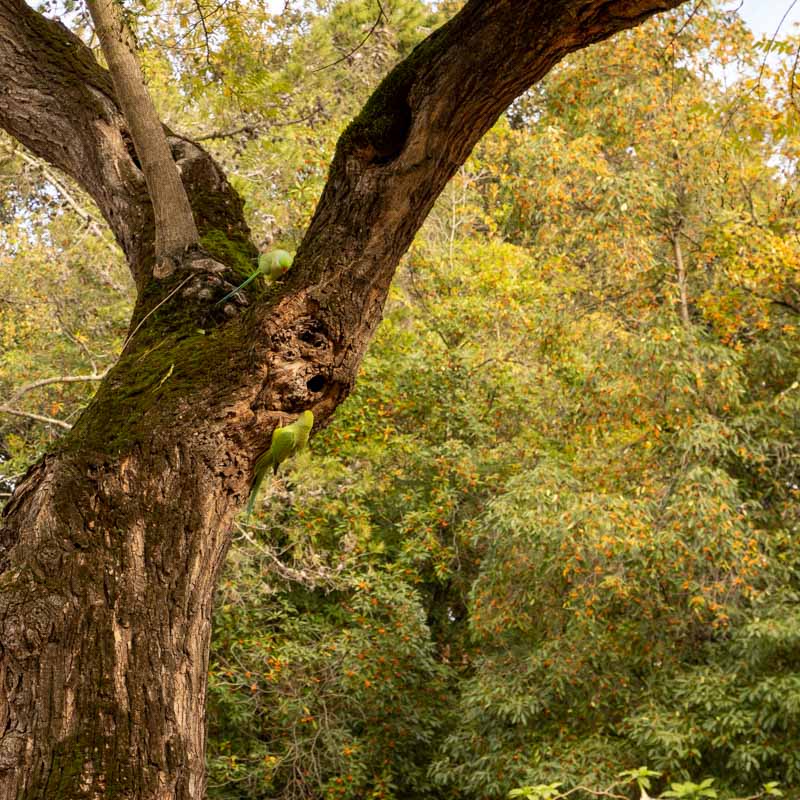
From a landscape point of view, the garden stands out for its naturalistic layout, its curving paths and its combination of lawns, flower beds, tree masses and water areas, in a composition designed to create visual variety and shifting viewpoints. Among its most distinctive elements are the ponds with waterfowl and carp, the iron railings and gates, and the wrought-iron bandstand that now marks the centre of the grounds. That bandstand was built in 1884 for the Passeio Público and transferred to Jardim da Estrela in 1936, which adds historical value beyond its decorative role. Botanical richness is also one of the site’s defining qualities. Municipal and tourism sources highlight species such as jacarandas, dragon trees and araucarias, which strengthen the garden’s exotic and varied character. On the north-west side stands Casa do Jardim da Estrela, a building inaugurated in 1882 as the first kindergarten in Portugal and now reused as an important municipal cultural venue.
More context
During a visit, it is worth entering without hurry and following the curving paths, because it is precisely in the sequence of shade, clearings and small surprises that the garden reveals its identity. The bandstand deserves special attention, both for its iron design and for the memory of concerts and public gatherings traditionally associated with this kind of structure. The ponds are another essential feature, not only because of the ducks, geese, swans or carp, but also because they help explain the scenic dimension of the space. It is also worth noticing the most remarkable trees and the botanical variety that changes with the seasons. Nearby, the Biblioteca-Quiosque continues the tradition of open-air libraries begun in the garden in 1922, while Casa do Jardim da Estrela adds an educational and cultural layer to the visit. Finally, the relationship with the Basilica da Estrela, directly in front of one of the entrances, shows clearly that this garden was conceived not as an isolated space, but as part of a broader and highly visible urban composition.
Gallery