Lisboa · Lisboa
Casa Fernando Pessoa
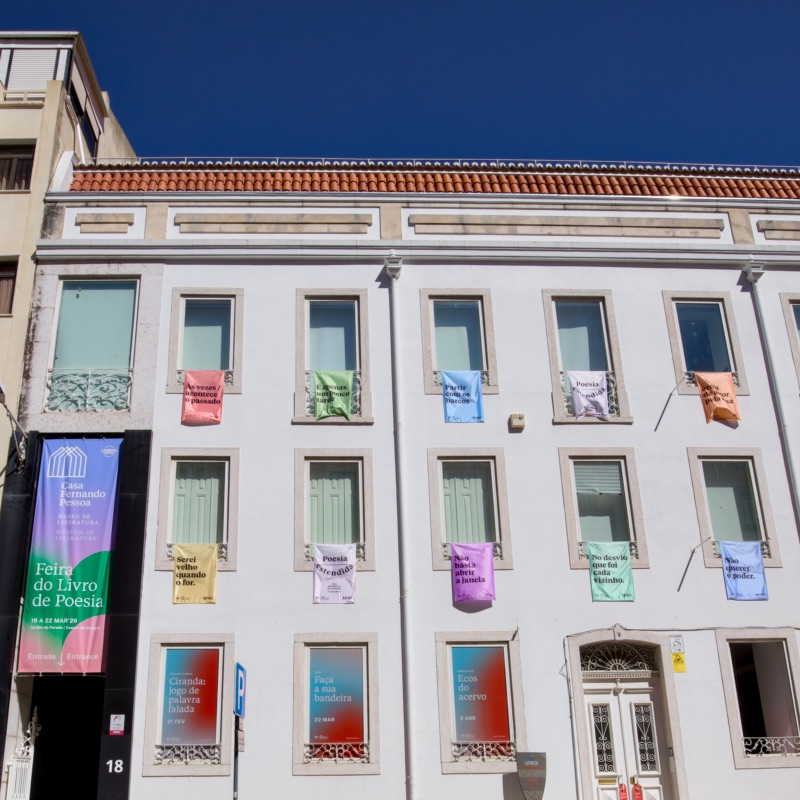
Casa Fernando Pessoa, in Lisbon, occupies the writer’s last home, where he lived with his family from 1920 until a few days before his death on 30 November 1935. The building was acquired by Lisbon City Council in the late 1980s, when it was in poor condition, and opened to the public on 30 November 1993. Rebuilt while preserving original elements, the House keeps personal objects, some furniture and a large part of the books that belonged to Pessoa. The long-term exhibition is organised around memory, literary creation, reading and home. Across three floors, it presents the heteronyms, documents, works of art and the Private Library, classified as a National Treasure. More than preserving a reconstructed bedroom, the House shows how reading nourished one of the most plural literary works of the 20th century.
Why it matters
Casa Fernando Pessoa stands on Rua Coelho da Rocha, in Campo de Ourique, in the building where the writer lived from 1920 until a few days before his death on 30 November 1935. For that reason, the site has a singular biographical value: more than a literary museum, it is the last home of one of the central authors of Portuguese literature. In the late 1980s, Lisbon City Council acquired the building, then in poor condition and at risk of demolition, recognising both its heritage value and the importance of the estate. The house opened on 30 November 1993, a date chosen to coincide with the anniversary of the poet’s death. Since then, it has established itself as a place devoted to preserving, studying and sharing the life and work of Fernando Pessoa. Between 2019 and 2020, the building underwent a major renovation, gaining better accessibility, greater sustainability and a significantly expanded exhibition area. Its reopening strengthened the House’s role as a centre for literature, memory and research, bringing together the intimate dimension of Pessoa’s biography and the international reach of his work.
Architecture and history
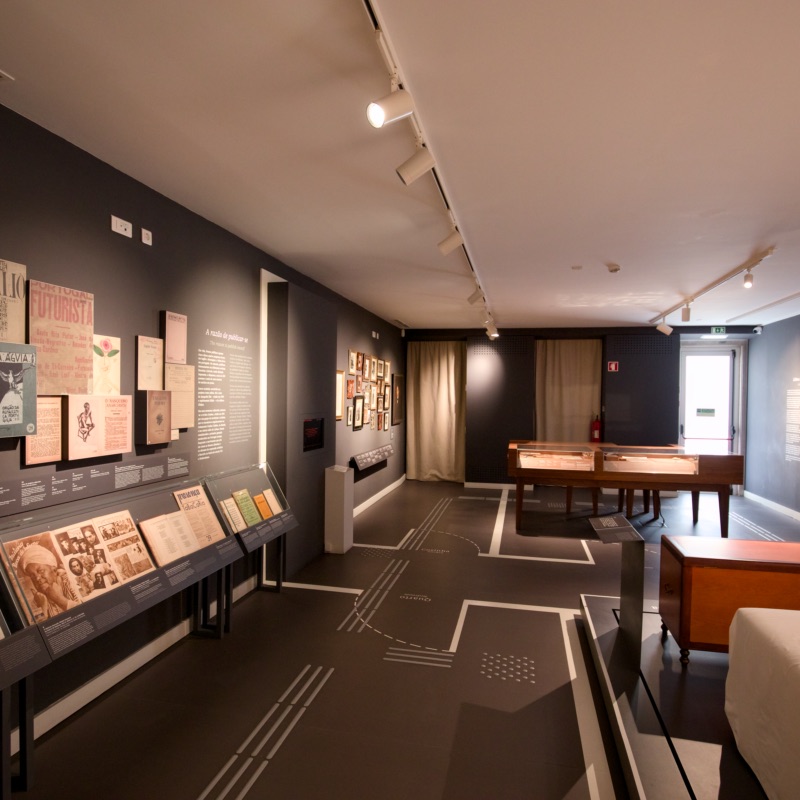
Architecturally, Casa Fernando Pessoa is defined by its balance between preservation and reinvention. In the 1993 intervention, the building was reconstructed to function as a cultural venue, while the original facade, the staircase leading to the first floor and two rooms from the family apartment were kept intact. This choice preserved the material memory of the house without preventing its museum adaptation. The 2019-2020 renovation reinforced that approach by reorganising entrances, circulation routes and internal functions to create a more coherent relationship between architecture and exhibition. Designed by José Adrião Arquitectos, the project introduced new visitor routes, redefined the functional layout and moved the auditorium to a different floor, improving the continuity of the visit. Today, the complex is organised across three exhibition floors, alongside reception, bookshop and library areas. The result is not a full reconstruction of a period home, but a contemporary house-museum in which a domestic scale coexists with discreet exhibition devices. The sobriety of the building helps focus attention on what matters most: the spaces Pessoa inhabited, his books, his objects and the literary universe that continues there.
More context
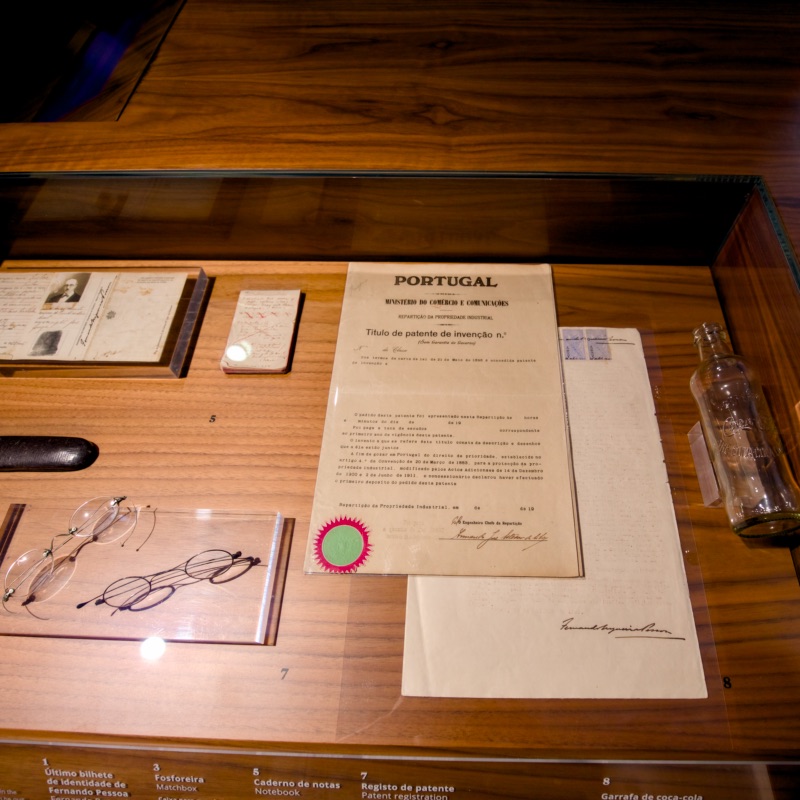
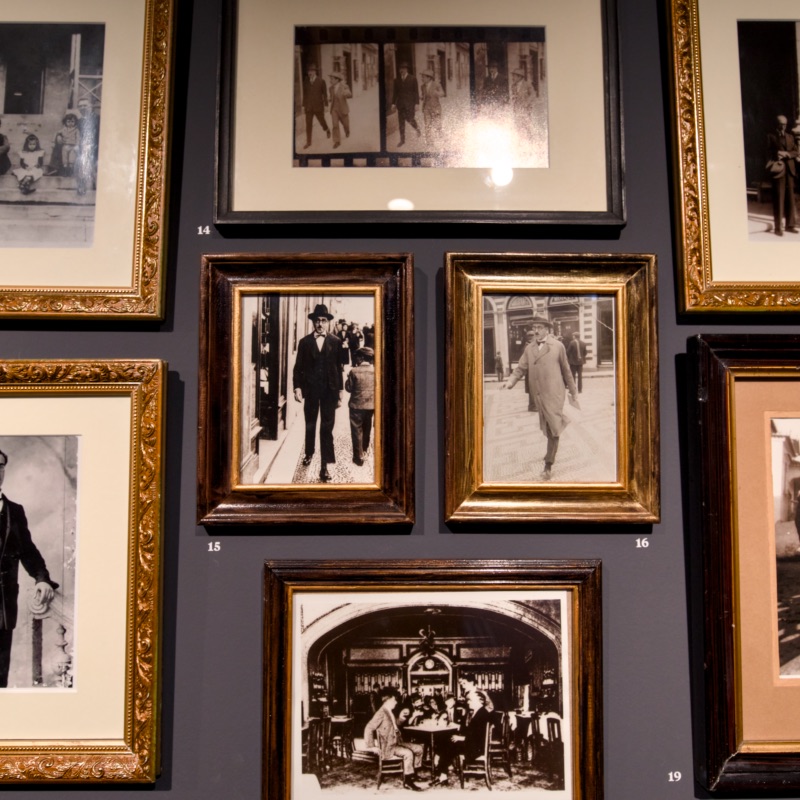
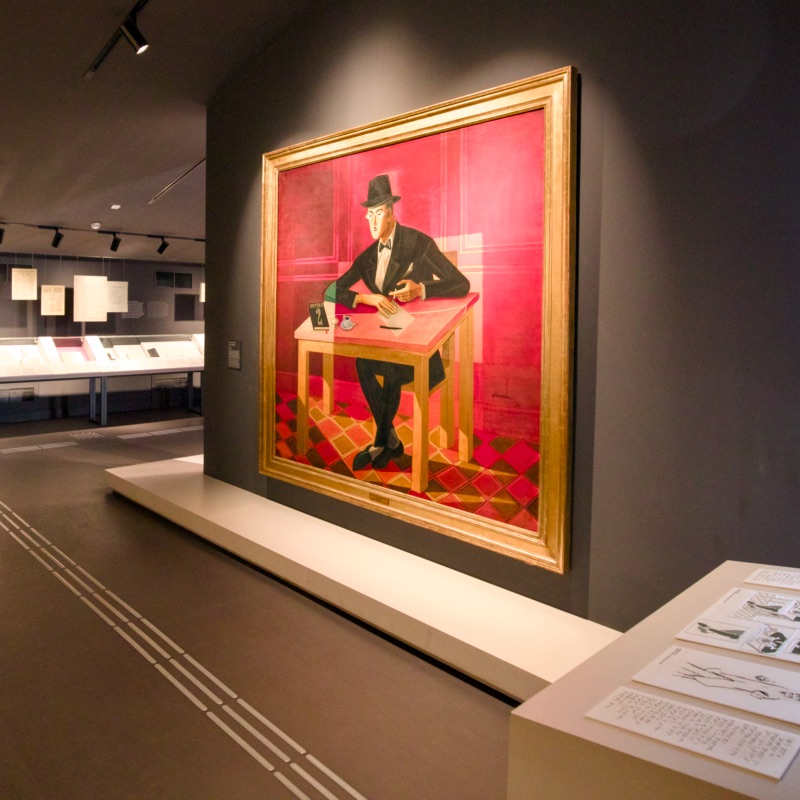
There are three essential parts of the visit. On the floor devoted to the heteronyms, the exhibition presents the literary system created by Fernando Pessoa and places figures such as Alberto Caeiro, Ricardo Reis, Álvaro de Campos and Bernardo Soares in context; it also includes artworks portraying the writer, notably the celebrated portrait by Almada Negreiros and drawings by Júlio Pomar. On the next floor, the heart of the visit is Fernando Pessoa’s Private Library, described by the House itself as its “heart”: a large part of the poet’s books, a collection classified as National Treasure, can be seen in a vault-like installation, revealing the readings, annotations and marginal notes that nourished his writing. The reading table with different editions and translations of Pessoa’s work is also worth noting. Finally, on the apartment floor, the reconstruction of the house plan and the display of documents, photographs and personal objects bring visitors closer to the writer’s daily life in Lisbon. Among the final highlights is the sheet bearing the last sentence he wrote in hospital, in English: “I know not what tomorrow will bring”, now one of the most evocative elements of the exhibition route.
Gallery