Reservatório da Mãe d'Água das Amoreiras

Lisboa · Lisboa

Reservatório da Mãe d'Água das Amoreiras

MuseumXVIIIIndustrial Architecture
Praça das Amoreiras 10, 1250-020 Lisboa4.6 Rating · 3,43945 min

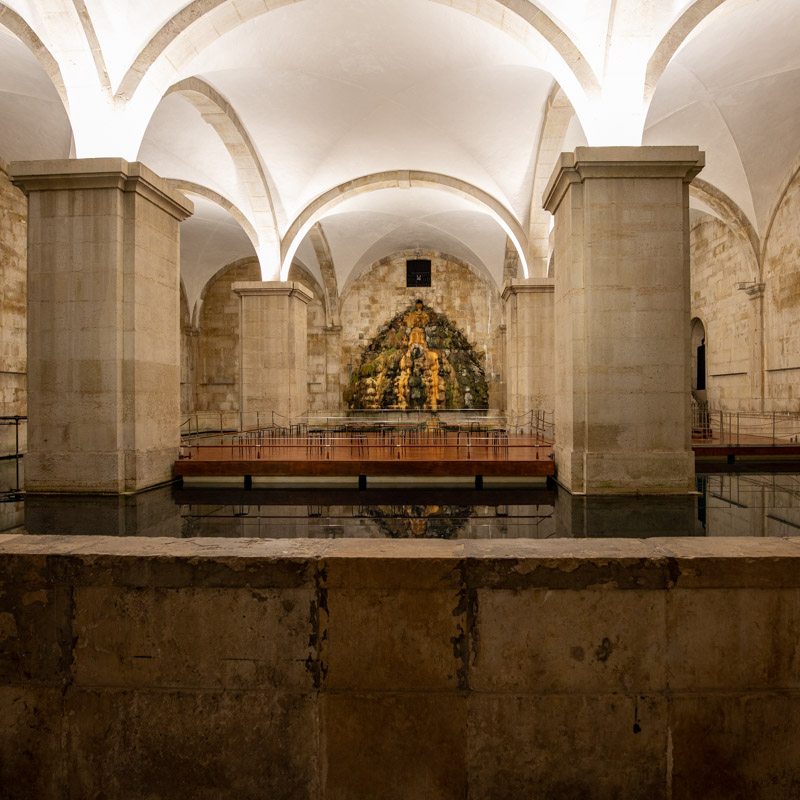
The Mãe d’Água das Amoreiras Reservoir has the silent grandeur of a place built to protect what a city depends on. At the point where the Águas Livres Aqueduct enters Lisbon, it began to be designed by Carlos Mardel in the mid eighteenth century and was only completed in the following century, which helps explain the striking blend of sobriety and scale it still conveys today. Inside, the deep tank, the four sturdy pillars, the vaults and the water falling from the mouth of a dolphin create an unexpectedly solemn space, almost like a church devoted to engineering. It is also worth noticing the Casa do Registo, where the distribution of water to fountains, convents and noble houses was controlled. And on the terrace, Lisbon opens out with rare clarity. Few places show so well how urban history is also written through water.

Why it matters

The Reservatório da Mãe d'Água das Amoreiras was conceived as the terminal reservoir of the Águas Livres Aqueduct, the great system created to address Lisbon’s shortage of water during the reign of King João V. The design is attributed to Carlos Mardel, and work began in 1746 in the Amoreiras area, where the aqueduct entered the city. Construction stretched over many decades. When Mardel died in 1763, the building was still unfinished. In 1771, Reinaldo Manuel dos Santos resumed the works and introduced important changes, especially to the roof, the cascade and the inner structure. The final completion only came in 1834, already in the reign of Queen Maria II, the year in which the reservoir was ready for use. More than a technical structure, Mãe d'Água marked the arrival of water into Lisbon and organised its distribution to fountains, convents, factories and noble houses, as part of the Águas Livres system, now protected as a National Monument.

Architecture and history

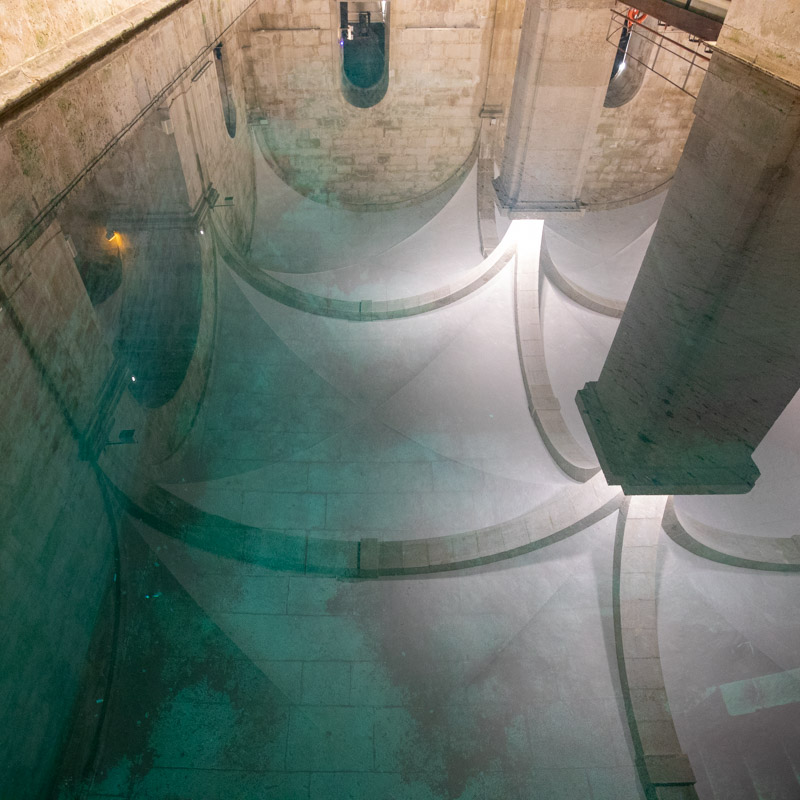
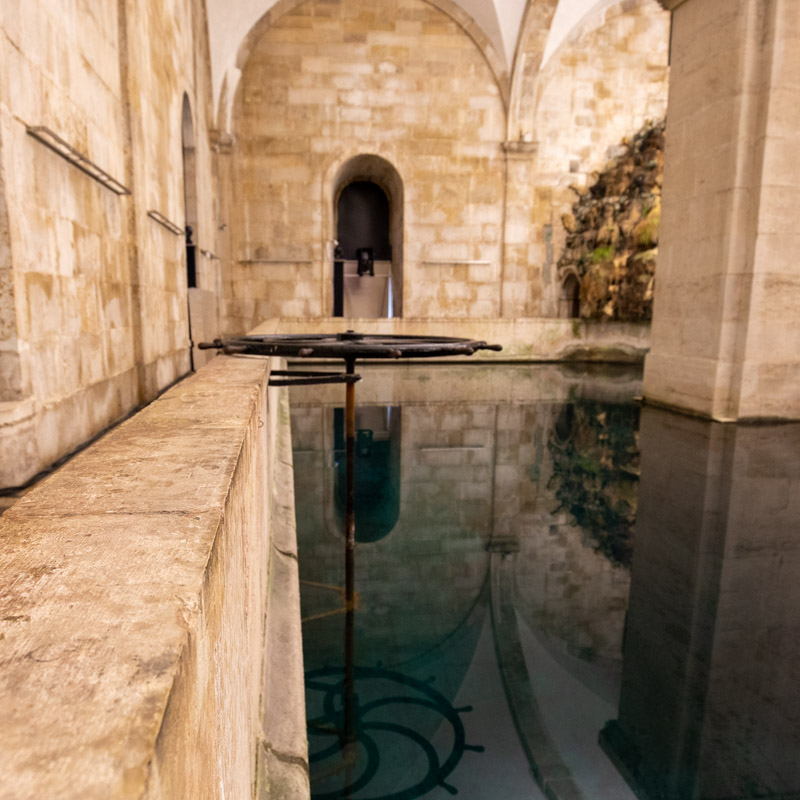
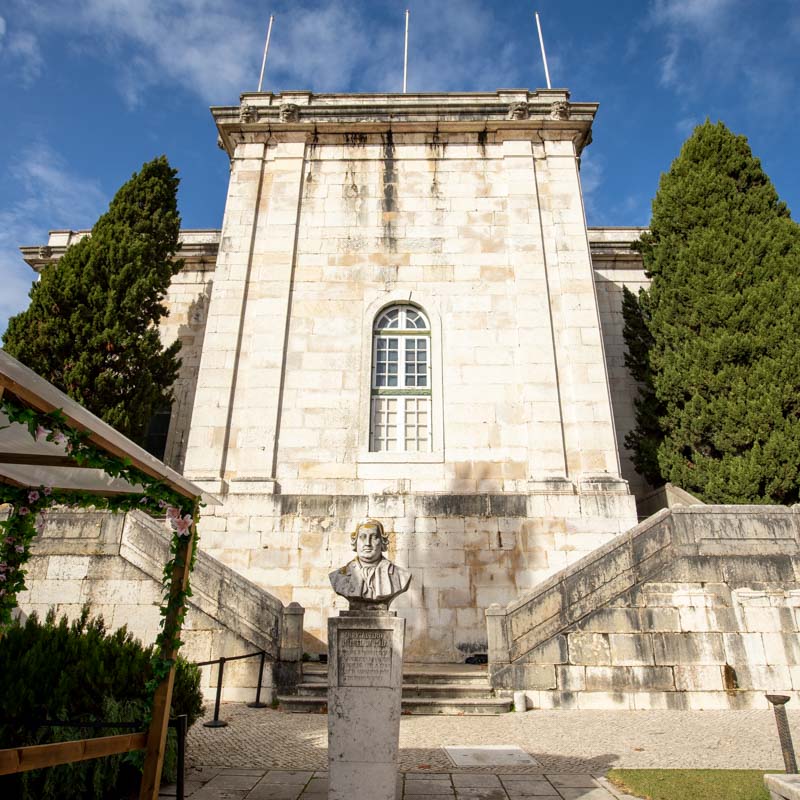
The building stands out because it transforms a hydraulic infrastructure into a space of great architectural dignity. The reservoir has a simple rectangular plan, a terrace roof and sober lines, with Baroque and Neoclassical features visible in the Tuscan order and in the restrained decoration of the façades. Inside, however, the effect is monumental. A tank about seven and a half metres deep occupies the centre of the space, and four robust square pillars support a ceiling of groin vaults, creating a sequence of bright volumes that recalls a great ceremonial hall more than a mere water depot. Water enters through a cascade flowing from the mouth of a dolphin, built with stone brought from the aqueduct’s springs, and the whole ensemble is completed by the Casa do Registo on the western front, where the flows sent into the city were controlled. Above the vaults lies the broad upper terrace, now one of the most distinctive viewpoints in this part of Lisbon.

More context

During a visit, it is worth beginning inside, because that is where the reservoir reveals its true scale. The first highlight is the great central tank, whose reflective surface reinforces the height of the vaults and the sense of silence. Then the cascade fed by the dolphin’s mouth deserves close attention, as a scenic detail that gives visible form to the arrival of water. It is also worth observing the four pillars and the way they organise the space, as well as the Casa do Registo, which helps explain the administrative and distributive role of the system. The climb to the upper terrace is another essential moment. From the top, the position of Mãe d'Água beside Jardim das Amoreiras and its relationship with the point where the aqueduct entered the city become much clearer. This view broadens the reading of the monument, which stops being only a beautiful vaulted interior and becomes understandable as a key piece of urban engineering that joined utility, water control and architectural ambition.

Gallery

Reservatório da Mãe d'Água das Amoreiras 1
Reservatório da Mãe d'Água das Amoreiras 2
Reservatório da Mãe d'Água das Amoreiras 3
Reservatório da Mãe d'Água das Amoreiras 4
Reservatório da Mãe d'Água das Amoreiras 5

Nearby places

View all