Museu Medeiros e Almeida

Lisboa · Lisboa

Museu Medeiros e Almeida

Historic HouseXXPalace Architecture
Rua Rosa Araújo 41, 1250-165 Lisboa4.7 Rating · 96670 min

Hidden near Avenida da Liberdade, the Medeiros e Almeida Museum feels less like a museum than a house where taste still lives. António de Medeiros e Almeida began collecting in the 1930s and, to keep the whole ensemble together, created a foundation in 1972 and turned his own residence into a museum, which opened to the public in 2001. Today, the route runs through 27 rooms and around two thousand works, divided between the wing once lived in by the couple, preserved with domestic intimacy, and the extension built over the former garden, where grand decorative settings were recreated. The collection is deliberately eclectic, yet some groups stand out at once, such as the clocks, Chinese ceramics, silver and fans. It is also worth lingering in the Lake Room, conceived as an evocation of the lost garden: among tiles, marble and silence, one understands how this place turned a collector’s private passion into a rare experience of beauty and memory.

Why it matters

The history of the Medeiros e Almeida Museum begins in a mansion built in 1896 in central Lisbon, but it acquired its present meaning when António de Medeiros e Almeida and Margarida Pinto Basto bought it in 1943 and moved in, after adaptation works, in 1946. A prominent businessman linked to cars, commercial aviation and Azorean enterprises, Medeiros e Almeida used the consolidation of his post-war career to intensify an older collecting activity, becoming a regular visitor to European auction houses and antique dealers. From the mid-1960s onwards, the couple sought to guarantee the unity and preservation of the collection through a donation to the country. In 1968, the architect Alberto Cruz was commissioned to enlarge the house over the garden and adapt the whole property into a house-museum. The Medeiros e Almeida Foundation was created in 1972, the works were completed in 1974, and the museum opened to the public in June 2001, fulfilling the founder’s wishes and preserving the collection as a coherent whole.

Architecture and history

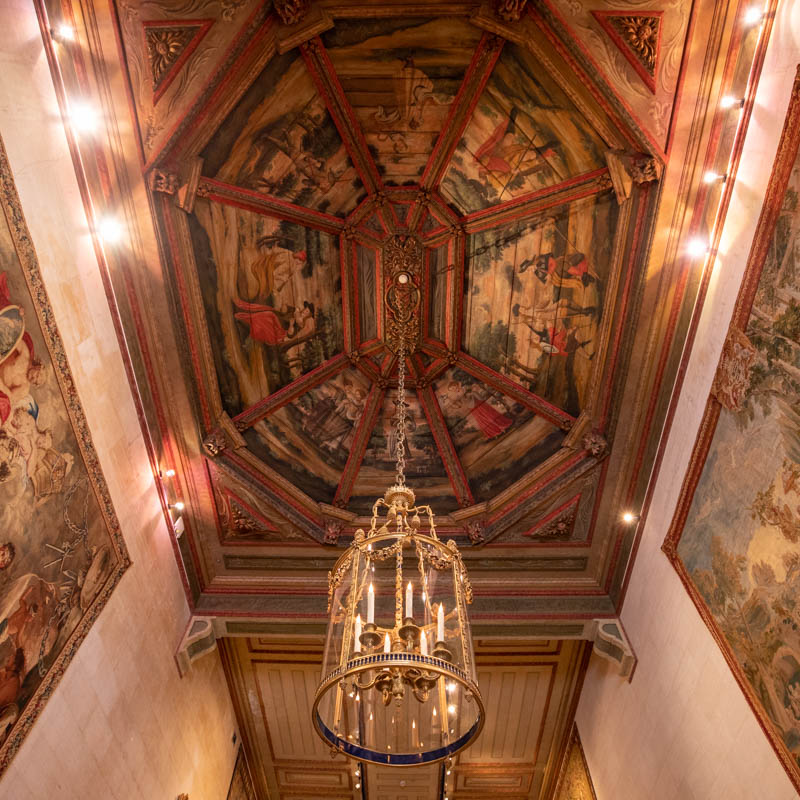
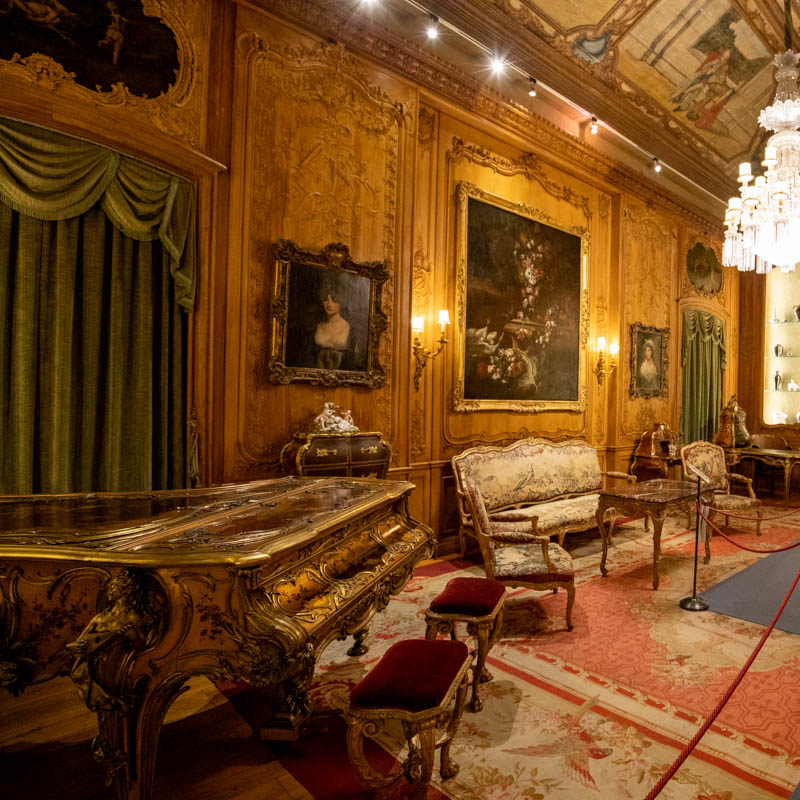
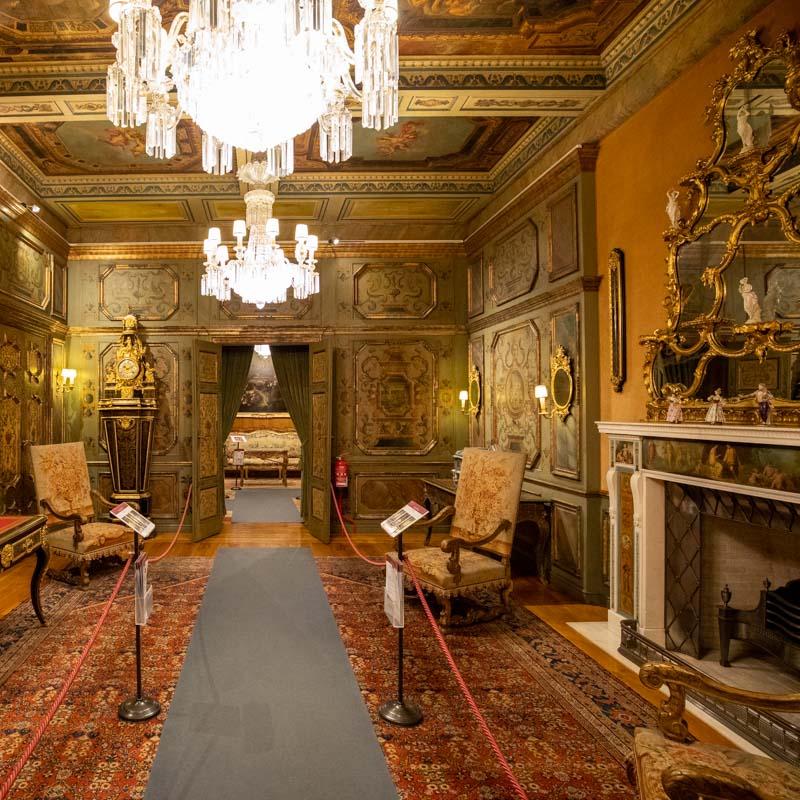
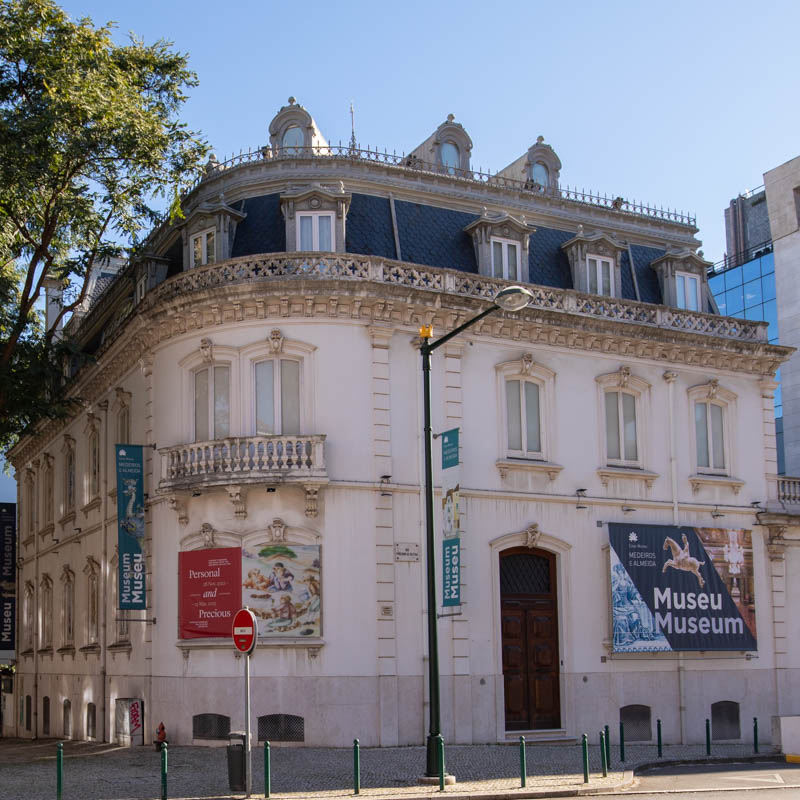
The museum’s architecture results from the superimposition of several phases, and it is an essential part of the visit. The original core is an urban corner mansion built on Rua Mouzinho da Silveira with a frontage onto Rua Rosa Araújo, which underwent remodelling and enlargement campaigns in 1922 and 1924 before a new interior transformation between 1943 and 1946. The decisive change came, however, between 1968 and 1974, when the house was adapted into a museum and gained a new wing built over the garden. From that intervention emerged a route with two distinct characters. In one part, the residence inhabited by the couple survives, preserving its domestic atmosphere. In the other, a sequence of more formal spaces was designed to display the collection in recreated settings with panelling, painted ceilings and decoration inspired above all by French taste. The ensemble now brings together 27 rooms and around 2,000 works, linking house, collection and museography in an unusual way, without fully separating the collector’s private world from the museum’s public staging.

More context

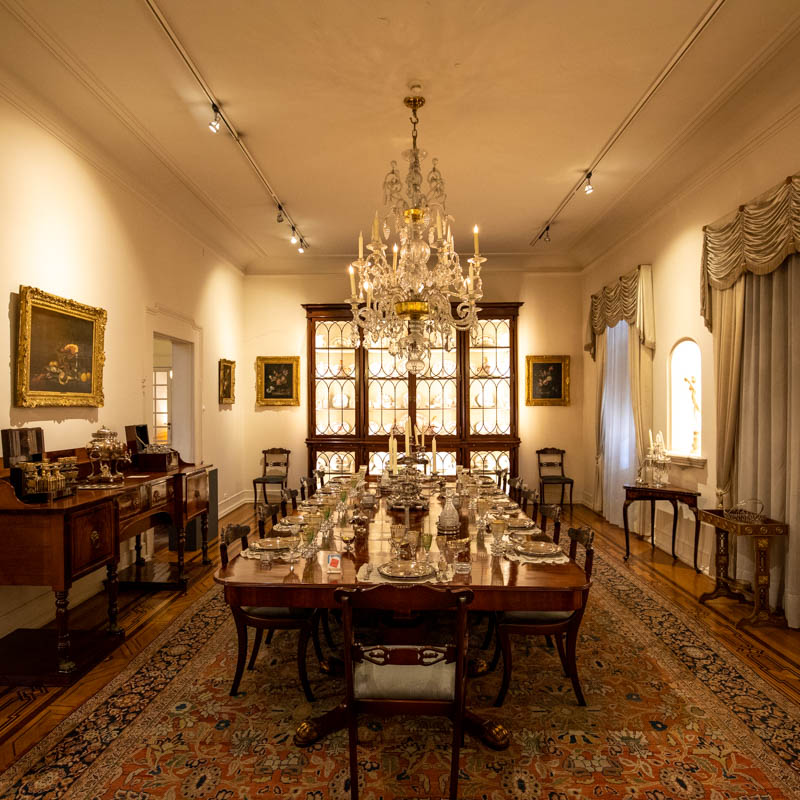
The Watches and Clocks Room is one of the best places to begin, because it gathers one of the museum’s most admired groups. There are French, English and Swiss pieces, including a rare English night clock from the seventeenth century with internal lighting and an important group of Breguet clocks and watches. The Porcelain Room deserves equal attention, especially for its Chinese ceramics and the so-called first commissions made for the Portuguese market in the early sixteenth century. It is also worth lingering in the Silver Room, where artistic quality meets historical provenance, and in the Chapel, created to house sacred art. Yet what most distinguishes the museum is the continuity between objects and spaces. The private apartments, the office, the galleries and the rooms of the new wing show how Medeiros e Almeida collected in order to live among objects, not merely to accumulate them. That reading, between domestic intimacy and refined display, is what makes the visit especially revealing.

Gallery

Museu Medeiros e Almeida 1
Museu Medeiros e Almeida 2
Museu Medeiros e Almeida 3
Museu Medeiros e Almeida 4
Museu Medeiros e Almeida 5

Nearby places

View all