Centro Cultural de Belém

Lisboa · Lisboa

Centro Cultural de Belém

Cultural CentreXXCivil Architecture
Praça do Império, 1449-003 Lisboa4.6 Rating · 20,46775 min

Among Belém’s great historic symbols, the Belém Cultural Centre marks the moment when Lisbon decided to inscribe its modernity too into the city’s monumental landscape. Its construction was decided in 1988, in the context of Portugal’s European presidency in 1992, and the project by Vittorio Gregotti and Manuel Salgado imagined a kind of open city, made of buildings, streets, squares and bridges, in dialogue with Praça do Império, the Jerónimos Monastery and the Tagus. During a visit, it is worth exploring the outdoor spaces as much as the auditoriums and exhibition rooms, because the CCB is not understood only from within: it also lives in the light, the voids and the relationship between pale stone and the river. Today, listed as a Monument of Public Interest, it remains one of the places where Lisbon shows, with remarkable ease, that contemporary architecture can also create memory.

Why it matters

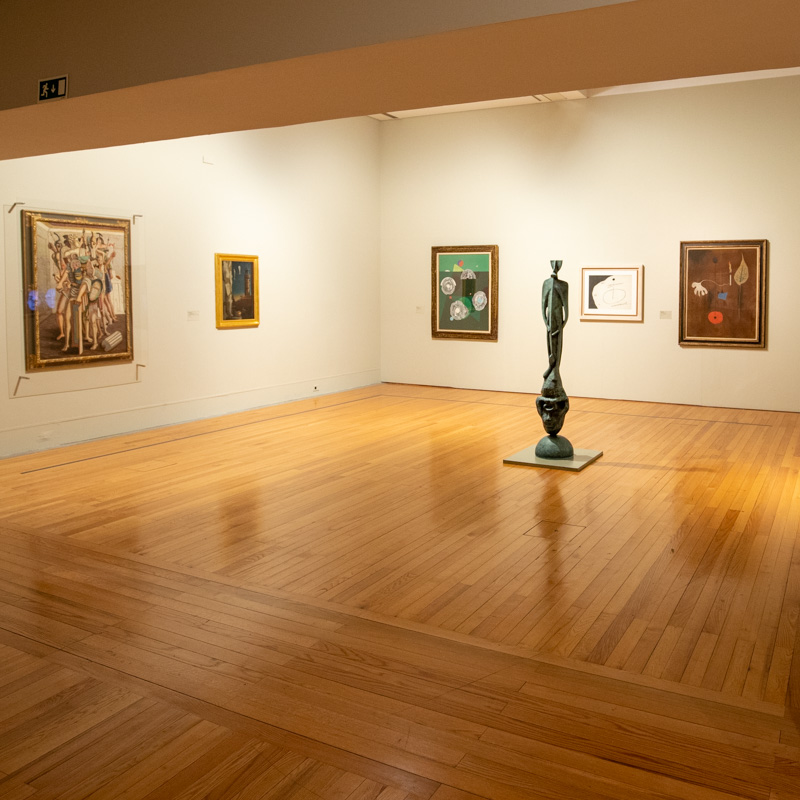
The Belém Cultural Centre was created at the end of the 1980s, when Portugal wanted to give Lisbon a major institution able to host the Portuguese presidency of the then European Community and, at the same time, remain as a lasting cultural centre. The decision to build the complex was taken in 1988, the year in which an international competition brought together 57 proposals. The selected scheme was by the architects Vittorio Gregotti and Manuel Salgado, who imagined a complex of five modules. Of these, the three main nuclei were built, devoted to congresses and meetings, performances and exhibitions. The centre was ready to receive the Portuguese presidency in the first half of 1992 and, after that diplomatic role, it established itself as a permanent cultural space for the city. Over time, the exhibition module passed through several museum phases and today houses MAC/CCB, inaugurated under that name in 2023. In 2002, the building was classified as a Property of Public Interest.

Architecture and history

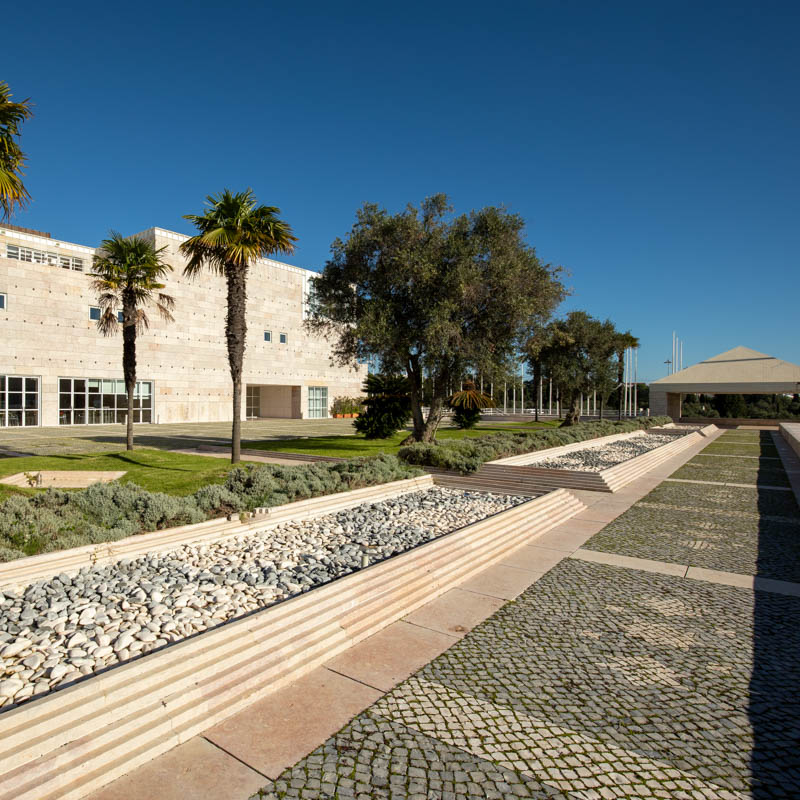
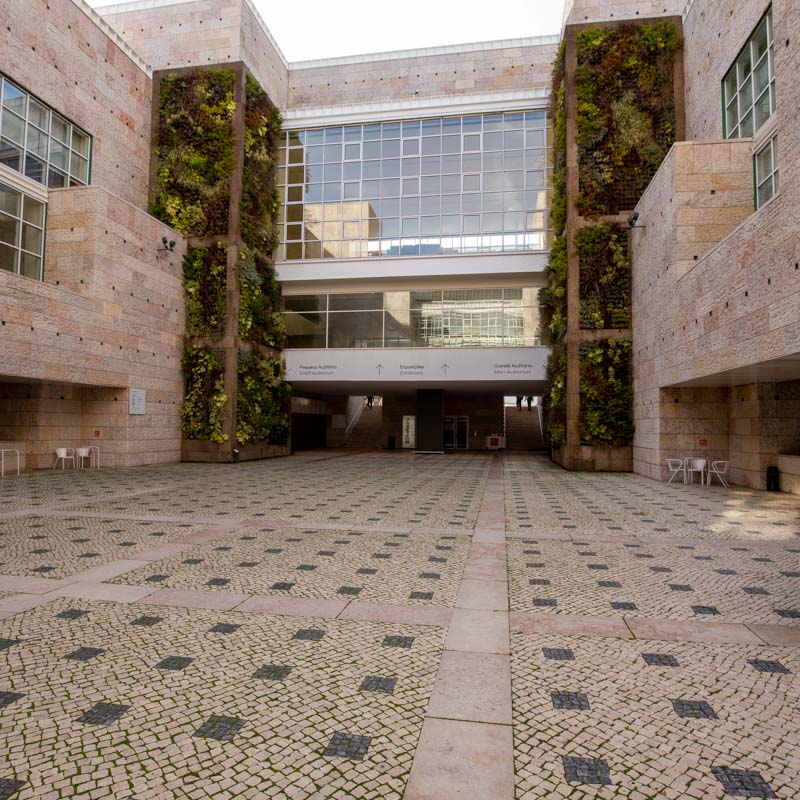
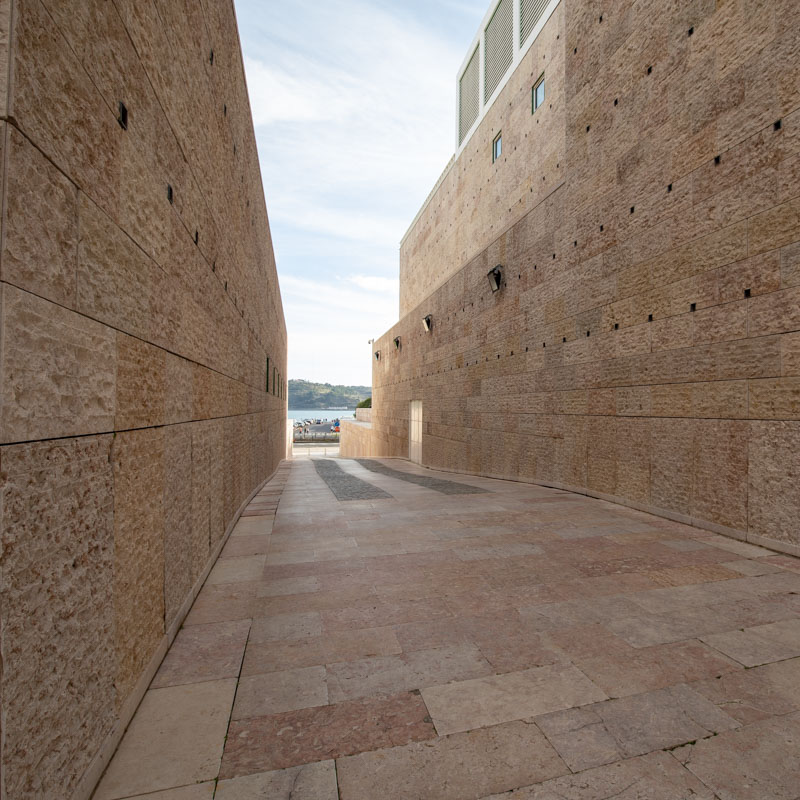
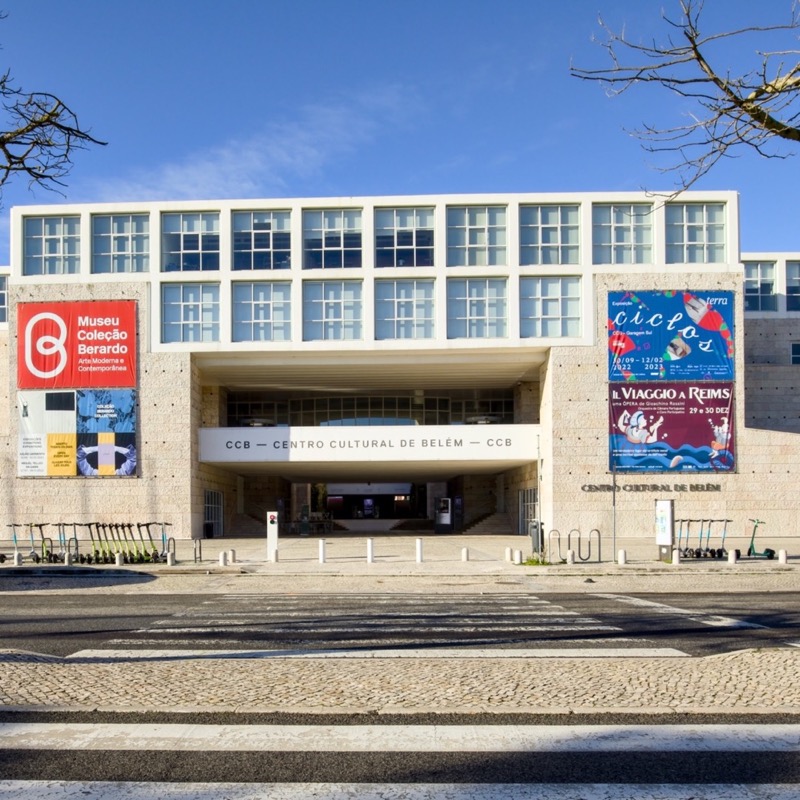
Architecturally, the CCB is one of the most emblematic works of contemporary Portuguese architecture. It stands on the western side of Praça do Império and was designed to respond to the monumental scale of Jerónimos Monastery and of the Belém waterfront, without relying on excessive decoration. The complex has a rectangular plan, stepped volumes and a compact orthogonal structure crossed by streets, courtyards and passages that allow the public to move between its different bodies. The façades are entirely clad in limestone ashlar panels, a solution that strengthens the building’s visual solidity and the clarity of its lines. This stone skin, animated by small square openings and large glazed surfaces, creates a balance between mass and transparency. Inside and in the intermediate spaces, the axial organisation leads naturally towards Praça CCB, the auditoriums, the meetings centre and the exhibition module. The result is a building that works almost like a small civic city.

More context

During a visit, it is worth beginning with the José Saramago Walkway, the pedestrian street that cuts through the complex and helps explain how the building was meant to be crossed and inhabited. From there, you reach Praça CCB, a large stone atrium between the performance centre and the museum, where the relationship between silence, light and monumentality becomes especially clear. The Olive-Tree Garden, opening towards the Tagus, reveals another side of the complex, more relaxed and panoramic, while the Water Garden marks an important entrance to the museum. Inside, the Main Auditorium deserves attention for its scale and for the foyers connected to a terrace facing the river. The Small Auditorium adds another terrace with views over the Tagus and the Monument to the Discoveries. In the exhibition module, MAC/CCB continues the artistic vocation of the centre, while the Architecture Centre, installed in a former car park, shows how the CCB still reinvents its spaces without losing the coherence of the original design.

Gallery

Centro Cultural de Belém 1
Centro Cultural de Belém 2
Centro Cultural de Belém 3
Centro Cultural de Belém 4
Centro Cultural de Belém 5

Nearby places

View all