Praça do Comércio e Cais das Colunas

Lisboa · Lisboa

Praça do Comércio e Cais das Colunas

SquareXVMonumental Architecture
Praça do Comércio, 1100-148 Lisboa4.7 Rating · 4,75830 min

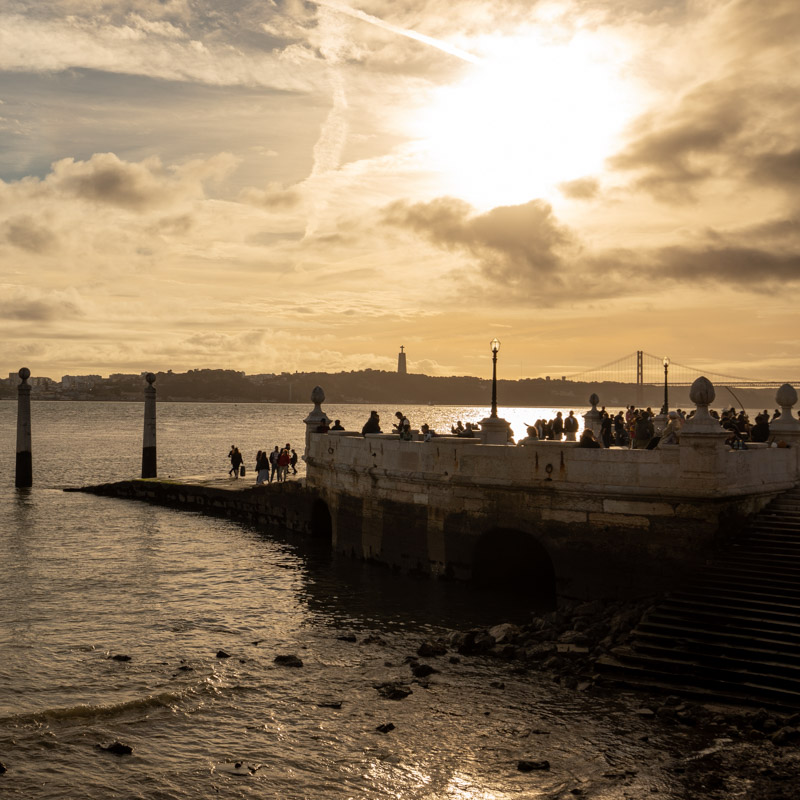
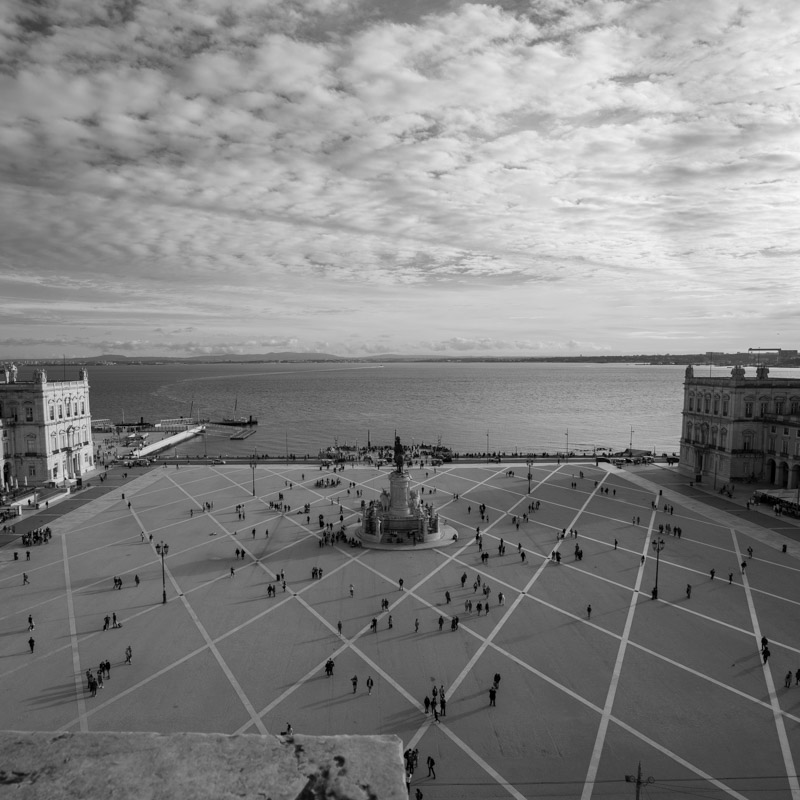
Few places explain Lisbon as clearly as Praça do Comércio and Cais das Colunas. Before the 1755 earthquake, the Ribeira Palace stood here; after the catastrophe, the Pombaline reconstruction turned the old Terreiro do Paço into a regular square open to the Tagus, expressing the capital’s new commercial and political role. The long arcades, the towers and the equestrian statue of King José the First give the whole ensemble the solemnity of a great urban stage, yet it is by the river that the place gains a different intensity. Cais das Colunas, conceived within this new bond between city and water, served as Lisbon’s ceremonial landing place for those arriving by river. Today, between the square’s luminous geometry, the broad horizon of the estuary and the steps that almost touch the Tagus, this ensemble still shows that Lisbon has always understood itself best when facing the river.

Why it matters

Praça do Comércio stands on the site of the former Terreiro do Paço, where, from the sixteenth century onwards, the Ribeira Palace rose as the royal centre facing the Tagus. The 1755 earthquake destroyed that complex and opened the way for one of the most decisive urban interventions in Lisbon’s history. Under the political direction of Sebastião José de Carvalho e Melo, the rebuilding of the Baixa was studied by Manuel da Maia and drawn above all by Eugénio dos Santos, with the participation of Carlos Mardel. In place of the former palace there emerged a new royal square, open to the river and integrated into an entirely new geometric plan. The name Praça do Comércio already appears in 1759 and clearly reflects the space’s new symbolic and economic function. To preserve the square’s bond with the Tagus, the plan also included the recovery of a riverside landing stage, which gave rise to Cais das Colunas, conceived as the city’s ceremonial entrance by water.

Architecture and history

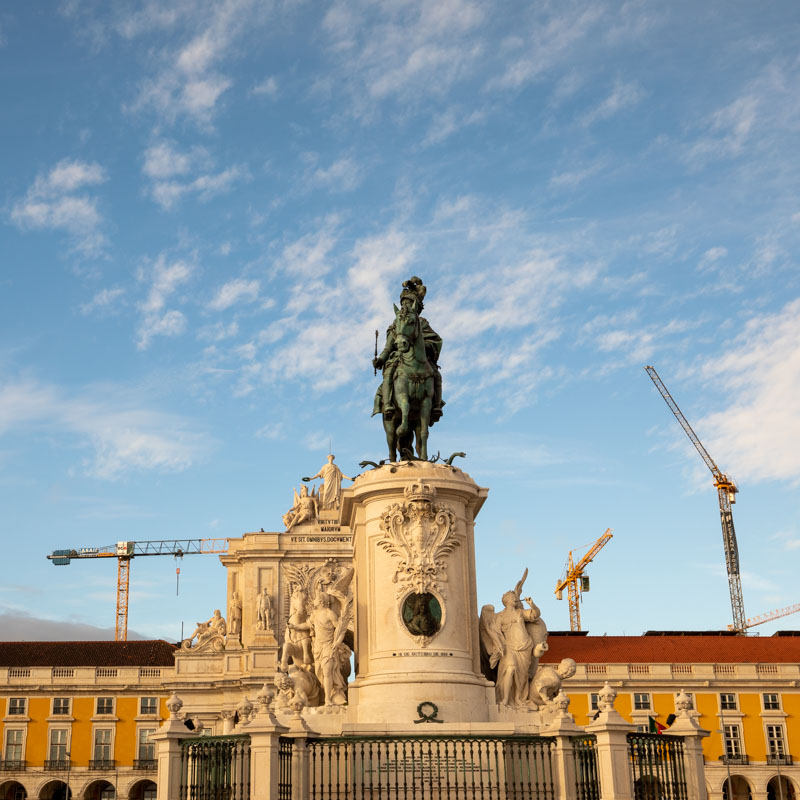
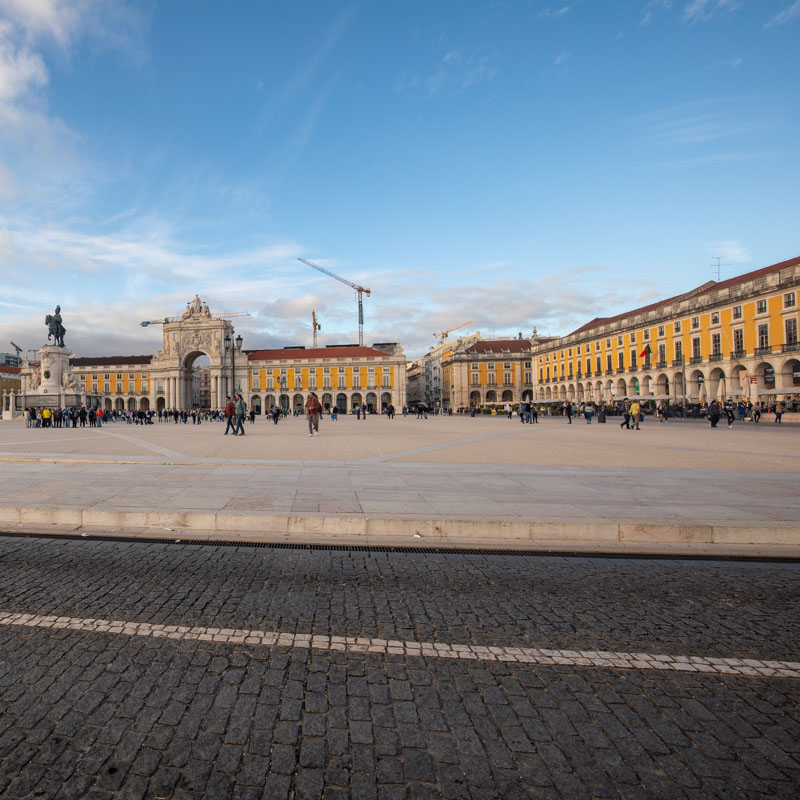
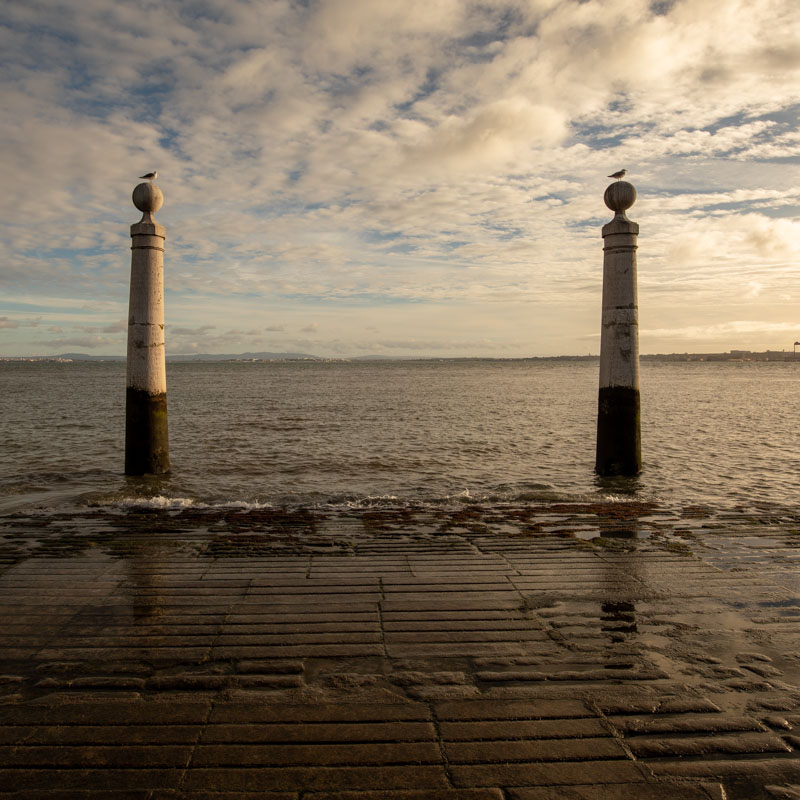
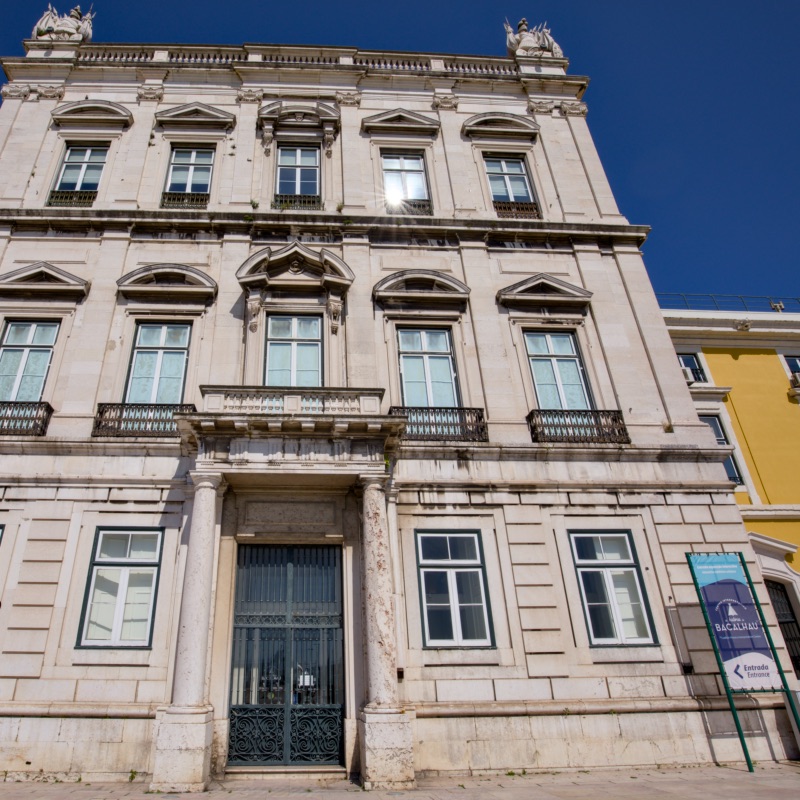
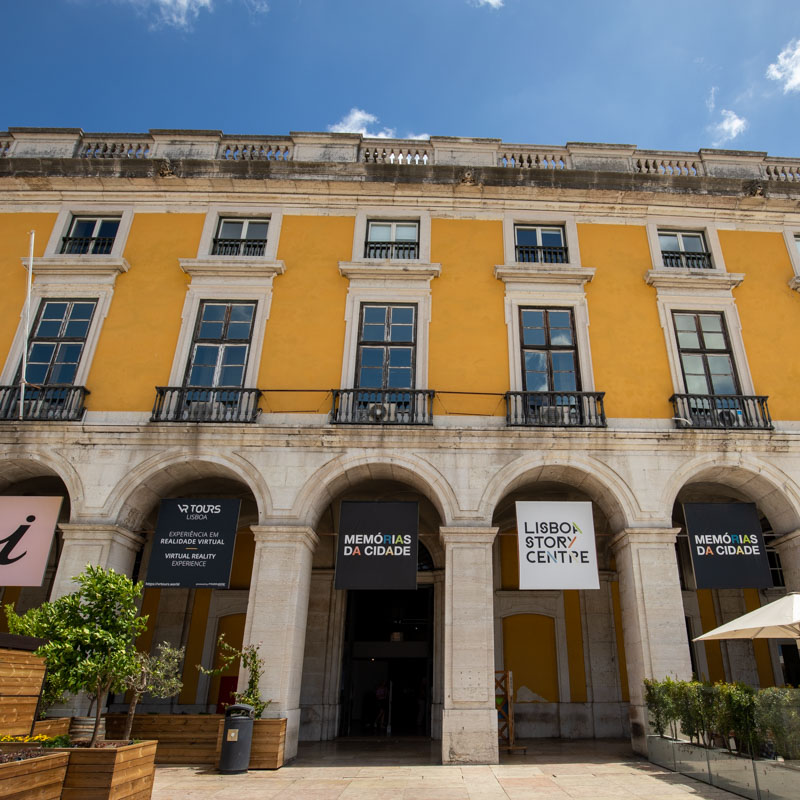
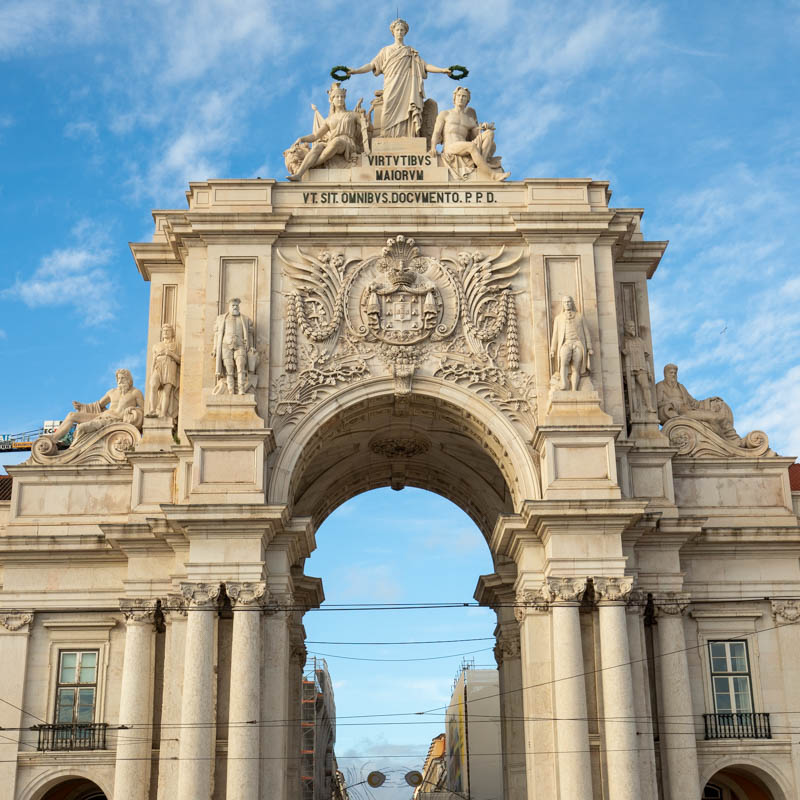
Architecturally, the square is one of the clearest compositions of Pombaline Lisbon. The space is organised by three uniform wings of three-storey buildings, with arcades on the ground floor, balcony windows on the principal floor and a continuous cornice above. At the outer ends, two towers reinforce the monumentality of the whole and recall the memory of the former royal palace. Its greatest distinction, however, lies in its full opening towards the Tagus, which turns the square into a scenic urban frontage and a symbolic gateway to the city. Along the main axis stand three elements that structure the reading of the space: the Rua Augusta Arch, the equestrian statue of King José I, completed in 1775 by Machado de Castro, and Cais das Colunas. The quay itself descends to the river by a monumental staircase and is marked by two pillars topped with spheres, now one of the most recognisable images of Lisbon’s waterfront.

More context

During a visit, it is worth beginning by the Tagus, because Cais das Colunas is where the riverside and ceremonial vocation of the whole becomes clearest. Notice the stone steps, the direct relationship with the water and the framing created by the two columns, which make this one of the most expressive places of Lisbon’s former fluvial entrance. Then move towards the centre of the square and pause by the statue of King José, an essential piece for understanding the symbolic programme of the site. From there, look at the regularity of the yellow façades, the rhythm of the arcades and the way the towers frame the square on either side. On the northern side, the Rua Augusta Arch closes the space with great scenic force and marks the passage into the Baixa. The Pátio da Galé, within the western wing, also deserves attention, because it helps show that this square was never only a monumental setting, but also a political, commercial and representative centre of Lisbon.

Gallery

Praça do Comércio e Cais das Colunas 1
Praça do Comércio e Cais das Colunas 2
Praça do Comércio e Cais das Colunas 3
Praça do Comércio e Cais das Colunas 4
Praça do Comércio e Cais das Colunas 5

Nearby places

View all