Lisboa · Lisboa
Estação do Rossio
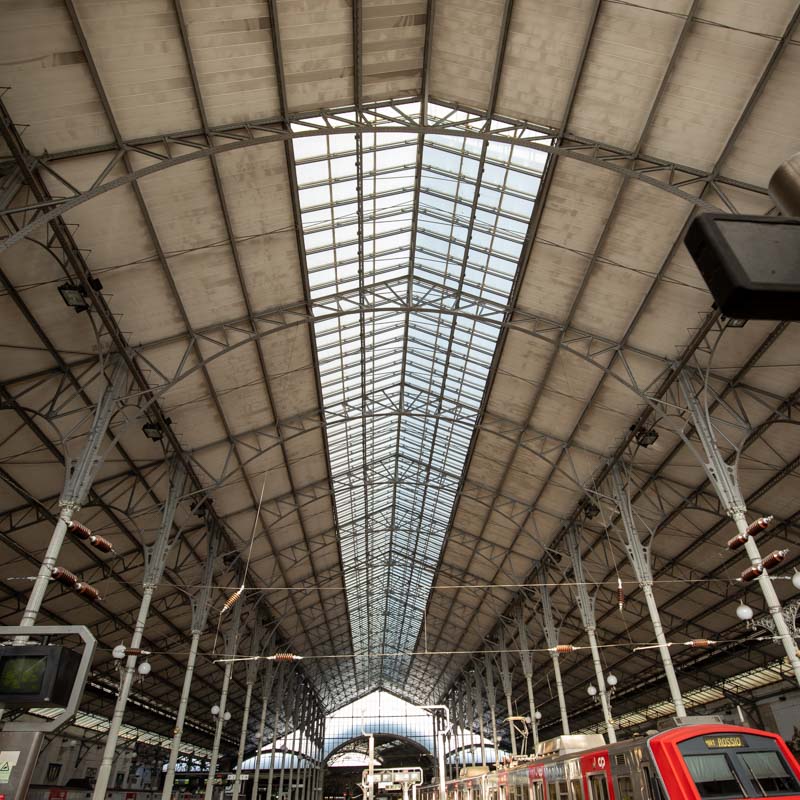
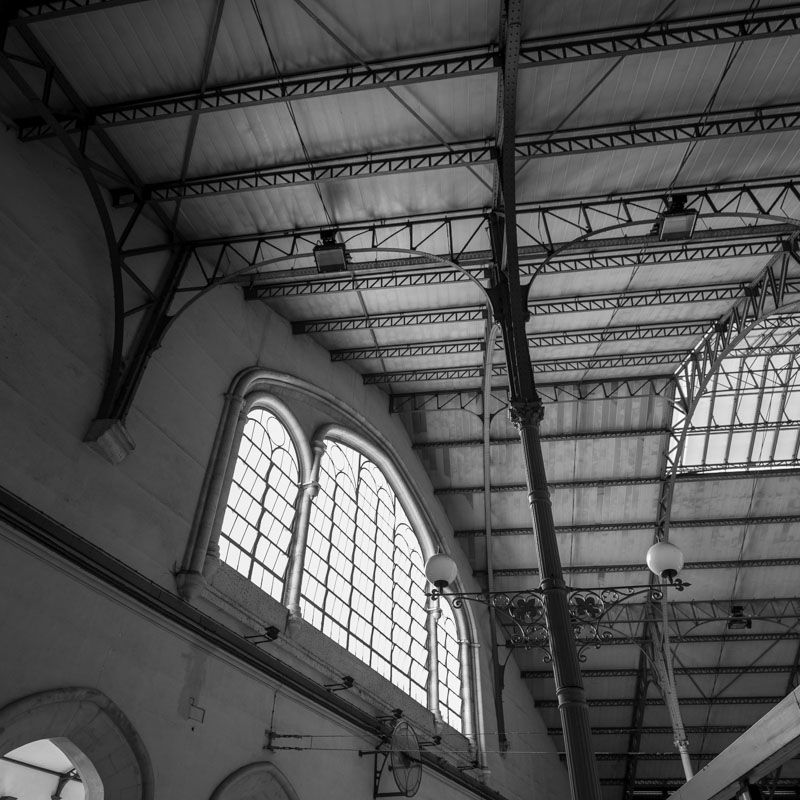
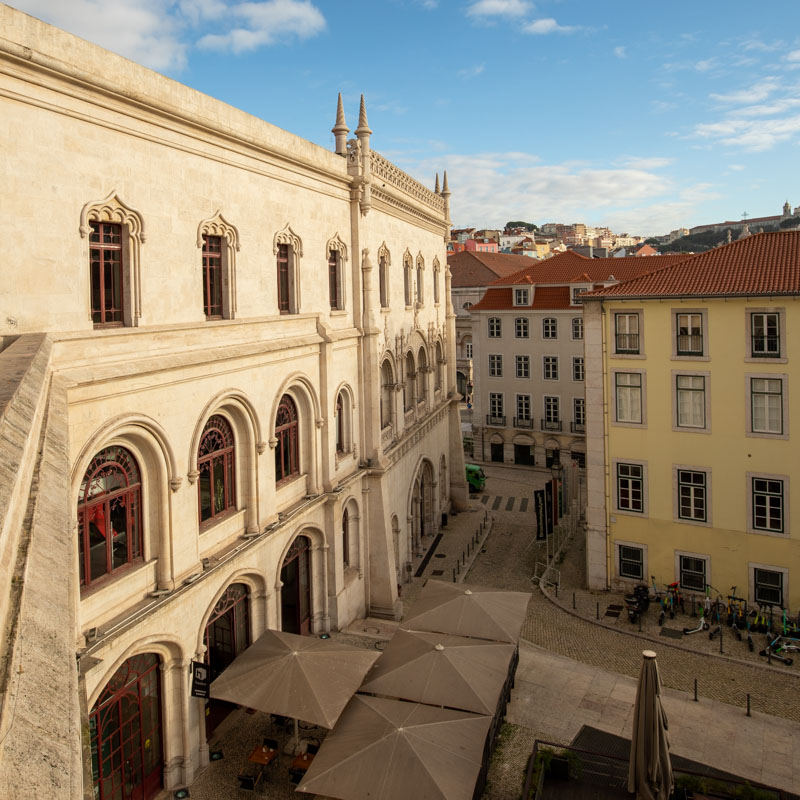
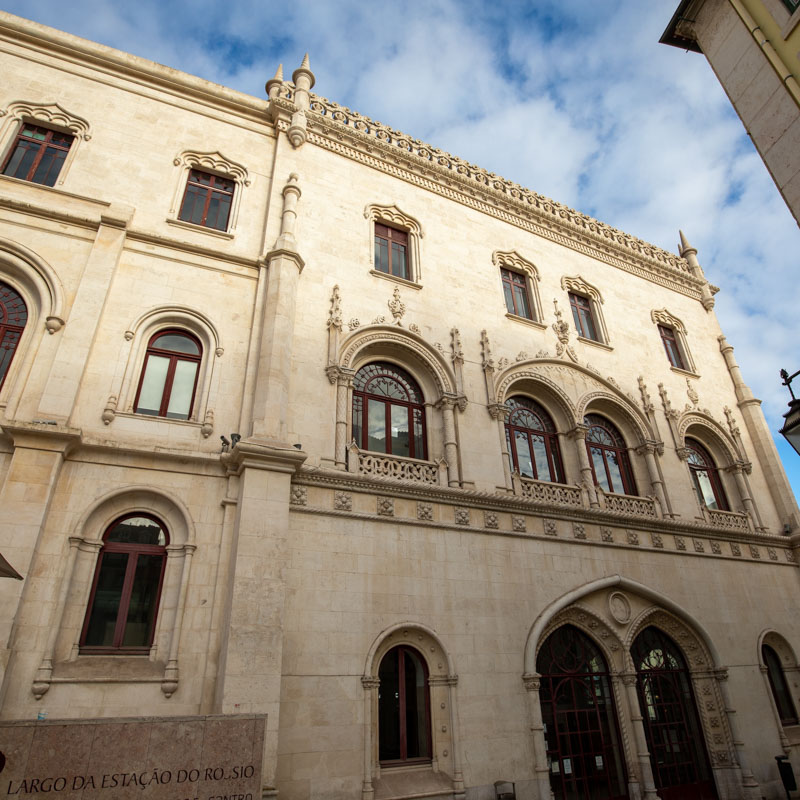
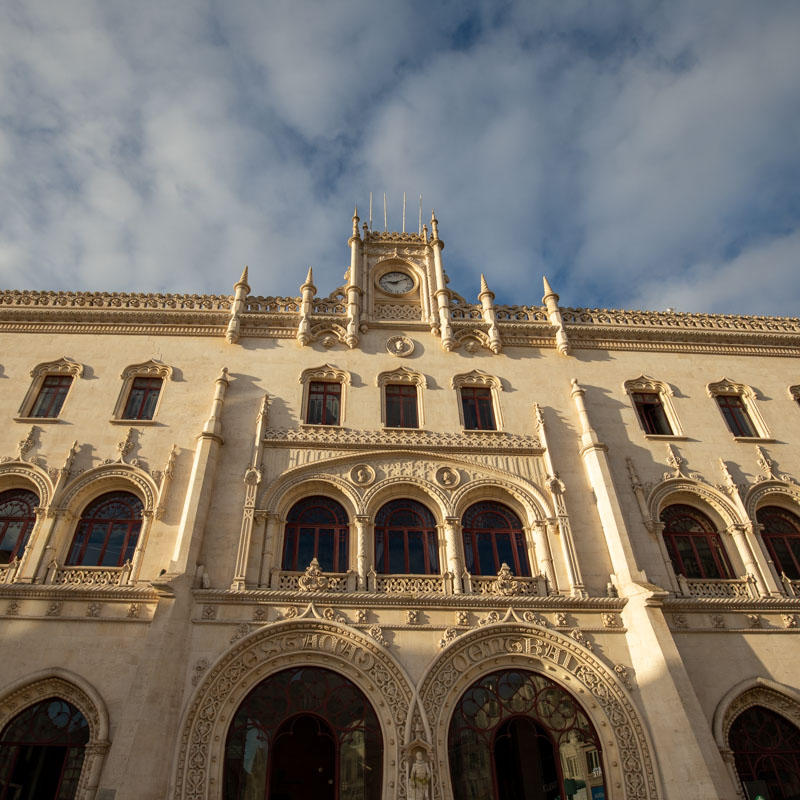
Rossio Station does something rare: it turns a train arrival into a memorable first meeting with Lisbon. Opened in 1890 to serve as the city’s Central Station, it was designed by José Luís Monteiro in the Neo-Manueline style, and one look at the façade explains why: carved arches, lace-like stonework, armillary spheres, sculpture and the clock tower give the building the solemnity of an urban palace. Yet its beauty is not only decorative. The station solved the site’s steep difference in level with great ingenuity and connects to Campolide through a tunnel more than two and a half kilometres long, a decisive work of nineteenth-century railway engineering. It is worth stepping inside and looking up at the iron-and-glass structure above the platforms, or seeking out the famous Sala do Rei. Few places show so clearly that, in Lisbon, even departure can carry grandeur, memory and imagination.
Why it matters
Rossio Station was born from the ambition to give Lisbon a great central station in an area that was already crucial to the city’s political and commercial life. In 1886, the design for the passenger building and the platform roof was entrusted to the architect José Luís Monteiro. The following year work began on the Rossio Tunnel, the essential link to Campolide, and in 1888 construction moved forward with the participation of the French firm Duparchy & Bartissol. The first trial journey through the tunnel took place in April 1889, and the official inauguration of the station was held on 11 June 1890. For decades, Rossio operated as one of Lisbon’s main railway terminals, providing the link to Sintra and also serving national and international traffic. Between 1934 and 1948, the interior was modernised under a project by Cotinelli Telmo. Electrification in the mid twentieth century changed railway operations and helped shift long-distance services to Santa Apolónia. Classified as a Property of Public Interest in 1971, the station underwent major works again between 2004 and 2008, with the rehabilitation of the tunnel and of the station complex.
Architecture and history
TThe station’s architectural distinction lies in the way it combines monumental presence, railway function and adaptation to the terrain. José Luís Monteiro was instructed to adopt a Neo-Manueline language and applied it to a building that resolves the difference in level between Rossio and the tracks through several floors, ramps and urban connections. The external composition brings together stone, iron and glass. On the main façade, the clock tower, the lace-like parapets, the pinnacles, the armillary spheres and the statuary stand out, together with signs linked to the railway world, such as the medallions with the likenesses of Stephenson, Fontes Pereira de Melo and King Luís. At the centre open two large horseshoe arches leading to the lower vestibule. Behind the building, the wide iron-and-glass roof over the platforms shows the importance of iron architecture at the end of the nineteenth century. The complex also included the station hotel, now the Avenida Palace, physically connected to the station itself.
More context
The façade facing Restauradores and Rossio deserves careful attention, because it clearly displays the symbolic programme of the building. Notice the two interlaced horseshoe arches of the main entrance, the central clock, the historical medallions and the Manueline motifs that combine flowers, pinnacles and armillary spheres. On the intermediate floor, the King’s Room preserves one of the station’s most distinctive spaces, designed for royal waiting before departure. Near the platforms, it is worth looking at the scale of the iron-and-glass roof, which still conveys the dimension of this nineteenth-century station. In that area there are also ceramic roundels by Lucien Donnat and Rogério Amaral, dedicated to Portuguese products, and tile panels by Lima de Freitas on myths and legends of Lisbon. Another important feature is the relationship between the different levels of the building and the city’s slope. The ramps and accesses between Largo Duque de Cadaval, the vestibule and the boarding area show how architecture solved a difficult technical problem without losing the dramatic impact of the whole ensemble.
Gallery