Lisboa · Lisboa
Teatro Nacional Dona Maria II
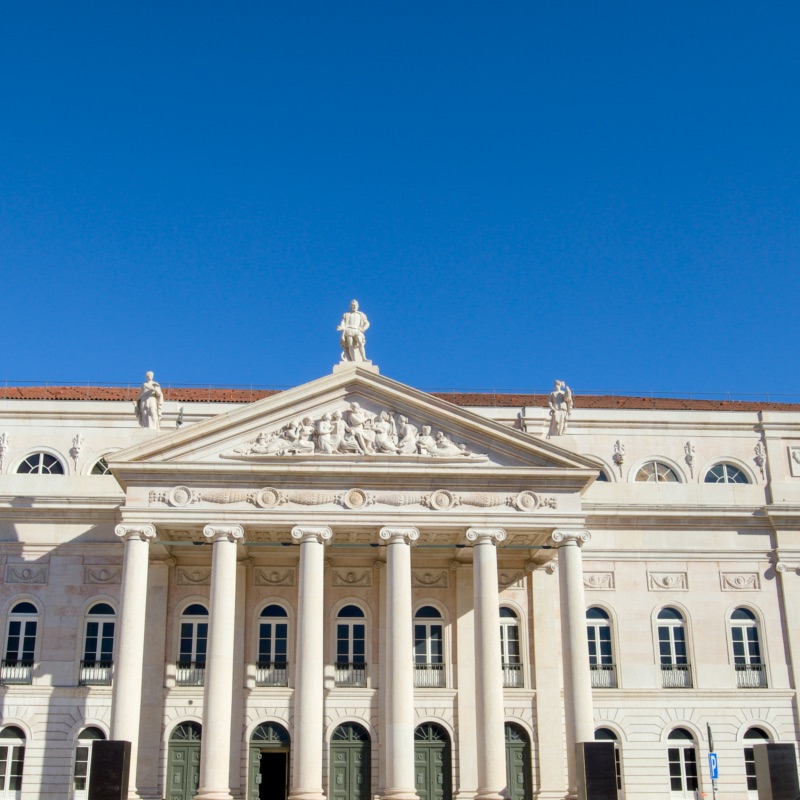
In Rossio, the National Theatre Dona Maria II is far more than a famous façade: it is a symbol of the very idea of public theatre in Portugal. Its origins are tied to the cultural reform of 1836, when Passos Manuel asked Almeida Garrett to conceive a national theatre; the building, designed by Fortunato Lodi, rose between 1842 and 1846 on the site of the former Palácio dos Estaus, once the seat of the Inquisition. Its neoclassical front, with a portico of six Ionic columns brought from the former Convent of São Francisco da Cidade, gives Rossio the air of an urban stage. In 1964, a fire destroyed almost all the interior, but the theatre was rebuilt and reopened in 1978. Today it still brings memory and creation together, and it is worth taking time to look at it: few buildings tell so clearly how Lisbon turned a place of power and surveillance into a space for art and imagination.
Why it matters
The National Theatre D. Maria II grew out of a cultural and political programme launched after the September Revolution of 1836. Passos Manuel asked Almeida Garrett to plan a national theatre that could promote Portuguese drama, artistic training and a public idea of culture linked to nineteenth-century liberalism. The chosen site was Rossio, on the ruins of the former Palácio dos Estaus, long associated with the Inquisition and destroyed by fire in 1836. The design of the new building was entrusted to the Italian architect Fortunato Lodi, and construction took place between 1842 and 1846. The theatre opened on 13 April 1846, during the celebrations of Queen Maria II’s birthday, from whom it took its name. In December 1964, a severe fire destroyed the interior of the building and largely spared only the outer walls. The reconstruction, carried out to a design by Rebello de Andrade, allowed the theatre to reopen in 1978. Classified in 1928 and reclassified as a National Monument in 2012, it remains the leading reference point of Portuguese public theatre.
Architecture and history
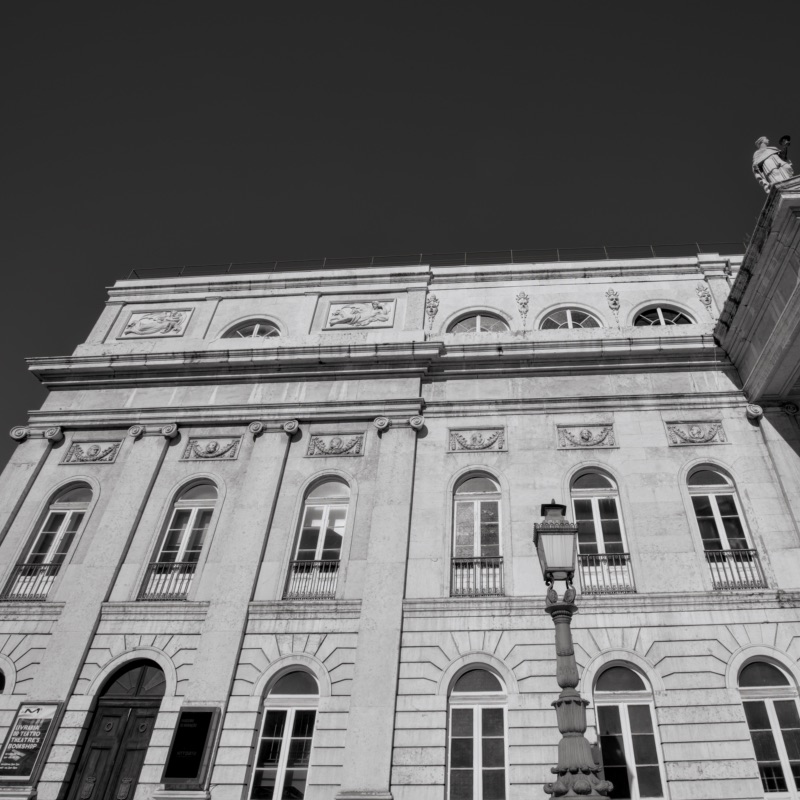
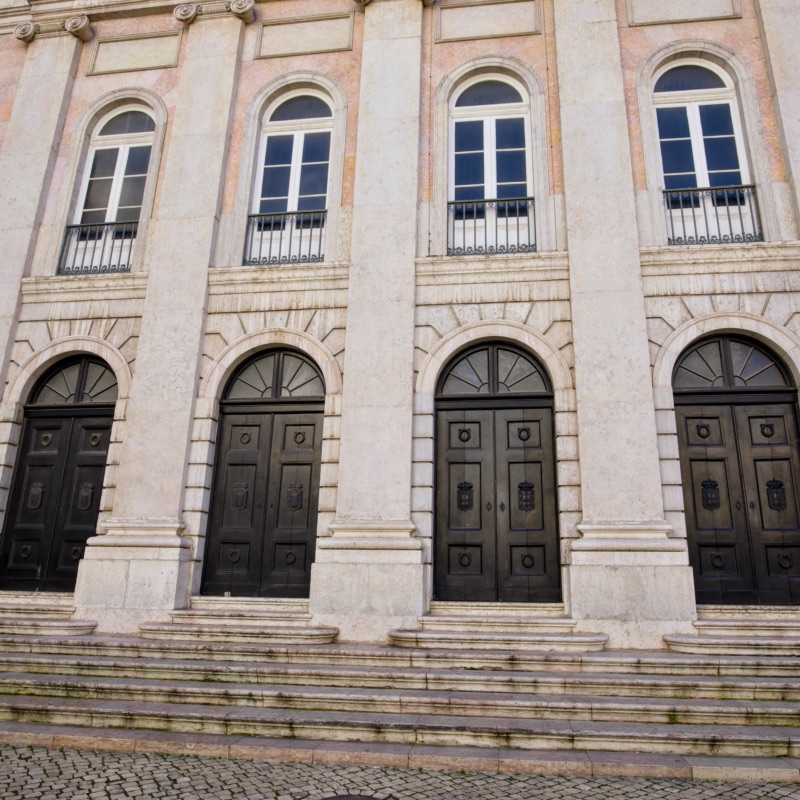
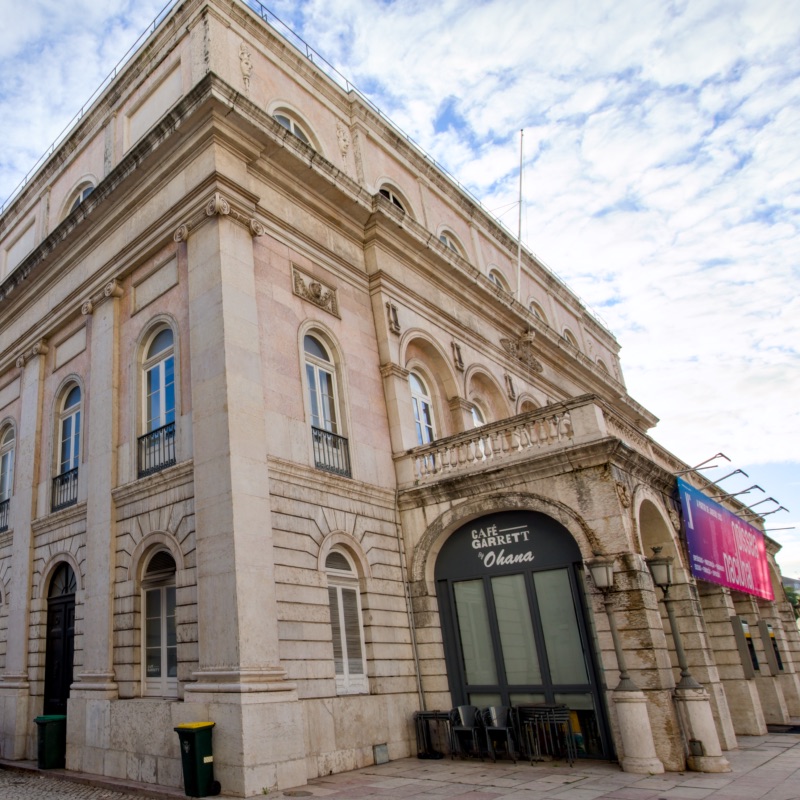
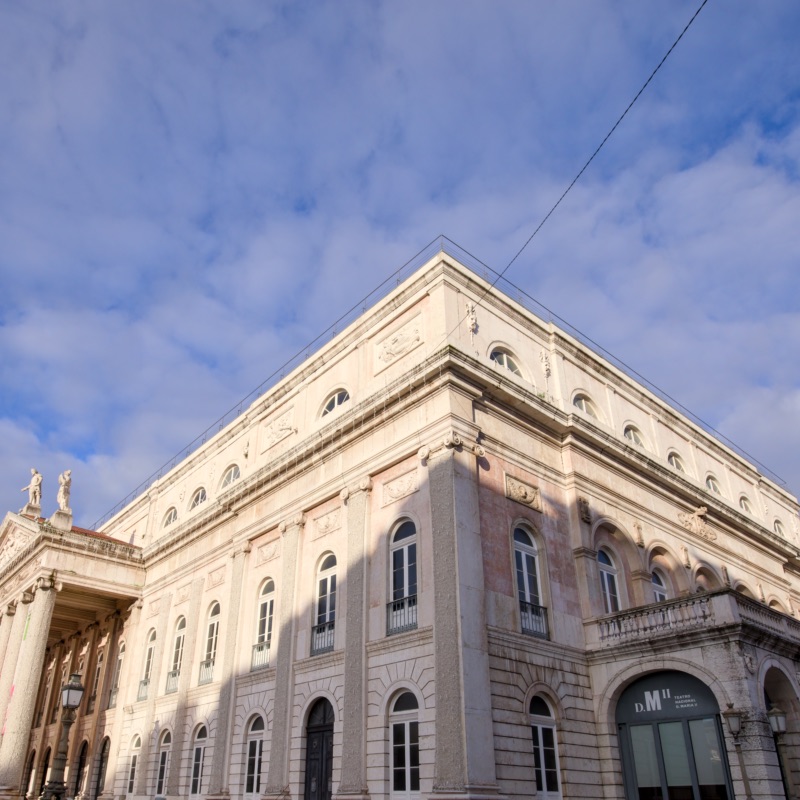
The building’s architecture gives Rossio a neoclassical image of Palladian inspiration, remarkable for the monumental clarity with which it shapes the square. The main façade is symmetrical and centres on a great portico with six Ionic columns topped by a triangular pediment, almost like a civil temple devoted to performance. Above it stand the sculptures of Gil Vicente in the centre, flanked by Thalia and Melpomene, underlining the theatre’s symbolic place in Portuguese culture. The building develops through sober volumes, regular openings, clear cornices and a disciplined composition that balances solemnity with urban legibility. Inside, the nineteenth-century theatrical tradition continues in the Sala Garrett, the foyers, the staircase and the spaces for performance and gathering that support the life of the house. Even after the destruction caused by the 1964 fire, the reconstruction sought to preserve the monument’s historic image and maintain the ensemble as one of the most emblematic examples of Lisbon’s nineteenth-century neoclassicism.
More context
The portico’s colonnade is an excellent place to begin, because it makes clear how the theatre relates to Rossio by turning the entrance into a stage-like gesture facing the city. Above, it is worth focusing on the statue of Gil Vicente and the figures of Thalia and Melpomene, which condense in a single view the literary and dramatic legacy evoked by the building. When the interior is accessible, the Sala Garrett is the most striking space. There, close attention is rewarded in the relationship between stalls, boxes, ceiling, proscenium opening and presidential box, all of which reveal the organisation of the theatrical space. The foyers, the staircase, the Noble Hall and the Library extend that reading and show that the theatre was conceived not only as a stage, but also as a place of meeting, memory and movement. Even from outside, its position at the northern end of Praça D. Pedro IV helps explain its urban role: more than an isolated building, D. Maria II acts as a monumental frontage for one of Lisbon’s central squares.
Gallery