Lisboa · Lisboa
Igreja de São Domingos
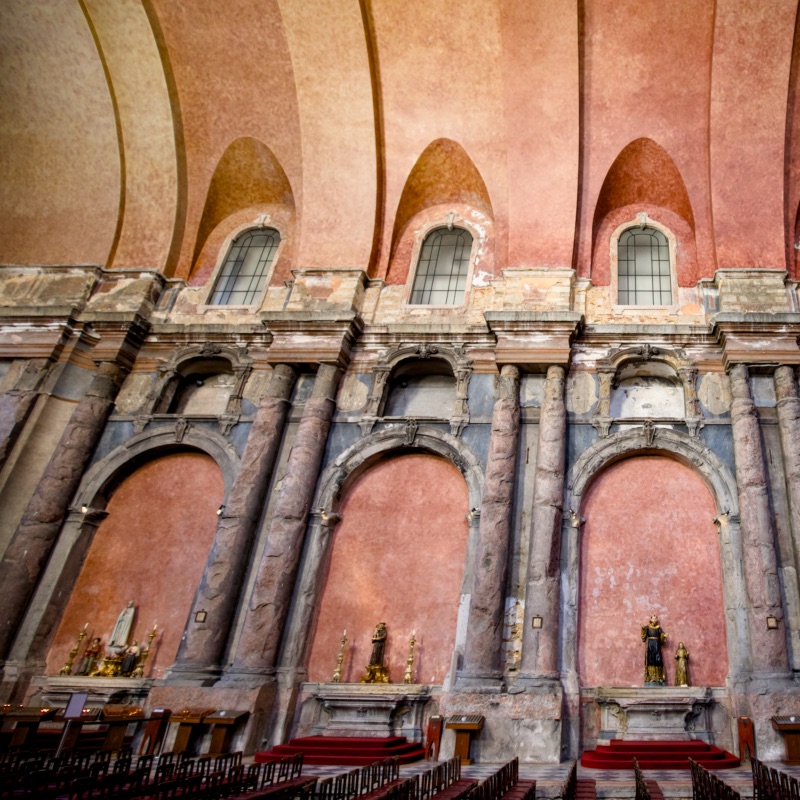
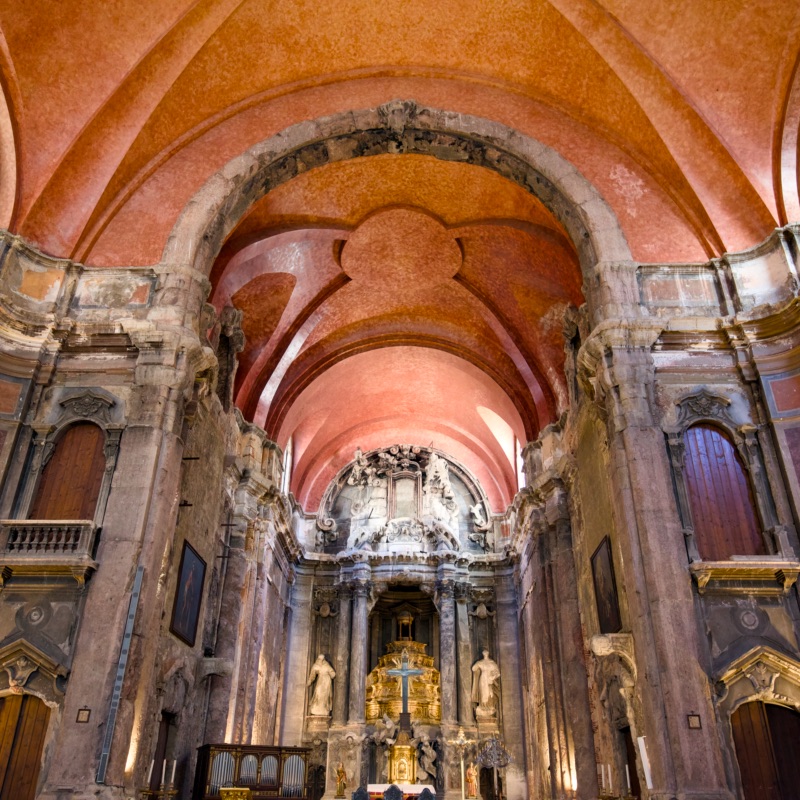
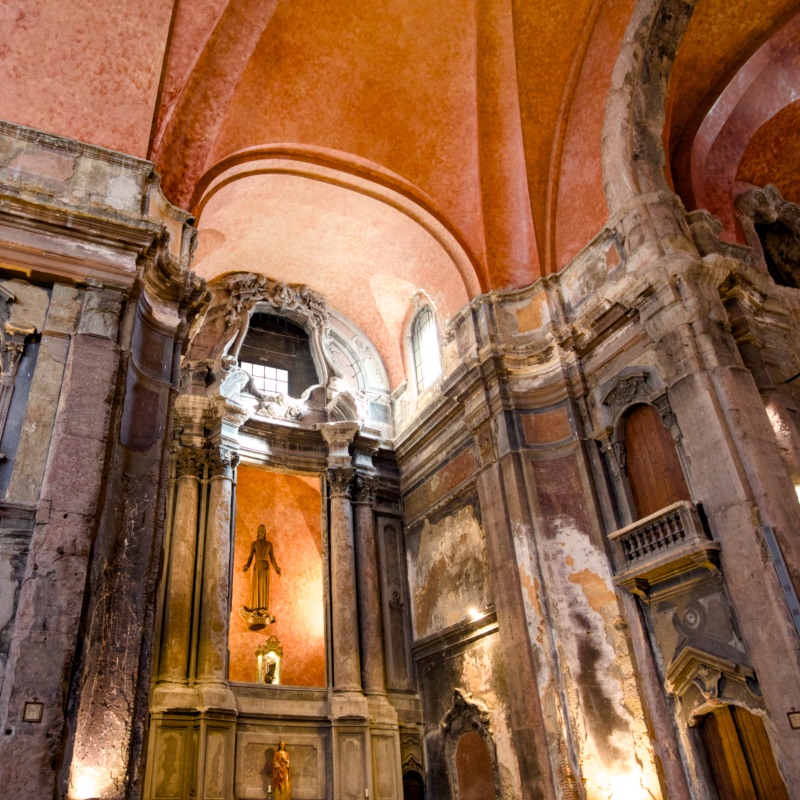
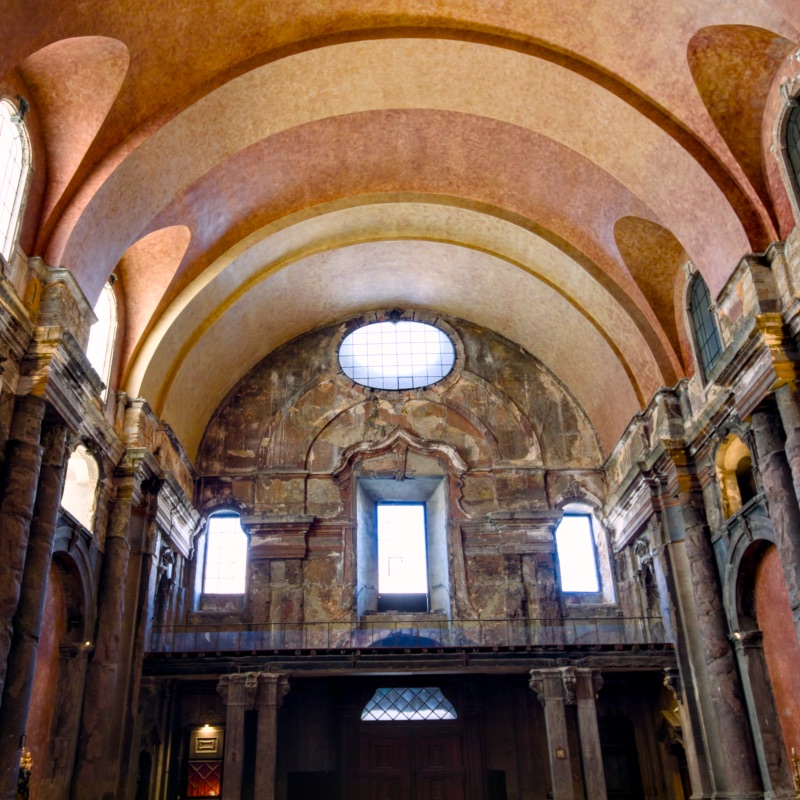
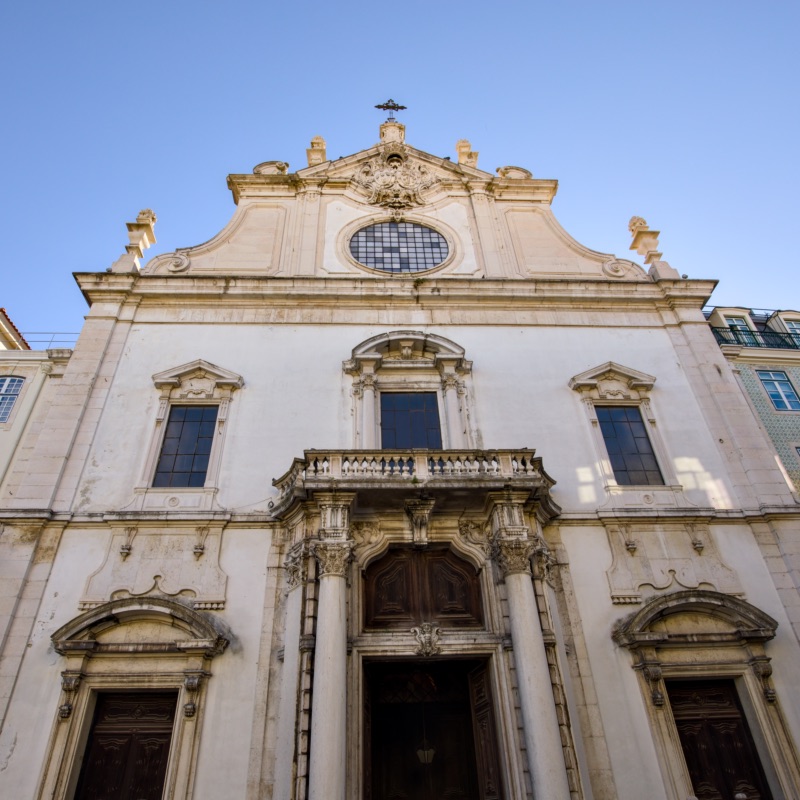
The Church of São Domingos, in Lisbon, is a place where history can be seen in stones marked by fire. The first stone was laid in 1241, in the former Dominican convent, and the building passed through successive building campaigns. Classified as a National Monument since 1918, it saw its chancel reformed in 1748 by João Frederico Ludovice; this would be the area spared by the 1755 earthquake. The later reconstruction, associated with Manuel Caetano de Sousa, incorporated the portal and balcony that came from the Royal Chapel of the Ribeira Palace. The Baroque church, with a Latin-cross plan and a single nave, preserves an interior scale marked by monumental columns and the polychromy of its marbles. On 13 August 1959, a fire destroyed much of the interior. Reopened in 1994, it keeps those marks visible, turning loss into material memory.
Why it matters
The Church of São Domingos, located between Rossio and Praça da Figueira, is one of Lisbon’s most striking historic churches. Construction began in 1241 by order of King Sancho II, and over the centuries the church became the setting for major religious, national and royal ceremonies. Its history, however, is also linked to traumatic episodes in the city’s past. It was here, in the Convent and Largo de São Domingos, that the 1506 massacre began, an event now recalled by a municipal memorial near the church. The building suffered severe damage in the 1531 earthquake and was again almost destroyed in the 1755 earthquake, which led to a long rebuilding campaign in the second half of the eighteenth century. That reconstruction involved figures such as Carlos Mardel and Manuel Caetano de Sousa, while the high chapel and facade are associated with João Frederico Ludovice. In 1959, a fire devastated the interior; the church only reopened to the public in 1994, with the marks of the fire deliberately left visible. Classified as a National Monument, the church brings together several layers of Lisbon’s religious, political and urban history in a single space.
Architecture and history
Architecturally, the Church of São Domingos is defined by the superimposition of different periods and building campaigns. Heritage classification describes it as a religious building with a predominantly Baroque character, with a plan formed by a single nave in a Latin-cross layout, a projecting transept, a deep rectangular chancel and access to a crypt. The facade is relatively sober, contrasting with the monumental scale of the interior, which still retains a strong theatrical character. The rebuilding that followed the 1755 earthquake shaped much of the church’s present image, yet traces of earlier phases were not entirely lost: the sacristy and entrance area still reveal Mannerist features, while the use of polychrome marble reinforces the material richness of the whole. What now makes the church truly distinctive, however, is the way the post-1959 restoration was handled: instead of concealing the destruction, it left blackened stone, cracked columns and other scars of the fire exposed. The result is a rare interior in Lisbon, where Baroque monumentality, the memory of catastrophe and contemporary restoration coexist in a remarkably expressive way.
More context
A visit should begin in the main nave, because this is where the scale of the building and the visual impact of the fire marks preserved in the restoration are most clearly understood. It is worth observing the contrast between the columns, the marble altars, the depth of the high chapel and the burnt surfaces, since that tension defines the church’s present identity. Visitors should then pay attention to the overall composition of the space, noticing how the sobriety of the exterior facade contrasts with the ceremonial dimension of the interior, once chosen for royal funerals, baptisms and weddings. Whenever accessible, the sacristy and adjoining spaces help complete this reading, as they preserve echoes of artistic campaigns from before the fire. Outside, Largo de São Domingos adds an essential historical dimension to the route: the memorial dedicated to the victims of the 1506 Jewish massacre makes clear that this is not only a religious monument, but also a place of civic memory. Seen together with Rossio and Praça da Figueira, the church helps explain why São Domingos occupies such a central place in the historical and symbolic reading of downtown Lisbon.
Gallery