

Lisboa · Lisboa
Mosteiro dos Jerónimos
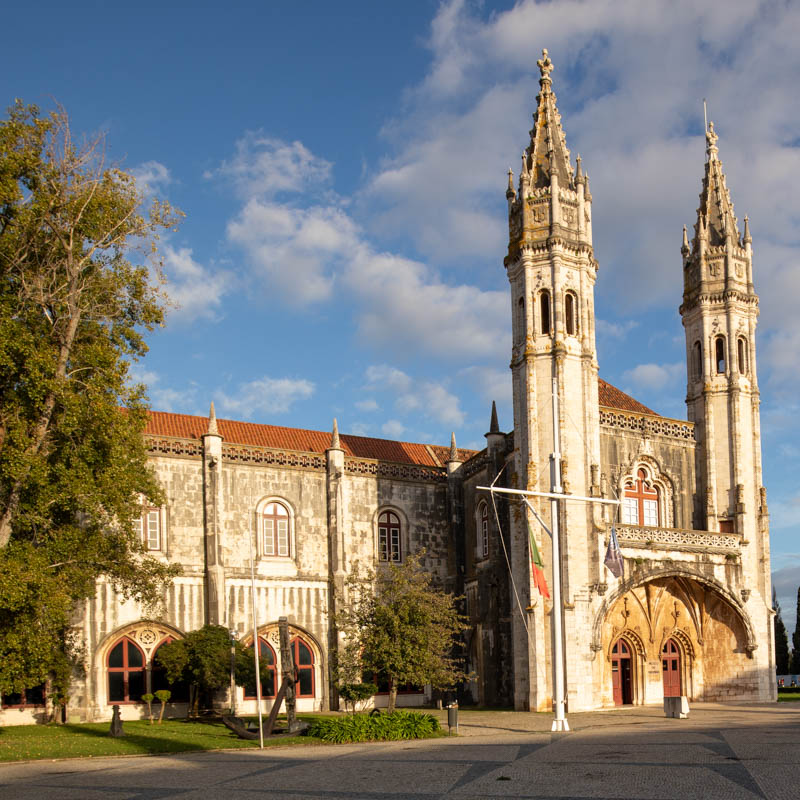
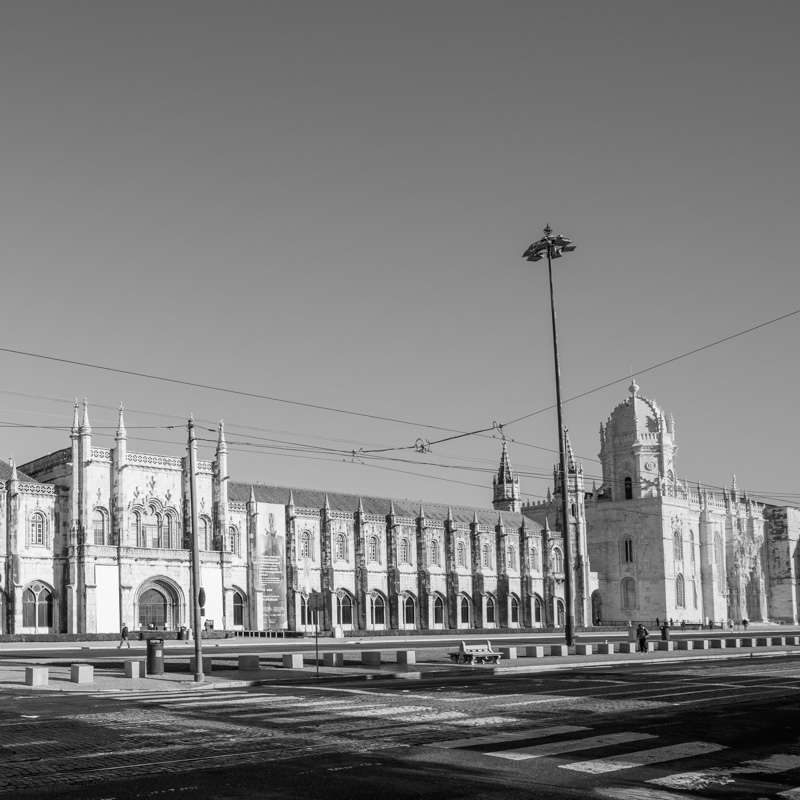
On the edge of the Tagus, Jerónimos Monastery seems to turn into stone the moment when Lisbon opened itself to the world. Commissioned by King Manuel the First at the end of the fifteenth century, beside Restelo, where ships and caravels set out, it was entrusted to the monks of Saint Jerome, who were meant to pray for the king and offer spiritual support to navigators. Work began in fifteen hundred and one and continued for about a century, leaving one of the finest examples of the Manueline style, exuberant yet precise, filled with royal, Christian and natural symbols. During a visit, it is worth slowing down in the sixteenth-century cloister and before the south portal, where the sculpture seems almost like lace in stone. In the church lie Vasco da Gama and Luís de Camões, a detail that deepens the monument’s bond with the country’s maritime and literary memory. Few places tell Portugal’s story with such clarity and beauty.
Why it matters
Jerónimos Monastery was founded on the initiative of King Manuel I, who in 1495 asked the Holy See for permission to turn the hermitage at Restelo into a great monastery for the Order of Saint Jerome. Approval came in 1496 and construction began in 1502, at a time when Lisbon was asserting its Atlantic role. Built beside the Tagus, the complex was symbolically linked to maritime voyages and offered spiritual assistance to the navigators who left from Restelo beach. The work continued through much of the sixteenth century and passed through several building campaigns, with decisive contributions from Diogo Boitaca, João de Castilho, Nicolau Chanterene, Diogo de Torralva and Jerónimo de Ruão. In 1517, Manuel I decided that the monastery should also serve as a royal pantheon. Later, the building underwent important alterations, especially in the nineteenth century, but it kept the essential cores that gave it international fame. In 1907 it was classified as a National Monument and, in 1983, it was inscribed on the UNESCO World Heritage List together with the Tower of Belém.
Architecture and history
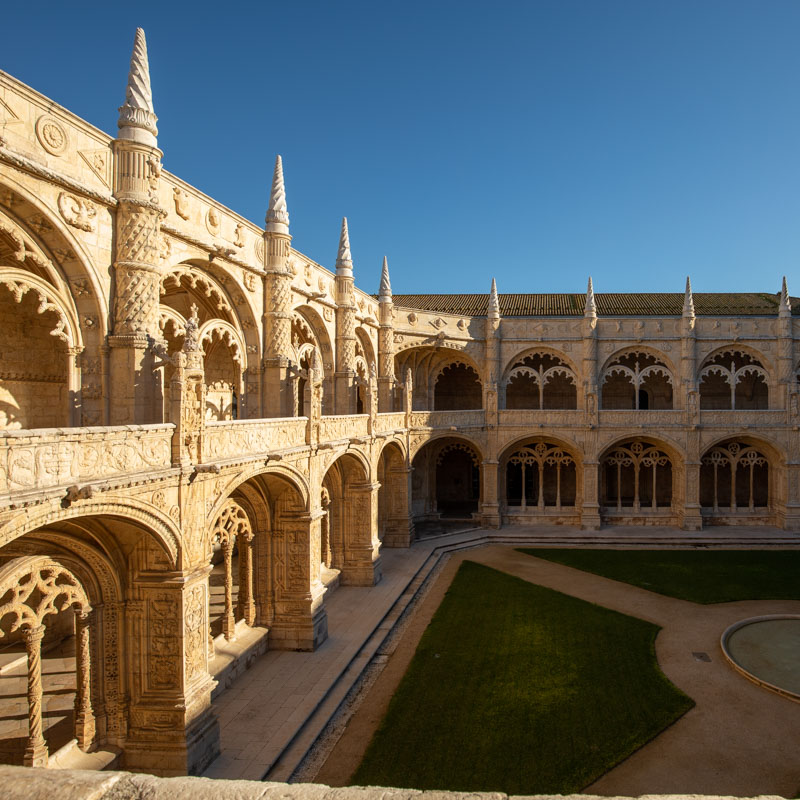
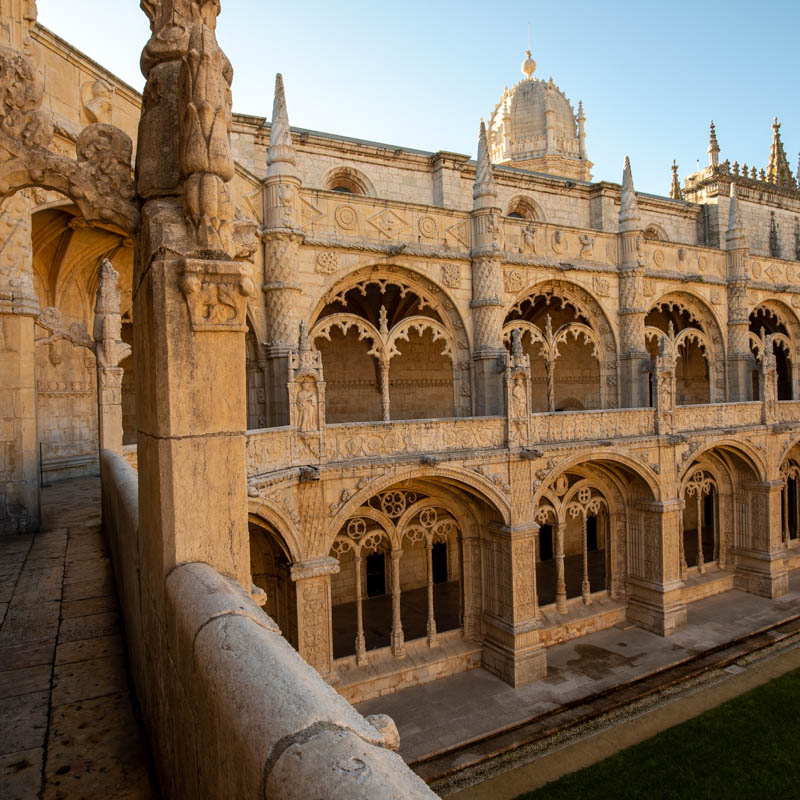
Architecturally, the monastery is one of the great expressions of the Manueline style, a Portuguese language of form that combines Gothic inheritance, openness to the Renaissance and decoration charged with symbolism. The church of Santa Maria de Belém is arranged as a hall church, with three aisles of equal height, covered by a vast vault resting on very slender pillars and creating a unified, luminous space. Outside, the axial portal, associated with Nicolau Chanterene, and the south portal stand out. The latter was conceived like a vast stone altarpiece, filled with apostles, prophets, Doctors of the Church, angels and the images of the Virgin of Belém and the Archangel Michael. Beside the church opens the two-storey cloister, one of the most celebrated spaces in the complex, decorated with Christological, heraldic and naturalistic motifs. The chancel, already Mannerist in character, contrasts with the rest of the building and shows how the monastery passed through different artistic phases without losing its monumental unity.
More context
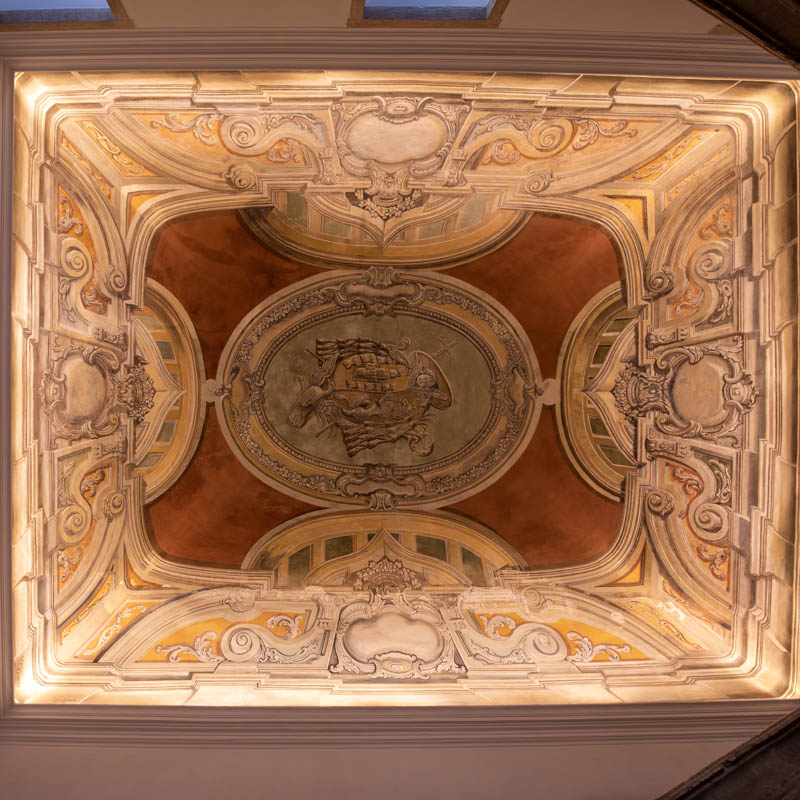
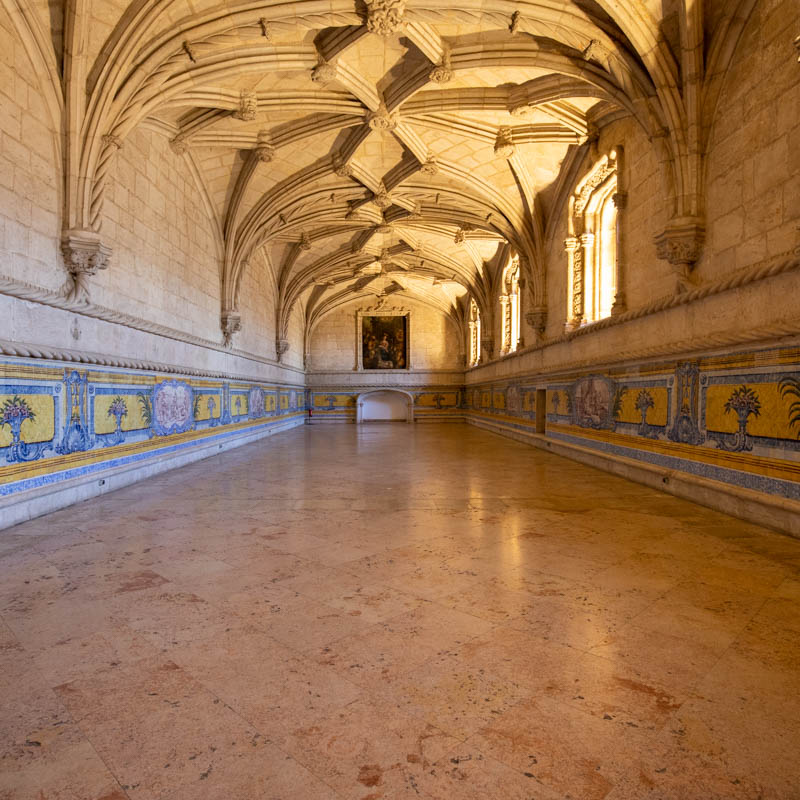
During a visit, it is worth starting with the church in order to grasp the scale of the nave, the lightness of the vault and the almost continuous effect of the columns drawing the eye towards the chancel. Beneath the choir are the tombs of Vasco da Gama and Luís de Camões, which reinforce the monument’s symbolic bond with maritime expansion and Portuguese cultural memory. Outside, the south portal deserves careful attention for its rich iconography, while the axial portal reveals a more ordered composition, closer to Renaissance language. The sixteenth-century cloister is another essential point, not only for the calm of the space, but also for the density of its reliefs, medallions and heraldic elements. It is also worth noticing the preserved former conventual rooms, such as the refectory, the Chapter House and the old library, because they help explain that the monument was conceived not only as a royal church, but as a vast monastic house organised around religious life and power.
Routes
Explore this place in a cultural route
Gallery