Museu Nacional de Arte Antiga

Lisboa · Lisboa

Museu Nacional de Arte Antiga

MuseumXVIIPalace Architecture
Rua das Janelas Verdes, 1249-017 Lisboa4.6 Rating · 7,47090 min

High on Rua das Janelas Verdes, the National Museum of Ancient Art is one of those places where Portugal seems to tell its own story with unusual clarity. Opened in 1884, to give a home to many works that came from convents and monasteries after the extinction of the religious orders, it was installed in the former Palace of the Counts of Alvor and became the country’s great house of ancient art. Its collection crosses centuries and geographies, from painting to goldsmithing, from sculpture to works from Europe, Africa and the East, yet some encounters ask for real pause: the Panels of Saint Vincent, the Belém Monstrance, the Namban screens. During a visit, it is also worth slowing down in the garden facing the Tagus, where the city seems to breathe differently. Between palace, collection and horizon, the museum leaves a rare impression: that history, when well kept, remains alive.

Why it matters

The National Museum of Ancient Art was created in 1884 and installed in the Palácio Alvor, an aristocratic residence built in the late seventeenth century beside the Convent of Santo Alberto. The institution began as the Royal Museum of Fine Arts and Archaeology, at a time when the State was seeking to gather, study and display works coming from suppressed convents, palaces and other public collections. In 1891, the incorporation of the former Convent of the Albertas made it possible to enlarge the available space and respond to the growing size of the holdings. After the proclamation of the Republic, José de Figueiredo reorganised the collections and, in 1911, the division of the former national museum fixed here the core of ancient art, while works produced after 1850 were transferred to the future Chiado Museum. Over the twentieth century, purchases, donations and new incorporations consolidated a collection of more than 40,000 items and some of the most emblematic works of Portuguese and European artistic heritage, making this museum a central reference in the cultural life of Lisbon and of the country.

Architecture and history

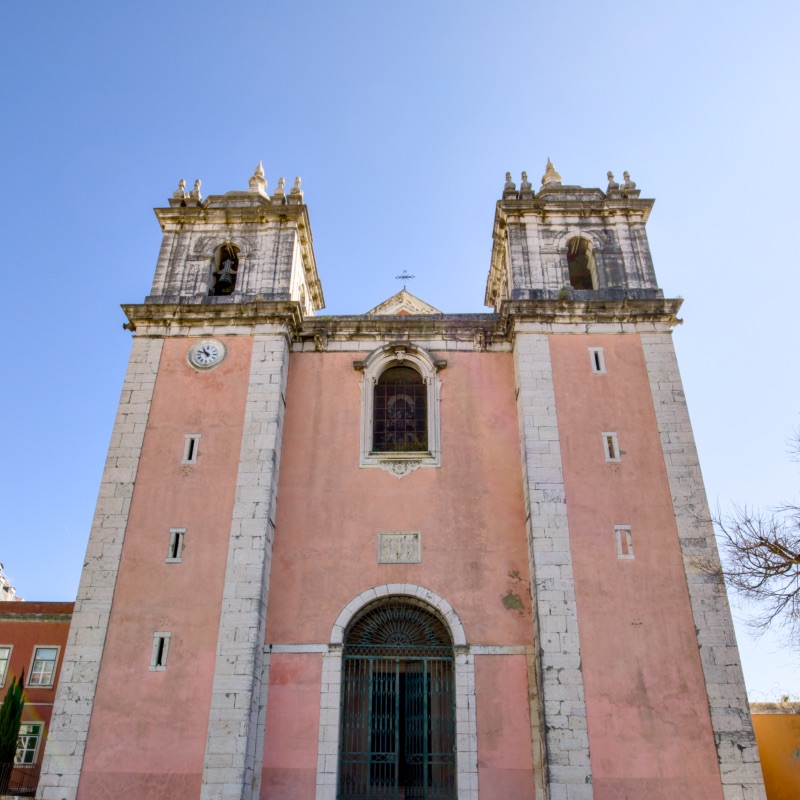
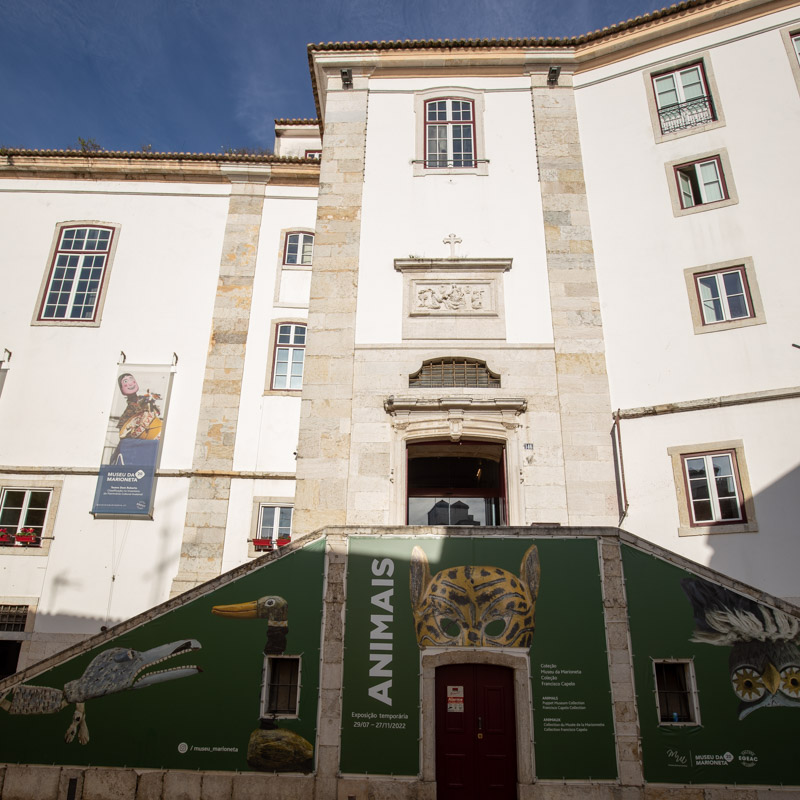
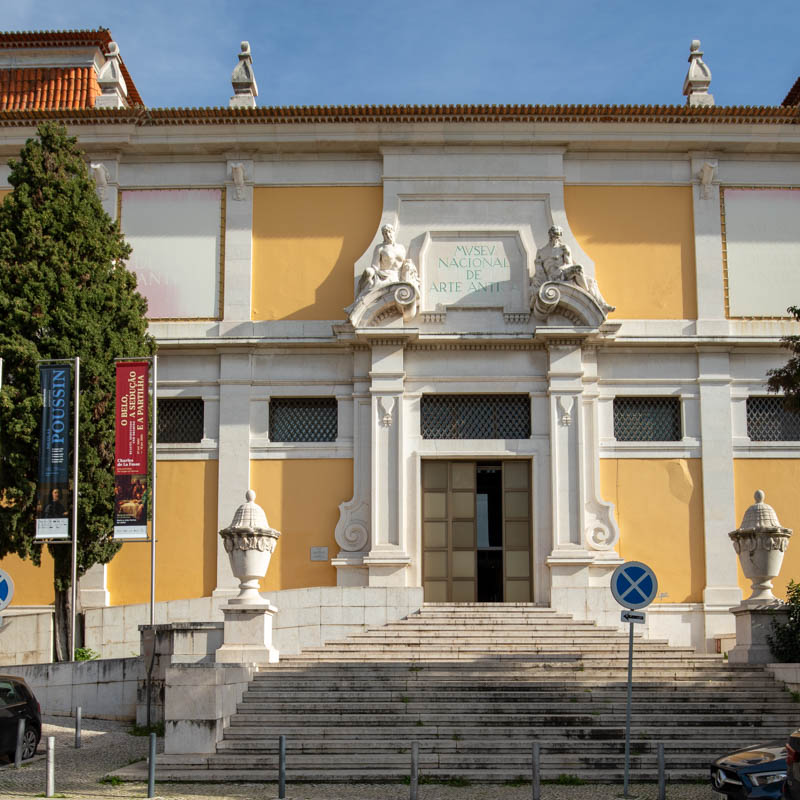
Architecturally, the complex stands out because it brings together three different bodies that now function as a single museum. On the left stretches the Palácio Alvor, with its long symmetrical façade, discreet pilasters and regular windows that preserve the noble scale of the former aristocratic residence. At the northern end stands the former church of the Convent of Santo Alberto, known as the Albertas Chapel, marked by a Mannerist portal, a convent inscription and a religious memory that remains strongly present. On the western side rises the large annex completed in 1939 and inaugurated in 1940, with its frontal staircase, neo-Baroque façade and monumental entrance crowned by the museum inscription. Inside, circulation is organised across several floors devoted to Portuguese and European painting, sculpture, drawing, goldsmith’s work, ceramics, jewellery, furniture and arts linked to Portuguese expansion. This layered composition, joining palace, chapel and twentieth-century museum building, helps explain why the MNAA is both a museum of collections and an architectural place with a strong urban identity above the Janelas Verdes area.

More context

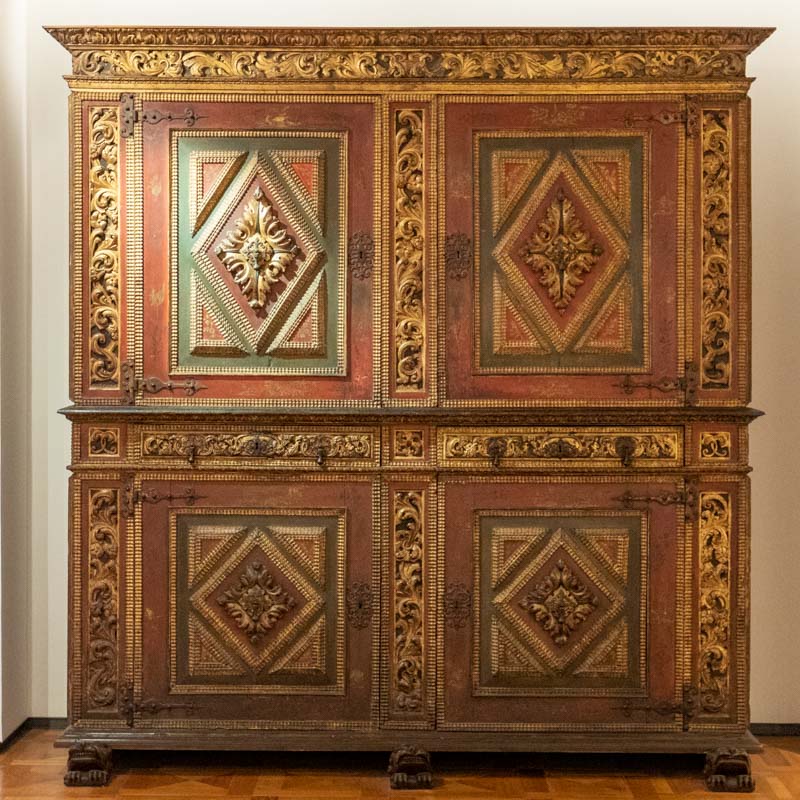
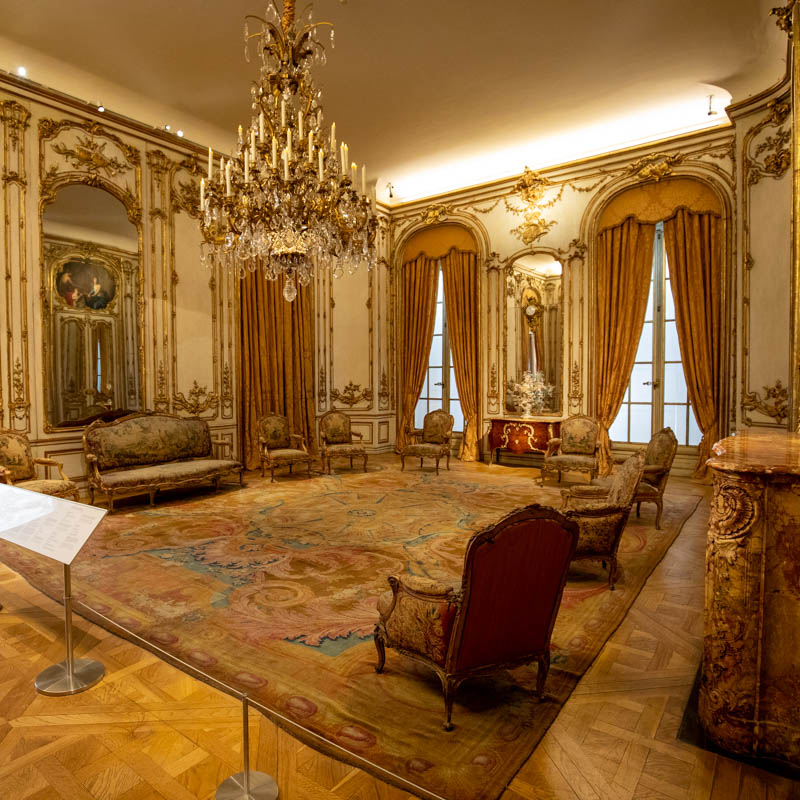
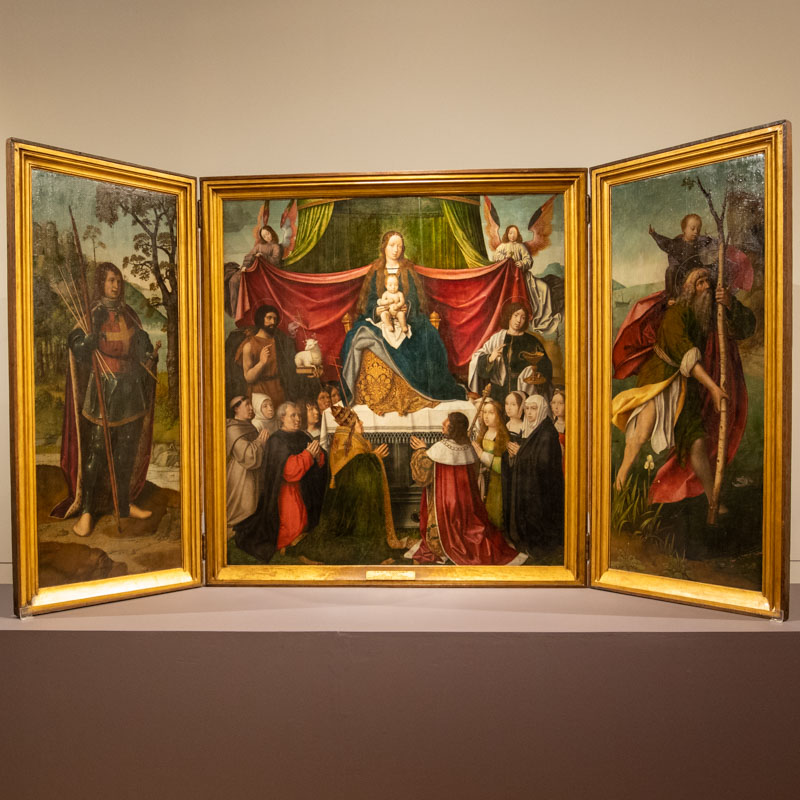
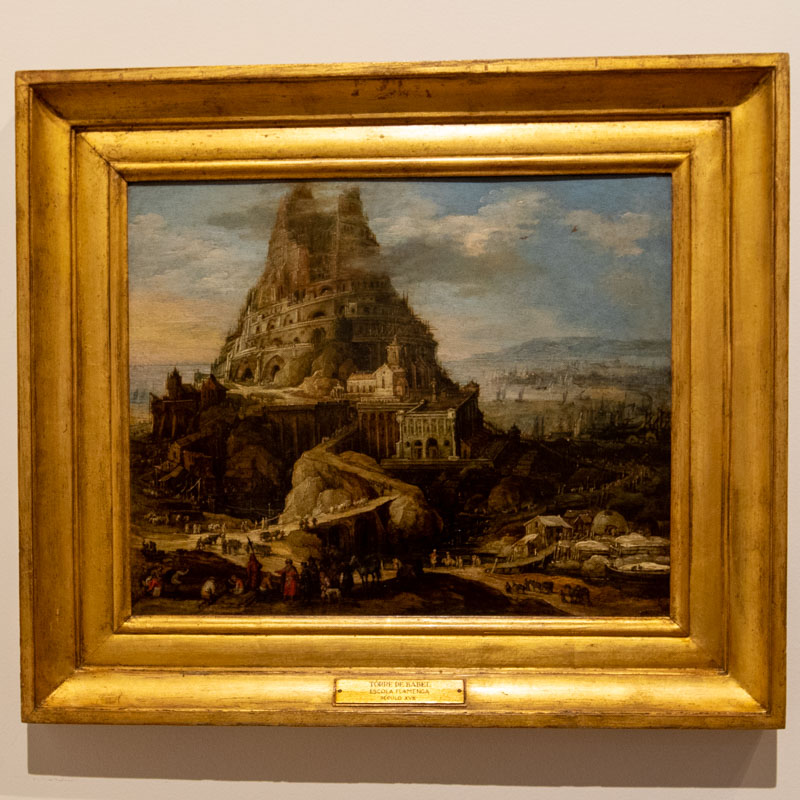
During a visit, it is worth beginning with the Panels of Saint Vincent by Nuno Gonçalves, because they are among the most decisive images in fifteenth-century Portuguese painting and one of the museum’s great icons. The route can then open onto European painting, where The Temptations of Saint Anthony by Bosch, Saint Jerome by Dürer, and works by masters such as Memling, Raphael and Cranach stand out. In the decorative arts collections, the Belém Monstrance and the Namban Screens show particularly well how the museum connects artistic creation, devotion, the circulation of objects and contacts between Portugal, Africa and the East. The rooms devoted to furniture, ceramics and jewellery also deserve attention, because they show that the idea of ancient art here goes far beyond painting. Finally, pay attention to the architecture of the route itself: the solemn entrance of the annex, the presence of the Albertas Chapel and the dialogue between the different parts of the building remind visitors that this is a museum for seeing works, but also for understanding the material history of Lisbon.

Gallery

Museu Nacional de Arte Antiga 1
Museu Nacional de Arte Antiga 2
Museu Nacional de Arte Antiga 3
Museu Nacional de Arte Antiga 4
Museu Nacional de Arte Antiga 5

Nearby places

View all