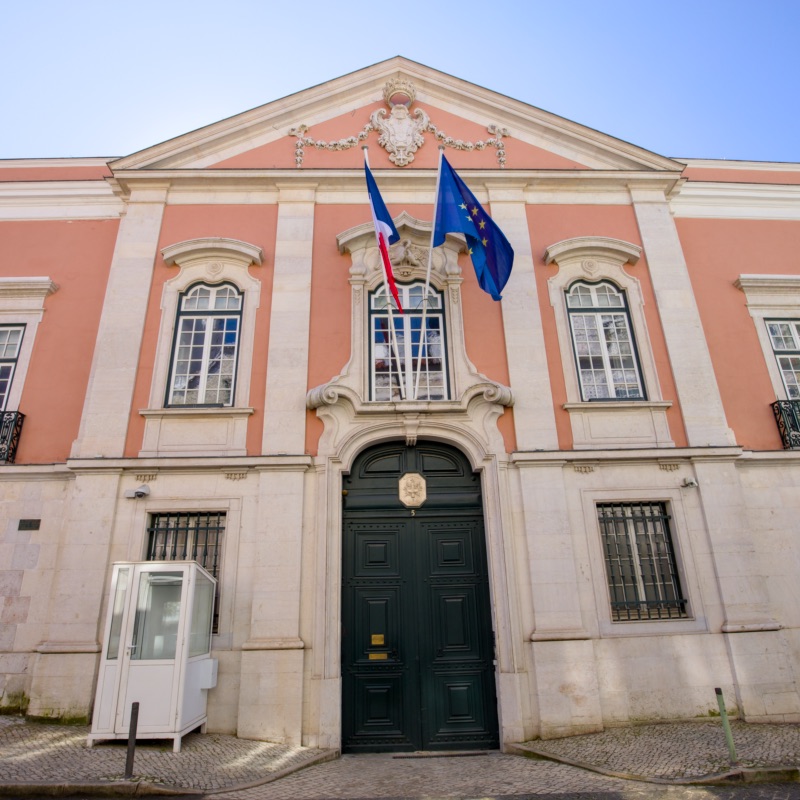
Palácio de Santos - Embaixada de França

Lisboa · Lisboa

Palácio de Santos - Embaixada de França

PalaceXVIIBaroque Residential Architecture
Rua Santos-O-Velho 1, 1200-656 Lisboa4.5 Rating · 275 min

The Palácio de Santos, in Lisbon, is also known as the Palácio de Abrantes and today houses the French Embassy in Portugal. The memory of the site is much older than the palace: the history associated with the building links it to the martyrs Veríssimo, Máxima and Júlia; after the conquest of Lisbon in 1147, King Afonso Henriques ordered a new hermitage to be built here. The site became a convent and, in the 15th century, was transformed into a palatial residence. The form recognised today owes much to the Lancastre family, who commissioned a major building campaign from João Antunes in the 17th century. The building survived the 1755 earthquake and preserves interiors with a strong Baroque presence. Among them, the Porcelain Room stands out, with a carved wooden pyramidal ceiling filled with 267 Chinese porcelain plates. In the ceremonial rooms, painted ceilings and mythological decoration extend the palace’s history as a setting of power, taste and diplomacy.

Why it matters

The Palácio de Santos, also known as the Palace of the Marquises of Abrantes, stands on a site whose memory predates the present building. Christian tradition links the place to the cult of the martyrs Veríssimo, Máxima and Júlia; after the conquest of Lisbon, Afonso Henriques ordered a hermitage there, and throughout the Middle Ages the site evolved until it became a palatial residence. In the early 16th century, Manuel I promoted the creation of a royal palace at Santos, associated with royal stays in this part of the city. In the 17th century, the Lancastre family, later holders of the title of Marquises of Abrantes, commissioned a major building campaign from the architect João Antunes, decisive for the baroque character the palace still retains. The building survived the 1755 earthquake and underwent further decorative interventions in the second half of the 18th century, especially in the state rooms. In the 19th century it was let to members of high society and royalty, including Empress Amélie and Infanta Ana de Jesus. In 1909 it definitively passed to the French state and still serves today as the Embassy of France in Portugal.

Architecture and history

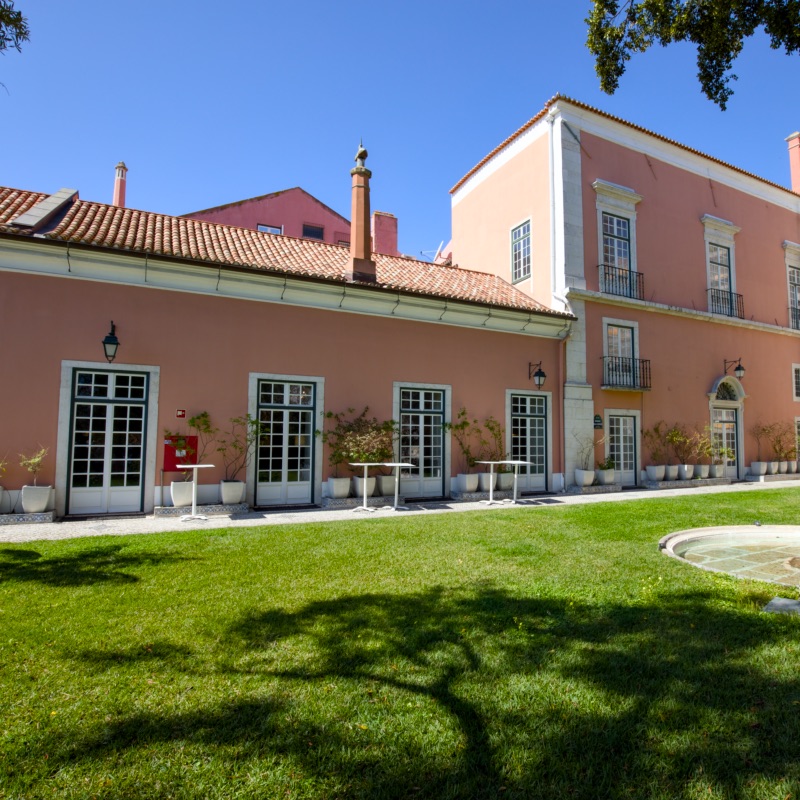
Architecturally, the palace is a remarkable example of Lisbon’s baroque noble residences, bringing together built wings, a courtyard, a garden and a sequence of ceremonial spaces. João Antunes’s intervention strengthened the relationship between the house and its outdoor areas and organised the noble route through the porch, the atrium, the chapel and the large rooms opening onto the garden. Among its most distinctive features is the Porcelain Room, famous for its pyramidal carved-wood ceiling filled with 267 Chinese porcelain dishes, a rare ensemble in Portugal that includes porcelain from the Ming dynasty. The chapel is equally important, a small baroque space where gilded carving, painting and tiles are combined; the altar displays a Crucifixion attributed to Amaro do Vale, and the decorative programme includes Gospel scenes and representations of the three martyrs associated with the origin of the site. In the 18th century, decorative campaigns further enhanced the splendour of the principal rooms with ceiling paintings by Pedro Alexandrino de Carvalho and wall compositions in a Pompeian taste inspired by classical mythology.

More context

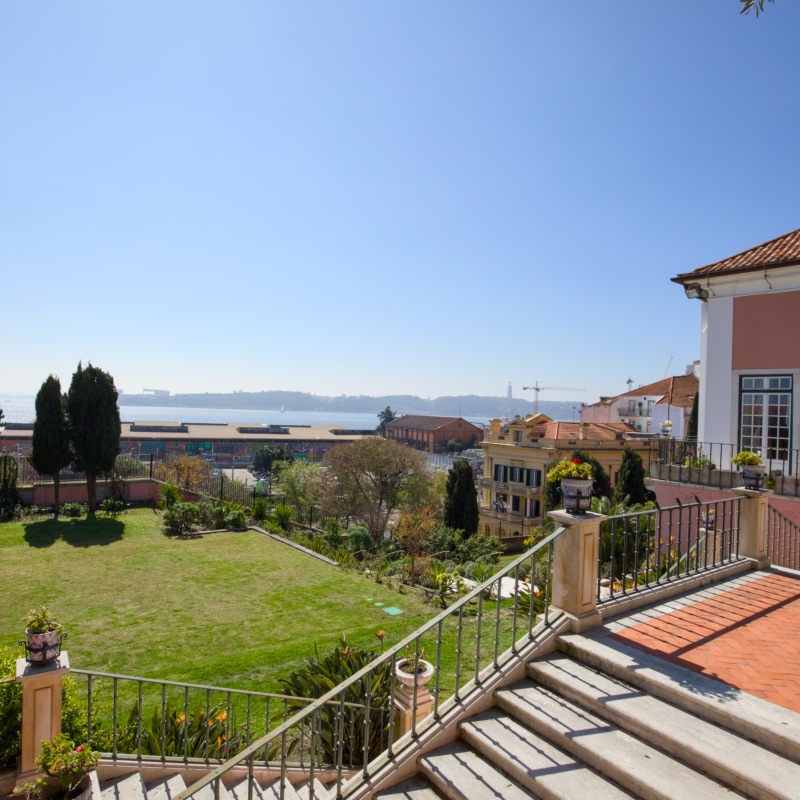
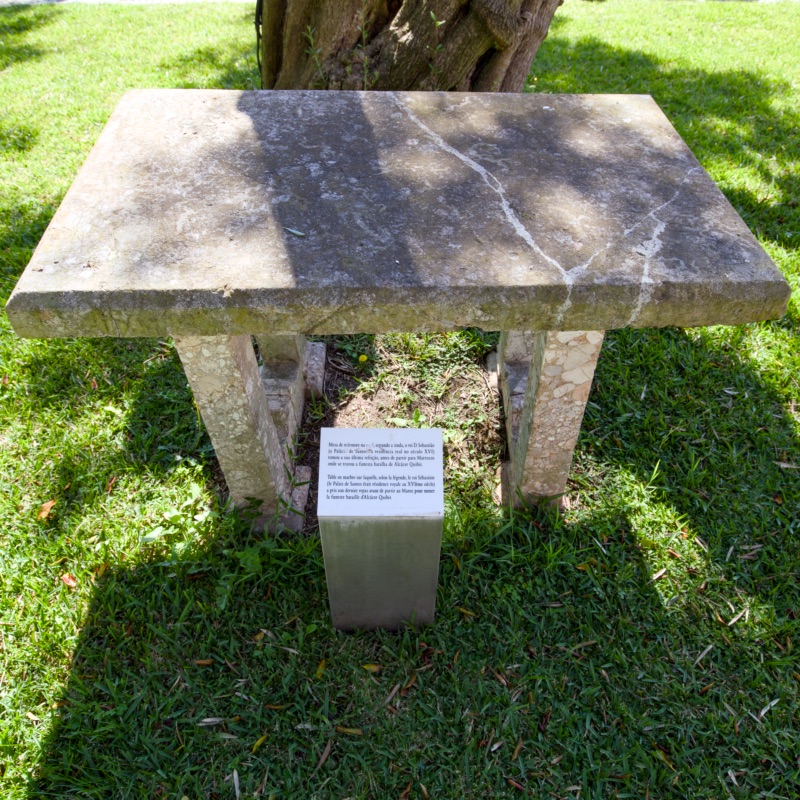
During a visit, it is worth beginning with the porch and the atrium, which introduce the representational logic of the complex and lead the eye towards the sequence of historic rooms. The chapel deserves careful attention, not only because of its intimate scale, but also because of the quality of the dialogue between painting, gilded carving and tilework. Among the ceremonial spaces, the Noble Hall and the Music Room are essential for understanding the 18th-century decorative campaign and the way the Abrantes family expressed social standing through art. The Porcelain Room is an unmissable highlight because of the theatrical effect of its ceiling and the rarity of its Chinese porcelain covering. The garden also has strong symbolic value: besides extending the reception rooms, it preserves the memory of the tradition that links the site to Sebastian’s last meal before Alcácer Quibir. The route also includes the dining room and the vestibule, allowing visitors to see how the palace’s aristocratic layers coexist today with its contemporary diplomatic role.

Gallery

Palácio de Santos - Embaixada de França 1
Palácio de Santos - Embaixada de França 2
Palácio de Santos - Embaixada de França 3
Palácio de Santos - Embaixada de França 4
Palácio de Santos - Embaixada de França 5

Nearby places

View all