Lisboa · Lisboa
Igreja de Santos-o-Velho
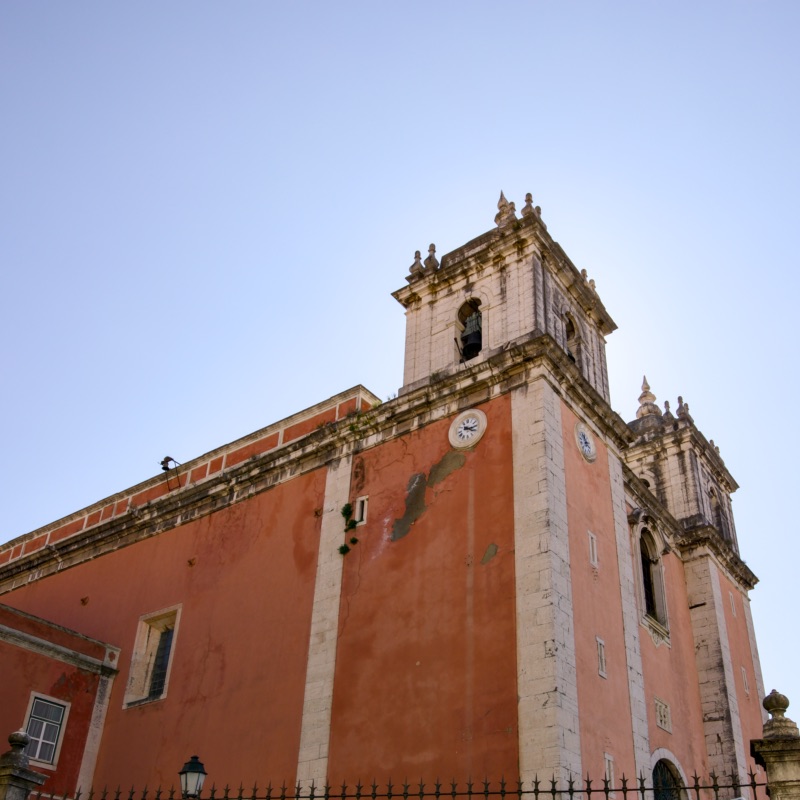
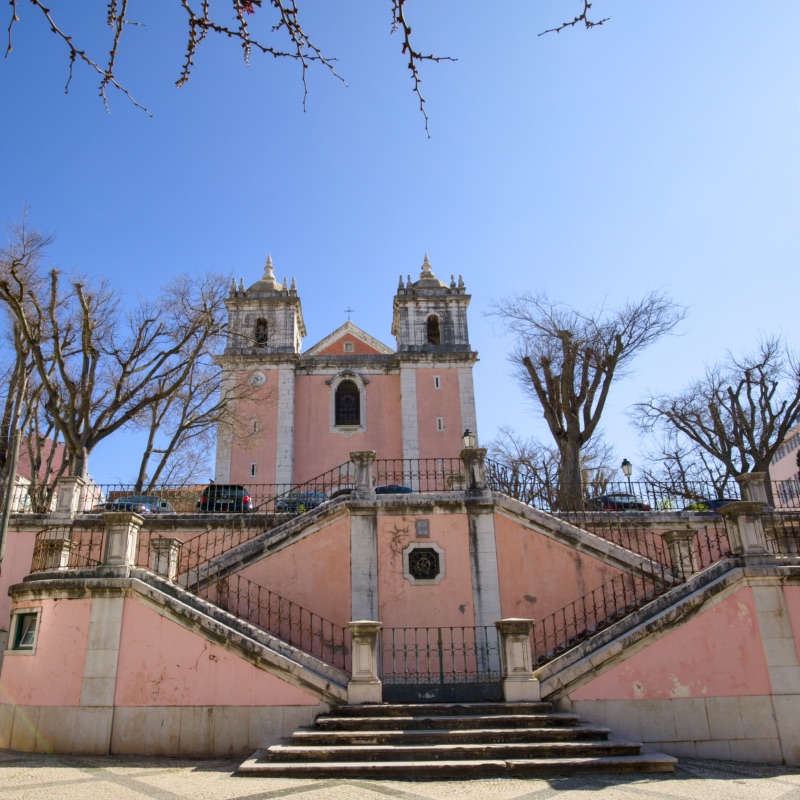
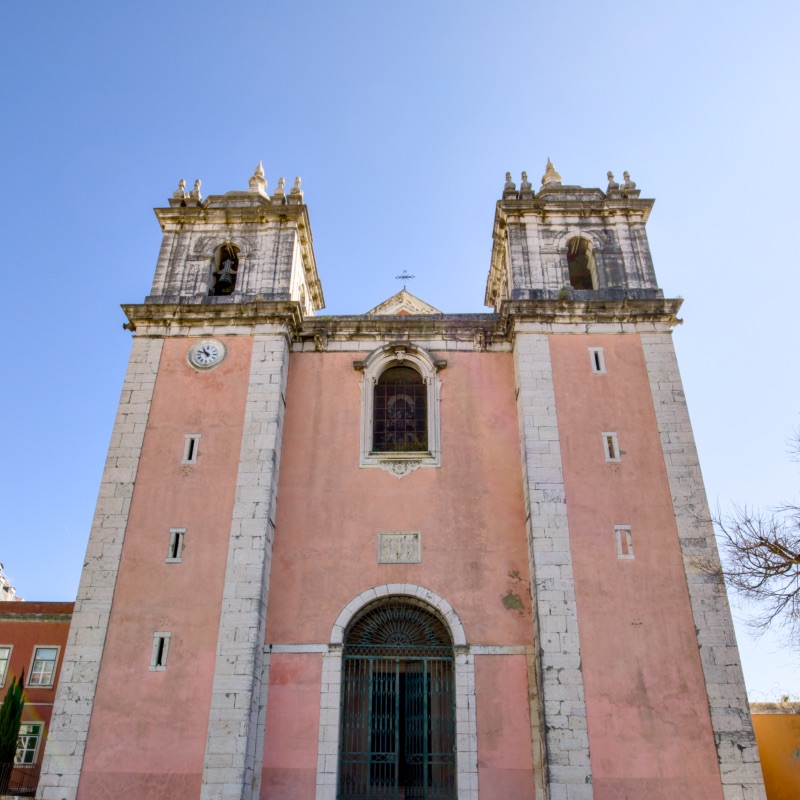
The Church of Santos-o-Velho, in Lisbon, holds a very ancient religious memory, associated with the Holy Martyrs Veríssimo, Máxima and Júlia. Municipal sources refer to remains on the site of a presumed Late Roman temple from the 4th century; in 1147, after the conquest of the city, King Afonso Henriques ordered a new church to be built there. The parish was established in 1566 by Cardinal Henrique, and the church was built during the reign of King Sebastião. Its present appearance results mainly from reconstructions carried out in the 17th and 19th centuries. The façade, flanked by two bell towers, opens through a portal with a relief of the martyrs and leads to a galilee. Inside the single nave, the false wooden barrel vault stands out, decorated with 72 painted and gilded panels on the Eucharist. Side chapels, a choir resting on corbels and a stucco chancel complete a space where devotion, memory and art overlap in discreet layers.
Why it matters
The Church of Santos-o-Velho is linked to one of Lisbon’s oldest Christian traditions, associated with the martyrs Veríssimo, Máxima and Júlia. Heritage and municipal sources refer to the existence on this site of a presumed late Roman temple from the 4th century; after the Christian conquest of Lisbon in 1147, Afonso Henriques is said to have ordered a new chapel to be built over those ruins. The site was later granted by Sancho I to the Military Order of Saint James of the Sword and then passed to the Comendadeiras de Santiago, who left the complex in 1490. The parish of Santos-o-Velho was established in 1566 by Cardinal Henry, and the rebuilt church was associated with the reign of Sebastian. The building seen today, however, is the result of successive transformations. In 1696, João Antunes led an important renewal campaign connected with the main facade, the bell towers, the pulpits and the side portal. Further remodelling and rebuilding took place in the 18th and 19th centuries, especially between 1876 and 1889, giving the monument the baroque and historicist appearance it retains today.
Architecture and history
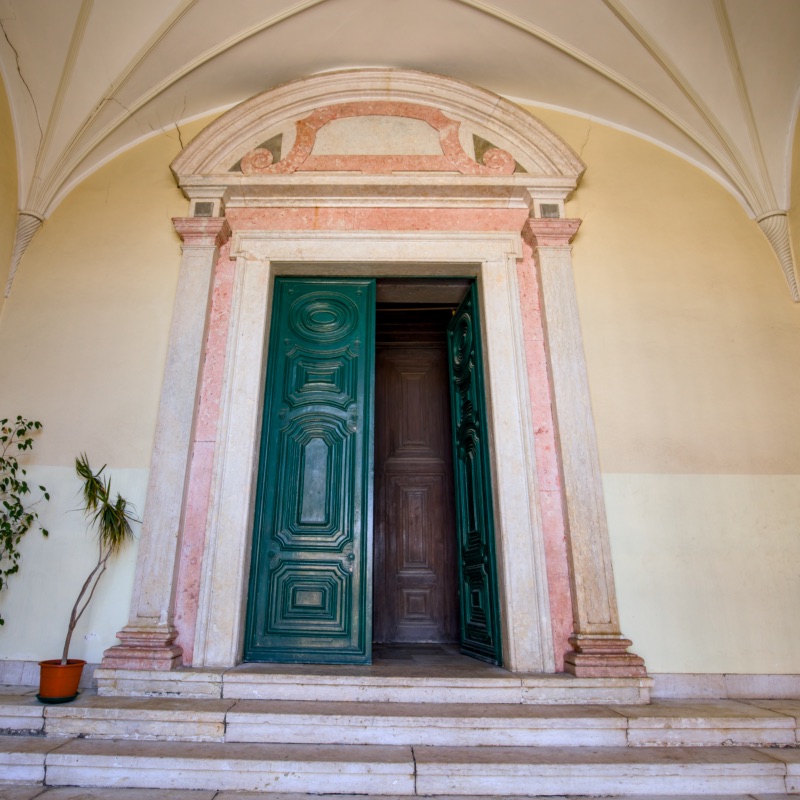
Architecturally, the church is a striking example of Lisbon’s baroque religious architecture. It has a longitudinal plan formed by the nave and chancel, with a single nave covered in wood by a false barrel vault. The main facade is organised around a depressed-arch portal, topped by a relief of the three patron saints, which leads into a porch-like galilee. Above this central axis rises a large window with an elaborate surround and attic finish, while the front elevation ends in a triangular pediment flanked by two square bell towers, opened by four belfry windows and crowned with domes and acroteria. Inside, the nave ceiling is especially notable for its decoration of 72 painted and gilded panels devoted to Eucharistic themes, as well as for the high choir with its curved balcony and balustrade. Along the side elevations there are three chapels on each side, particularly those of Our Lady of the Immaculate Conception and the Blessed Sacrament. The chancel has a barrel vault with stucco decoration, triple-arched tribunes and marble balustrades; on the high altar, framed by stucco columns imitating marble, stand the images of the three patron saints.
More context
A visit should begin at the main facade in order to understand the theatrical composition of the complex: the portal with the martyrs’ relief, the galilee, the large central window and the twin bell towers help reveal the building’s different phases. The galilee is especially important because it gives access to the chapel connected with the memory and veneration of Lisbon’s Holy Martyrs. Inside, attention should turn upwards to the nave ceiling, where the gilded and painted panels create an unusual decorative programme centred on the Eucharist. The high choir and the pulpits, associated with João Antunes’s renovation, also help explain the baroque language introduced in the late 17th century. Among the side chapels, those of Our Lady of the Immaculate Conception and the Blessed Sacrament deserve particular attention, both for their devotional role and for the way they are integrated into the nave. Finally, the chancel brings together some of the church’s most significant features: stucco work, tribunes with marble balustrades, the coat of arms of the Marquises of Abrantes on one of the tribunes, and the high altar with the images of Veríssimo, Máxima and Júlia, the iconographic centre of the temple.
Gallery