Lisboa · Lisboa
Padrão dos Descobrimentos
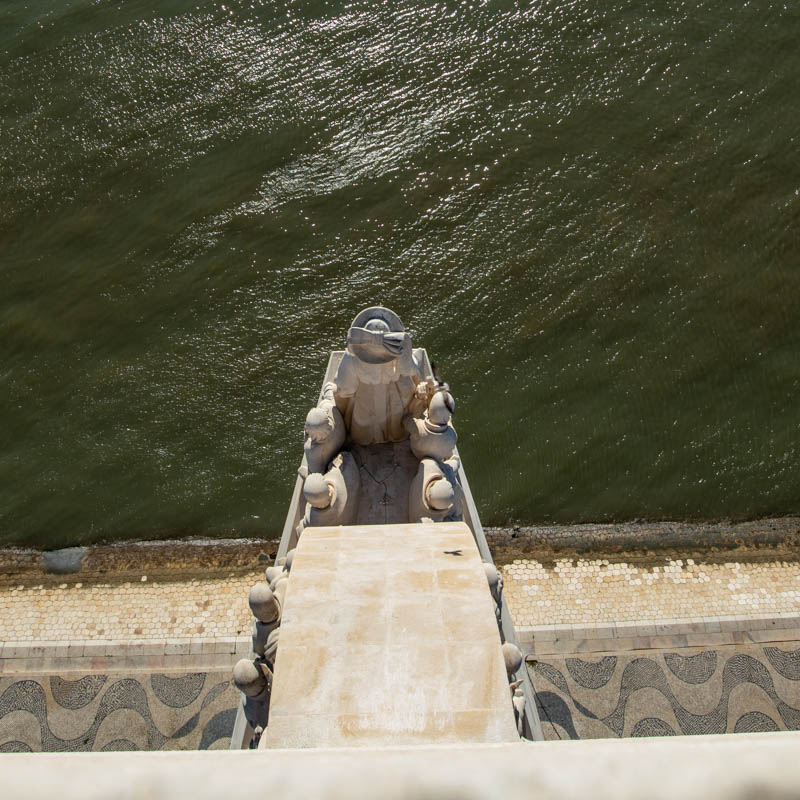
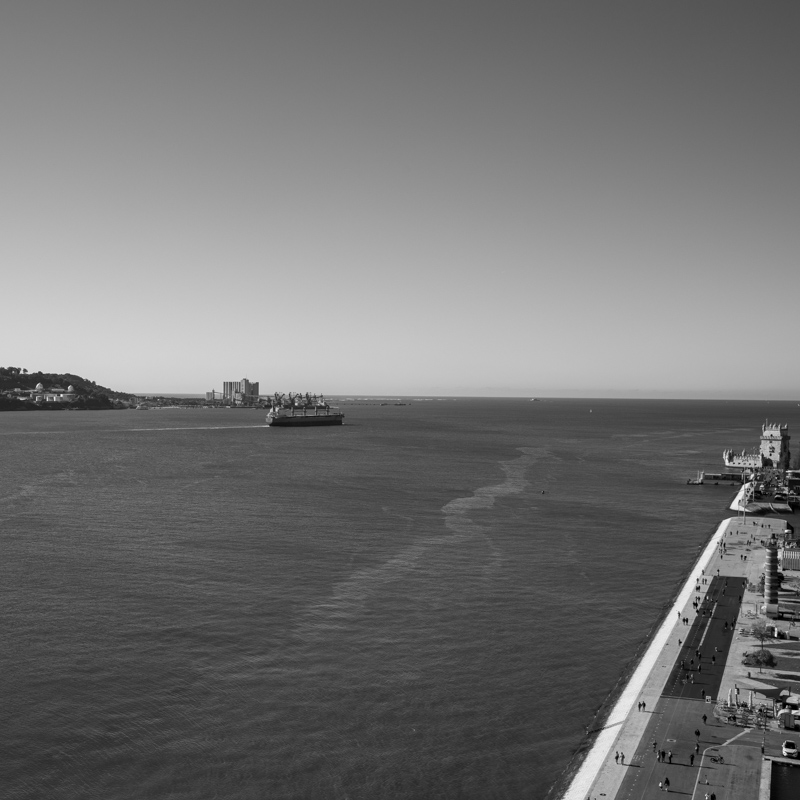
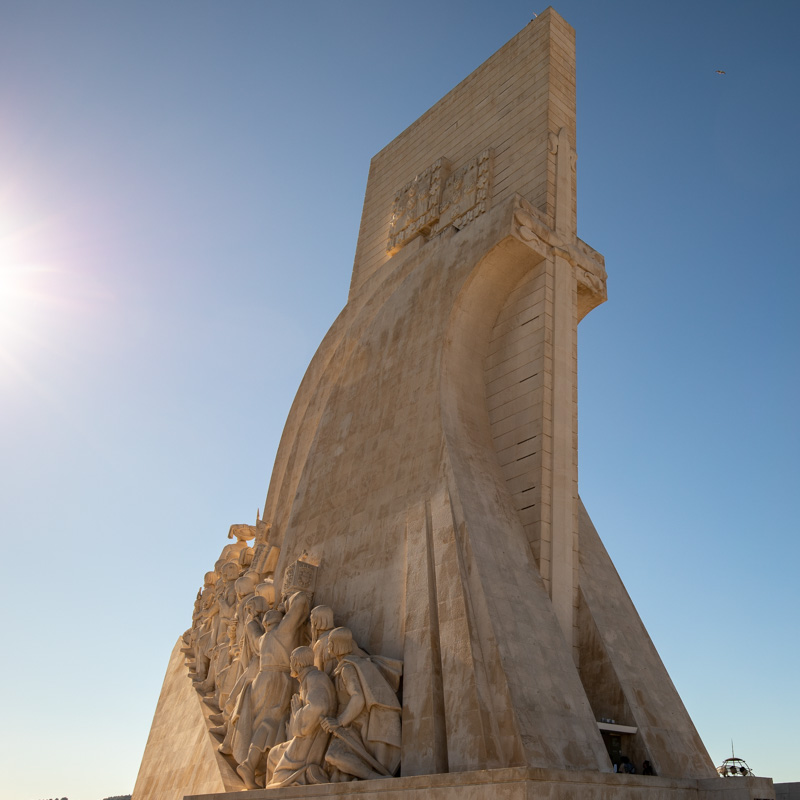
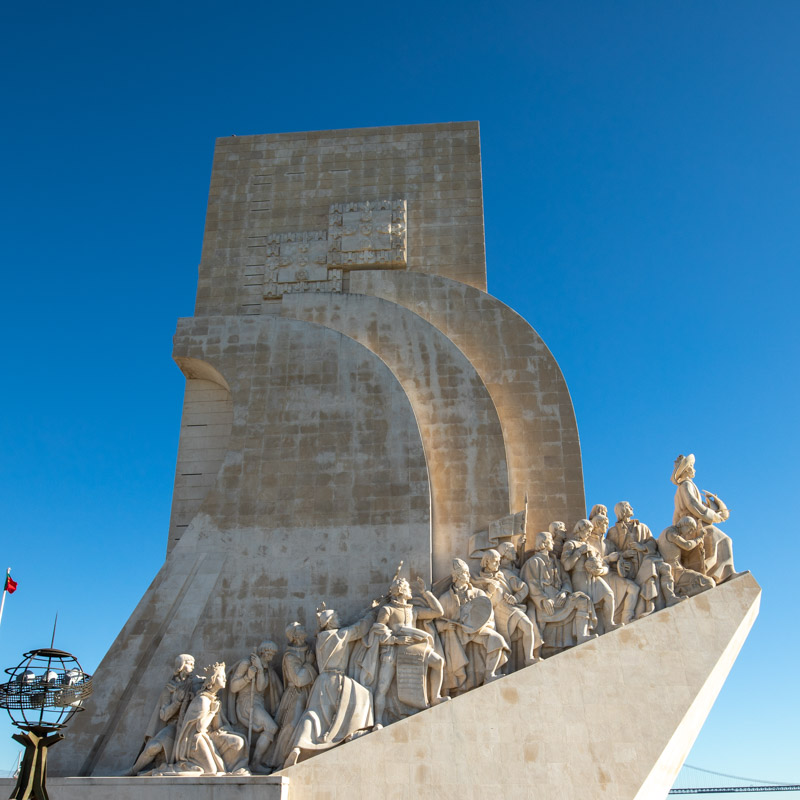
Facing the Tagus, the Monument to the Discoveries has the theatrical force of a ship ready to depart, yet it speaks as much about Portuguese memory in the twentieth century as about the voyages of the fifteenth and sixteenth centuries. It was first built as an ephemeral structure for the Portuguese World Exhibition of 1940 and rebuilt in 1960, for the fifth centenary of the death of Prince Henry the Navigator, the figure who advances at the prow of this stone caravel. Behind him come navigators, cartographers, missionaries and men of culture, in a sculptural procession conceived by Cottinelli Telmo and Leopoldo de Almeida. It is worth seeing the monument from a distance, to feel its scale and forward thrust, and then noticing the Compass Rose on the ground, a gift from South Africa. From the viewpoint, the panorama over Belém, the Tagus and the monumental riverfront helps explain why this is a place where landscape, history and memory meet with rare clarity.
Why it matters
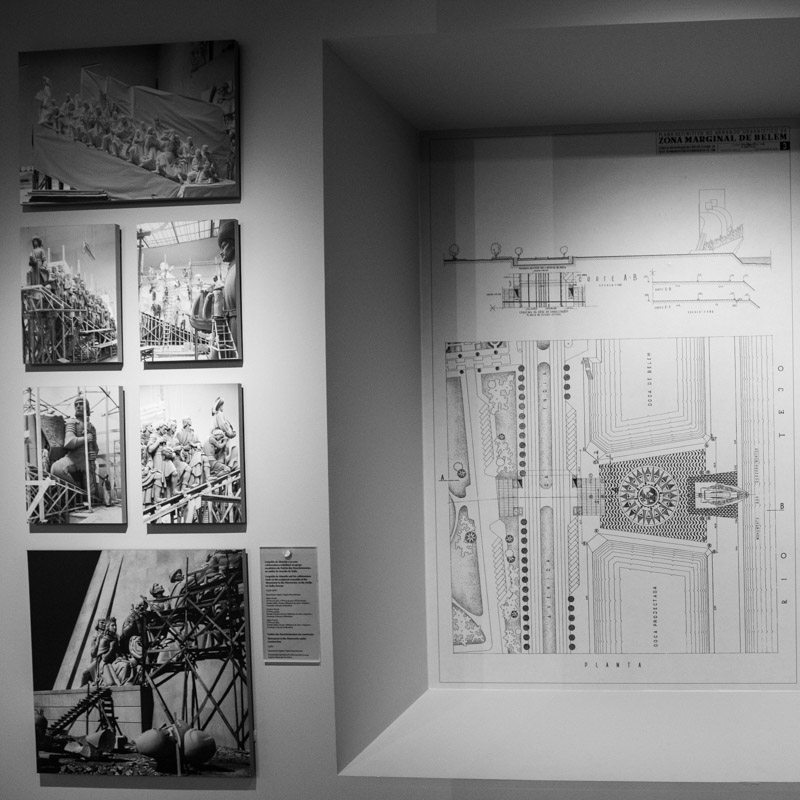
The Monument to the Discoveries stands in Belém beside the Tagus and was born in the context of the 1940 Portuguese World Exhibition. Designed by the architect Cottinelli Telmo and the sculptor Leopoldo de Almeida, it was first built as an ephemeral structure created for that major historical display. The image, however, had enough impact to justify a permanent reconstruction. In 1960, during the commemorations of the 500th anniversary of the death of Prince Henry the Navigator, the monument was rebuilt in concrete and faced with stone, taking the form and position it still has today on the Belém waterfront. In 1985, the interior was remodelled by Fernando Ramalho and the monument gained a viewpoint, an auditorium and exhibition rooms, strengthening its cultural role. More than a commemorative sculpture, it became one of Lisbon’s most recognisable urban images and one of the monuments most closely linked to the public memory of Portuguese expansion.
Architecture and history
Architecturally, the monument was conceived as a stylised caravel about to set sail, with a central mast and large curved surfaces suggesting wind-filled sails. The composition is organised around the figure of Prince Henry at the prow, followed by a group of historical figures associated with navigation, cartography, war, evangelisation, chronicle writing and culture. On the main faces, shields, fleurs-de-lis and metal inscriptions reinforce the heraldic and commemorative character of the whole. The final version, completed in 1960, rises 56 metres and combines a concrete structure with stone facing. On the forecourt stands the Compass Rose, designed by Luís Cristino da Silva and offered by South Africa in the same year. With a diameter of 50 metres and a central planisphere measuring 14 metres, it expands the monument’s symbolic meaning and connects it directly to the maritime routes of the Portuguese voyages.
More context
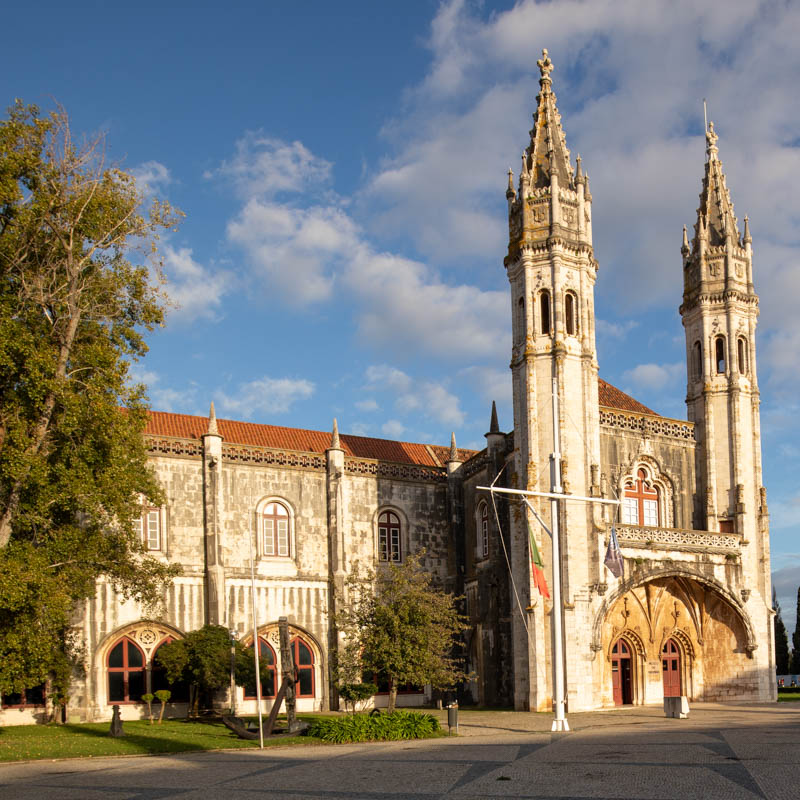
During a visit, it is worth first observing the monument from the axis of Praça do Império, because that distance makes the relationship between the caravel shape, the vertical mast and the Tagus especially clear. Then move closer to the sculptural groups and notice the attributes that identify each figure, such as maps, stone markers, swords, nautical instruments and books. The upper terrace viewpoint, more than 50 metres high, is one of the most important parts of the route, because it offers a very clear reading of Belém, the river and the monumental frontage that includes Jerónimos Monastery, Praça do Império and the 25 April Bridge. On the lower level, the auditorium and exhibition rooms extend the visit beyond the sculptural exterior. On the ground outside, the Compass Rose deserves slow attention, because its planisphere, ships and dates turn the forecourt into a visual summary of Portuguese voyages between the fifteenth and sixteenth centuries.
Routes
Explore this place in a cultural route
Gallery