Museu Nacional de História Natural e da Ciência

Lisboa · Lisboa

Museu Nacional de História Natural e da Ciência

MuseumXIXPalace Architecture
Rua da Escola Politécnica 56, 1250-102 Lisboa4.4 Rating · 3,39260 min

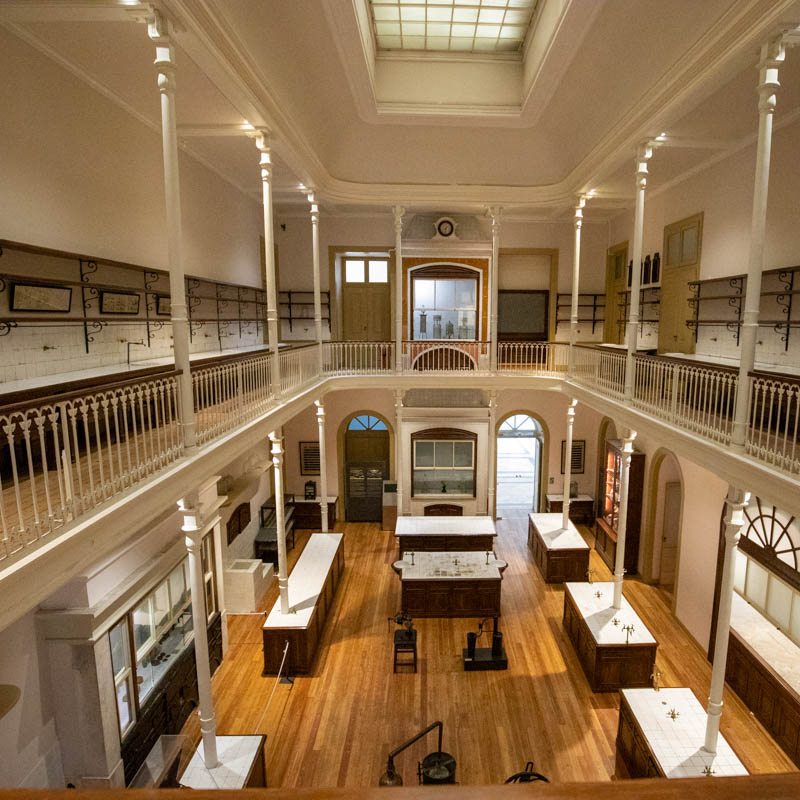
The National Museum of Natural History and Science is one of Lisbon’s most unexpected places: behind the solemn façade of the former Polytechnic School, the city opens itself to curiosity. Heir to the Royal Museum of Natural History and Botanical Garden created in the second half of the eighteenth century, the museum preserves more than 250 years of scientific activity and brings together collections with more than three million objects. Yet the visit never feels like stepping into a static archive. Between galleries, the Lisbon Botanical Garden, integrated into the complex, and the magnificent Laboratorio Chimico, you sense how knowledge was observed, classified and taught. It is worth lingering in that laboratory, a true historical and scientific jewel, where the scale of the space still makes you imagine lessons, experiments and wonder. Few museums show so clearly that science also has architecture, memory and imagination.

Why it matters

The Museu Nacional de História Natural e da Ciência, known as MUHNAC, is the public name of the University of Lisbon Museums unit, created in 2011. However, the place where it stands holds a much longer history. The complex on Rua da Escola Politécnica began as the House of the Cotovia Novitiate in the late sixteenth century, became the Royal College of Nobles between 1761 and 1837, turned into the Lisbon Polytechnic School in 1837, and later housed the Faculty of Sciences of the University of Lisbon from 1911 to 2002. This sequence gives the museum unusual depth, because it brings together religious memory, Enlightenment education, scientific training and university activity in the same place. In March 1978, a fire destroyed a large part of the building and important collections, especially in Zoology, but the complex was gradually restored. Today the museum preserves more than 250 years of scientific activity and over 3 million objects, making it one of Portugal’s major centres of scientific heritage.

Architecture and history

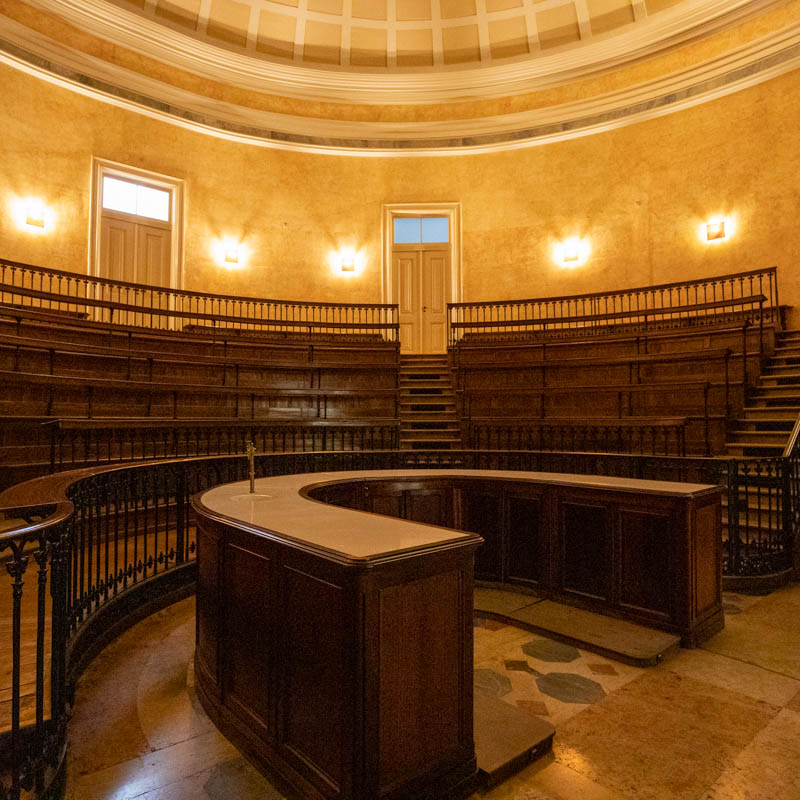
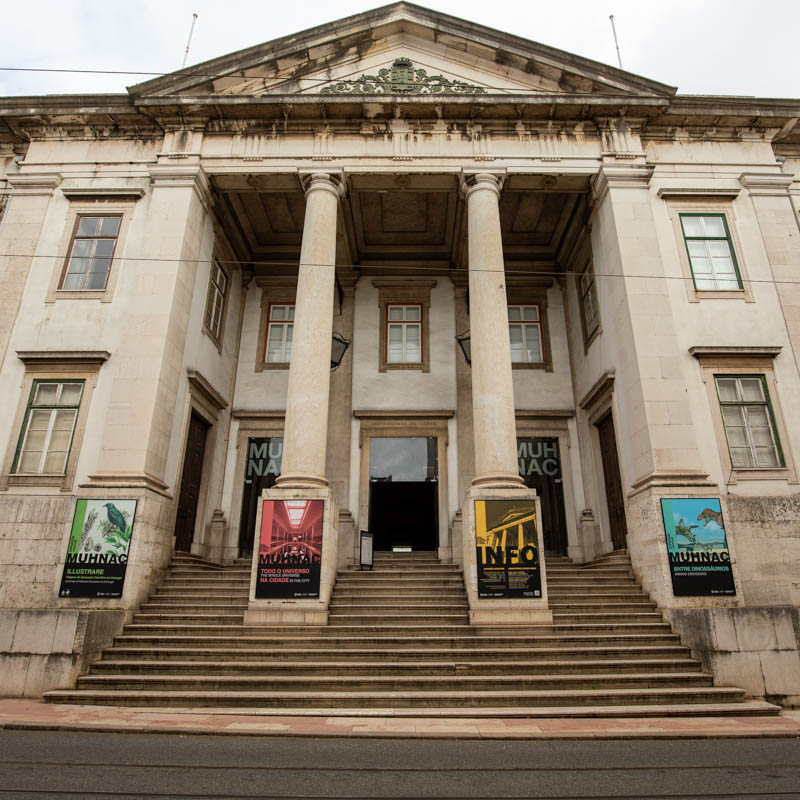
From an architectural point of view, the main nucleus occupies the former Polytechnic School, a rectangular building organised around a broad courtyard. Its present appearance comes largely from the reconstruction that followed the fire of 1843 and retains a very clear Neoclassical language, visible in the long façade, the central portico and the regular ordering of the openings. Inside, the entrance hall with its upper gallery, iron columns and circulation on two levels clearly shows the presence of nineteenth-century iron architecture in Lisbon. The complex becomes even more distinctive through its preserved scientific spaces, especially the Amphiteatro and Laboratorio Chimico of the Polytechnic School, described by the museum itself as a historical and scientific jewel. Added to these is the Lisbon Botanical Garden, an integral part of the museum and designed in the mid nineteenth century to support experimental teaching. More than a simple container of collections, MUHNAC is a rare ensemble in which building, garden and instruments tell the same story.

More context

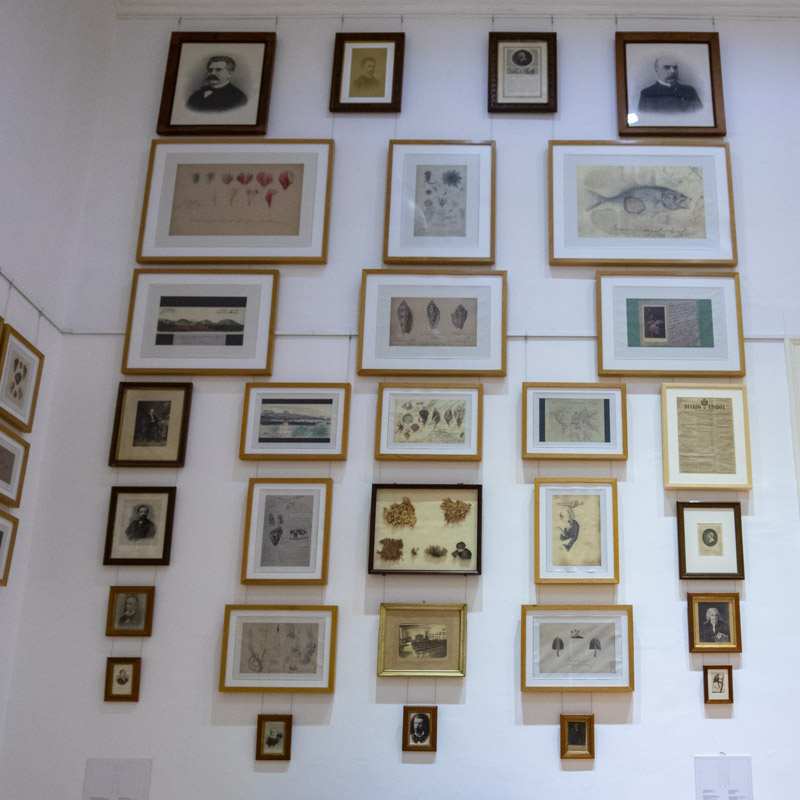
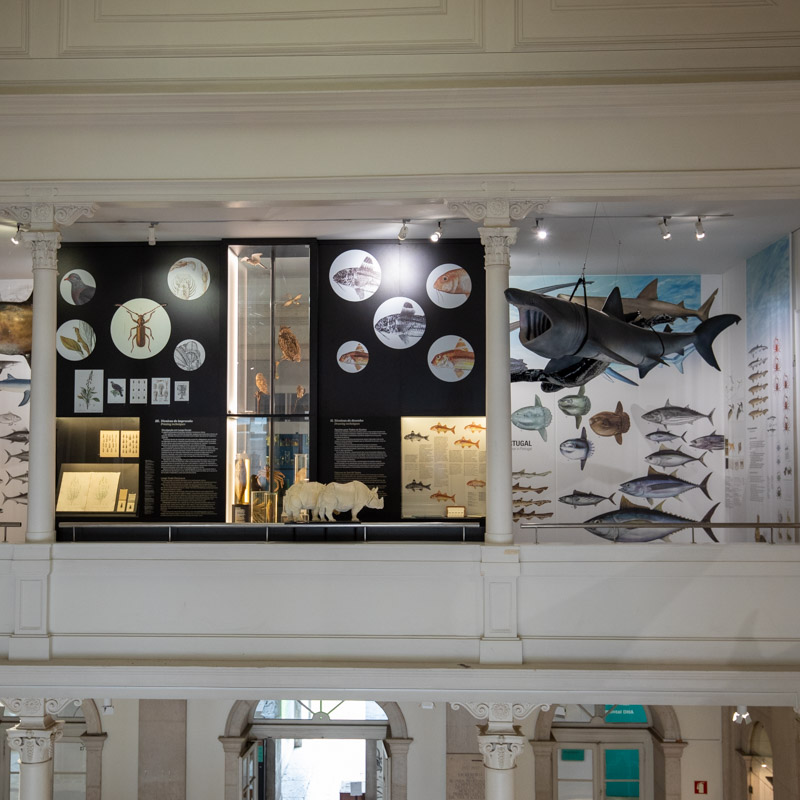
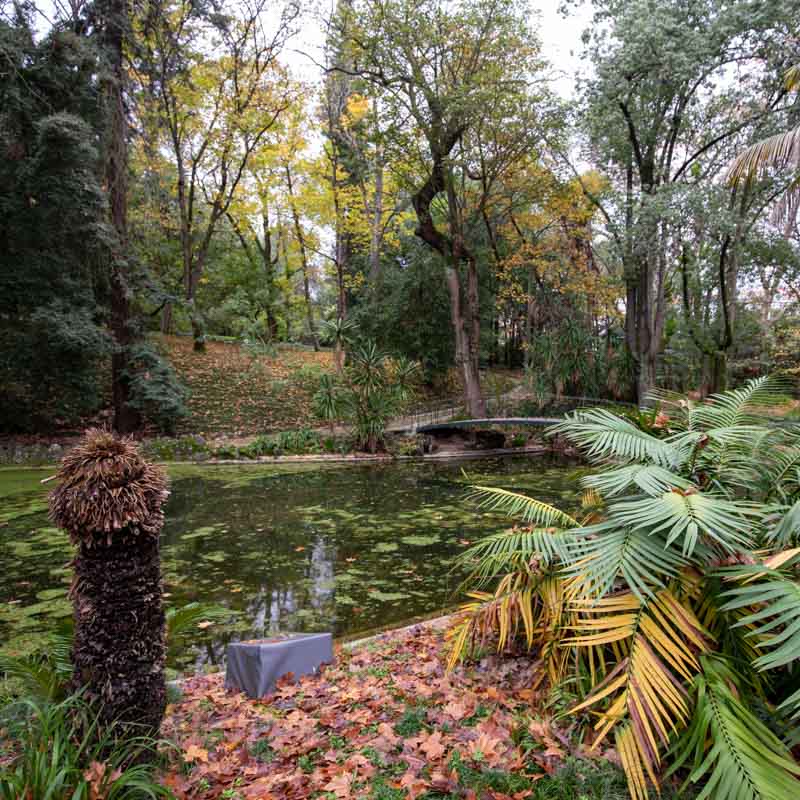
During a visit, it is worth beginning with the main façade and the entrance hall, because they immediately reveal the institutional scale of the former scientific establishment. Then the Laboratorio Chimico and the Chemistry Amphitheatre are essential stops, not only for their preserved apparatus and benches, but because they allow visitors to enter the atmosphere of nineteenth-century experimental teaching. The Lisbon Botanical Garden extends the visit outdoors and shows how botany formed part of the scientific education of the old Polytechnic School. It is also worth taking time over the exhibitions and collections that document more than 250 years of research, from natural specimens and instruments to archives, models and teaching objects. Even when the route changes with the temporary programme, what sets this museum apart remains constant: the chance to see in one place the architecture of knowledge, the spaces of experiment and the material traces of several generations of science in Lisbon.

Gallery

Museu Nacional de História Natural e da Ciência 1
Museu Nacional de História Natural e da Ciência 2
Museu Nacional de História Natural e da Ciência 3
Museu Nacional de História Natural e da Ciência 4
Museu Nacional de História Natural e da Ciência 5

Nearby places

View all