Museu do Oriente

Lisboa · Lisboa

Museu do Oriente

MuseumXXPalace Architecture
Doca de Alcantara Norte, Av. Brasília 352, 1350-352 Lisboa4.5 Rating · 4,38960 min

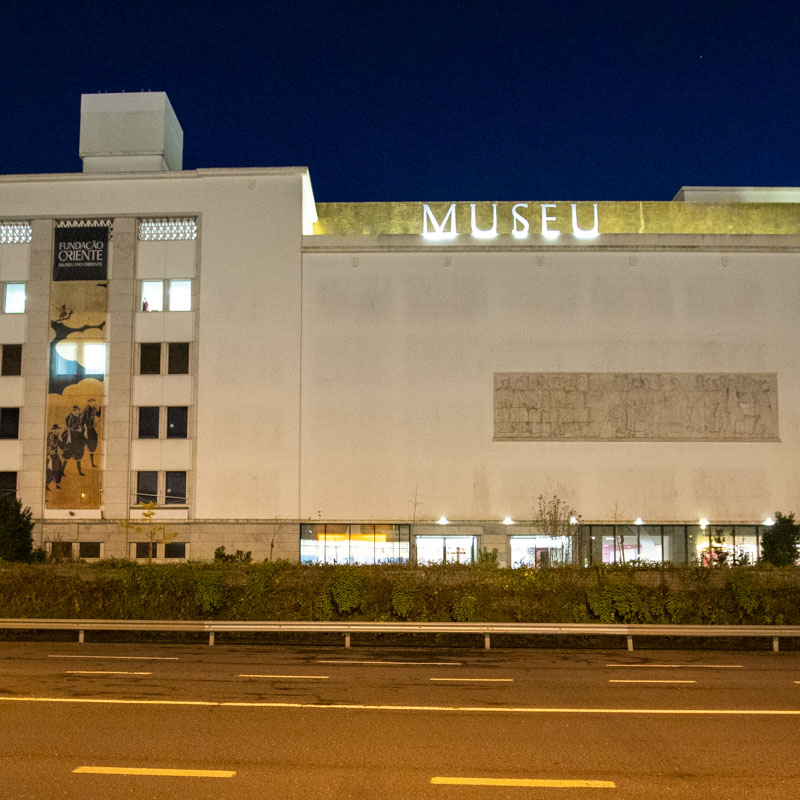
On Alcântara’s waterfront, the Orient Museum shows how a former dockside warehouse can become a place where worlds meet. Opened in 2008 inside the modernist building of the former refrigerated cod warehouses, designed from 1939 onwards, it holds two collections that define its character with unusual clarity. On one side, Portuguese Presence in Asia brings together thousands of objects and reveals the fascination, exchange and curiosity that shaped the relationship between Portugal and the East. On the other, the Kwok On collection, regarded as one of the most representative of its kind in Europe, opens a path into the performing arts, rituals and popular religions of a much wider Asia. During a visit, it is worth noticing the contrast between the building’s industrial sobriety and the richness of puppets, masks, folding screens, ivories and ritual objects. Few museums in Lisbon manage to feel at once so calm, so layered and so open to dialogue.

Why it matters

The Museum of the Orient opened in Lisbon in 2008 on the initiative of the Oriente Foundation and established itself from the outset as a place devoted to the relations between Portugal and Asia, understood not only as an art museum but also as a meeting point between cultures. It preserves and interprets material and immaterial heritage through two major collections. The first, Portuguese Presence in Asia, brings together more than 2,000 artistic and documentary objects linked to contacts between the Portuguese and Asian territories. The second, the Kwok On collection, was donated to the Oriente Foundation in 1999 and today includes more than 15,000 pieces connected with performing arts, ritual practices and popular traditions from a wide geographical arc stretching from Turkey to Japan. This dual basis helps explain the museum’s singular identity. The route does not merely recall Portuguese expansion. It also shows how objects, techniques, images and beliefs circulated in both directions, producing encounters, adaptations and new artistic forms.

Architecture and history

The museum occupies the former Pedro Álvares Cabral Building, constructed from 1939 onwards as a refrigerated warehouse linked to the cod trade in the port of Lisbon. The original design, by João Simões, belongs to a modernist language shaped by strong functional rationality and intended for the storage and preservation of food. That origin explains the massive scale of the volume, its longitudinal and symmetrical organisation, the scarcity of windows and the robust reinforced-concrete structure designed to bear heavy loads. The building remained in use as a warehouse until 1992 and was later refurbished to house the museum, in a project by José Luís Carrilho da Graça and Rui Francisco, with landscape design by Gonçalo Ribeiro Telles. The conversion sought to reconcile the building’s industrial identity with its new cultural role, reorganising access, circulation and public areas without erasing the austere character of the original construction. In 2010, it was classified as a Monument of Public Interest, confirming its value within the port landscape of Alcântara.

More context

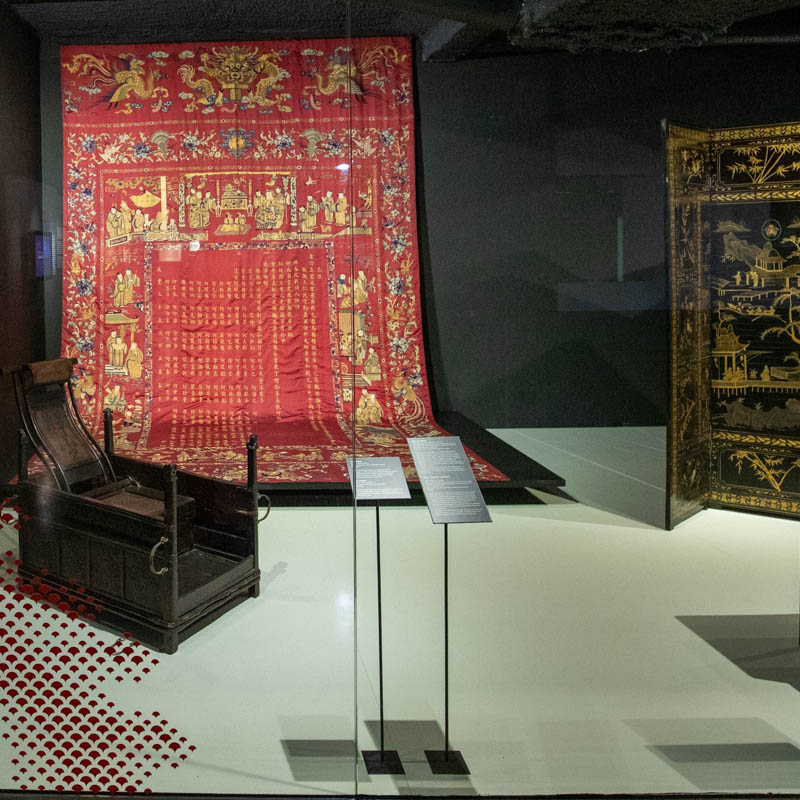
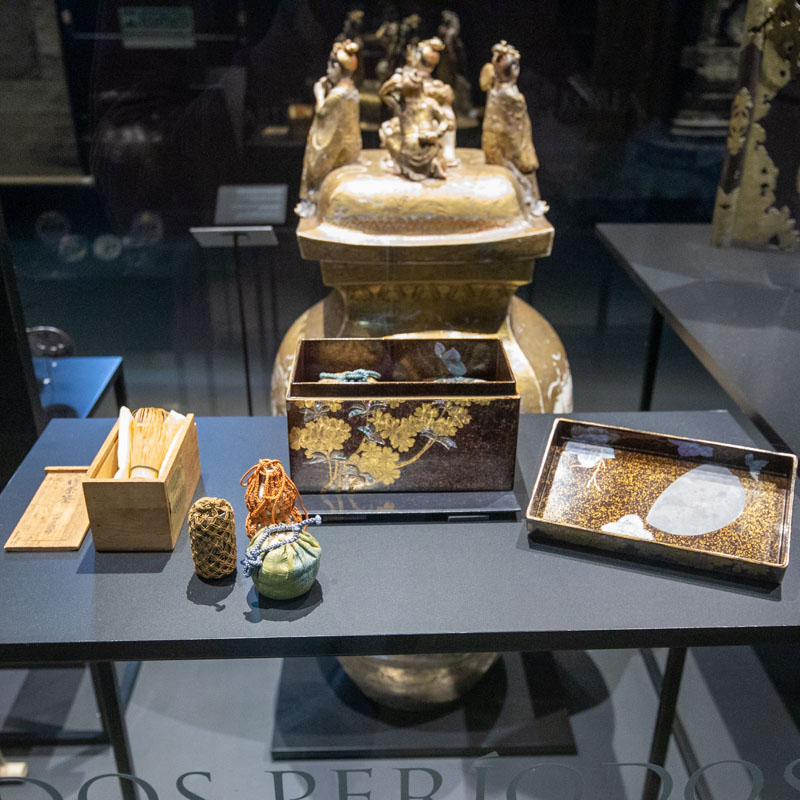
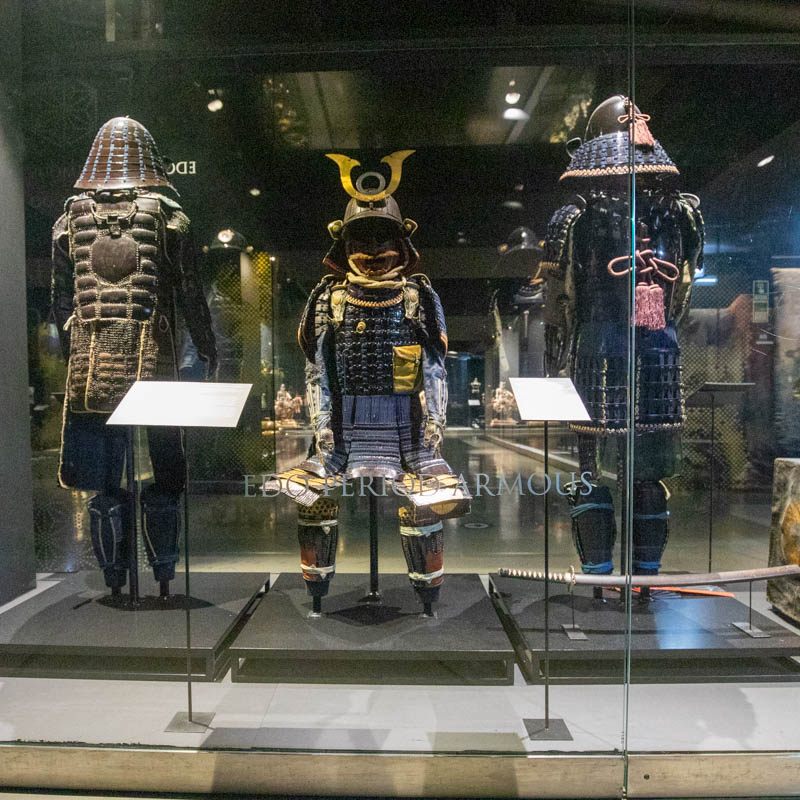
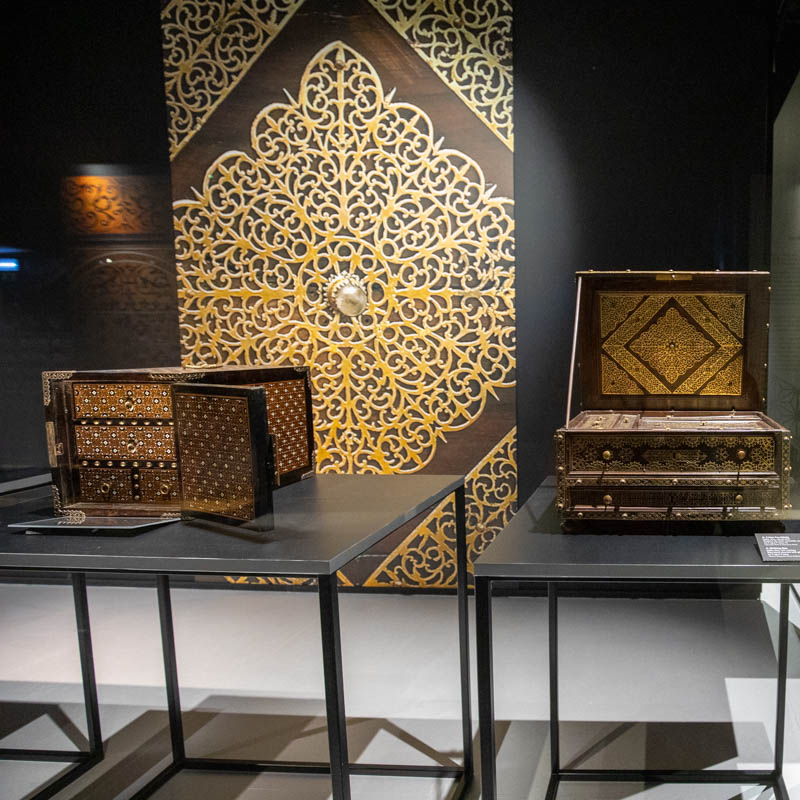
During a visit, the essential starting point is the permanent exhibition Portuguese Presence in Asia, because this is where the dialogue between European models and Asian techniques becomes clearest. The liturgical objects, Goan ivories, Indo-Portuguese furniture, Namban art and the important group of Chinese porcelain all deserve attention, with the latter forming one of the museum’s strongest holdings. It is also worth observing pieces connected with the collecting interests of Camilo Pessanha and Manuel Teixeira Gomes, which extend this story into the nineteenth and twentieth centuries. The Kwok On collection then offers a change of perspective. Here you find puppets, masks, costumes, musical instruments, figurines and ritual objects linked to theatre, festivity and religion in many Asian contexts. This part of the route is especially rich because it brings visitors closer to the performative and popular dimensions of the cultures represented. It is also worth noticing the building itself, the exterior bas-reliefs by Barata Feyo and the way a former port warehouse was transformed into a large-scale museum facing the Tagus.

Gallery

Museu do Oriente 1
Museu do Oriente 2
Museu do Oriente 3
Museu do Oriente 4
Museu do Oriente 5

Nearby places

View all