Lisboa · Lisboa
Pilar 7 - Experiência Ponte
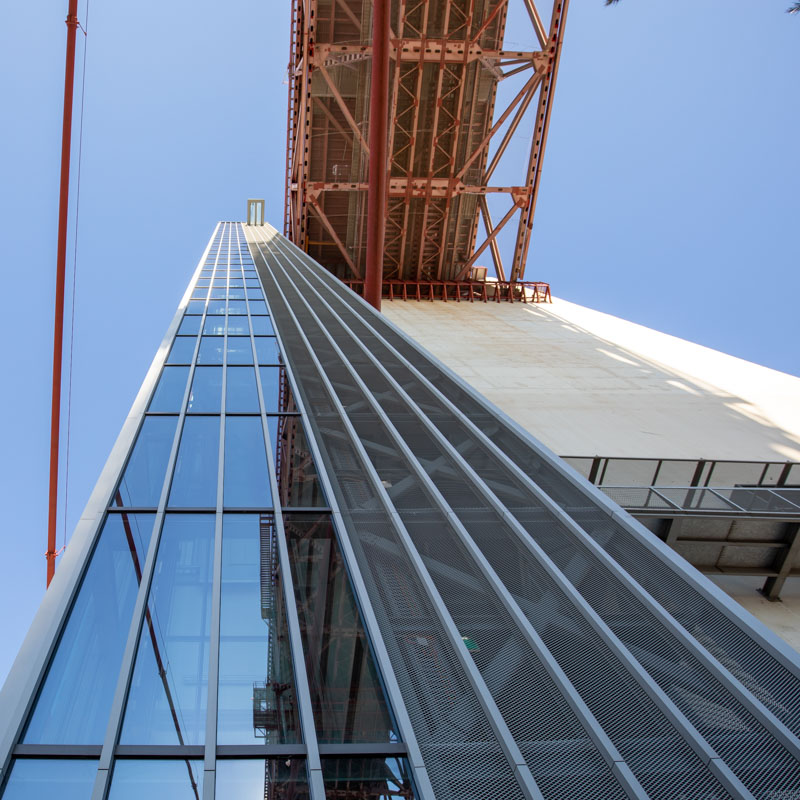
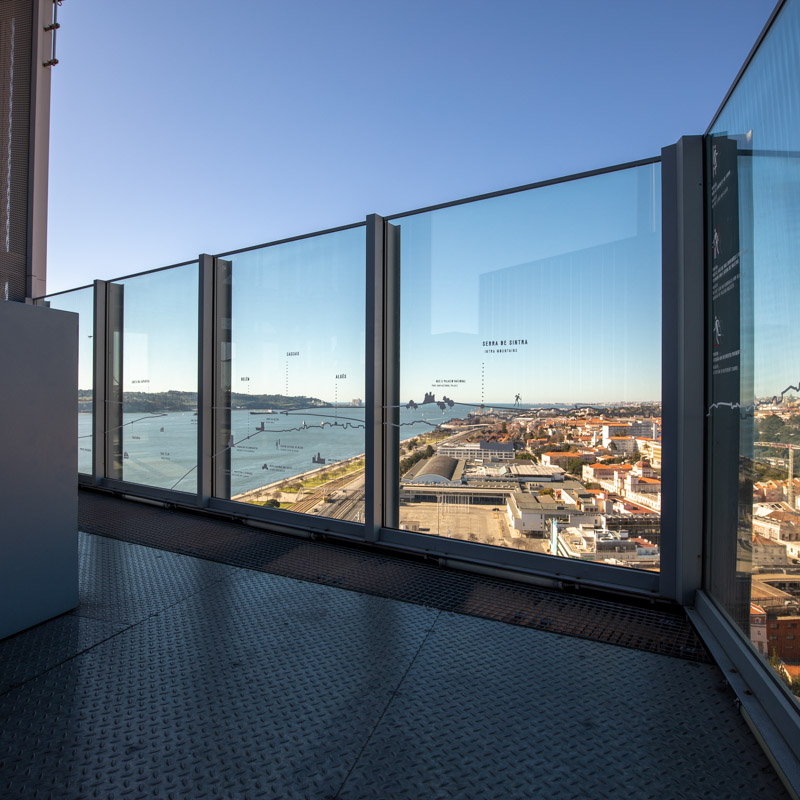
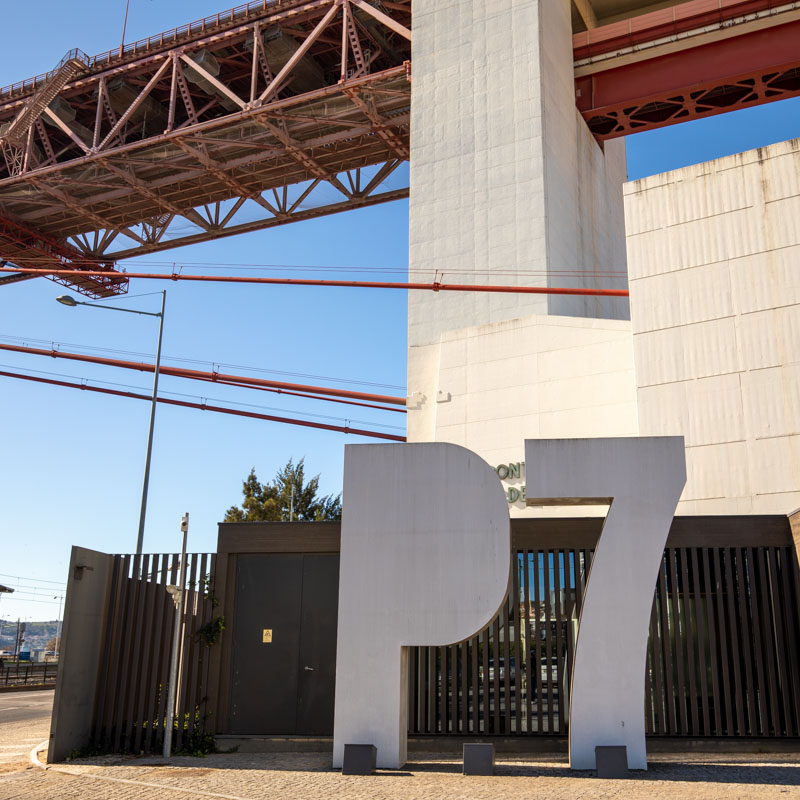
In Alcântara, Pilar 7 - Bridge Experience invites you inside one of Lisbon’s great pieces of machinery. Installed in one of the main pillars of the 25 de Abril Bridge, it was born during the bridge’s conservation works and opened to the public in 2017, turning a technical structure into a place of discovery. The route begins beside the anchorage blocks and continues through an interpretive centre with multimedia displays, the memory of the workers of the 1960s and the story of this crossing, inaugurated in 1966. Then the lift rises to road-deck level and reveals what is rarely seen: the bridge from within, the scale of steel and concrete, the constant sound of traffic and Lisbon opening onto the Tagus. From above, between Alcântara, Belém and the opposite bank, it becomes clear that this is more than a panoramic viewpoint. It is an unexpected way of understanding how the city connects, grows and imagines itself.
Why it matters
More than a simple viewpoint, Pilar 7 - Bridge Experience was created to reveal from within one of Lisbon’s greatest works of engineering. The historical basis of the visit is the 25 de Abril Bridge, whose construction began in 1962 and which opened to traffic in August 1966. Originally called the Salazar Bridge, the structure was conceived as a road and rail crossing, although trains only began to use the lower deck in 1999. It was in the context of the bridge’s fiftieth anniversary, in 2016, that the project for the interpretive centre installed in Alcântara, inside Pilar 7, began. The site was inaugurated in September 2017 and started offering a public reading of an infrastructure that is usually perceived only from outside or while in motion. By turning a functional pillar into an exhibition and panoramic space, the project brought the bridge closer to Lisbon’s urban experience and made it not only a route of passage, but also a place of observation, technical memory and discovery of the city.
Architecture and history
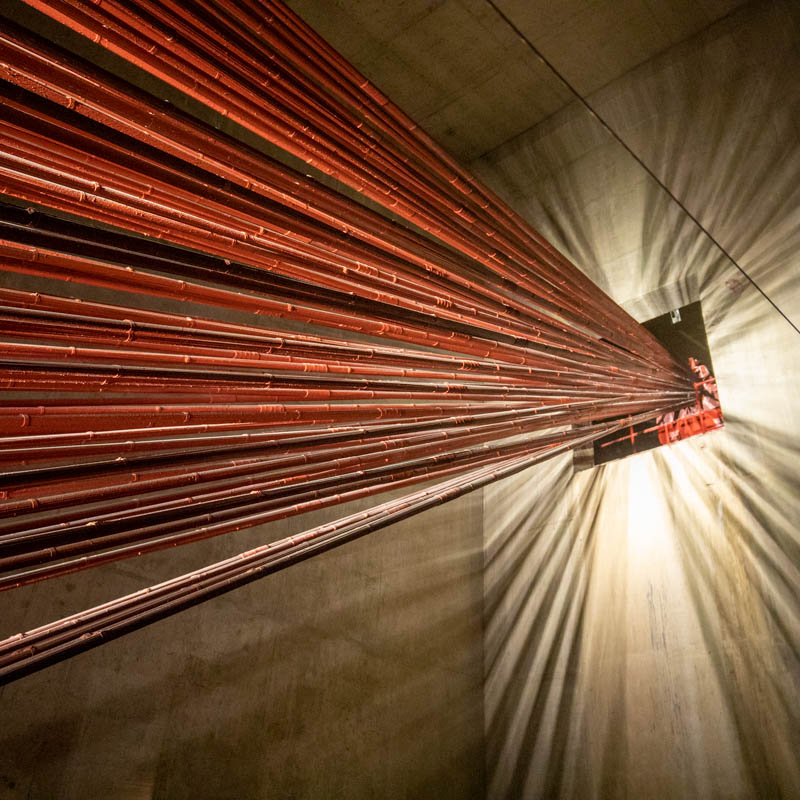
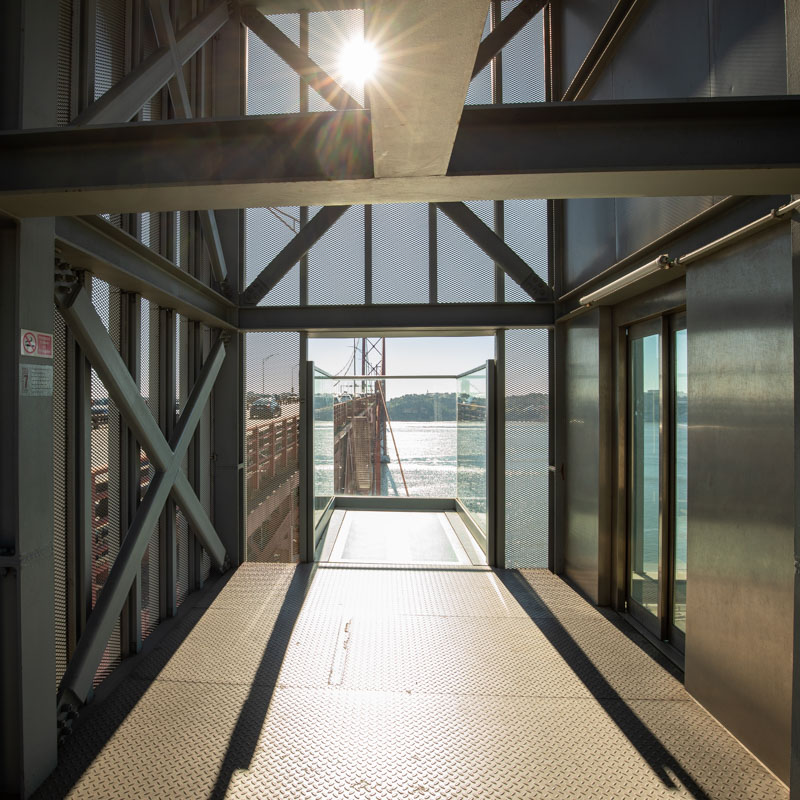
What makes Pilar 7 distinctive is the combination of heavy infrastructure and a contemporary museum device. The route begins outdoors, where ground signage introduces the history of the bridge, and then moves into the inner mass of the pillar, a body of concrete normally closed to public view. At the entrance level appear the reception area and the first multimedia resources, yet it is in the internal rooms that the experience gains real force. The so-called workers’ room presents 360-degree projections about the bridge’s construction and an illuminated model, while the upper levels reveal the suspension-cable anchoring room and a mirrored space that intensifies the sensation of vertical ascent. The final rise is made by lift to a viewpoint set at the level of the bridge deck. The architecture open to visitors does not compete with the bridge itself. Instead, it exposes the inside of its operation and uses material, light, scale and vertigo to make legible a work designed above all to bear traffic, weight and movement.
More context
The suspension-cable anchoring room is one of the most revealing parts of the route, because it shows the bridge as a structural machine and not only as an iconic image above the Tagus. Right after that, the mirrored room changes the perception of height and prepares the arrival at the viewpoint, where the relationship with Lisbon becomes immediate. From there, the riverside front of Alcântara and Belém, the outline of the river, the scale of the deck and the nearness of road traffic, experienced almost at the same level, become especially clear. It is also worth noticing the way the experience alternates technical information and sensory effect. The model, the projections, the reading of the massive concrete and the ascent by lift help move from the history of construction to the direct observation of the city. What most distinguishes Pilar 7 is precisely this sequence. First one enters the material interior of the bridge, then rises to a point where engineering, panorama and urban movement can be read as a single landscape.
Gallery