Lisboa · Lisboa
MACAM - Museu de Arte Contemporânea Armando Martins
MACAM — Armando Martins Contemporary Art Museum, in Lisbon, makes public the private collection assembled by Armando Martins over five decades. Opened to the public on 22 March 2025, it occupies the former Palace of the Counts of Vila Franca, later Counts of Ribeira Grande, a building with origins in the early 18th century. The history of the site remains legible in the long façade, the former chapel, the noble staircase and the traces recovered during the rehabilitation. The collection, begun in 1974, brings together more than 600 works, from the late 19th century to the present day, spanning painting, sculpture, drawing, photography, video and installation. The route places modern Portuguese art in dialogue with national and international contemporary creation. Between palace, museum and hotel, MACAM presents the private collection as public matter, open to observation and conversation.
Why it matters
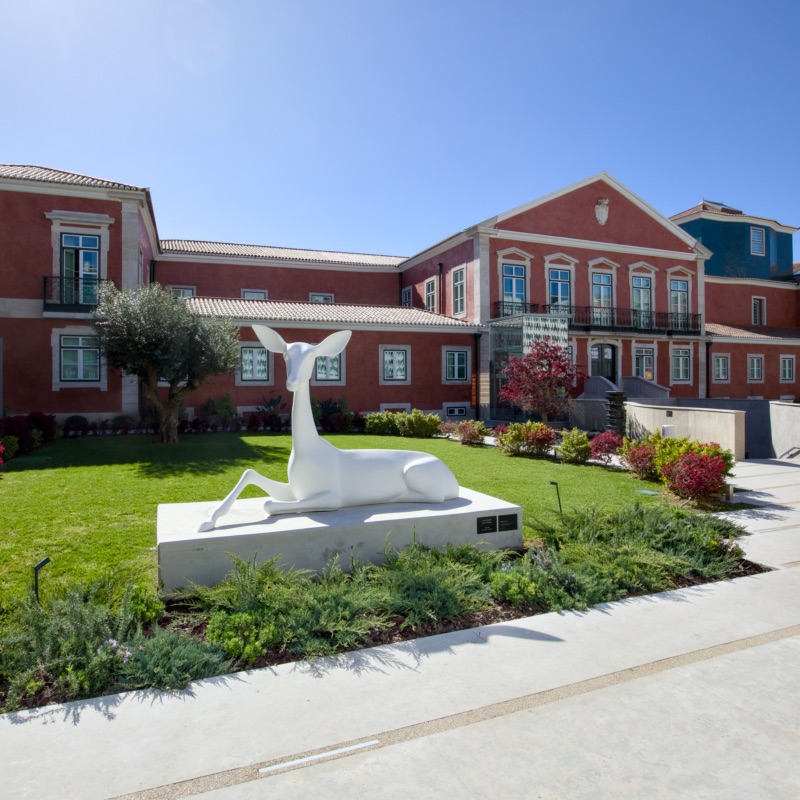
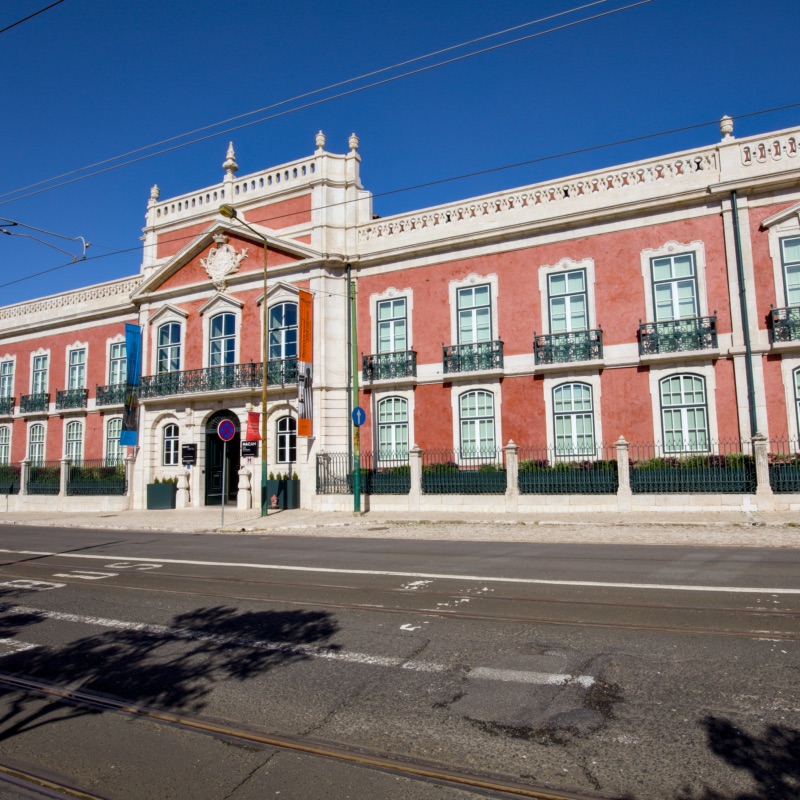
MACAM - Museu de Arte Contemporânea Armando Martins stands on Rua da Junqueira, in Lisbon, and occupies the former Palace of the Counts of Vila Franca, later known as the Palace of the Counts of Ribeira Grande. The building was commissioned in 1701 by the Marquis of Nisa, Francisco Baltazar da Câmara, and in 1752 it passed to José da Câmara Teles, Count of Ribeira Grande, who gave it the name by which it became known. It survived the 1755 earthquake and retained signs of its noble past, including the pediment bearing the motto "For Faith, for the Prince, for the Homeland". Between the late nineteenth and the twentieth centuries, the palace served several educational purposes, housing Colégio Arriaga, Colégio Novo de Portugal and, later, a succession of public secondary schools until it closed in 2002. Armando Martins began his collection in 1974, acquired the palace in 2007, rehabilitation works started at the end of 2018, and the museum opened to the public on 22 March 2025. Today, MACAM presents more than 600 works, ranging from Portuguese modern art to national and international contemporary art, under the concept of the "House of Private Collections".
Architecture and history
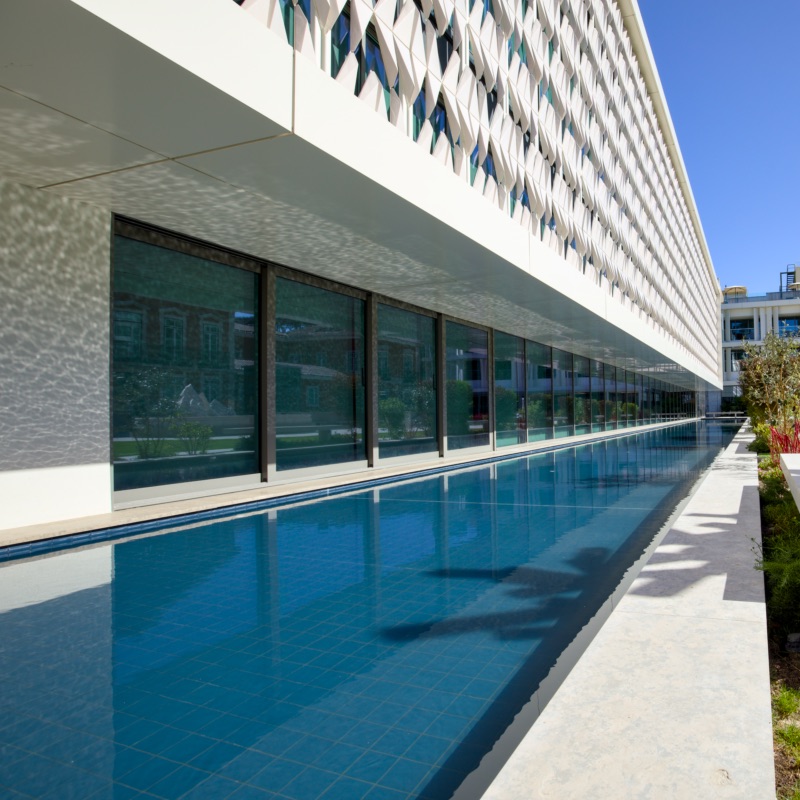
Architecturally, the complex combines an eighteenth-century palace with a contemporary intervention. The historic property, identified by Portugal’s cultural heritage inventory as a civil architecture palace and described as Baroque and eclectic, preserves an extensive facade of about 110 metres along Rua da Junqueira. On the south front, three bodies can be distinguished: the main core, with three storeys and a central entrance; the side wings; and, at the western end, the former Chapel of Our Lady of Mount Carmel, treated as an autonomous volume. Despite the major alterations made in the twentieth century to adapt the building for educational use, important elements remain, including the monumental facade, the north elevation, the noble staircase, vaulted ceilings, partially preserved gardens and the former chapel. The rehabilitation recovered mural paintings in the chapel and on the staircase, and restored stonework, iron balconies, balustrades, shutters and the timber structure of the library roof. The new wing, designed by the MetroUrbe studio, adopts straight lines and white facades, incorporating diagonal shading panels, an exterior staircase, a reflective pool and a three-dimensional glazed ceramic panel by ceramist Maria Ana Vasco Costa.
More context
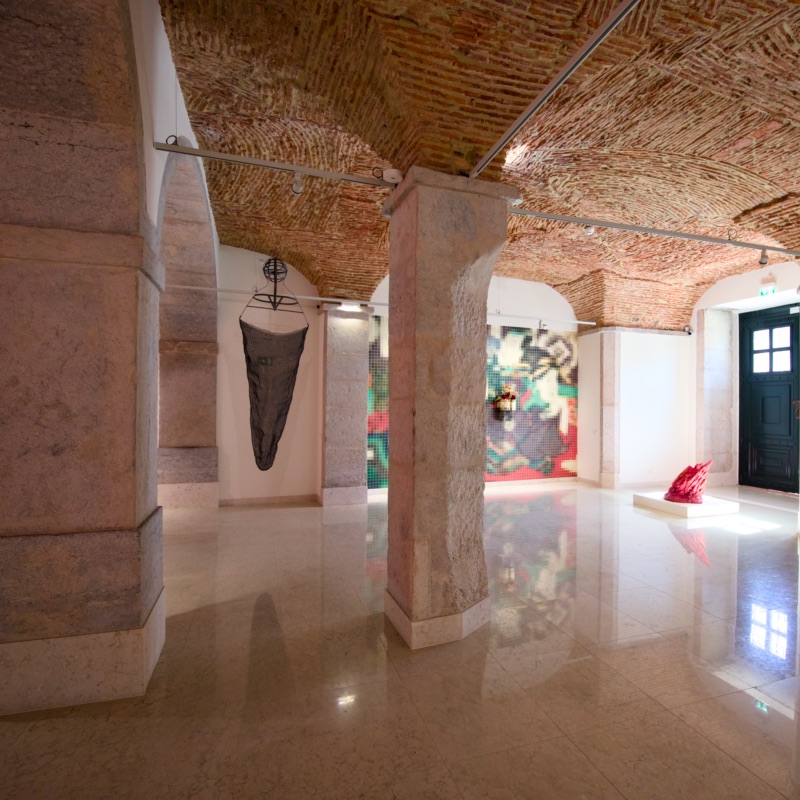
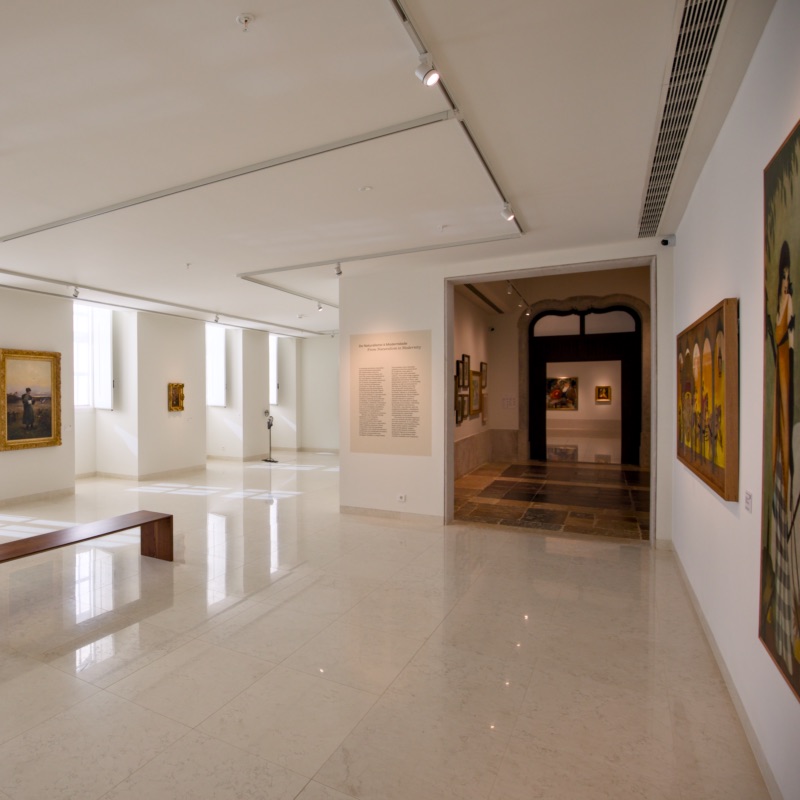
During the visit, one of the main highlights is the permanent exhibition "A collection in two stages", installed in Galleries 1 and 2 on the palace ground floor. This route explains how the collection was formed in two phases: first, Armando Martins’s focus on twentieth-century Portuguese art; then, the expansion towards international contemporary art, especially from the late twentieth and twenty-first centuries. Beyond the galleries, it is worth observing the architecture itself as part of the museum experience: the palace’s central entrance, the noble staircase, the vaulted surfaces and the decorative traces revealed by the restoration help visitors understand the building’s long history. The former chapel, where original paintings were recovered and historic timber was reused in the flooring, is another significant point of the visit. Outside, the reading of the south facade, the heraldic pediment and the dialogue between the palace and the contemporary new wing becomes especially interesting beside the garden, the large exterior staircase and the reflective pool that mirrors the white ceramic panel. MACAM also presents temporary exhibitions and parallel programmes that extend the interpretation of the collection.
Gallery