Lisboa · Lisboa
Museu da Carris
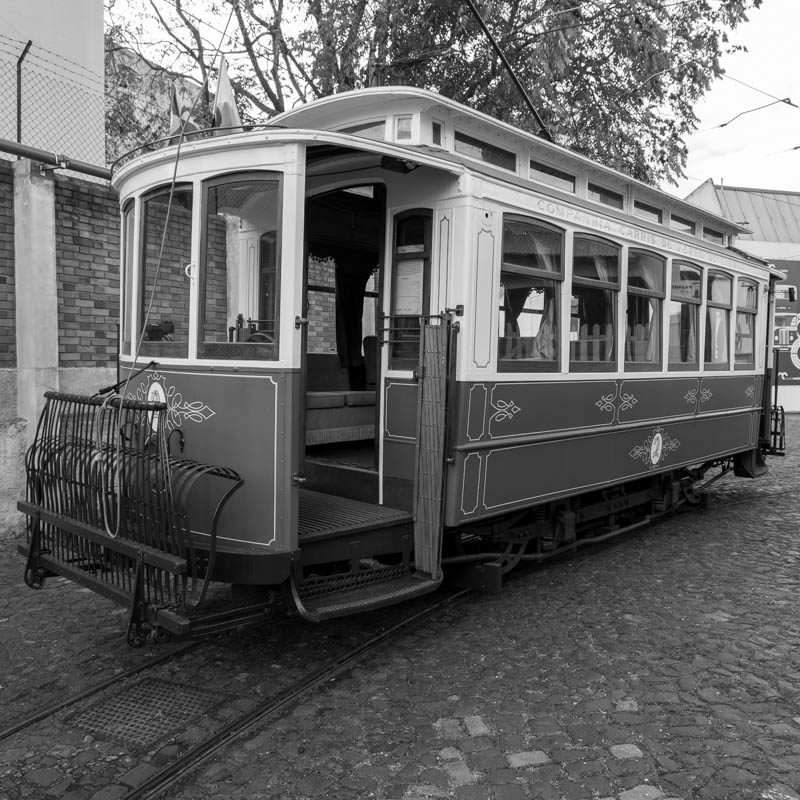
Stepping into the Carris Museum is like understanding Lisbon in motion. Housed in Santo Amaro Station, Carris’s first station, the museum preserves the memory of a company founded in 1872, intriguingly in Rio de Janeiro, before it transformed the way the capital expanded and overcame its hills. Here, the history of public transport meets the history of the city itself: from horse-drawn streetcars to the funiculars, from the electrification of the network to twentieth-century buses. Among photographs, uniforms, tickets, machinery and historic vehicles, visitors follow the technical, social and urban changes that shaped everyday life in Lisbon. One of the most memorable moments is the journey between the two exhibition areas on a tram from 1901, which gives the visit a rare sense of authenticity. More than a transport museum, this is a place where Lisbon can be seen growing along its rails.
Why it matters
The Carris Museum occupies Santo Amaro Station, the first major station of the Companhia Carris de Ferro de Lisboa. The company was founded on 18 September 1872 in Rio de Janeiro, with the aim of introducing to Lisbon a system of American cars, pulled by animals and guided on rails. The first line opened in 1873, and construction of Santo Amaro Station began the following year, with stables, carriage houses, workshops and barns. Over the following decades, the history of Carris followed Lisbon’s own urban transformation, from the arrival of the funiculars to the shift to electric traction, agreed in 1897 and brought into service with the inauguration of the electric tram network in 1901. The museum opened to the public on 12 January 1999 in the company’s historic complex, with the mission of preserving the collection and showing how public transport helped shape the city. In 2022, Núcleo I reopened after a renovation and an update of its exhibition spaces and contents.
Architecture and history
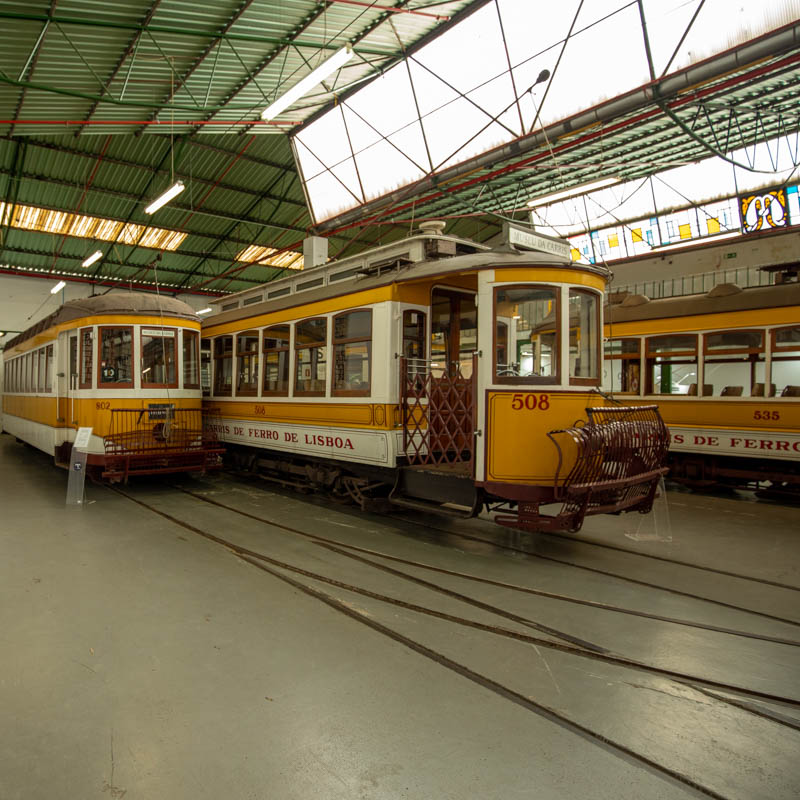
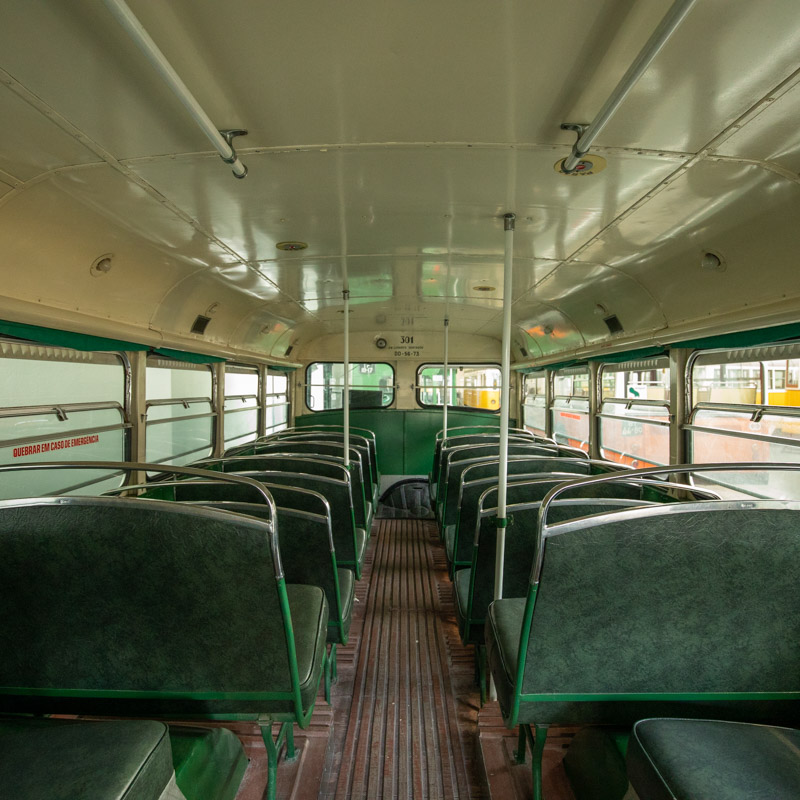
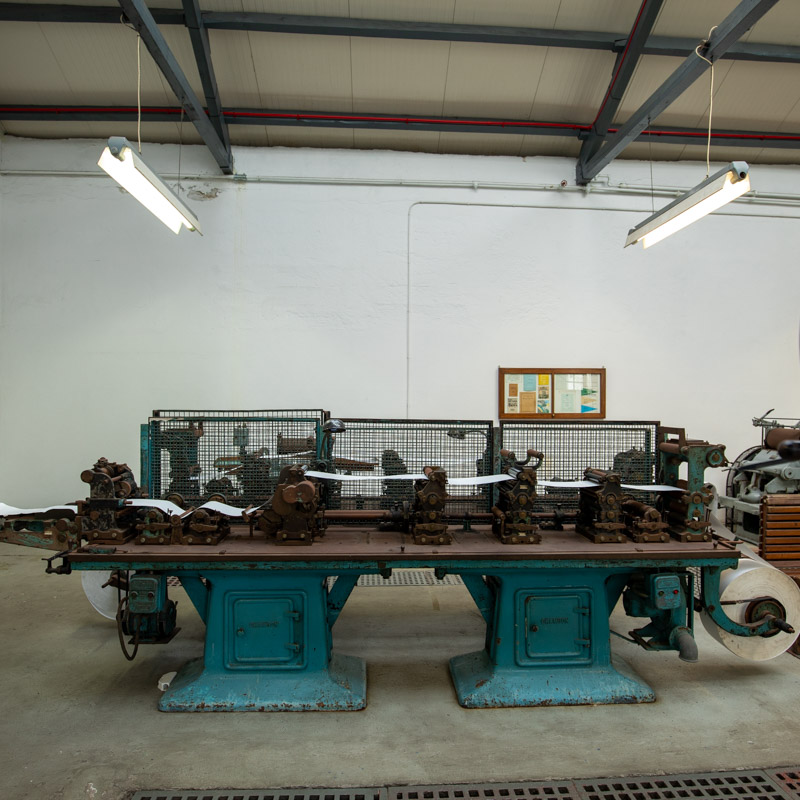
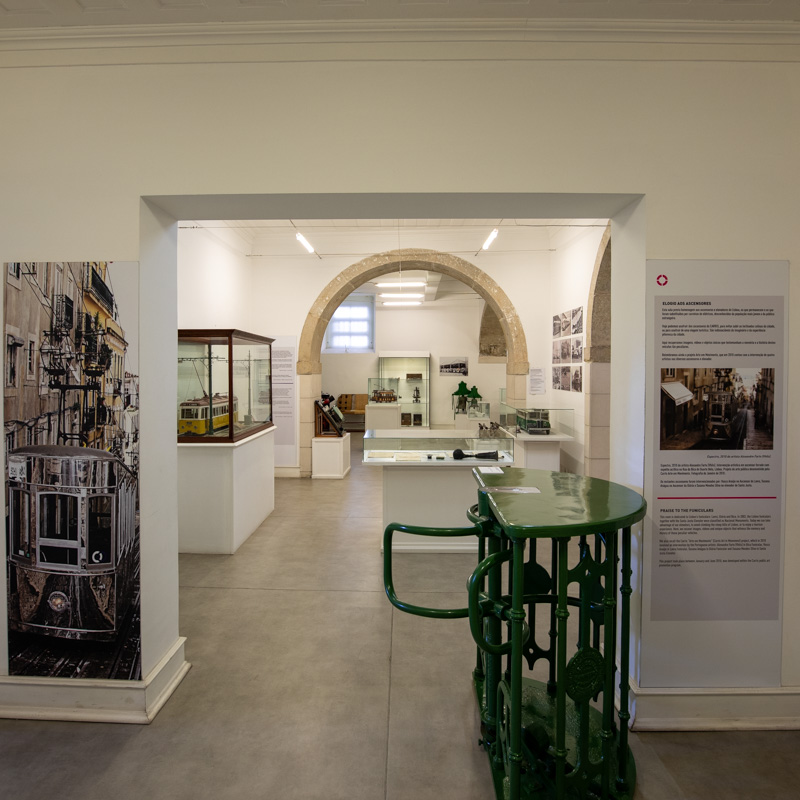
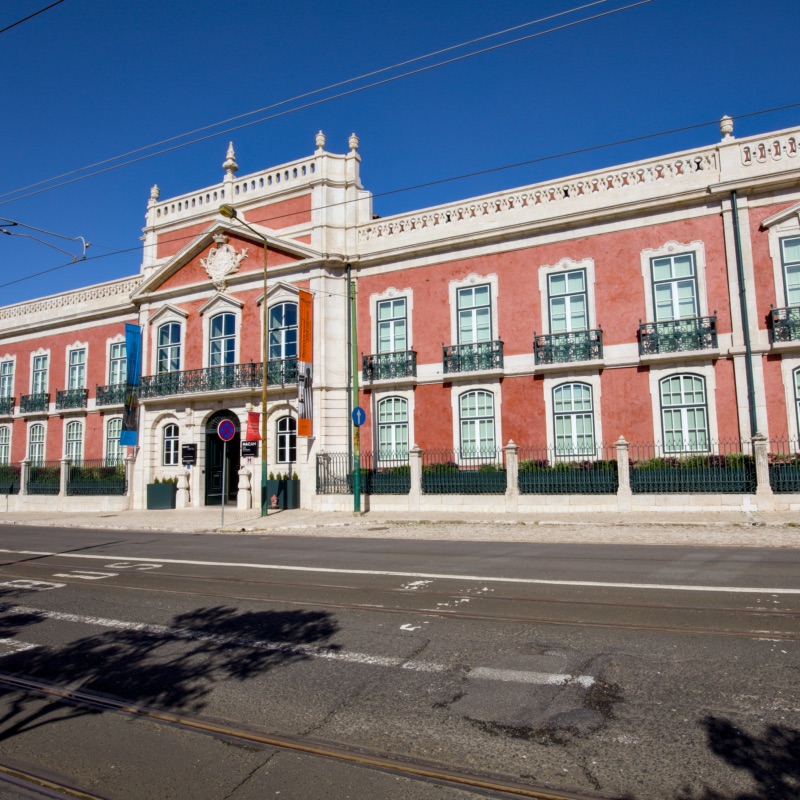
One of the museum’s most distinctive features is the way it brings together an older residential building and industrial heritage. Núcleo I occupies part of the former Palace of the Count of Ponte within Santo Amaro Station, and still preserves arches that recall this palatial origin. The display is arranged in five chronological rooms, where documents, models, uniforms, work tools and smaller objects trace the transition from animal traction to funiculars, trams and buses. This nucleus also includes recreated administrative and medical areas, as well as a room linked to the Carris Employees’ Music Band. Núcleo II is housed in disused workshop sheds covering about two thousand square metres and presents the vehicle and machinery collection at full scale. Here you find horse-drawn cars, trams and buses, together with the former printing workshop and the Geradora area, with rotary converters used to turn alternating current into direct current. The connection between the two nuclei is made on a historic 1901 tram, remodelled in the 1960s.
More context
During a visit, it is worth beginning with the room devoted to the foundation of Carris and the first American cars, where documents and images introduce the Cordeiro de Sousa brothers and the earliest vehicles to run in Lisbon. Then the room on the Lavra, Glória and Bica funiculars, together with the Santa Justa Lift, deserves close attention, especially for the small funicular model conceived and built in 1892. The next room, devoted to electrification, helps explain the technical modernisation of the network. In the same nucleus, the galleries on the company’s evolution, the administrative area and the medical service bring visitors closer to everyday life at Carris. The tram ride to Núcleo II is an essential part of the experience. Inside the sheds, attention should go to the vehicles preserved either in their original appearance or exactly as they left service, allowing a clear comparison of periods and technologies. The printing workshop, created in 1878 to produce tickets and fight forgery, and the old Geradora area are two especially revealing parts of the company’s inner workings.
Gallery