Lisboa · Lisboa
Museu Nacional dos Coches
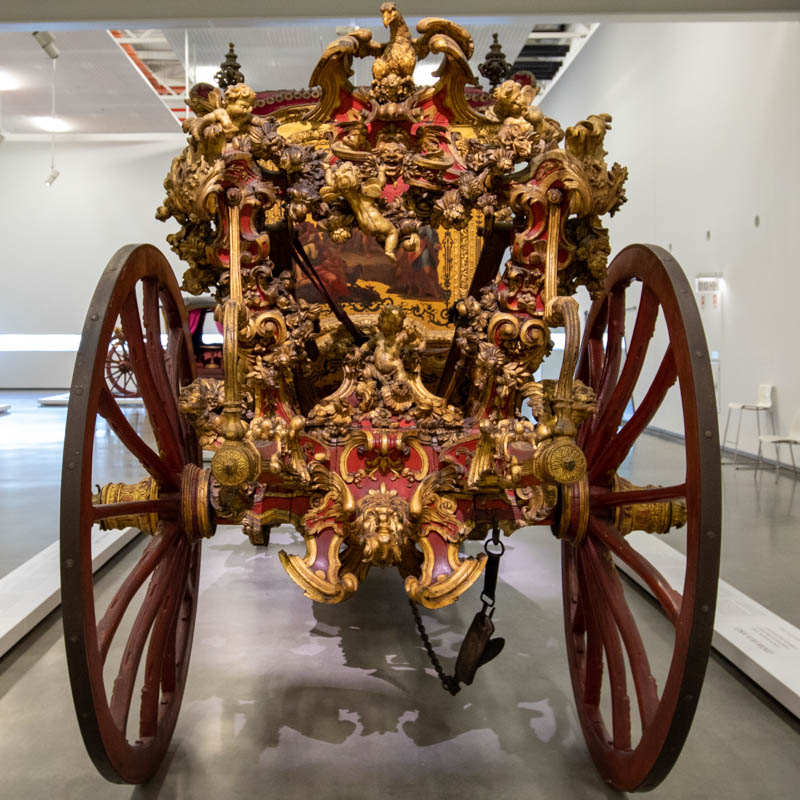
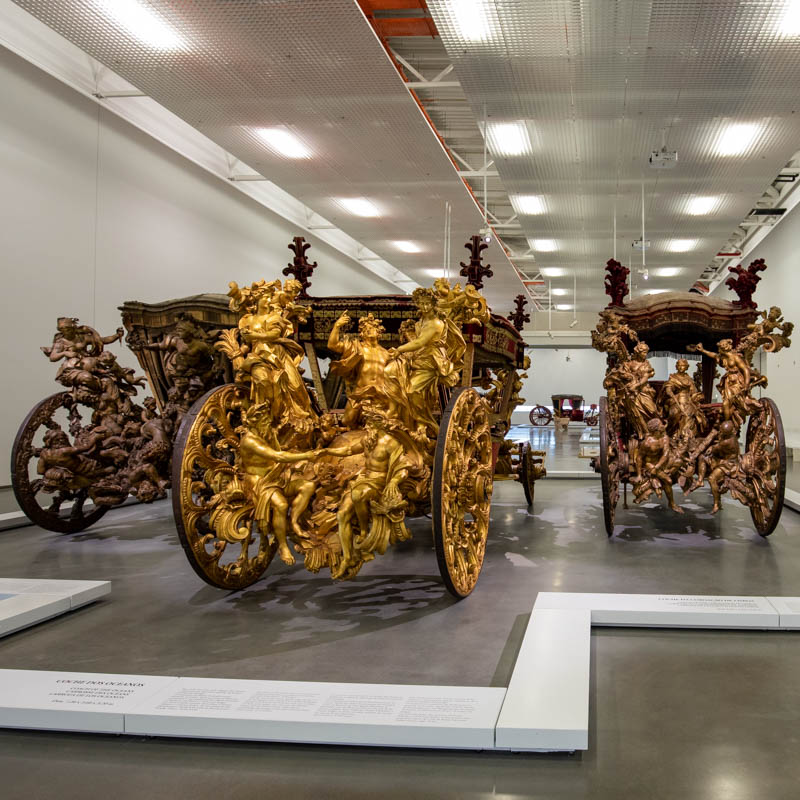
The National Coach Museum is one of those places where history seems to pass before your eyes in procession. Created on the initiative of Queen Amélia in 1905 to gather and preserve the royal vehicles scattered across different palaces, it began in the former Royal Riding School of Belém and, more than a century later, gained a new building designed by Paulo Mendes da Rocha. The collection, regarded as unique in the world, shows how power was displayed on wheels, through luxury, ceremony and diplomacy. Among coaches, berlins and litters, the eye is drawn to the celebrated Coach of the Oceans, one of the museum’s treasures, built for the embassy sent by King João the Fifth to Pope Clement the Eleventh in 1716. Its exuberant carving and allegories linked to the sea and the Discoveries reveal the grand image Portugal wished to project. Visiting this museum is like stepping into a theatre of splendour where memory moves at the solemn pace of horses.
Why it matters
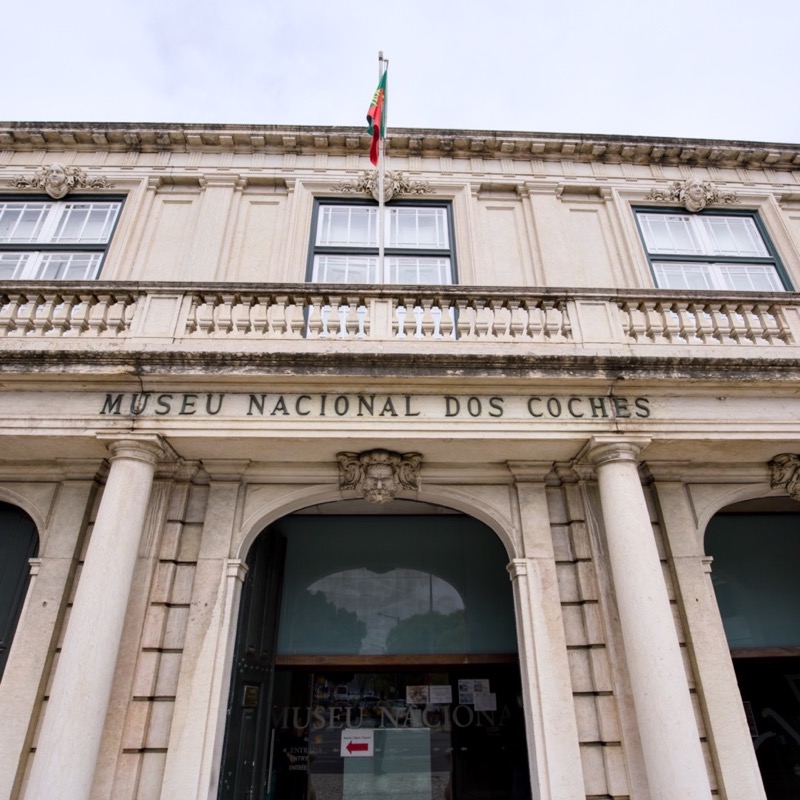
The Museu Nacional dos Coches was created on the initiative of Queen Amélia and opened in Lisbon on 23 May 1905, in the former Royal Riding Hall of the Palácio de Belém. Its creation had a clear purpose: to preserve the important group of vehicles belonging to the Portuguese Royal Household, at a time when they had already ceased to serve their original function. The chosen setting therefore became the first museum of coaches in the world. After the establishment of the Republic, the collection expanded with the arrival of coaches and Berlin carriages from the former Royal Household, as well as vehicles coming from Church assets, and in 1911 the institution adopted the name Museu Nacional dos Coches. In 1944, a new hall designed by Raul Lino was opened, yet the shortage of space remained. The decisive change came in 2015, when most of the collection moved to the new building in Belém. Today the museum continues to tell the story of ceremonial and travel transport between the sixteenth and nineteenth centuries, in direct connection with the representation of power and ceremony in European courts.
Architecture and history
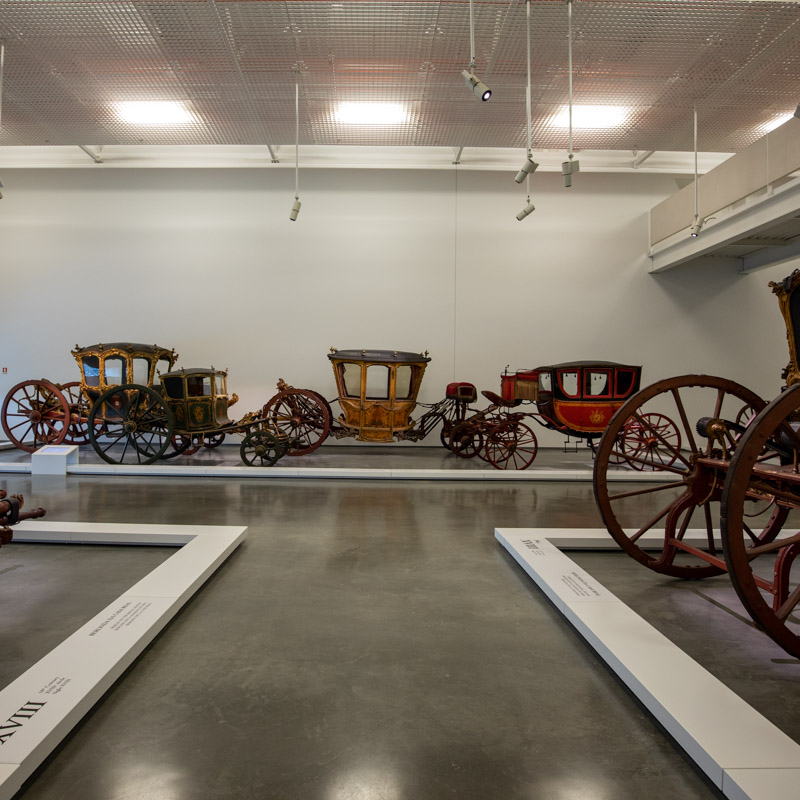
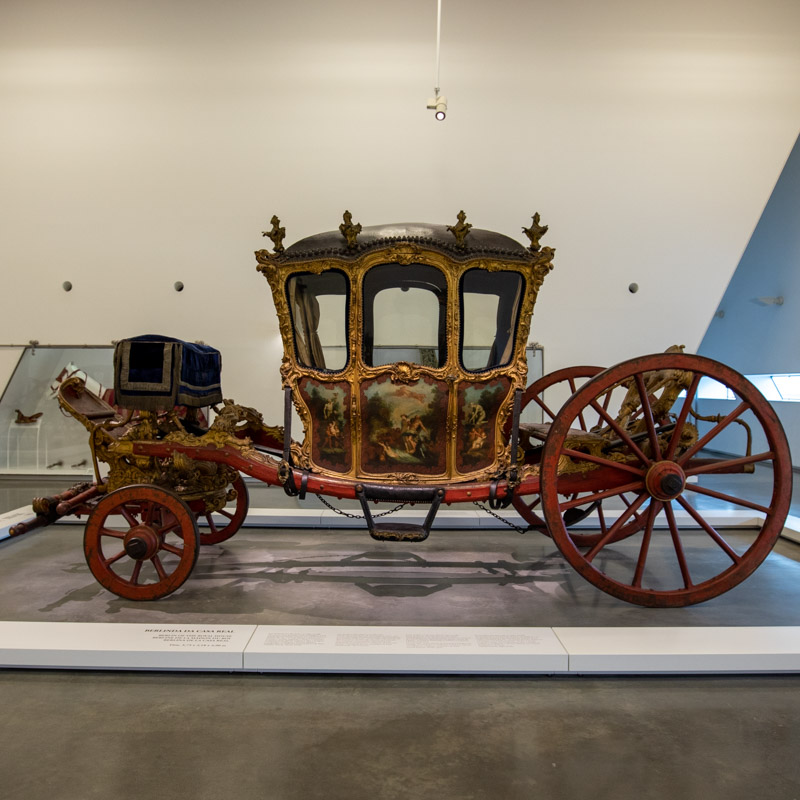
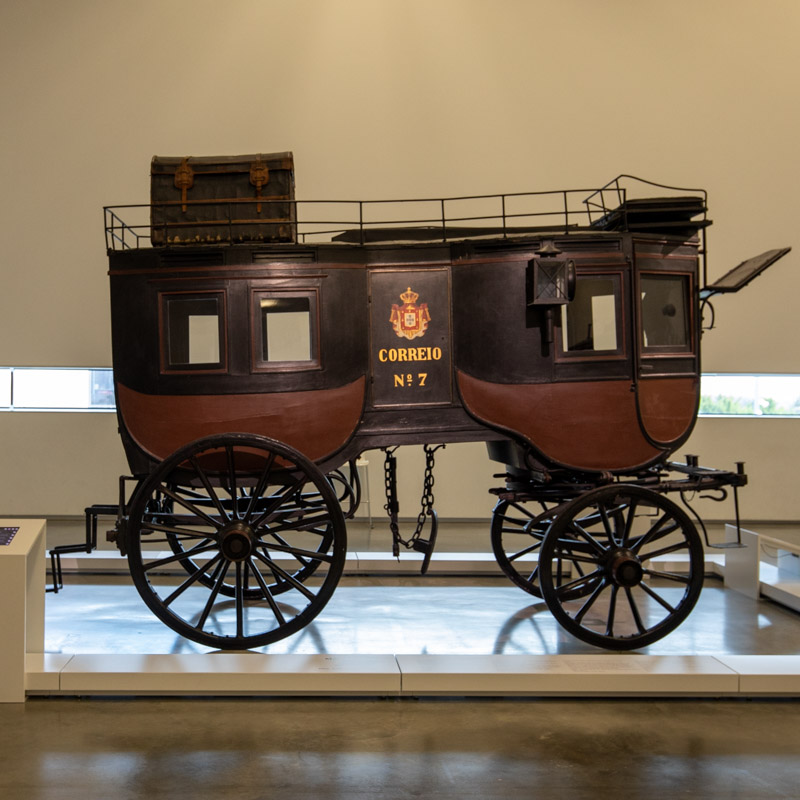
One of the museum’s defining qualities lies in the coexistence of two very different buildings. The first is the Royal Riding Hall, built in 1787 by Giacomo Azzolini and adapted in 1905 by Rosendo Carvalheira to house the collection, with the collaboration of the painters José Malhoa and Conceição e Silva. That space preserves the ceremonial scale of the former riding arena and still holds an exhibition nucleus with coaches, Berlin carriages, riding accessories and the gallery of portraits of the royal family. The second is the building opened in 2015, designed by Paulo Mendes da Rocha in partnership with Ricardo Bak Gordon. Its contemporary architecture is organised around a main pavilion with a large suspended nave and an annex linked by an overhead passage, forming an inner square open to the city. Along the exhibition route, around seventy vehicles stand out, from sixteenth-century examples to a nineteenth-century mail coach. The collection makes it possible to follow the technical and artistic evolution of animal-drawn transport, through gala coaches, travelling carriages, sedan chairs and other richly decorated vehicles.
More context
During a visit, a few pieces and spaces deserve unhurried attention. In the new building, one of the highlights is the Coach of the Oceans, part of the embassy sent by King João V to Pope Clement XI in 1716 and regarded as one of the museum’s national treasures. It is also worth noticing the contrast between the large ceremonial coaches, designed for processions and formal entries, and the lighter vehicles intended for leisure or practical travel. The Berlin carriages, other carriages, calèches, phaetons and sedan chairs show how form, suspension and decoration responded to different uses. In the Royal Riding Hall, the interest lies both in the vehicles on display and in the historic atmosphere of the old arena itself, which recalls the link between the court, horsemanship and royal representation. The gallery of portraits of the royal family and the group of harnesses and related accessories complete that setting. By the end, the museum feels less like a simple parade of vehicles and more like a material portrait of ceremony, technique and the tastes of European elites.
Gallery