Lisboa · Lisboa
Praça de Touros do Campo Pequeno
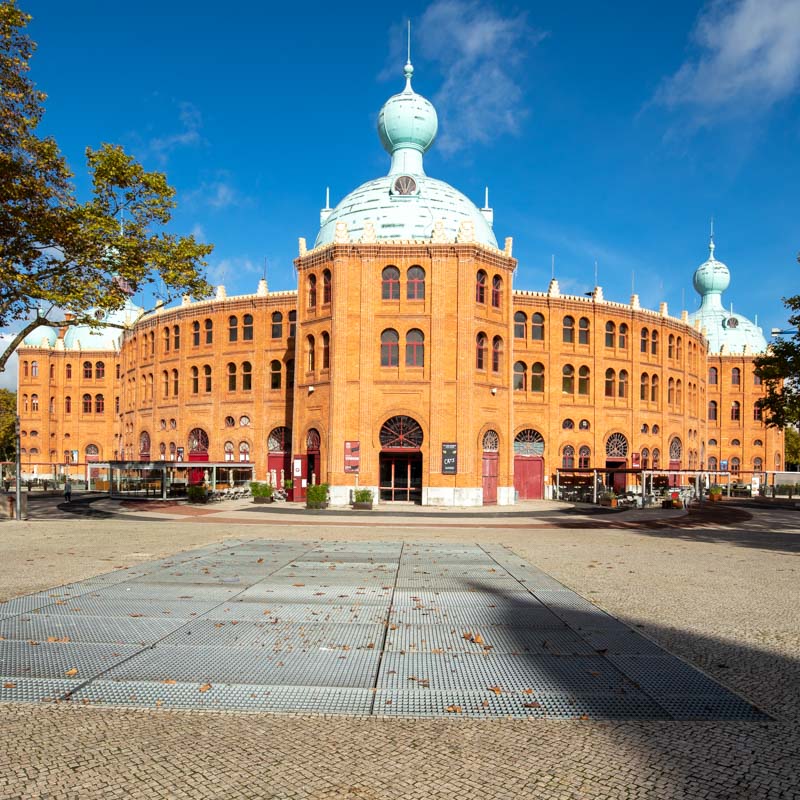
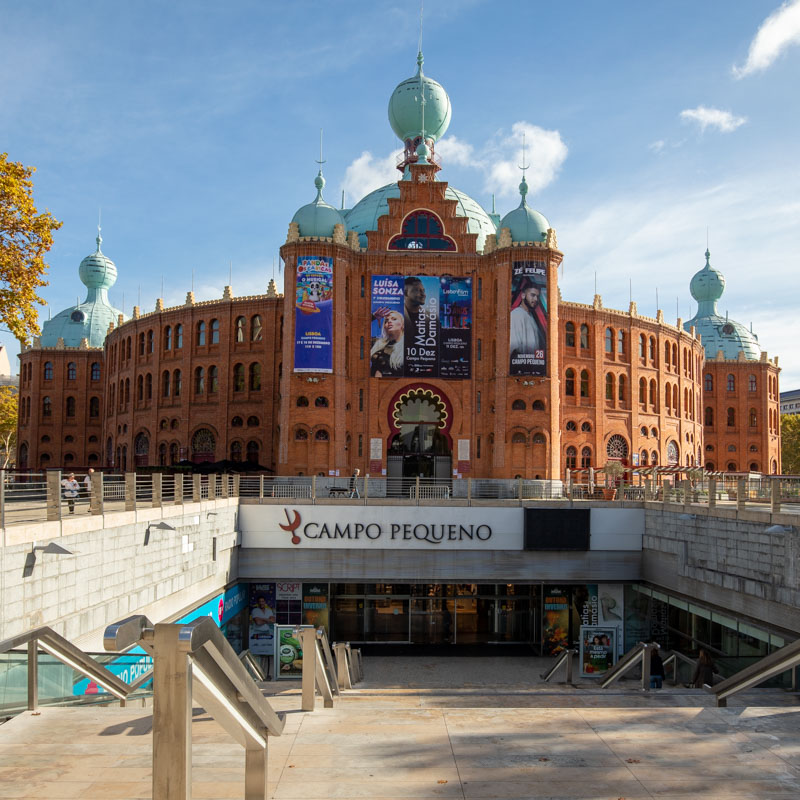
With its red-brick silhouette and neo-Moorish domes, Campo Pequeno seems to bring an unexpected imaginary world into Lisbon, yet its real strength lies in the way it gathers more than a century of urban life into one place. Opened in 1892 and designed by Dias da Silva, it was created as a bullring and soon became one of the city’s social stages, hosting a royal bullfight at the start of the twentieth century, rallies under the Estado Novo and, after the Carnation Revolution, major democratic gatherings. The renovation completed in 2006 preserved the building’s character and gave it a new life as a multi-purpose venue. It is worth noticing the arches, the exposed brick and the turrets, restored to their original turquoise blue. Today, between memory, tradition and reinvention, Campo Pequeno still shows how Lisbon changes without completely erasing its earlier traces.
Why it matters
The Campo Pequeno Bullring was inaugurated on 18 August 1892 and emerged at a time when Lisbon was seeking new large-scale facilities in the expanding area of Avenidas Novas. Designed by António José Dias da Silva, the building replaced the Campo de Santana arena, which had closed in 1888 for safety reasons. In 1889, Lisbon City Council granted Casa Pia a site at Campo Pequeno for the construction of the new venue, and the work went ahead through the Empreza Tauromachica Lisbonense. Throughout the twentieth century, Campo Pequeno was not only a bullring. It also hosted political, social and cultural events that gave it a visible place in the public life of the city. In 1983, the complex was classified as a Property of Public Interest. Then, between 2000 and 2006, it underwent a major restoration and refurbishment process, which allowed it to reopen in May 2006 as a multifunctional venue without erasing its historic identity.
Architecture and history
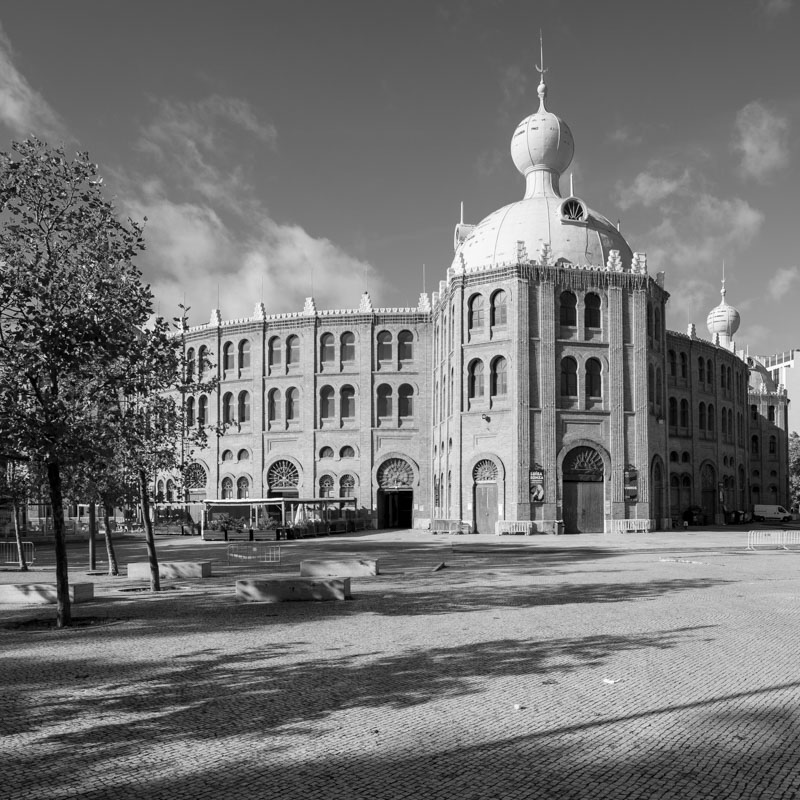
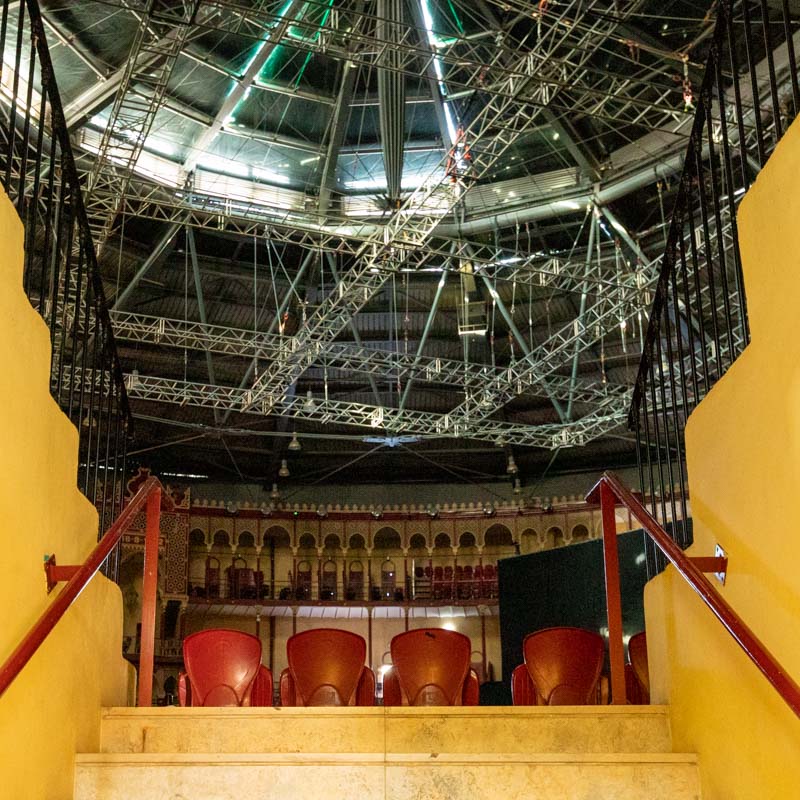
From an architectural point of view, Campo Pequeno is one of the most striking examples of revivalist architecture in Lisbon, with a particularly strong neo-Moorish and Mudéjar character. Its design was inspired by Madrid’s now vanished bullring, which helps explain the theatrical presence of the whole complex. The building has a circular plan and rises through several storeys, animated by attached towers that strengthen the rhythm of the exterior mass. The entire façade is clad in natural-coloured brick, a solution that reinforces its historic and decorative character. The metallic onion domes, the central dome with its cylindrical lantern, the stepped battlements and the openings in round or horseshoe arches create a silhouette unlike any other in Lisbon. Inside, the layout keeps the traditional logic of a central sand arena surrounded by seating tiers, galleries and boxes arranged in a circle. That combination of exterior monumentality and clear interior organisation is what makes the building so recognisable.
More context
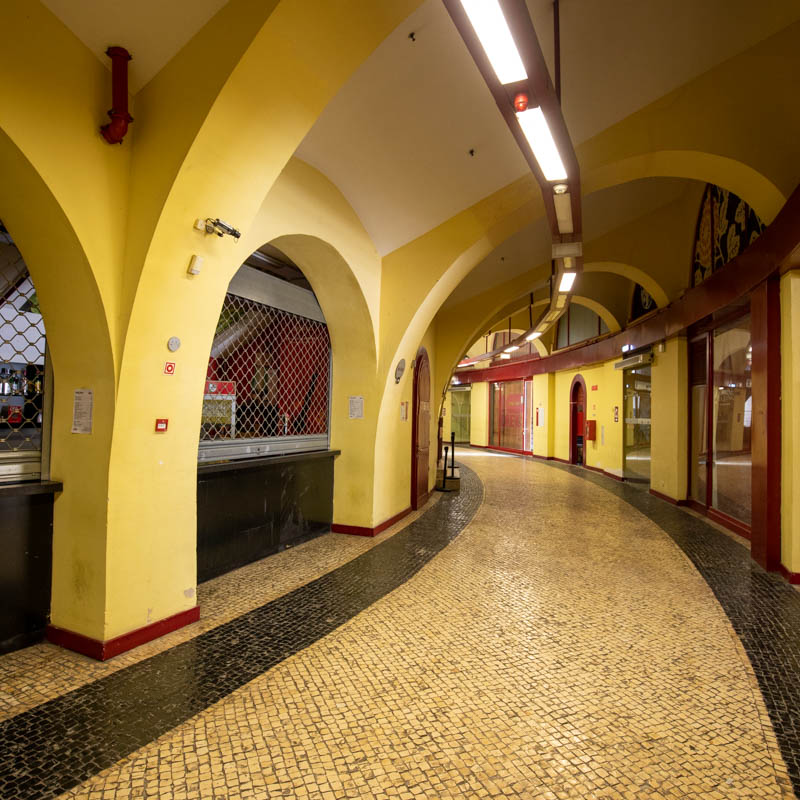
During a visit, the first thing to focus on is the exterior, because that is where Campo Pequeno reveals its identity most immediately. It is worth walking around the perimeter to understand the circular plan, the regular rhythm of the openings and the contrast between the red brick and the domes that crown the towers. The main façade concentrates the most emblematic image of the complex, with its taller central body and the arched entrance that leads the eye inward. Once inside, it is worth observing the continuity of the circular structure, the concentric arrangement of the seating and the relationship between arena, galleries and boxes. The restoration completed in 2006 preserved the essential features of the monument and adapted it to new uses, helping visitors understand how a nineteenth-century venue came to function as a performance hall and contemporary cultural space. Within the refurbished complex, the museum adds historical context and helps read Campo Pequeno beyond its original purpose.
Gallery