Oeiras · Lisboa
Aquário Vasco da Gama
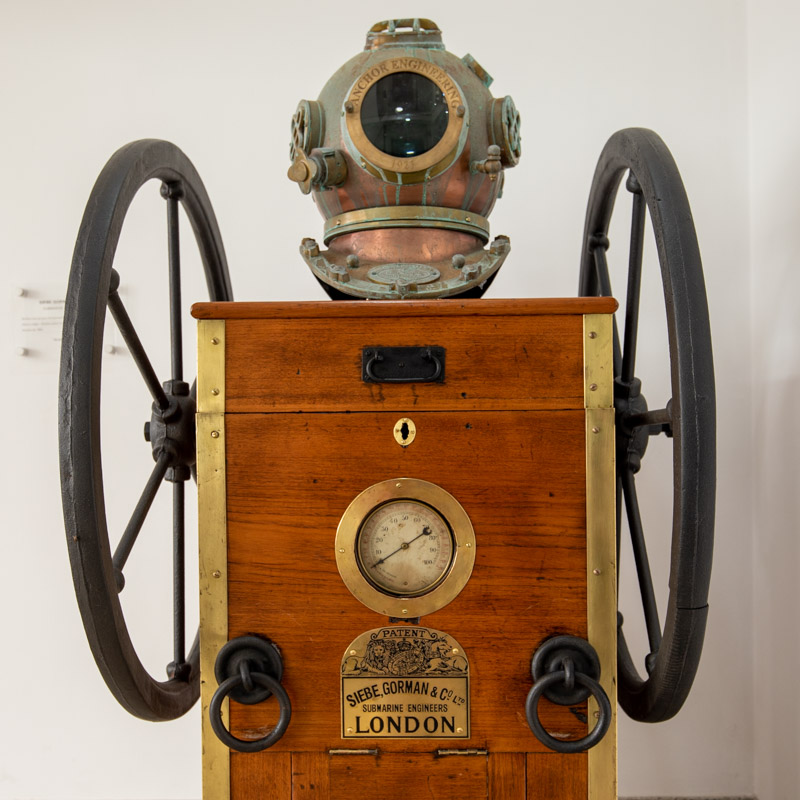
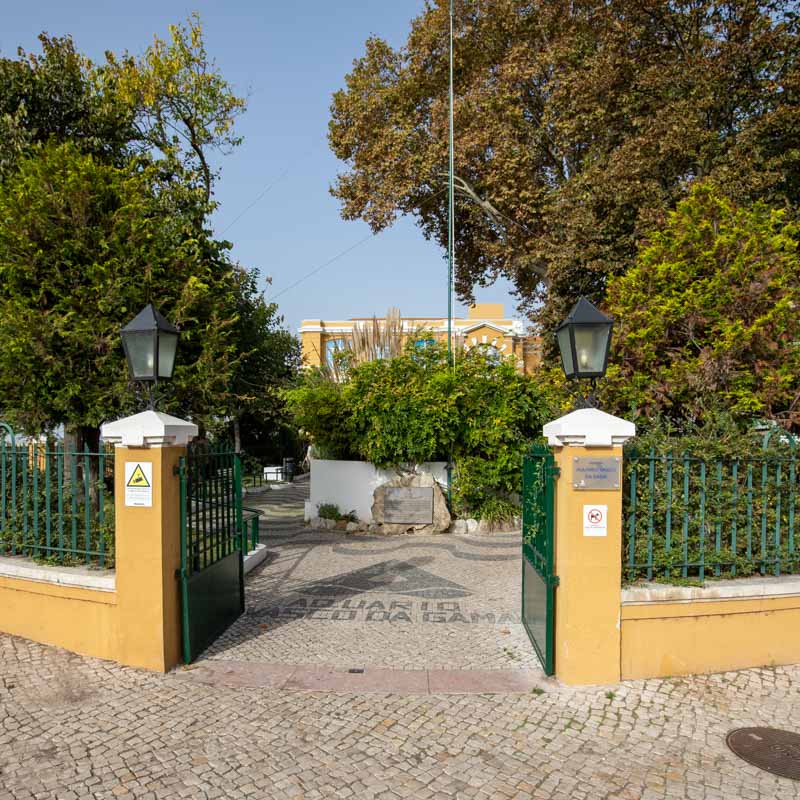
By the Tagus, in Dafundo, the Vasco da Gama Aquarium preserves something rare: the memory of a time when discovering the sea also meant learning how to observe it. Opened in 1898, during the celebrations of the fourth centenary of Vasco da Gama’s departure for India and under the patronage of King Carlos the First, it was one of the world’s earliest public aquariums and became a landmark in the popularisation of science in Portugal. The building retains the charm of a historic aquarium, yet what sets it apart most is its link to the oceanographer king: part of the Oceanographic Museum of King Carlos the First has been housed here since 1935. During a visit, it is worth noticing both the tanks and living species and the museum rooms, where science, curiosity and maritime tradition meet with natural ease. Today, now listed as a Monument of Public Interest, it still brings together wonder, memory and knowledge in a place of almost intimate scale.
Why it matters
The Vasco da Gama Aquarium, in Dafundo, opened to the public on 20 May 1898 as part of the celebrations of the fourth centenary of the discovery of the sea route to India. The initiative aimed to leave a lasting memorial to those commemorations and to create a place of recreation and public instruction devoted to the marine world. The project was backed by King Carlos I, a central figure in the history of the aquarium and a pioneer of oceanography in Portugal. In 1901, the institution passed to the Portuguese Navy. Its link to the king became even stronger with the incorporation of his oceanographic collection, formed from the campaigns carried out along the Portuguese coast between 1896 and 1907. After the monarch’s death, that collection followed a complex path until it was formally assigned to the aquarium in 1935. Throughout the twentieth century, the complex was gradually enlarged, strengthening its dual identity as both aquarium and museum. In 2023, the building and its garden were classified as a monument of public interest.
Architecture and history
From an architectural point of view, the Vasco da Gama Aquarium is not a building fixed in a single campaign, but a complex built in stages as its scientific, museological and educational needs grew. The original structure, inaugurated in 1898, had only one floor and two adjoining bodies. The first contained the public areas, including the entrance, the museum room, the saltwater aquarium corridors and the freshwater room. The second housed technical and support functions, including filters, reservoirs, laboratories, the library and offices. In 1917, construction began on the upper floor over the main façade, giving rise to the present Noble Hall, and in 1940 the building lost about a third of its surface because of the opening of the Lisbon-Cascais coastal road. Later enlargements changed the volume, but did not erase the logic of successive growth that is still visible today. The result is a functional architecture linked to the Tagus and shaped by the meeting of public display, scientific backstage work and museum memory.
More context
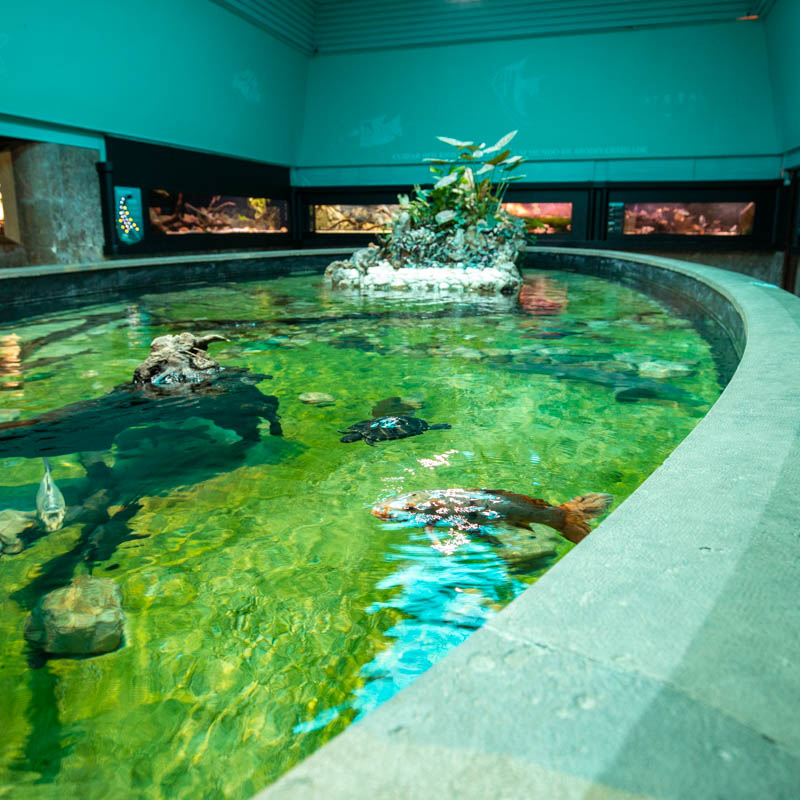
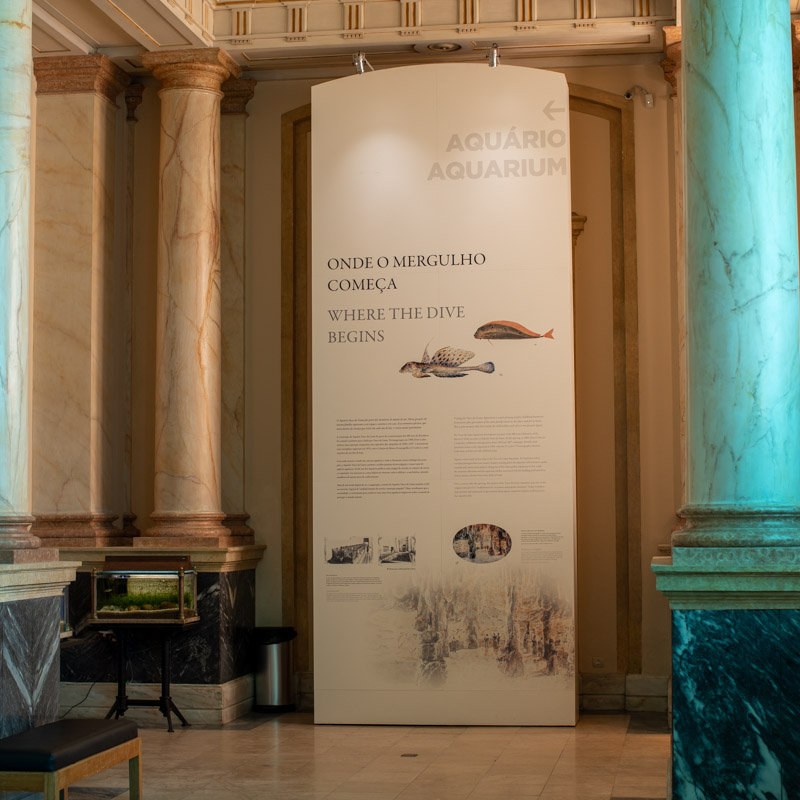
During a visit, it is worth starting with the saltwater galleries, where the aquarium places particular emphasis on the marine fauna of the Portuguese coast. According to the institution, this display is spread across 37 aquariums with capacities ranging from 600 to 25,000 litres, designed not only to show local species but also to support study and environmental education. The museum route then reveals what makes the place distinctive. The Noble Hall preserves its original furniture and the atmosphere of an old cabinet of curiosities, organised around the logbook illustrated by Carlos of Bragança during the 1897 expedition to the coast of Sesimbra. The New Room continues that view of the historic collection, while the Malacology Room brings together more than 600 shells from the Portuguese coast. The present Window to the Ocean also deserves attention. Installed in the former sea lion tank, it uses a large interactive video wall to present species and habitats from the Portuguese coast. This coexistence of living specimens, scientific memory and contemporary interpretation is what makes the Vasco da Gama Aquarium especially distinctive.
Gallery