Sesimbra · Setúbal
Castelo de Sesimbra
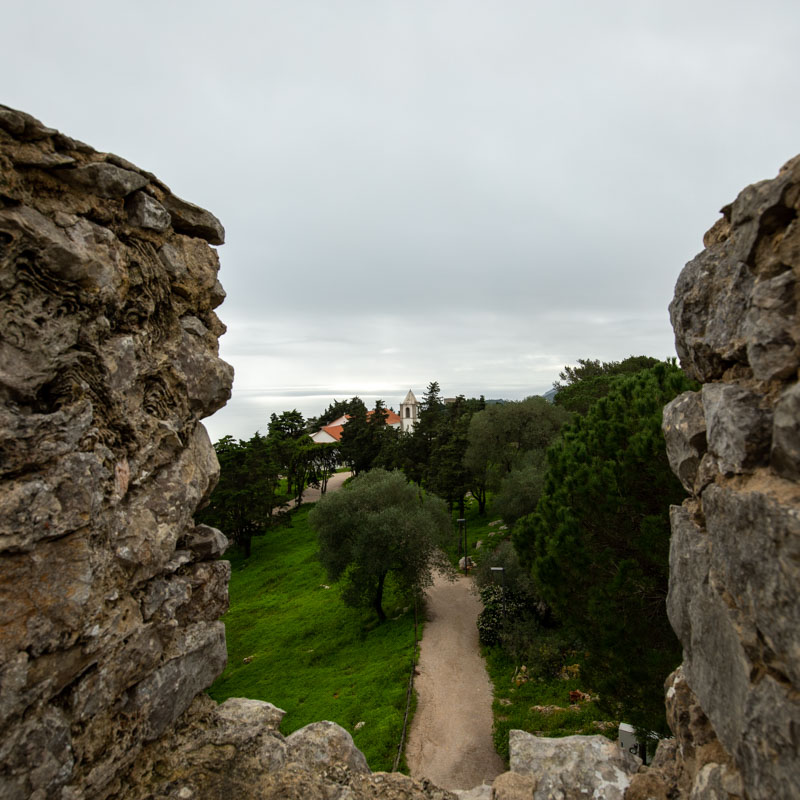
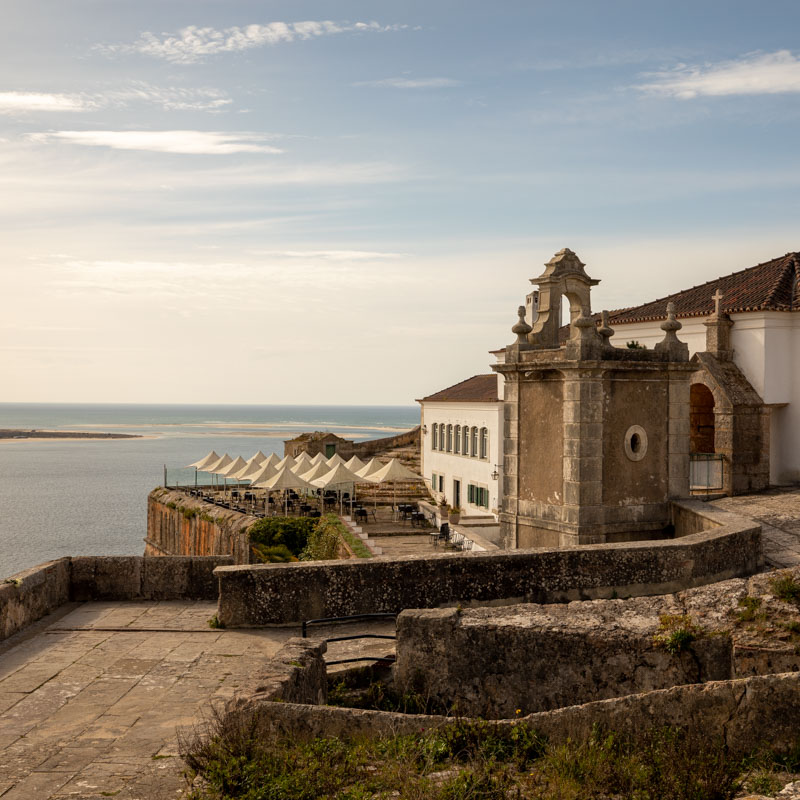
Perched above the bay, Sesimbra Castle is the last Portuguese castle over the sea to preserve its medieval layout, and that singular quality is felt at once in its walls opening towards the horizon. Of Islamic origin, it passed through conquest and reconquest until it was definitively secured on the Christian side at the beginning of the thirteenth century, when the town received its charter; soon afterwards, it was entrusted to the Order of Santiago, which strengthened the enclosure and its defensive role. Throughout the Middle Ages, it was a key stronghold in guarding the coast, but from the fifteenth century onwards the population gradually moved down towards the bay, drawn by fishing and shipbuilding. Today, as you walk through the alcáçova, the keep, the wall walk and the church within the ramparts, that long shift of centre and outlook becomes clear. Above all, linger over the view: between the town and the sea, Sesimbra seems to tell its whole story at once.
Why it matters
Sesimbra Castle holds a singular place in Portuguese military history because it is the last castle overlooking the sea to preserve its medieval layout in a clearly readable form. Its origins go back to the ninth century, during the Muslim occupation of the territory. It was taken by Afonso Henriques in 1165, lost to the Almohads in 1191 and recovered definitively through the initiative of Sancho I at the end of the twelfth century, when the town received its charter and the enclosure gained new momentum. In 1236, Sancho II granted the castle to the Military Order of Santiago, a link that shaped its administration and local religious life. Throughout the Middle Ages, the fortress was enlarged because of its strategic value in controlling both the coast and inland routes. From the fifteenth century onwards, however, the population gradually moved down towards the bay, drawn by fishing and shipbuilding. By 1516 signs of abandonment were already evident, and these deepened over the following centuries until the conservation campaigns carried out between 1933 and 1945.
Architecture and history
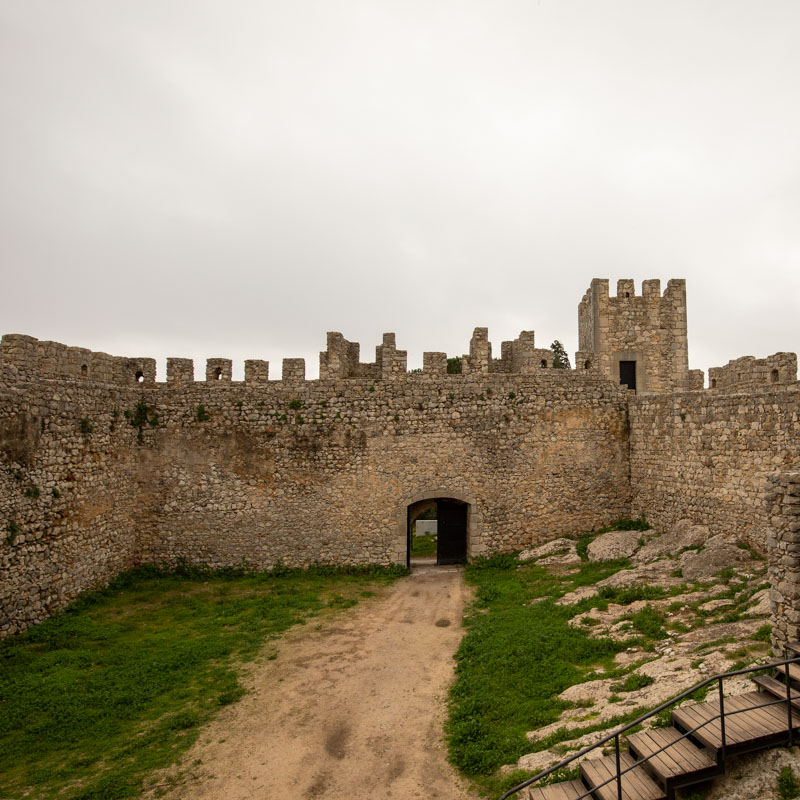
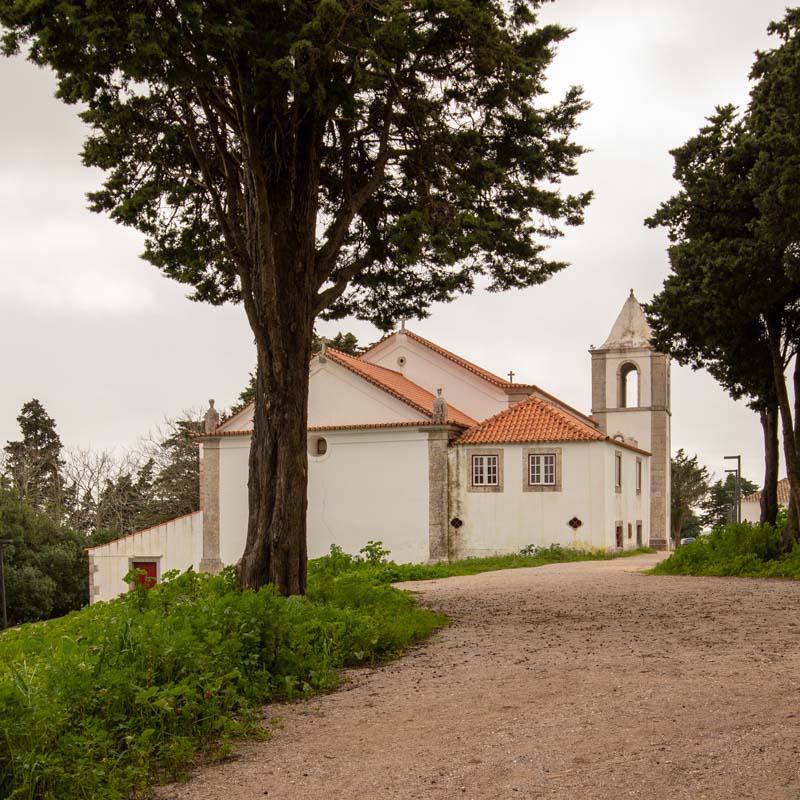
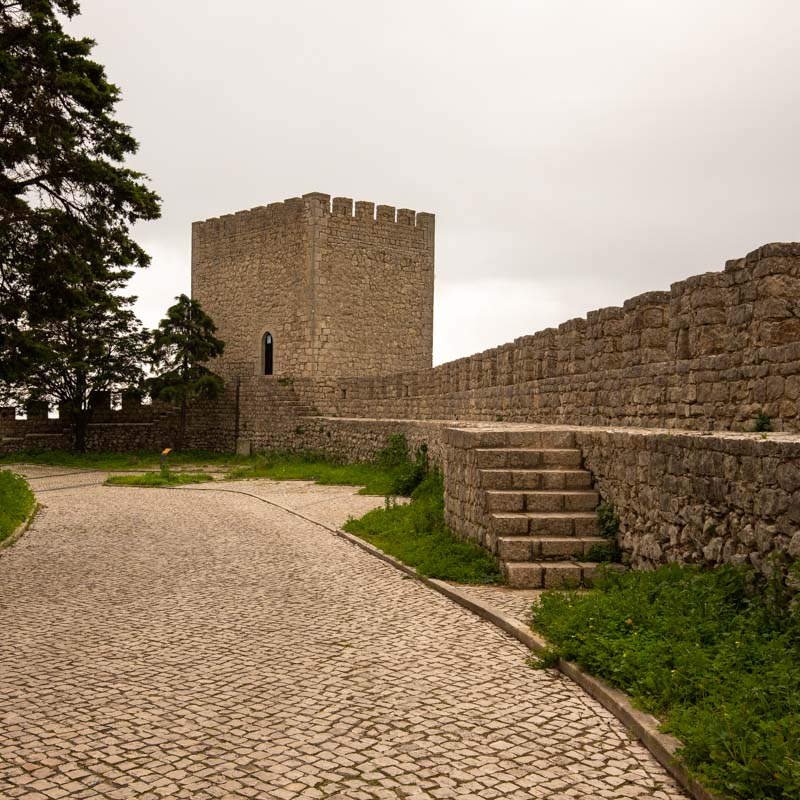
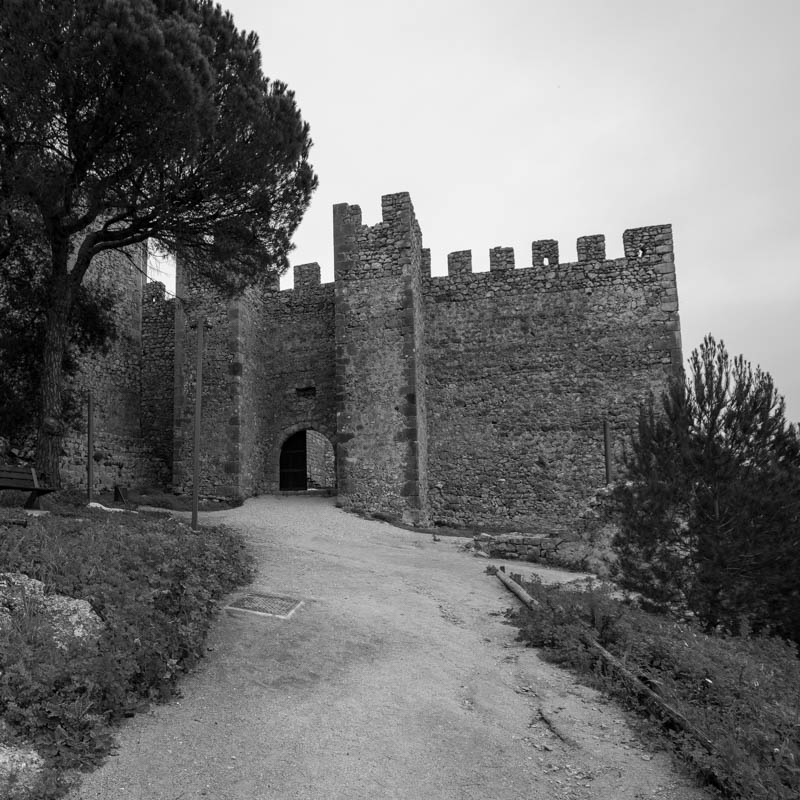
The castle’s architecture adapts to the steep terrain through an irregular and elongated plan, organised between the alcáçova at the highest point and the outer enclosure that once surrounded the settlement within the walls. In the alcáçova, the keep and the towers stand out, while the walls include walkways, cubelos and lookout points facing both the sea and the hills. The Porta do Sol, to the north-east, preserves traces of a defensive barbican, and the Porta da Azoia, to the north-west, shows another system for controlling access. Among the medieval reinforcements, the western tower is especially important. It was built in 1323, in the reign of Dinis, to improve surveillance of the coast. Inside the enclosure there are also structures linked to everyday life, including cisterns, silos or bread pits, and traces of an olive press. The historic church within the walls, now dedicated to Our Lady of Consolation of the Castle, has medieval origins, although the visible building largely reflects later rebuilding, especially in the eighteenth century. Its blue and white tile ensemble of 1721 adds a decisive artistic dimension to the castle.
More context
The tile panels in the Church of Our Lady of Consolation of the Castle are among the most expressive features of the whole site, because they connect the old fortress with a religious programme from the Baroque period. They depict apostles, evangelists and scenes from the lives of Christ and Saint James, helping explain how the castle remained a symbolic centre even after the decline of the settlement within the walls. The medieval ruins of the Casa da Vereação and the former Hospital of Corpo Santo also deserve attention, as they reveal civic and charitable functions inside the enclosure. In the alcáçova and at the keep, the main interest lies in reading the terrain and the defensive system, since this makes the logic of the castle’s position and its visual reach over the bay immediately clear. Walking along the walls, through the Porta do Sol, the bastion and the Torre Nova, reveals different solutions for surveillance and circulation. The cisterns, silos and deactivated cemetery finally recall that this was not only a military post, but also a place that was inhabited, governed and ritualised.
Gallery