Sesimbra · Setúbal
Cabo Espichel
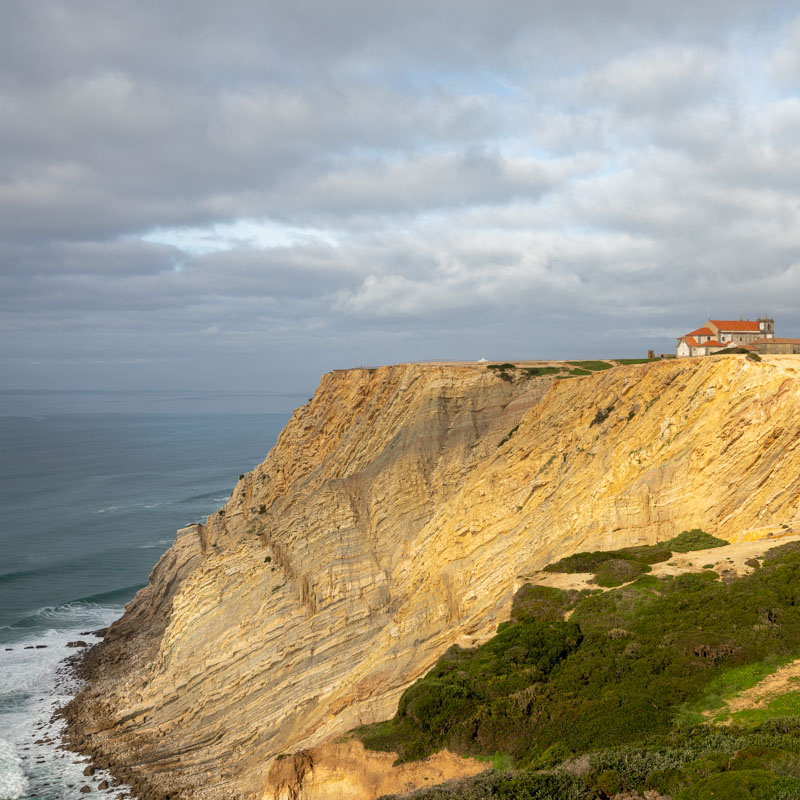
At the western edge of the municipality of Sesimbra, Cabo Espichel is striking for the way it brings together faith, vertigo and geological time. Devotion to Our Lady of the Cape is documented at least from 1366, and the sanctuary seen today, rare for its planned composition of church, forecourt and long pilgrims’ lodgings, took shape mainly between 1701 and 1770. The Ermida da Memória marks the place where, according to tradition, the image of the Virgin appeared in 1410, an episode that fed centuries of pilgrimages and cireos that are still alive today. But the cape does not speak only of pilgrims. On the limestone cliffs of Pedra da Mua, tracks of Jurassic sauropod dinosaur footprints survive, as if the landscape held a memory far older than the human one. Between the constant wind, the austere Baroque complex and the Atlantic stretching into the distance, Espichel feels like a place where devotion and nature enlarge one another.
Why it matters
At the western end of the Sesimbra coast, Cabo Espichel brings together devotion, navigation and geology on a promontory exposed to the Atlantic. The cult of Our Lady of the Cape is documented at least from 1366, through references to pilgrimage routes, and tradition places the discovery of the image in 1410 by two men from Caparica and Alcabideche. The brotherhood formed in the 15th century helped consolidate the pilgrimages known as círios. Between 1701 and 1770, the growing number of pilgrims led to the construction of the ensemble that still organises the plateau today: church, pilgrims’ lodgings, forecourt, aqueduct, Casa da Água and other support structures. The cult declined after the Napoleonic invasions, but remains alive in local celebrations. In 1790, the lighthouse added another function to the cape: guiding navigation along a difficult coast.
Architecture and history
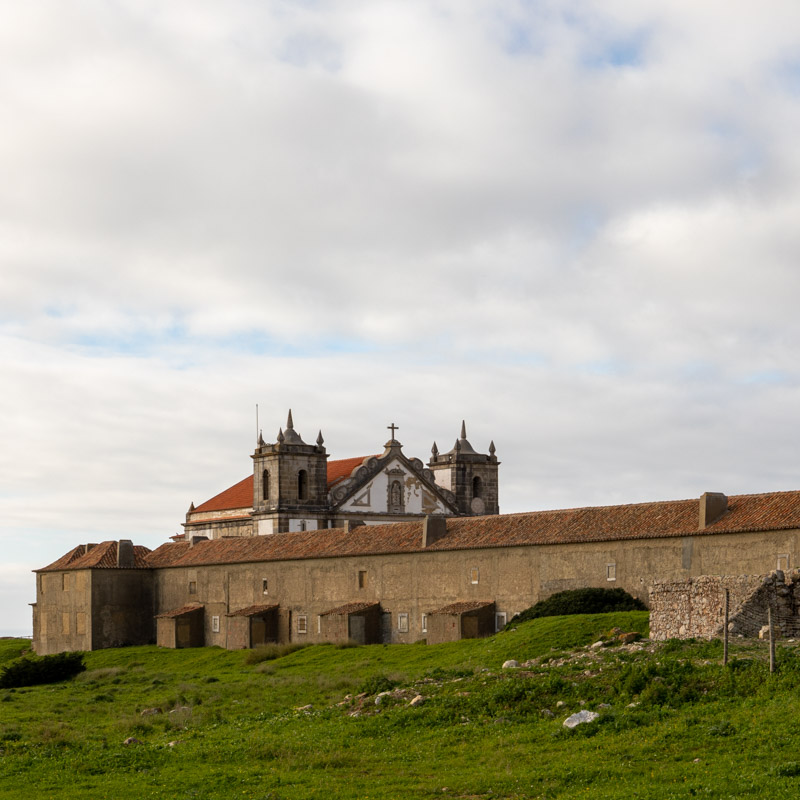
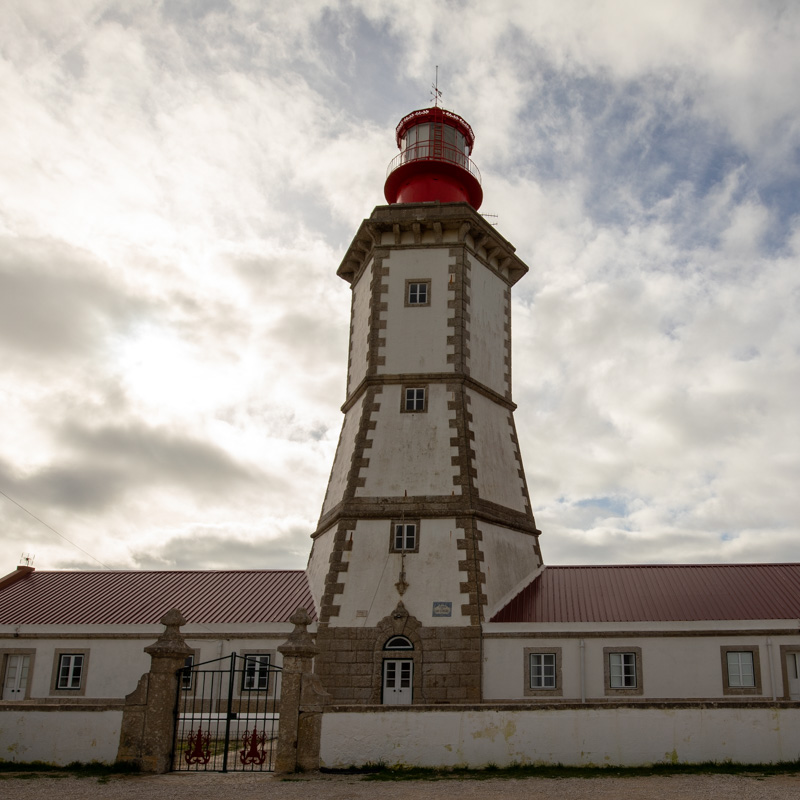
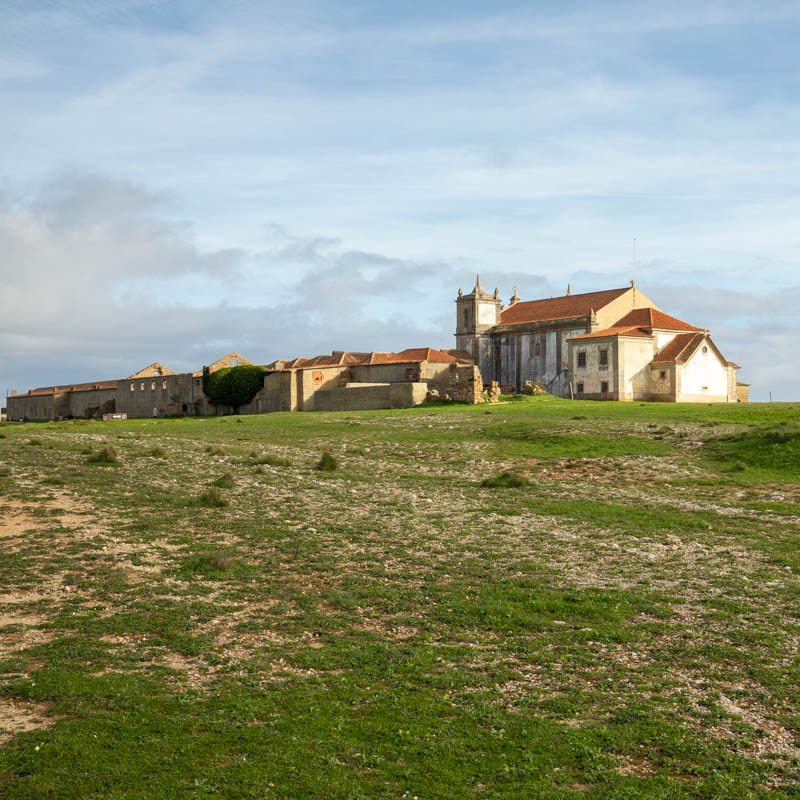
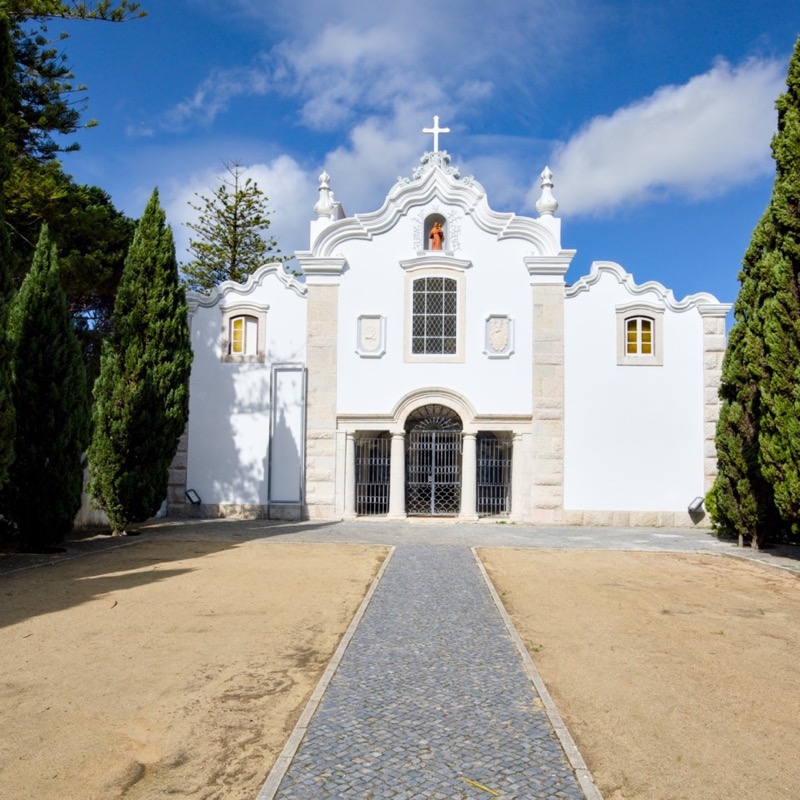
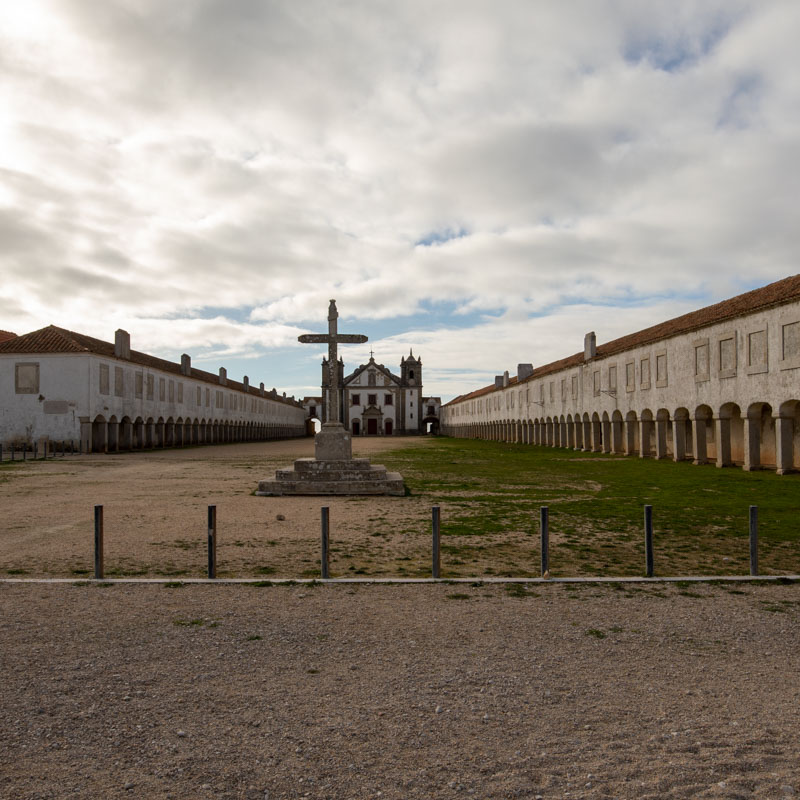
The large rectangular forecourt gives scale to the sanctuary before visitors reach the church. Two long wings of pilgrims’ lodgings, begun in 1715 and completed in later phases, lead the eye towards the façade, with its side towers and three portals. The present church was begun in 1701 and was probably completed in 1707, although the interior decoration continued afterwards. The Ermida da Memória, with a rectangular plan and rounded dome, is the oldest element of the ensemble and preserves tile panels linked to the legend of Our Lady of the Cape. The hexagonal Casa da Água marks the arrival of the Azoia aqueduct, essential for supplying pilgrims with water. Nearby, the lighthouse has a 32-metre tower, standing at an altitude of 168 metres, a clear sign of the promontory’s maritime function.
More context
The wings of pilgrims’ lodgings show the collective scale of the old pilgrimages. Notice how they form a kind of open corridor towards the church, turning the forecourt into a meeting space. Inside the temple, look for the perspective-painted ceiling, dated 1740, the main chapel altarpiece and the royal tribune, signs of a devotion that received strong artistic investment. In the Ermida da Memória, the tiles visually tell the legend of the discovery of the image. The link between that legend and the landscape becomes clearer in the nearby fossil sites: Pedra da Mua preserves Jurassic sauropod tracks, associated with the tradition of the “mule” that supposedly climbed the cliff, while Lagosteiros preserves Cretaceous footprints. The lighthouse completes the reading of the cape, reminding us that this place was also a point of orientation for those arriving from the sea.
Gallery