Places

Cultural places in Portugal

Browse LxDiscover places across monuments, museums, palaces, viewpoints, gardens, churches and historic sites. Use this hub to start planning, then open the app for map-based routes, saved places and short cultural audio guides.

19 places

Featured cultural places

Explore on the map
Palácio Nacional de Sintra4.5

Palácio Nacional de Sintra

Palace • Sintra, Lisboa

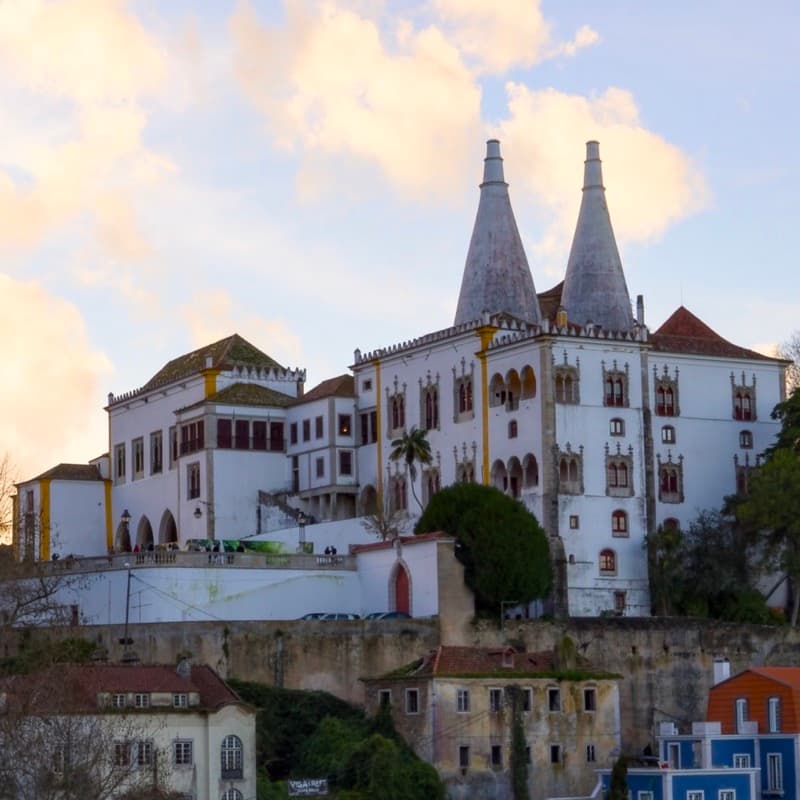
The National Palace of Sintra seems to rise out of the town itself, with its two white chimneys announcing a place where royal history has remained intact. With a thousand years of life behind it, and as the only Portuguese medieval royal palace preserved in its entirety, it was inhabited by almost all the kings and queens of Portugal, who left behind layers of Gothic, Manueline and Mudéjar architecture. Inside, the palace surprises less through its façade than through the intimacy of its rooms and the ceilings that speak of power, taste and memory. It is worth lingering in the Hall of Coats of Arms, where Manuel the First places himself at the centre of a noble order represented by seventy-two heraldic shields, and in the famous Hall of Magpies, whose painted ceiling of one hundred and thirty-six birds still provokes questions, because its exact meaning remains unknown. Visiting this palace is like entering a royal house still inhabited by ceremony and secrecy.

Palácio Nacional da Ajuda4.7

Palácio Nacional da Ajuda

Palace • Lisboa, Lisboa

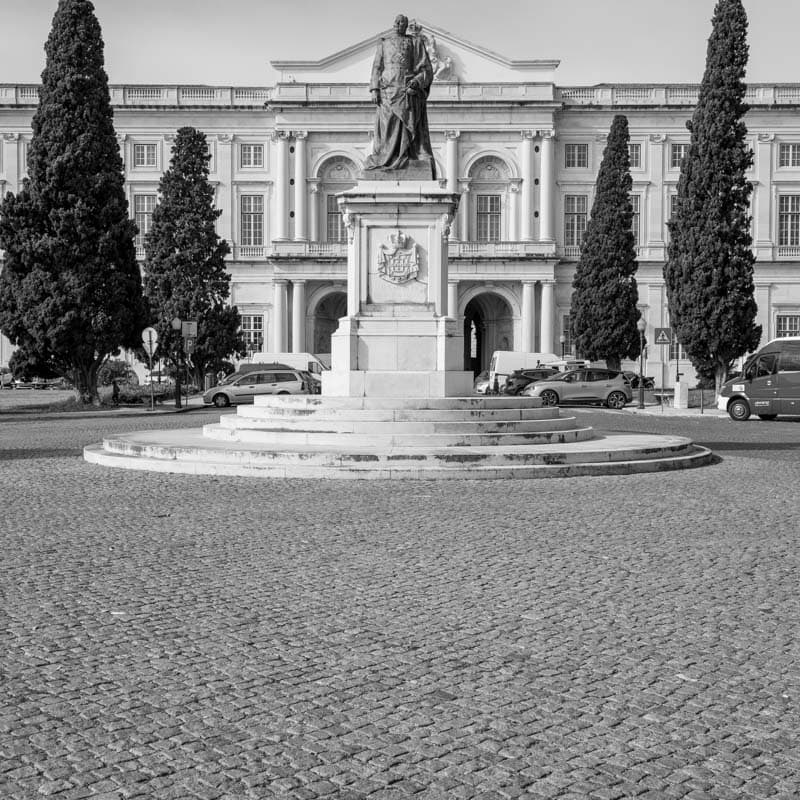
High on Ajuda hill, this neoclassical palace speaks less of completed triumph than of ambition, interruption and endurance. Conceived at the start of the nineteenth century to replace the wooden Real Barraca built after the earthquake, it was never fully finished, held back by the court’s departure to Brazil and by repeated financial difficulties. Even so, it became the royal family’s official residence from the reign of King Luís the First, and it was under Queen Maria Pia that it gained the domestic and ceremonial brilliance still felt in its interiors today. During a visit, it is worth lingering in the Throne Room, the state salons and the private apartments, because few places in Lisbon preserve so authentically the taste and protocol of nineteenth-century court life. Between its view over the Tagus, its splendour and its intimacy, Ajuda National Palace leaves the rare impression of a royal home suspended in time, made even more compelling by the fact that it was never entirely completed.

Palácio da Bolsa4.5

Palácio da Bolsa

Palace • Porto, Porto

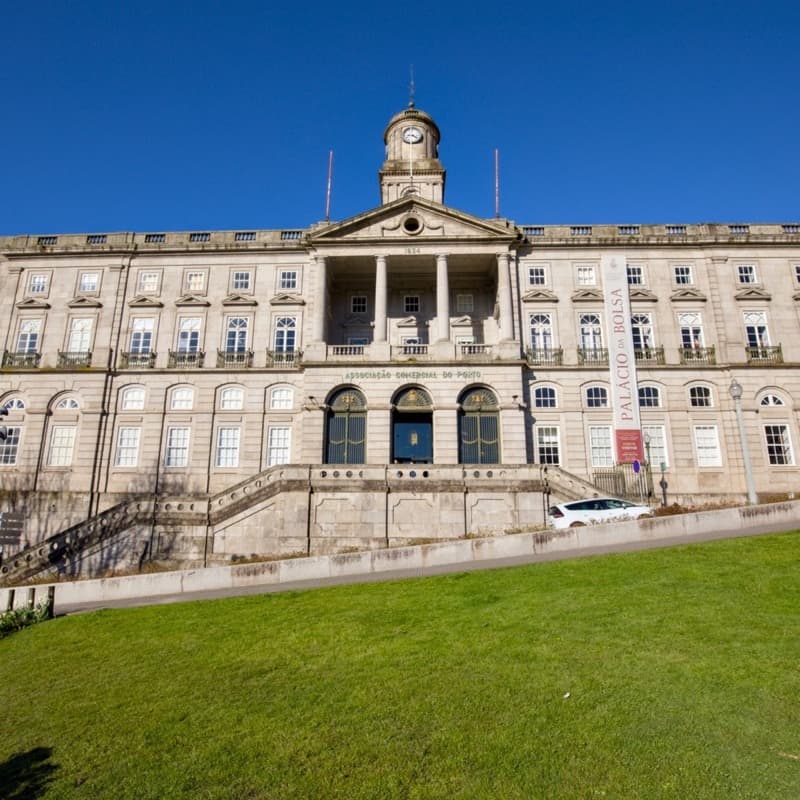
The Palácio da Bolsa, on Rua Ferreira Borges, stands in Porto’s Historic Centre, beside the former Convent of São Francisco. Its origin is linked to the fire of 1832, during the Siege of Porto, which left the convent in ruins. After the closure of the Casa da Bolsa do Comércio, Porto’s merchants sought a headquarters of their own; the first stone was laid in 1842 by the Associação Comercial do Porto, following a design by the architect Joaquim da Costa Lima. The neoclassical building, classified as a National Monument, is organised around the Pátio das Nações, covered by a glazed metal structure. From the 1860s onwards, the interiors gained greater decorative richness. The Arab Room, conceived by Gustavo Adolfo Gonçalves e Sousa, was inaugurated in 1880 and evokes the Alhambra. Between staircases, noble rooms and ornamented surfaces, the palace preserves the economic, artistic and civic memory of 19th-century Porto.

Palácio Nacional de Mafra4.6

Palácio Nacional de Mafra

Palace • Mafra, Lisboa

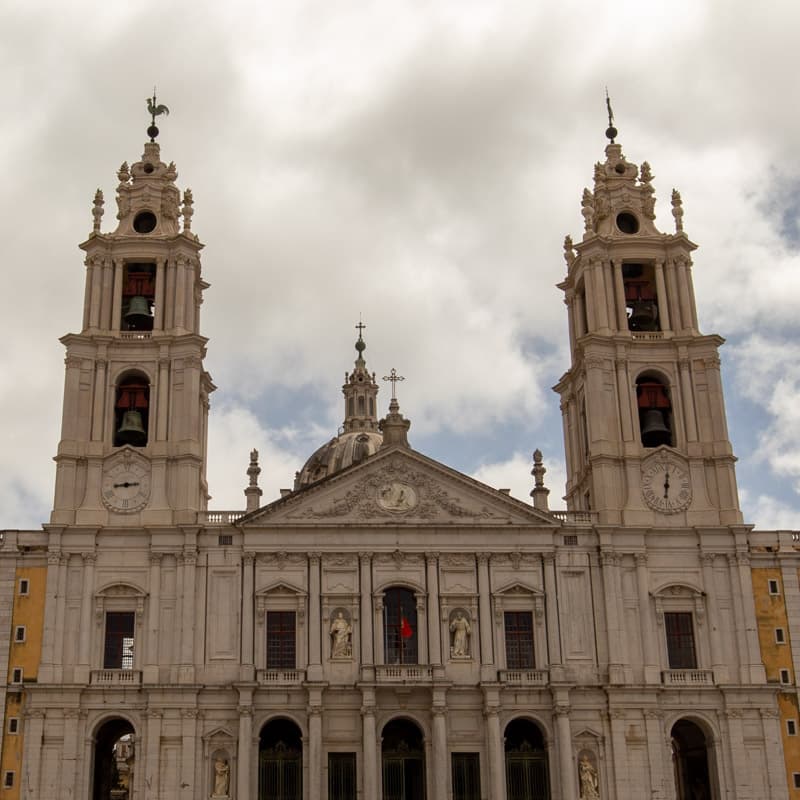
In Mafra, the scale of the palace seems to have been conceived to turn a royal vow into a spectacle of power. Commissioned by King João V and begun in 1717, the complex brings together palace, basilica, convent, Cerco Garden and Tapada in a Baroque composition of rare ambition. The basilica, the two carillons and the six historic organs remind us that music and liturgy were also part of this grand display. Yet there is one space that captivates in a different way: the library, a luminous nave of stone and wood that holds tens of thousands of volumes and remains one of Mafra’s most striking images. The building changed its role over time — royal residence, military quarters, monument — and it was from here that King Manuel II left for exile in 1910. A World Heritage Site since 2019, Mafra is remarkable for the way it brings devotion, knowledge and authority together in a single body.

Palácio da Cidadela de Cascais4.6

Palácio da Cidadela de Cascais

Palace • Cascais, Lisboa

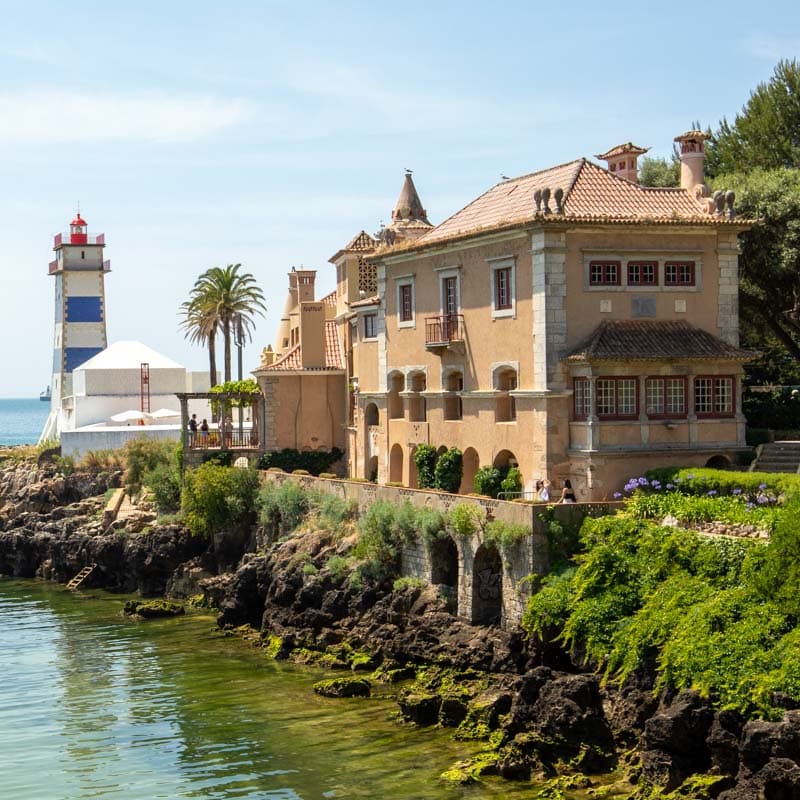
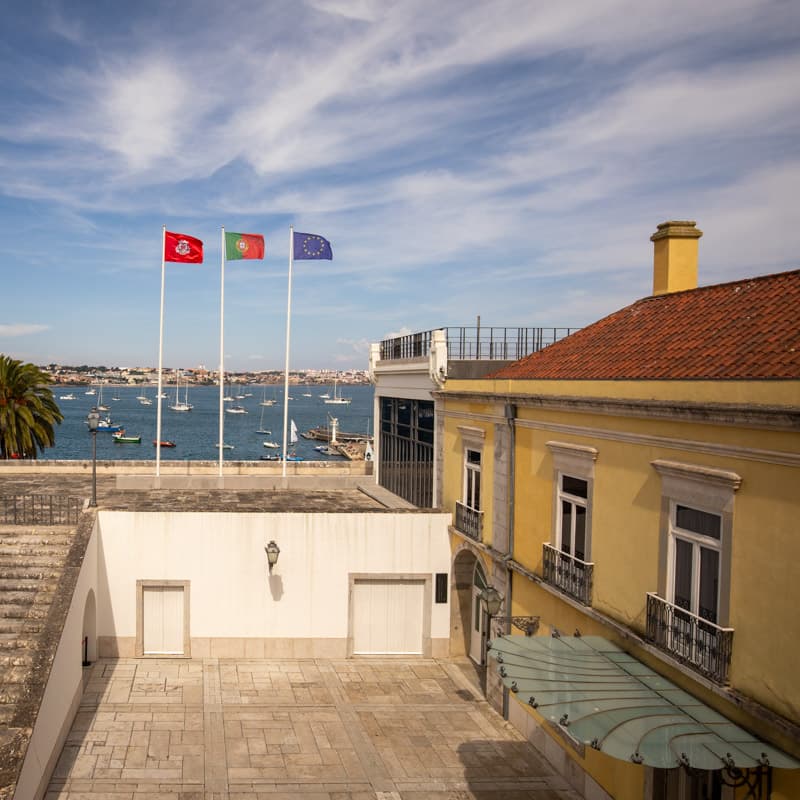
In the Citadel of Cascais, the palace shows how a place of maritime defence was transformed into a royal summer residence and later into a site of state memory. The former governor’s house of the fortress, part of a complex whose story begins in 1488, was adapted by King Luís in 1870 for the royal family. From then on, Cascais changed in scale: the court began to spend time in the town, King Carlos deepened its bond with the sea and, in 1878, one of Portugal’s earliest experiments with electric light illuminated the palace battery. Even today, between the courtyard of honour, the view over the bay, the Arab Room inspired by the Alhambra and the wood panelling from the time of Carlos, one senses that unusual blend of fortress, palace and lived residence. After the proclamation of the Republic, the building passed to the Presidency and, after rehabilitation in the twenty-first century, finally opened to the public.

Solar dos Zagallos4.4

Solar dos Zagallos

Palace • Almada, Setúbal

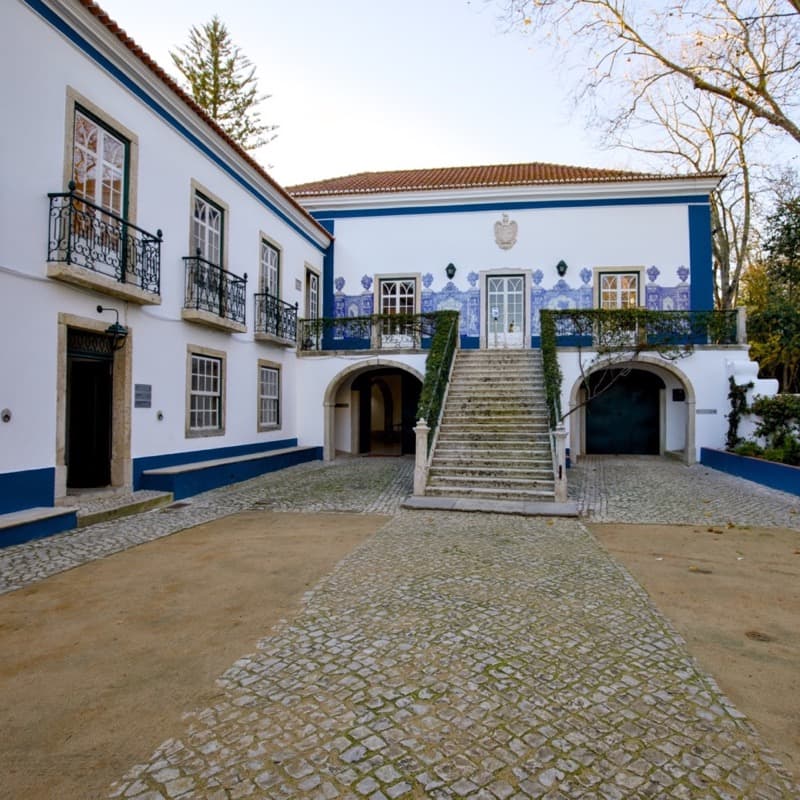
The Solar dos Zagallos is located in Sobreda, in the municipality of Almada, and preserves the memory of an old manor estate. Construction began in the 18th century, linked to the Zagallo family and to the Morgado da Sobreda, established in 1745. The house, with the character of a small palace, brings together civil and religious architecture, with Baroque, Rococo, Pombaline, Neoclassical and modern elements. Inside, the two noble halls, the courtyard, the chapels and a remarkable set of tile panels stand out, appearing in corridors, religious spaces and passage areas. Outside, the gardens, avenue, ponds, orchard and Casa da Água extend the reading of the former agricultural property. Restored by Almada City Council in 1994, while preserving its original character, the solar is now a cultural space, where family history, architecture and contemporary creation meet on an intimate scale.

Jardins do Palácio Marquês de Pombal4.7

Jardins do Palácio Marquês de Pombal

Palace • Oeiras, Lisboa

The Gardens of the Palácio Marquês de Pombal, in Oeiras, form with the palace, the Casa da Pesca and the adjoining cascade a complex classified as a National Monument. They emerged within the context of the recreational estate linked to Sebastião José de Carvalho e Melo, in an 18th-century project that combined residence, garden and agricultural production. The intervention is generally associated with Carlos Mardel, an architect linked to the Pombaline reconstruction of Lisbon. The Ribeira da Laje crosses the space and helped to structure canals, bridges, tanks and cascades, integrating water into the landscape composition. In the gardens, statues, marble busts, low walls and stairways clad in tiles stand out. Between terraces, lake, Casa da Pesca and Cascata dos Poetas, the ensemble reveals an idea of aristocratic leisure shaped by order, decoration and the scenic command of water.

Palácio Nacional da Pena4.4

Palácio Nacional da Pena

Palace • Sintra, Lisboa

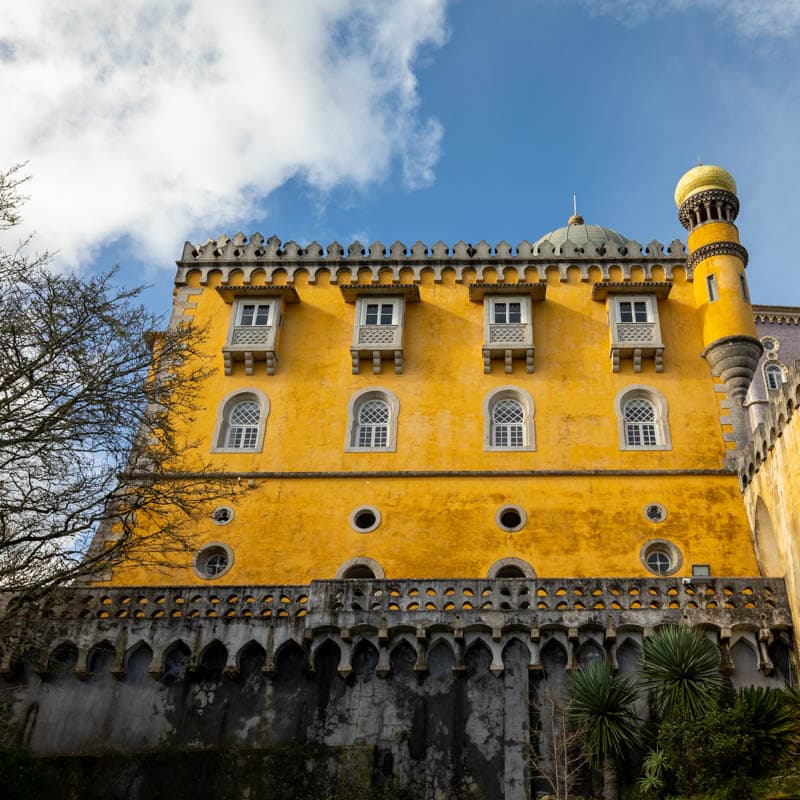
The National Palace of Pena rises above the hills as a romantic fantasy turned into stone. Dreamed up by Ferdinand the Second, the Artist King, it grew from the transformation of a former Hieronymite monastery into a summer palace for the royal family, where nineteenth-century taste blends medieval, Manueline, Moorish and Renaissance references without losing its harmony. Inside, the old church, cloister and apartments preserve the memory of a place once lived in; outside, Triton’s Terrace offers one of the palace’s most fascinating details, with its hybrid figure symbolically linking the aquatic and terrestrial worlds. From the Courtyard of Arches, too, the scenic ambition of Pena becomes clear, framing the hills, the park and the Atlantic as part of the palace itself. It was here that Queen Amélia received the news of the proclamation of the Republic. Few places tell so well the story of dream, power and the end of an era.

Parque da Quinta do Monteiro-Mor4.5

Parque da Quinta do Monteiro-Mor

Palace • Lisboa, Lisboa

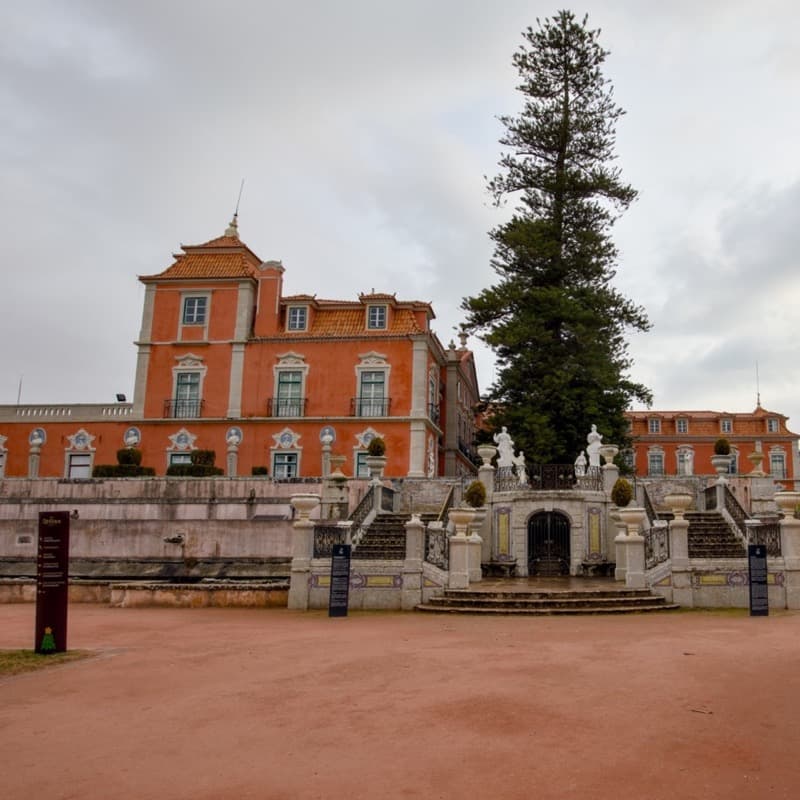
In Lumiar, the Quinta do Monteiro-Mor Park, now known as the Monteiro-Mor Botanical Park, is one of those places where Lisbon seems to gain time and depth. Created in the eighteenth century as part of an aristocratic leisure estate and associated with Vandelli, it still preserves the logic of a historic garden, orchard, vegetable garden, woodland and water corners spread across about eleven hectares. As you walk through it, you can still sense the site’s old botanical and collecting vocation, marked by rare species and by very different settings unfolding from one area to the next. It is no coincidence that the first known Araucaria heterophylla in mainland Portugal is found here. The park extends the memory of the Monteiro-Mor palaces and is in dialogue with the museums installed on the estate, yet what lingers most is the atmosphere: stairways, pools, deep shade and an almost unexpected serenity. It is a garden best discovered slowly, between science, landscape and memory.

Paço Episcopal do Porto4.4

Paço Episcopal do Porto

Palace • Porto, Porto

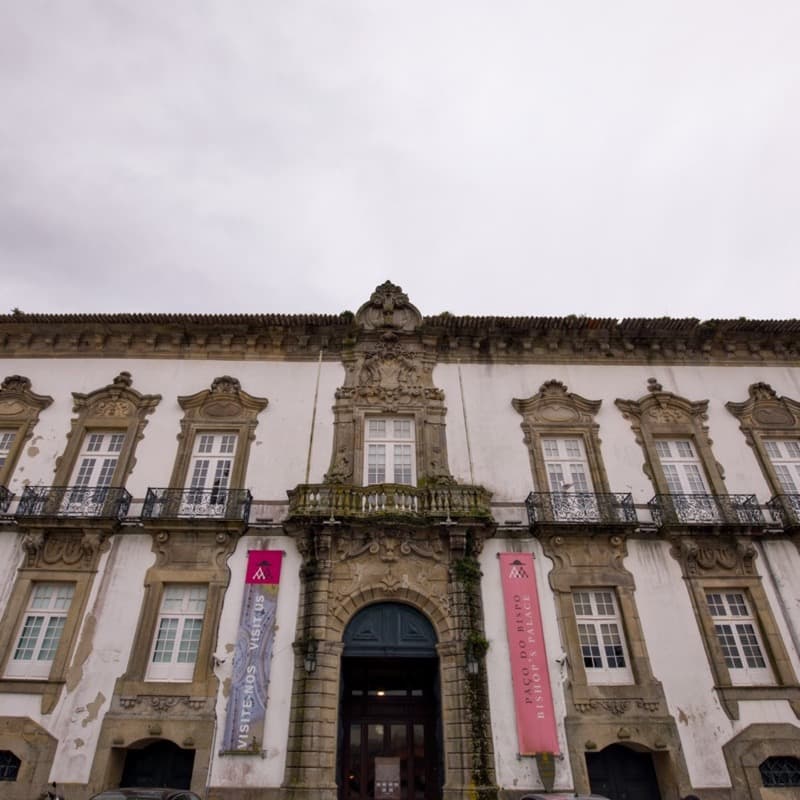
The Episcopal Palace of Porto, on the Terreiro da Sé, rises beside the cathedral and follows the history of religious power in the city. Classified as a National Monument in 1910, it occupies the site of former episcopal residences, with medieval traces still recognisable; in the medieval palace, in 1386, the wedding of King João I and Philippa of Lancaster was celebrated. Its present image results above all from the Baroque reconstruction of the 18th century. Nicolau Nasoni was paid in 1734 for the palace plan, but the works, more intense from 1737 onwards, continued for many years and altered the initial design. On the façade, the central portal, the noble balcony and the arms of Bishop Rafael de Mendonça organise the ensemble. Inside, the vestibule, the courtyard and the monumental staircase reveal a building that brought together episcopal residence, administrative services and, during part of the 20th century, municipal functions.

Palácio Nacional e Jardins de Queluz4.6

Palácio Nacional e Jardins de Queluz

Palace • Sintra, Lisboa

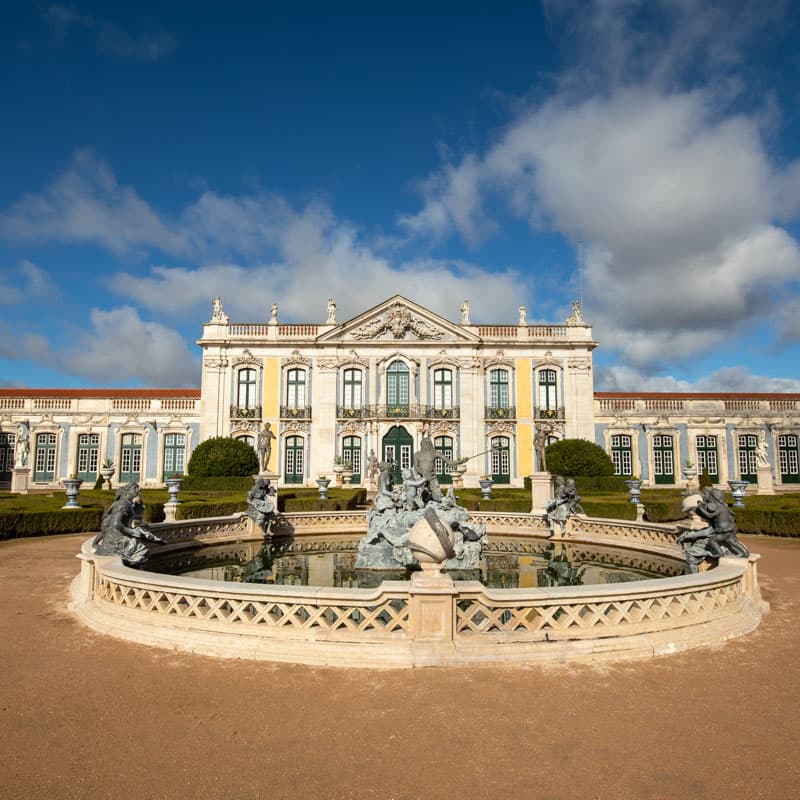
In Queluz, the Portuguese court still seems to breathe among luminous state rooms and gardens designed for pleasure. Born from a country house belonging to the Casa do Infantado, the palace was enlarged from 1747 for the infante D. Pedro, the future D. Pedro III, and under Jean-Baptiste Robillion it acquired the rococo elegance that still defines it today. After the fire at the Real Barraca da Ajuda in 1794, it became the official residence of Queen Maria I and the prince regents, until the royal family left for Brazil in 1807. Queluz also holds a rare emotion: D. Pedro IV was born and died here, in the famous Quarto D. Quixote. In the gardens, it is worth slowing down beside the parterres, the mythological sculpture and the Canal dos Azulejos, where the royal family once drifted by boat to the sound of music. Few places unite palatial intimacy, courtly theatre and the art of outdoor living with such grace.

Palácio Fronteira4.5

Palácio Fronteira

Palace • Lisboa, Lisboa

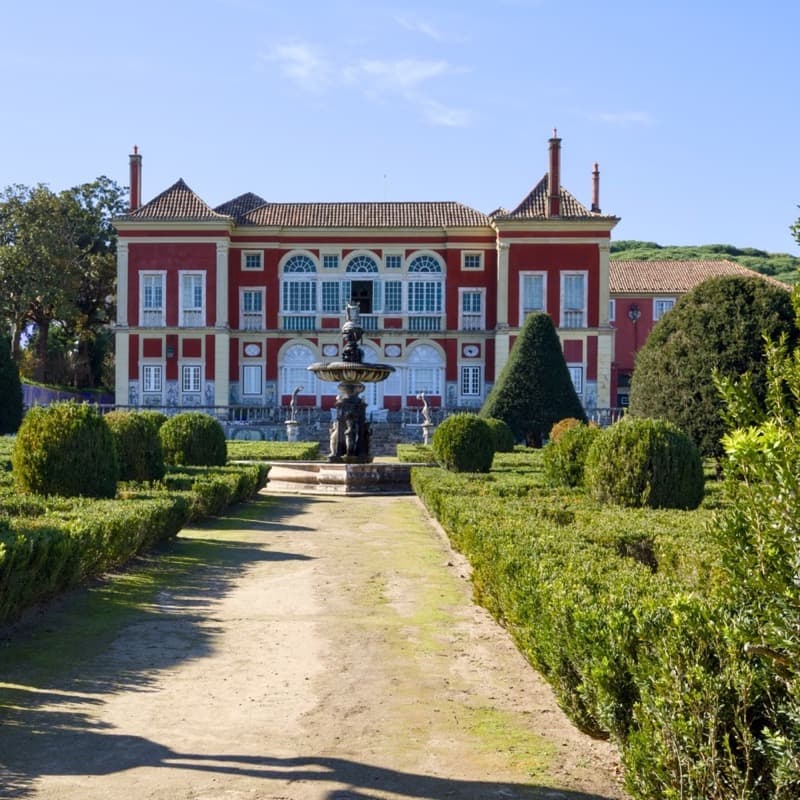
Palácio Fronteira is located in São Domingos de Benfica, Lisbon, on the former grounds of a recreational estate. Its main core was commissioned around 1670 by D. João de Mascarenhas, 1st Marquis of Fronteira, and D. Madalena de Castro, and was initially intended as a summer residence. After the 1755 Earthquake, the palace was enlarged and became the family’s main residence. Today it is still inhabited by the founder’s descendants and also functions as a house-museum. The complex, classified as a National Monument, brings together palace, gardens, vegetable garden and woodland. Its strength lies in the relationship between architecture, garden and tilework: the Tanque dos Cavaleiros, the Galeria dos Reis, the Formal Garden, the Garden of Venus, the Casa do Fresco and the Terrace of the Arts form a scenic route where water, sculpture and ceramics interact with rare continuity.

Parque e Palácio de Monserrate4.7

Parque e Palácio de Monserrate

Palace • Sintra, Lisboa

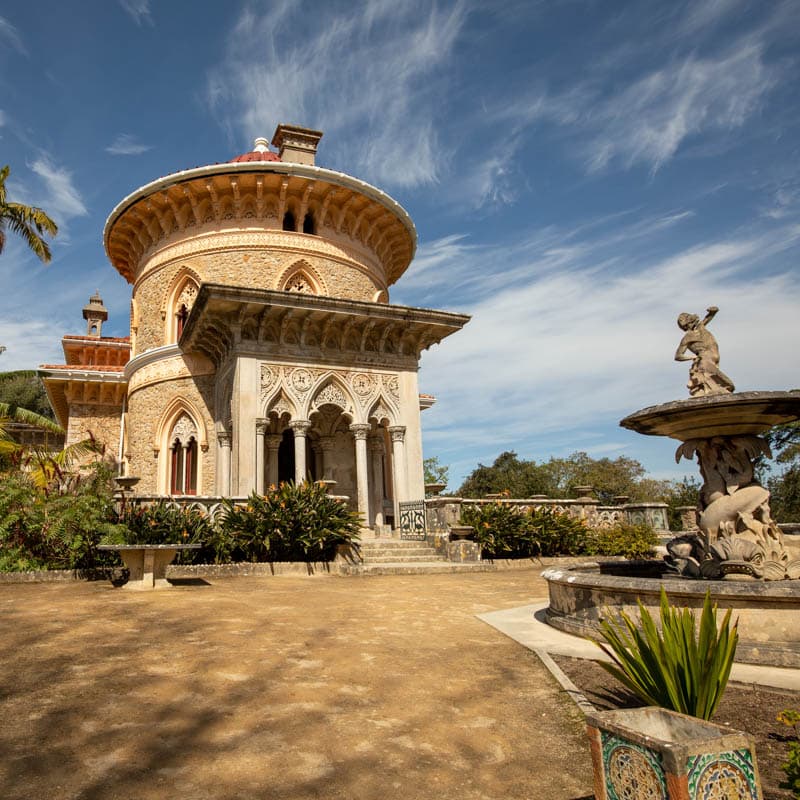
At Monserrate, Romanticism seems to have taken on an almost vegetal form. The story of the place begins in 1540, with the hermitage ordered by Frei Gaspar Preto, but the setting that dazzles visitors today gained a different scale in the nineteenth century: after the stay of William Beckford and the admiration that Lord Byron gave it in Childe Harold’s Pilgrimage, Francis Cook bought the estate in 1863 and had the palace built that still defines it today. Designed by James Knowles Junior, the building blends Gothic, Indian and Moorish echoes with unexpected lightness, especially in the octagonal atrium, where the sound of the fountain and the light filtered through the dome create an almost unreal atmosphere. Outside, the park matters as much as the palace: exotic species were arranged by geographical areas, taking advantage of the hills’ microclimates, and turned Monserrate into one of Portugal’s most remarkable botanical gardens. Among ruins, tree ferns, lakes and winding paths, everything here seems made to surprise without haste.

Palácio e Quinta de Beau-Séjour4.3

Palácio e Quinta de Beau-Séjour

Palace • Lisboa, Lisboa

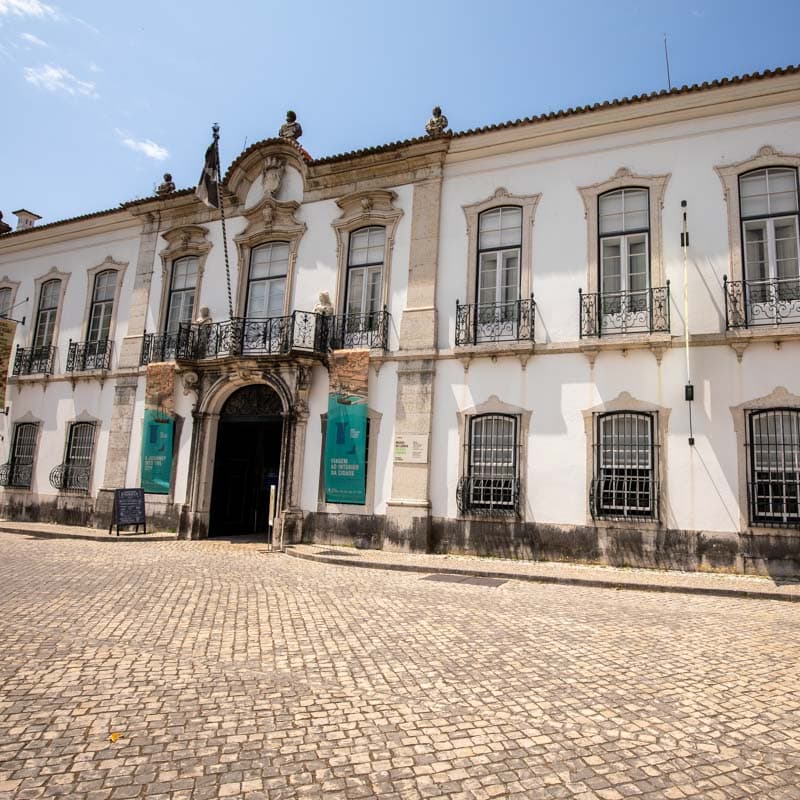
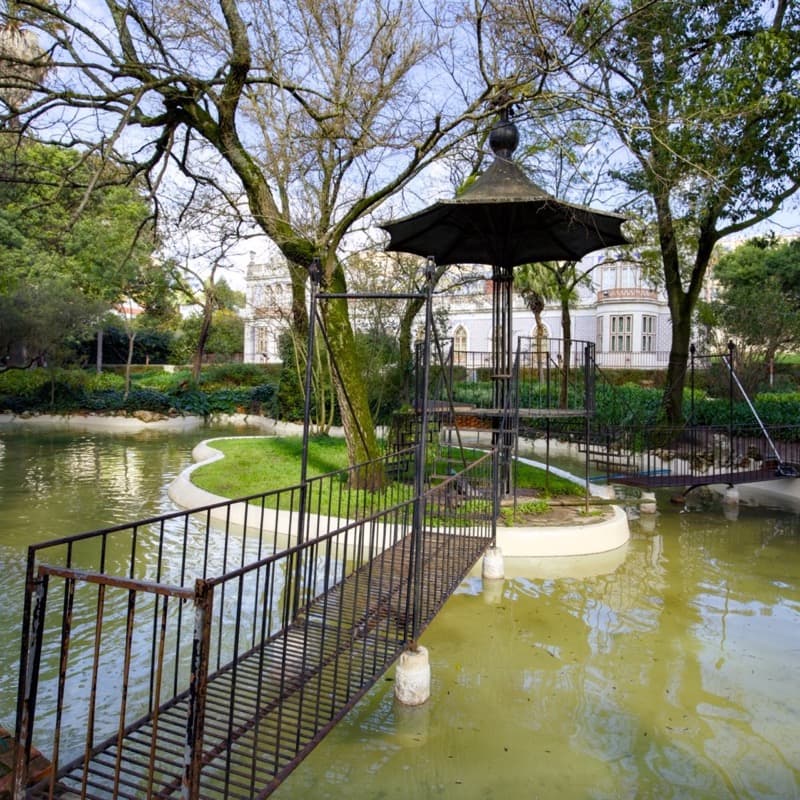
The Palácio e Quinta de Beau-Séjour is located in São Domingos de Benfica, Lisbon, on the former Quinta dos Loureiros. In 1849, D. Ermelinda Allen Monteiro de Almeida, Baroness and Viscountess of Regaleira, acquired the property, gave it the name Beau-Séjour and commissioned a summer house surrounded by exotic vegetation. In 1859, the estate was bought by António José Leite Guimarães, Baron of Glória, who introduced improvements, including the tile covering of the façade and the enlargement of the lake. Later, his nephews, José Leite Guimarães and Maria da Glória Leite, commissioned the interior decoration from artists connected to the Grupo do Leão. Classified as a Monument of Public Interest, the ensemble brings together a small palace, a romantic garden and agricultural memory. Today it houses the Gabinete de Estudos Olisiponenses, dedicated to the study of Lisbon’s history and culture.

Palácio e Parque Biester4.7

Palácio e Parque Biester

Palace • Sintra, Lisboa

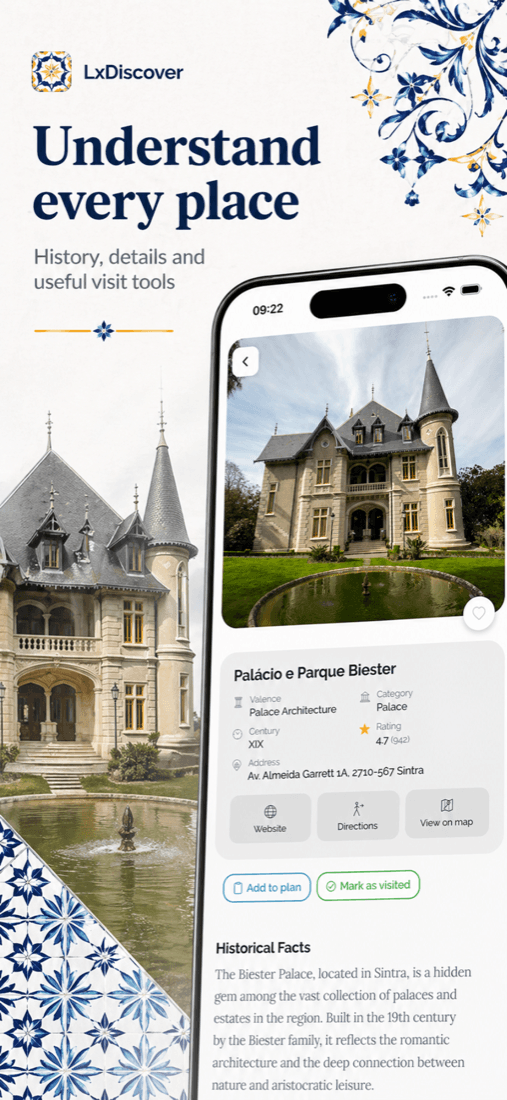
In Sintra, Palácio e Parque Biester show how late Romanticism could be both theatrical and intimate at the same time. Built in the last decade of the nineteenth century for the Biester family, the palace was designed by José Luiz Monteiro and enriched by Luigi Manini and Leandro Braga, in a dialogue of decorative painting, carved wood and revivalist forms that gives it an almost theatrical air. After a long private life, it opened to the public in 2022, finally allowing visitors to move through rooms shaped for domestic life yet filled with symbolic imagination. Outside, the park designed by the French landscaper François Nogré descends the hillside in terraces, with watercourses, exotic species and viewpoints towards the Moorish Castle and, farther away, the sea. Gruta da Pena, set into a rocky recess, deepens that blend of staged nature and mystery. Among turrets, ferns and winding paths, Biester helps one understand that in Sintra Romanticism was not only a style: it was a way of inhabiting the landscape.

Palácio de Santos - Embaixada de França4.5

Palácio de Santos - Embaixada de França

Palace • Lisboa, Lisboa

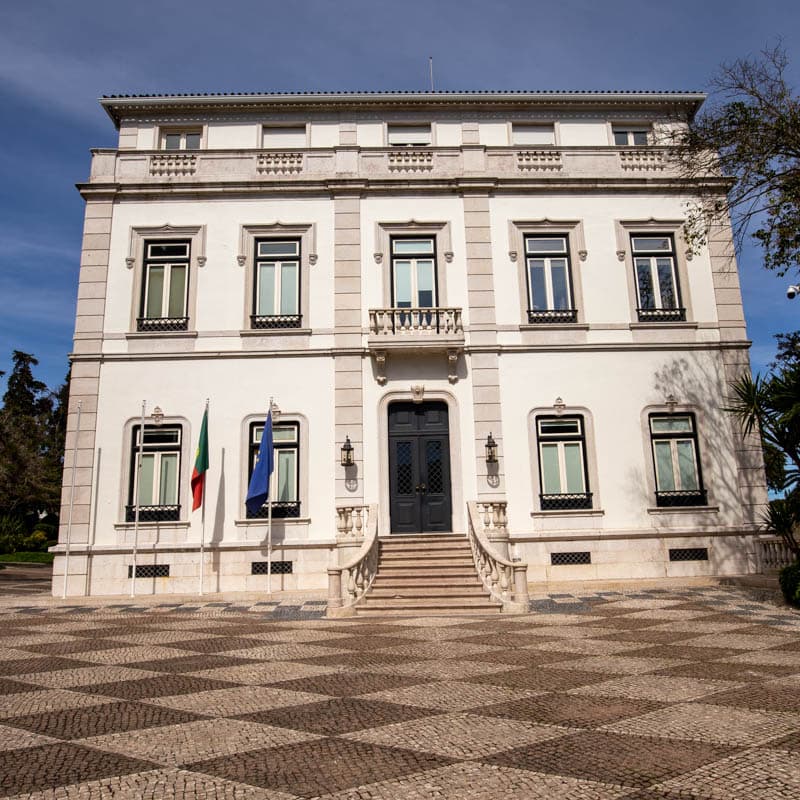
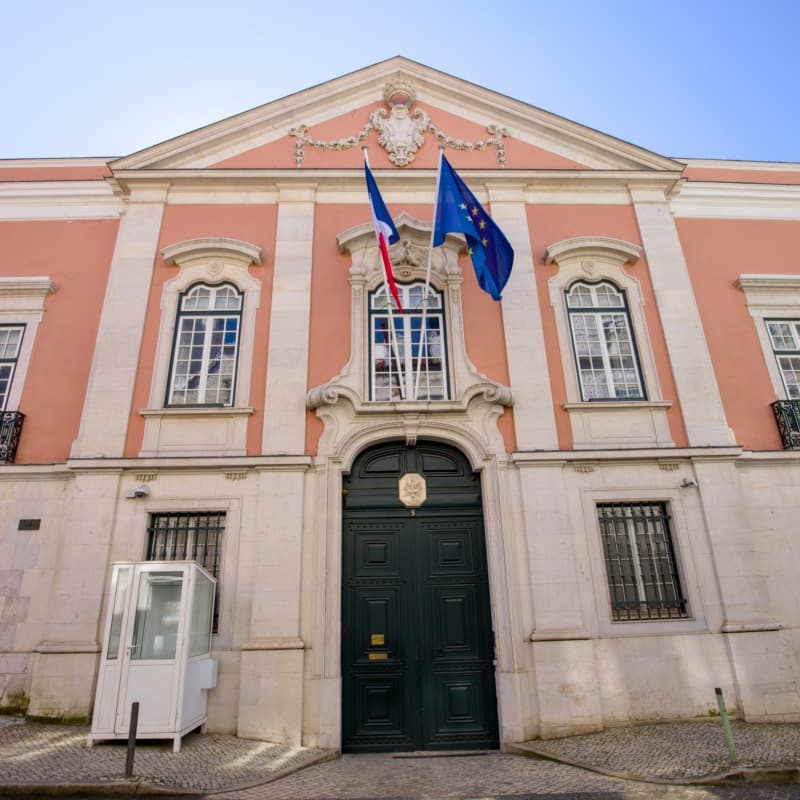
The Palácio de Santos, in Lisbon, is also known as the Palácio de Abrantes and today houses the French Embassy in Portugal. The memory of the site is much older than the palace: the history associated with the building links it to the martyrs Veríssimo, Máxima and Júlia; after the conquest of Lisbon in 1147, King Afonso Henriques ordered a new hermitage to be built here. The site became a convent and, in the 15th century, was transformed into a palatial residence. The form recognised today owes much to the Lancastre family, who commissioned a major building campaign from João Antunes in the 17th century. The building survived the 1755 earthquake and preserves interiors with a strong Baroque presence. Among them, the Porcelain Room stands out, with a carved wooden pyramidal ceiling filled with 267 Chinese porcelain plates. In the ceremonial rooms, painted ceilings and mythological decoration extend the palace’s history as a setting of power, taste and diplomacy.

Palácio e Quinta da Regaleira4.7

Palácio e Quinta da Regaleira

Palace • Sintra, Lisboa

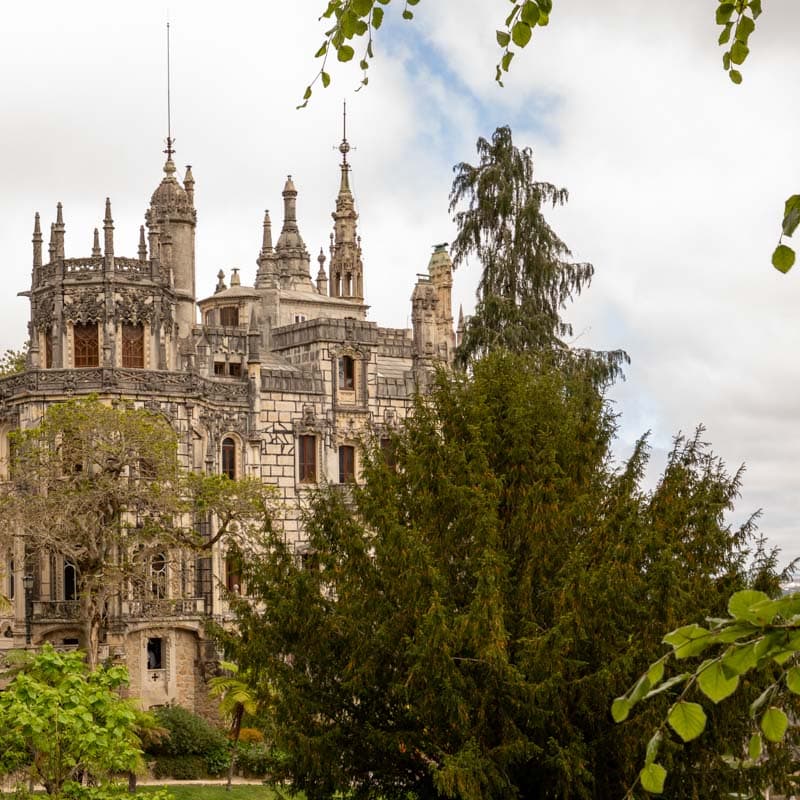
In Sintra, the Palace and Quinta da Regaleira feel less like a country house than like a world imagined in stone, water and vegetation. António Augusto Carvalho Monteiro bought the property in 1892 and, with Luigi Manini, transformed it between 1904 and 1910 into a theatrical ensemble where Neo-Manueline, Gothic, Renaissance and Classical forms meet with almost operatic freedom. The palace and chapel rise like parts of a larger enigma: in the park, lakes, grottoes, tunnels and the famous Initiation Well create a landscape charged with symbolic allusions, some linked to Masonic, Templar and Rosicrucian imagery. It is no surprise that people in Sintra called it the “Wedding Cake”. Yet Regaleira also impresses through its harmony with the hills and the way each corner seems designed to be discovered slowly. Part of the Cultural Landscape of Sintra, it shows how late Romanticism could turn a garden into a narrative and a visit into an experience of mystery.

Palácio dos Condes de Tomar - Brotéria4.5

Palácio dos Condes de Tomar - Brotéria

Palace • Lisboa, Lisboa

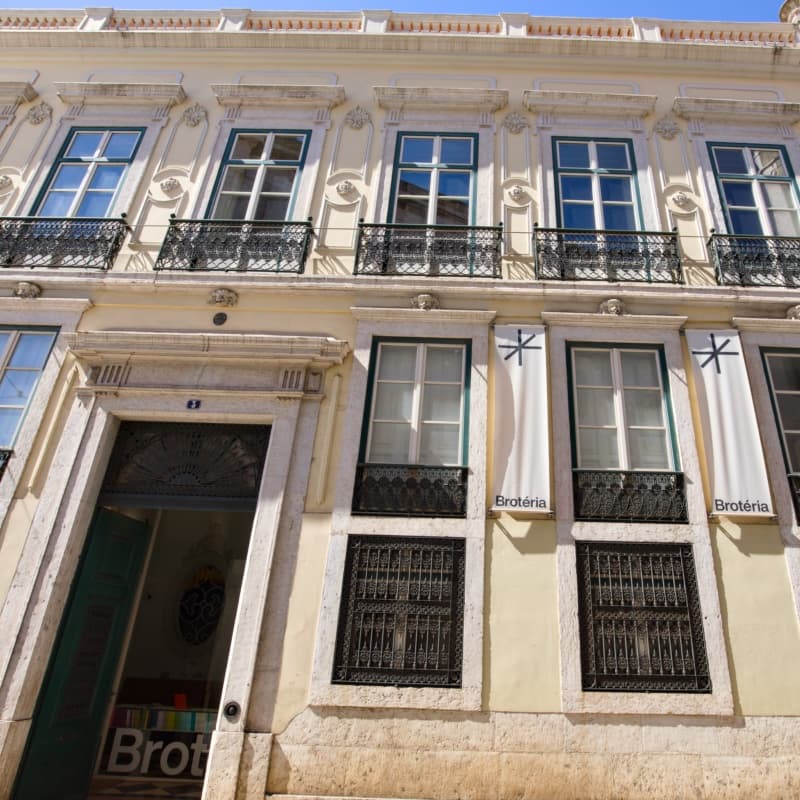
The Palace of the Counts of Tomar, in Lisbon, is today home to Brotéria, a cultural centre of the Society of Jesus. The building has its origins in 16th-century structures and gained its palatial form in the 19th century, linked to António Bernardo da Costa Cabral, first Count and Marquis of Tomar. Its history has passed through very different uses: it was an aristocratic residence, the headquarters of the Royal British Club and, for decades, Lisbon’s Municipal Newspaper and Periodicals Library. After being acquired by Santa Casa da Misericórdia de Lisboa and rehabilitated, it opened in 2020 as a house of culture. Brotéria brings together a magazine, library, gallery, bookshop, café and courtyard, bringing into the old palace a programme of thought, art and contemporary debate. The great central staircase and the interiors with Romantic decoration recall the building’s former life, now inhabited by books, exhibitions and public conversation.

Vila Sassetti4.6

Vila Sassetti

Palace • Sintra, Lisboa

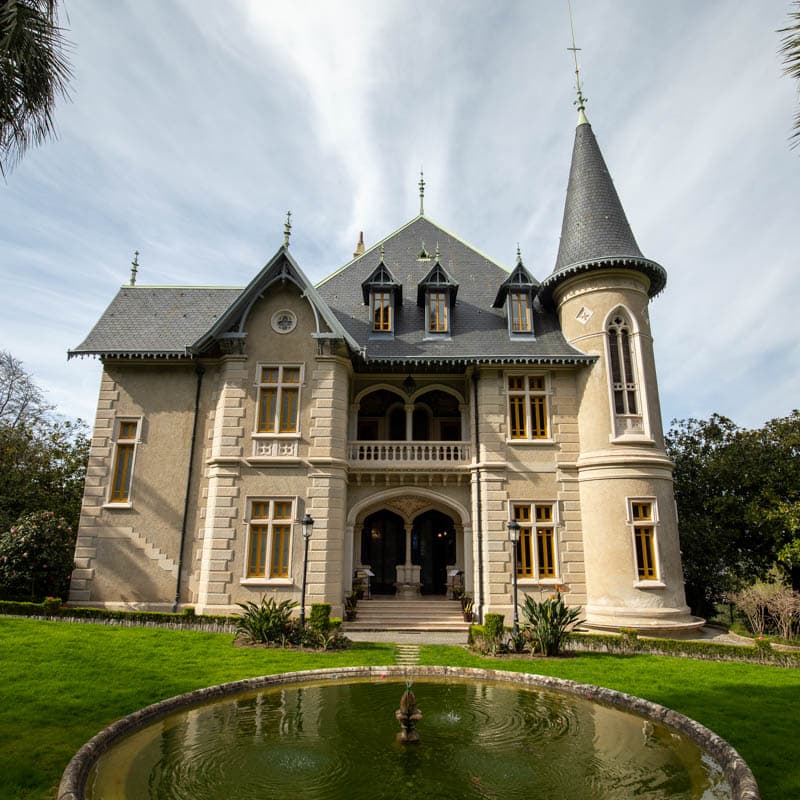
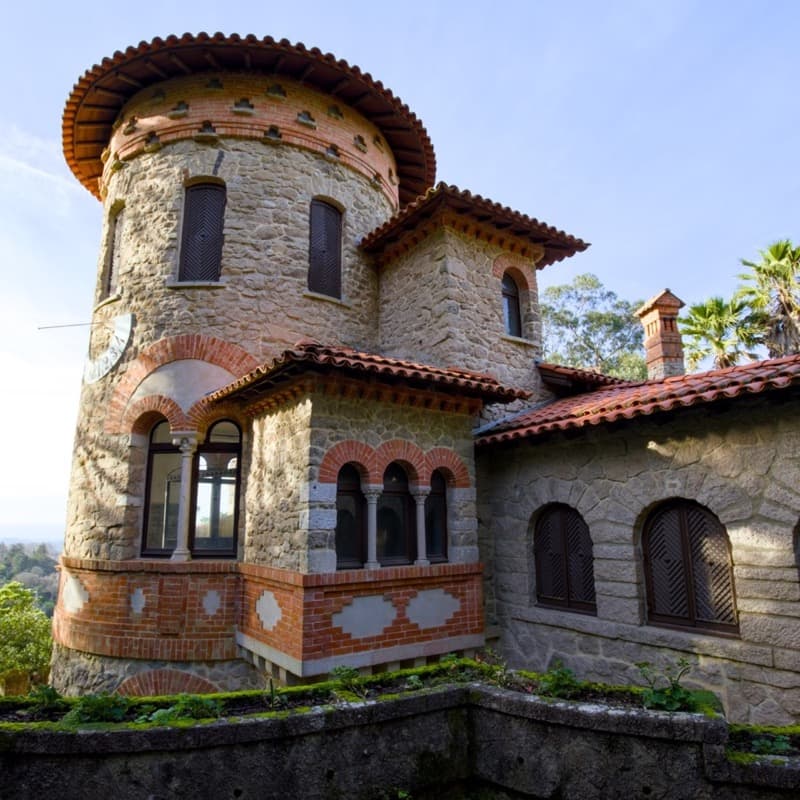
Vila Sassetti is located on the northern slope of the Serra de Sintra, between the Historic Centre and the path that climbs towards the Moorish Castle and Pena Park. The property began to take shape in 1885, when Victor Carlos Sassetti, born in Sintra and the owner of hotels in Lisbon and in the town, acquired the land to build a leisure residence there. Work began in 1890, with a design by the architect and set designer Luigi Manini. Inspired by the castles of Lombardy, the building is distinguished by its central three-storey circular tower, irregular volumes and the use of Sintra granite on the exterior cladding. The garden, also designed by Manini, develops along a winding path crossed by an artificial watercourse. Between architecture, vegetation and small tanks, Vila Sassetti reveals the most scenic side of Sintra Romanticism.

Get the app

Take LxDiscover with you

Explore Portugal with a cultural guide for monuments, museums, gardens, palaces, viewpoints, and historic places in Lisbon, Porto, Sintra, and other regions.

Use the map, follow cultural routes, read editorial context, save places, and track your visits with the visit passport.

Free features

  • Interactive map to discover places of interest
  • Detailed information about monuments, museums, and cultural sites
  • Favorites for the places you want to visit
  • Selected routes to start exploring

Premium subscription

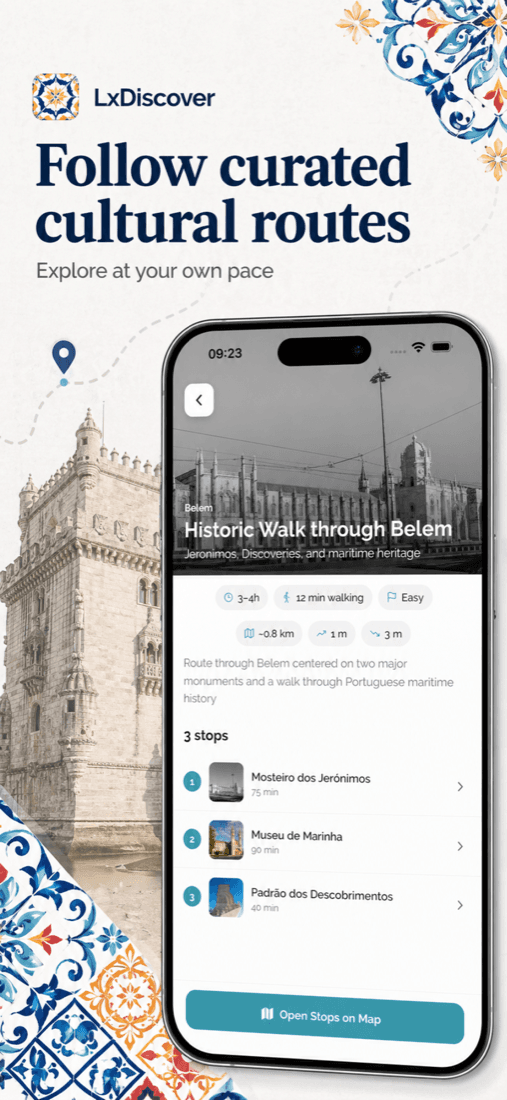
  • Curated routes with ordered stops, duration, and difficulty
  • Thematic collections with editorial context for each area
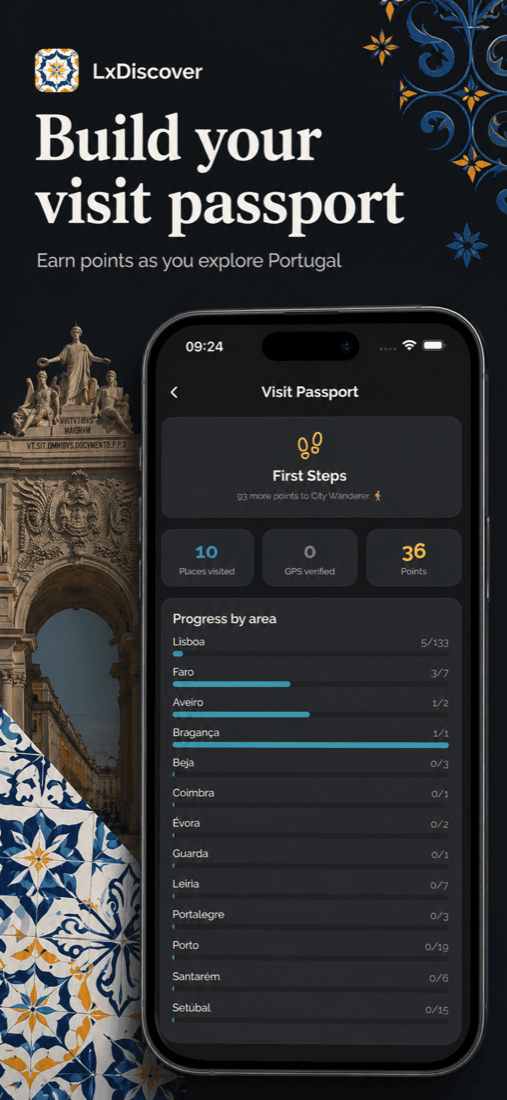
  • Visit passport for progress, visited places, and achievements
  • Advanced map, planning, and proximity alert tools
LxDiscover map screen
LxDiscover routes screen
LxDiscover visit passport screen