Lisboa · Lisboa
Parque da Quinta do Monteiro-Mor
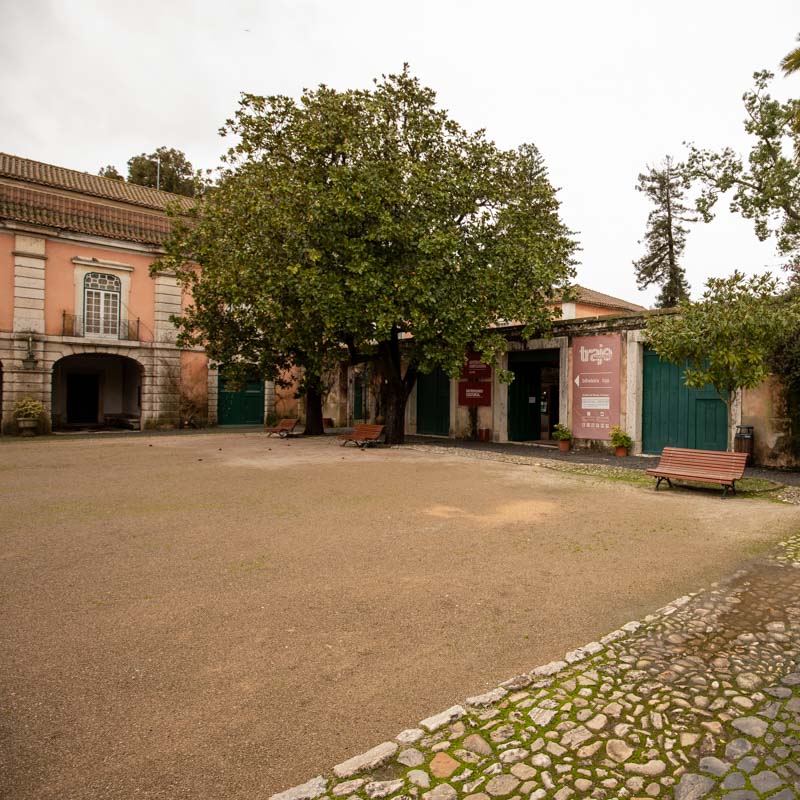
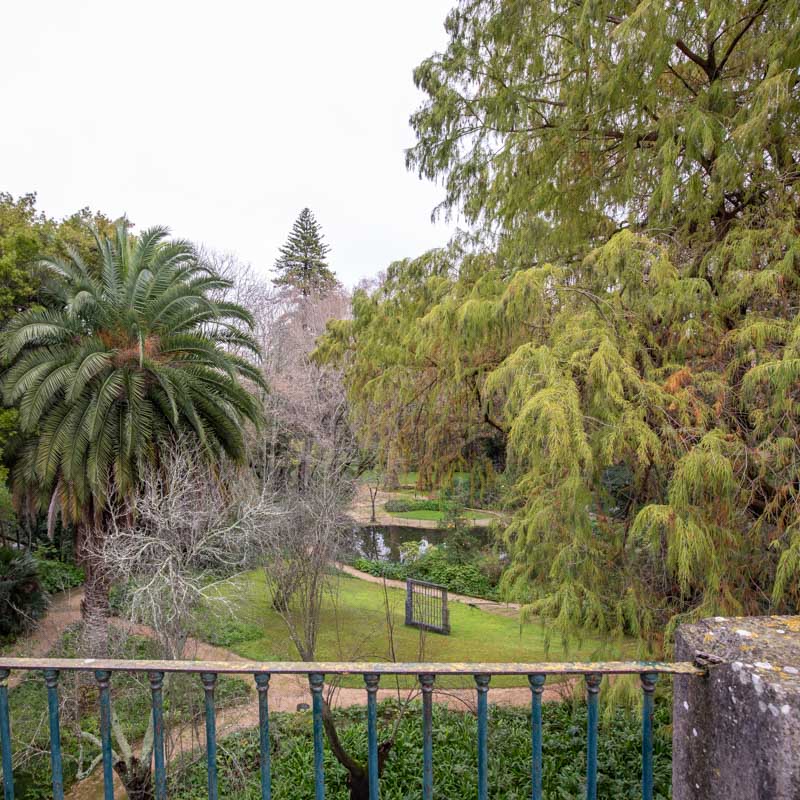
In Lumiar, the Quinta do Monteiro-Mor Park, now known as the Monteiro-Mor Botanical Park, is one of those places where Lisbon seems to gain time and depth. Created in the eighteenth century as part of an aristocratic leisure estate and associated with Vandelli, it still preserves the logic of a historic garden, orchard, vegetable garden, woodland and water corners spread across about eleven hectares. As you walk through it, you can still sense the site’s old botanical and collecting vocation, marked by rare species and by very different settings unfolding from one area to the next. It is no coincidence that the first known Araucaria heterophylla in mainland Portugal is found here. The park extends the memory of the Monteiro-Mor palaces and is in dialogue with the museums installed on the estate, yet what lingers most is the atmosphere: stairways, pools, deep shade and an almost unexpected serenity. It is a garden best discovered slowly, between science, landscape and memory.
Why it matters
The Quinta do Monteiro-Mor Park, now officially known as the Monteiro-Mor Botanical Park, emerged within the setting of the leisure estates of Lumiar and dates back to the eighteenth century. The garden was created on the former property of the 3rd Marquis of Angeja and is associated with the Italian botanist Domenico Vandelli, which helps explain the scientific and collecting character the site acquired early on. In the nineteenth century, already under the Palmela family, the estate underwent new landscape and social improvements, strengthening the prestige of the ensemble. In 1976, Decree-Law no. 863/76 created the National Museum of Costume and the Monteiro-Mor Botanical Park, giving public status to a site that today also connects with the National Museum of Theatre and Dance. The heritage protection of the whole ensemble was later consolidated with its classification as a Property of Public Interest, recognising the combined value of the park, the palaces and the attached structures.
Architecture and history
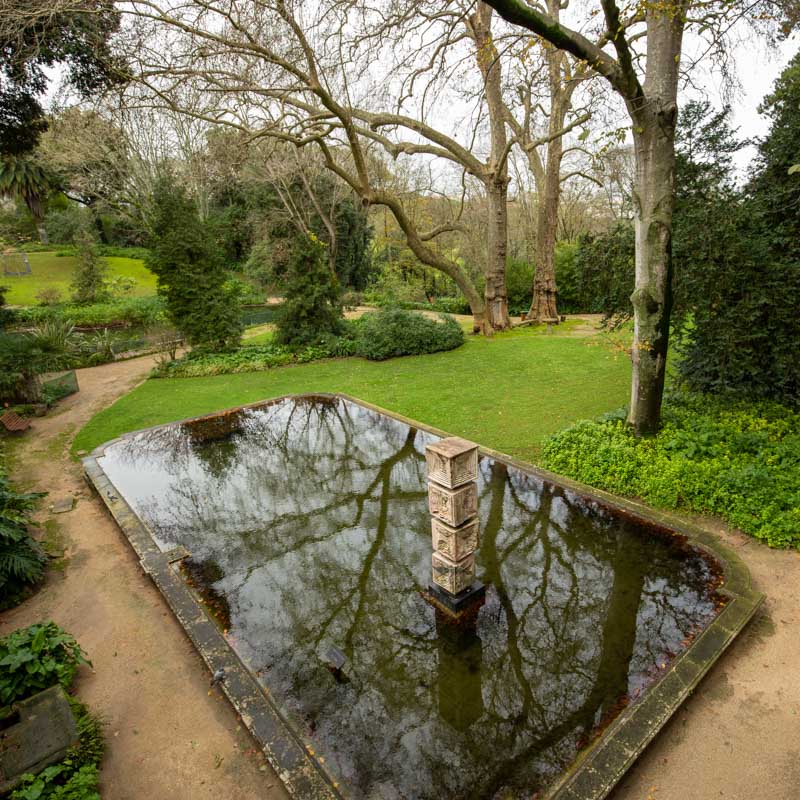
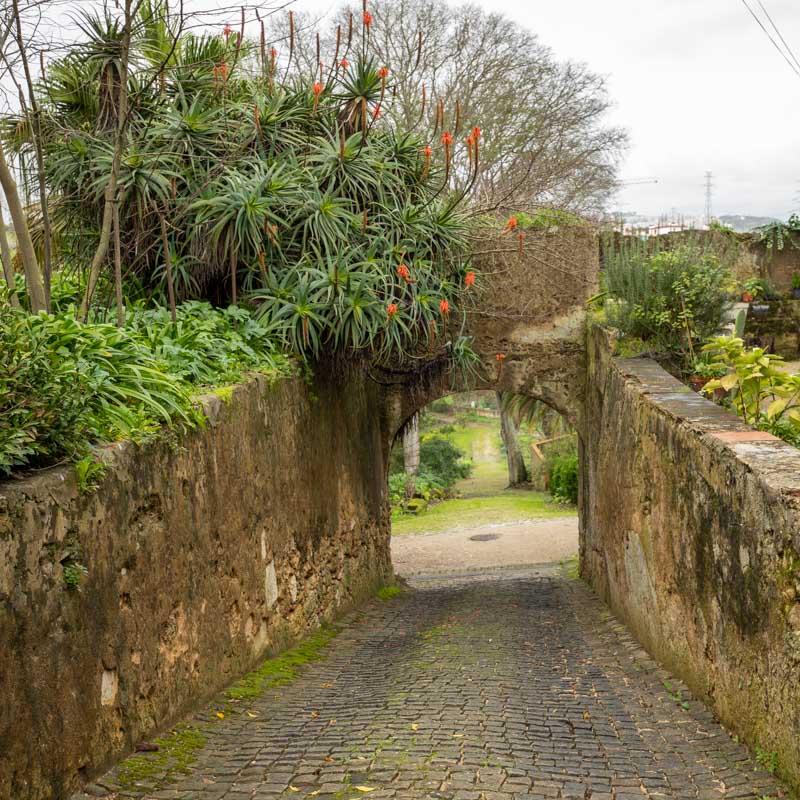
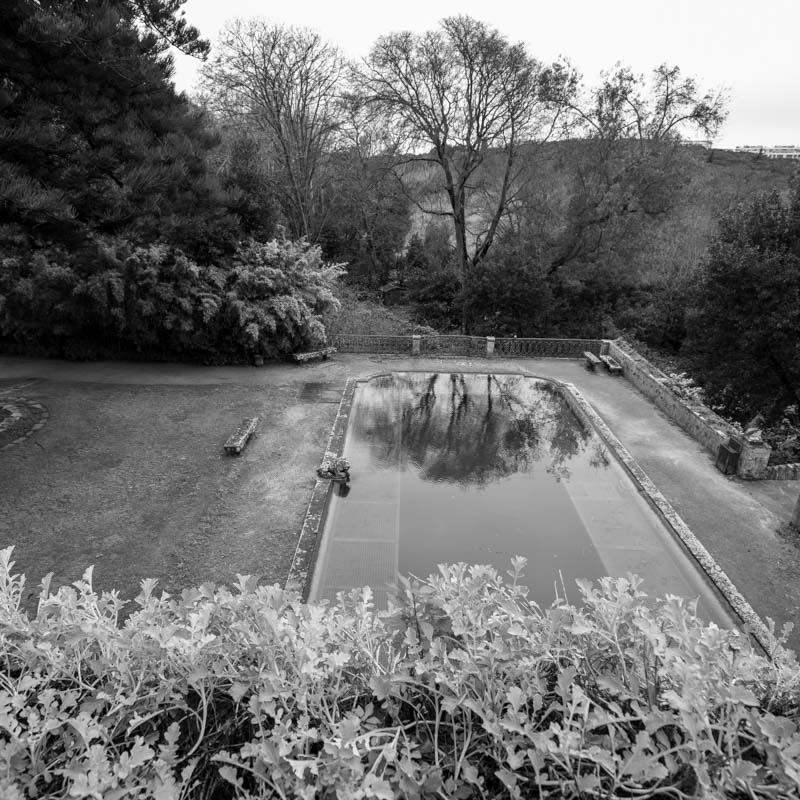
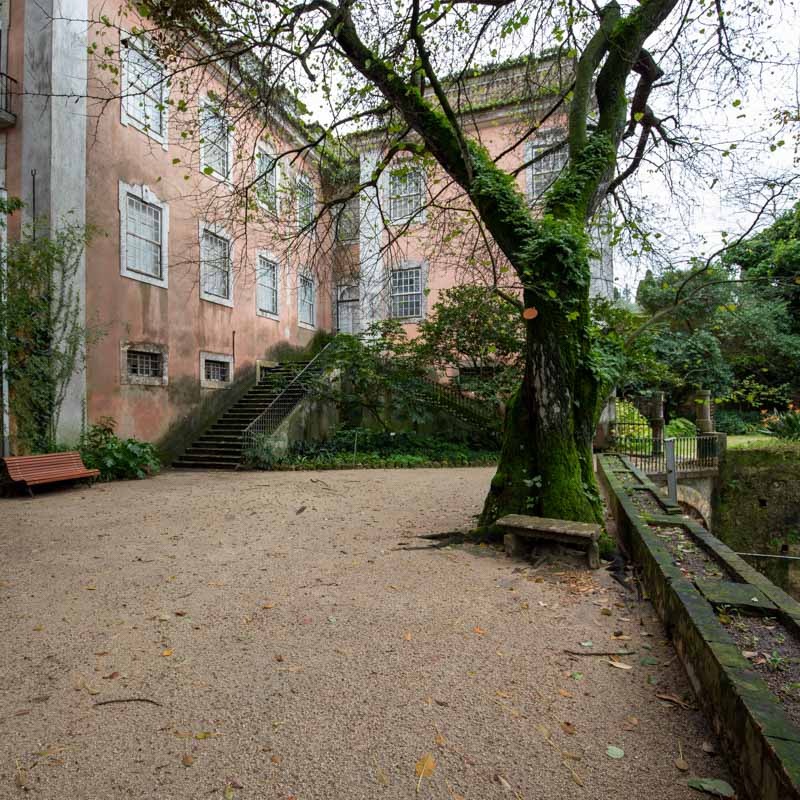
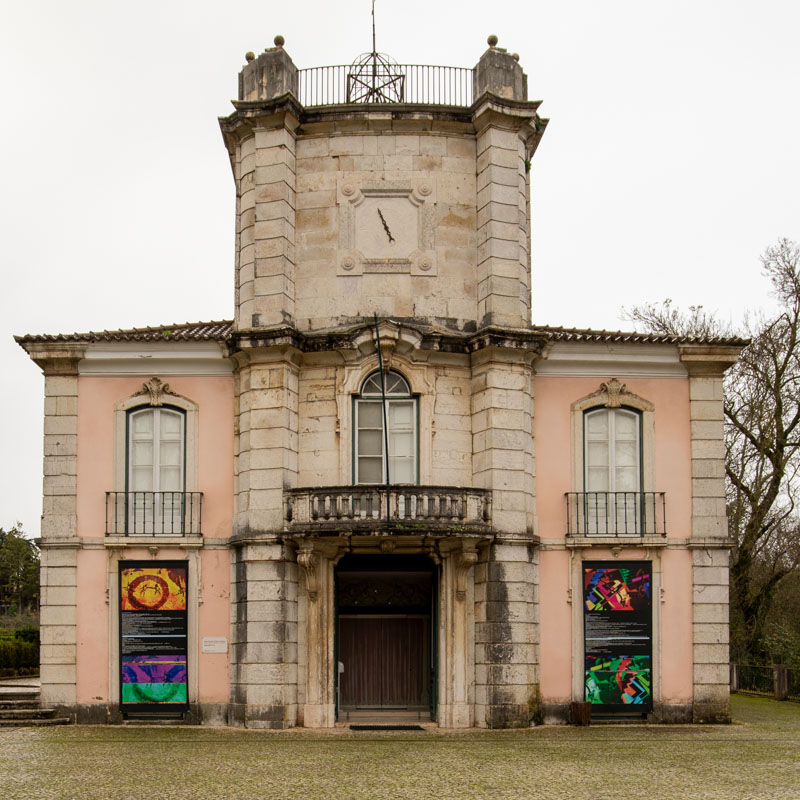
What makes this park distinctive is the survival of the old leisure estate logic within a large urban botanical garden. Across about 11 hectares there are lakes, lawns, wooded corners and a network of paths linking the historic garden, the botanical area, the orchard, the vegetable garden and the woodland. The composition combines more controlled design with picturesque areas, making use of the natural slope of the ground and creating routes that alternate shade, openness and shifts of scale. The park visually extends the two eighteenth-century palaces of the ensemble, Angeja-Palmela and Monteiro-Mor, and preserves features that give it scenic depth, such as stairways, walls, reflecting pools and a Neo-Gothic tea pavilion. Botany remains a central part of its identity. The grounds contain large mature trees and include the first known Araucaria heterophylla in mainland Portugal, a rare detail that helps explain the former ambition to gather unusual species in a setting that was at once scientific, ornamental and residential.
More context
The first known Araucaria heterophylla in mainland Portugal is a strong place to begin, because it sums up the park’s botanical and historical character. From there, it is worth moving slowly along the lakes and shaded paths to understand how the former estate combines formal areas with freer groves, without losing the feeling of refuge within the city. The rose garden, orchard, vegetable garden and botanical section help reveal the site’s older productive and ornamental structure, while the lawns and wooded corners show the broader scale of the park. It is also rewarding to notice the way the garden frames the buildings: the Angeja-Palmela Palace, linked to the National Museum of Costume, and the Monteiro-Mor Palace, now associated with the National Museum of Theatre and Dance, appear as presences integrated into the landscape. The stairways, walls, reflecting pools and Neo-Gothic pavilion complete this reading, closer to an inhabited estate than to a purely decorative garden.
Gallery