Museu Nacional do Traje

Lisboa · Lisboa

Museu Nacional do Traje

MuseumXXPalace Architecture
Largo Júlio Castilho, 1600-483 Lisboa4.4 Rating · 1,15745 min

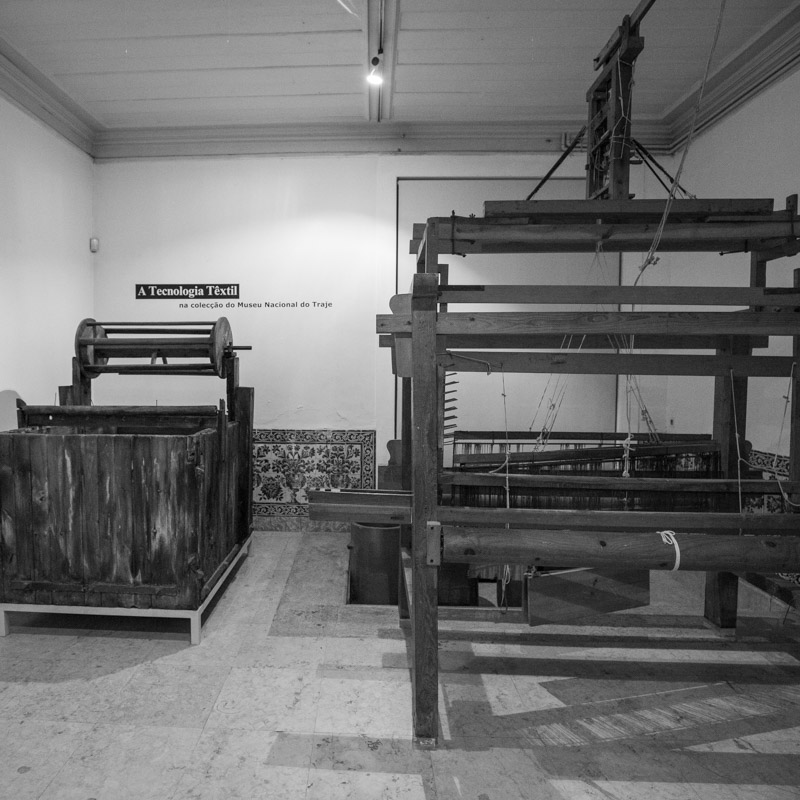
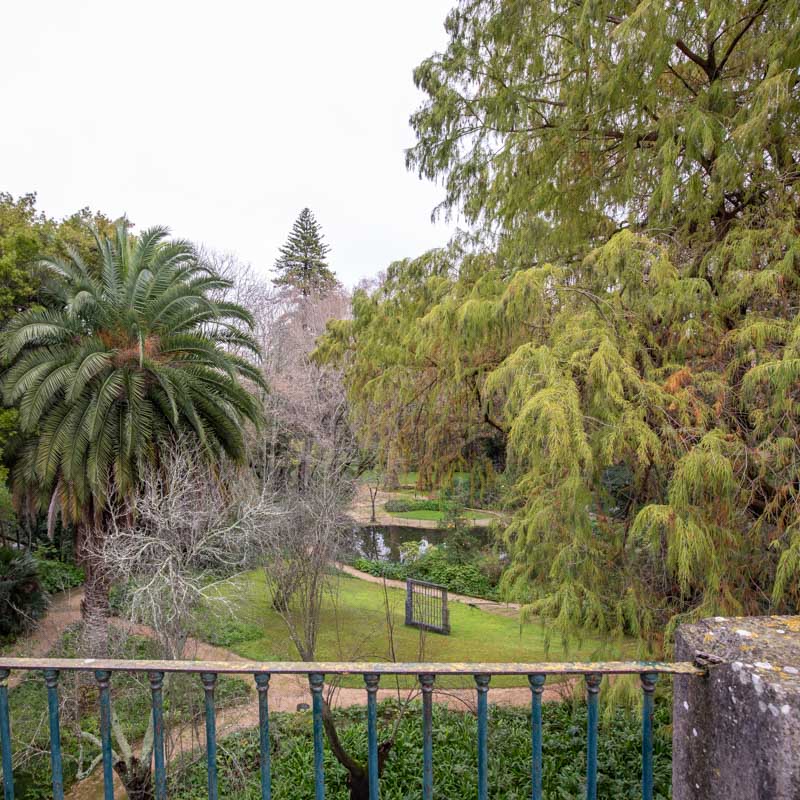
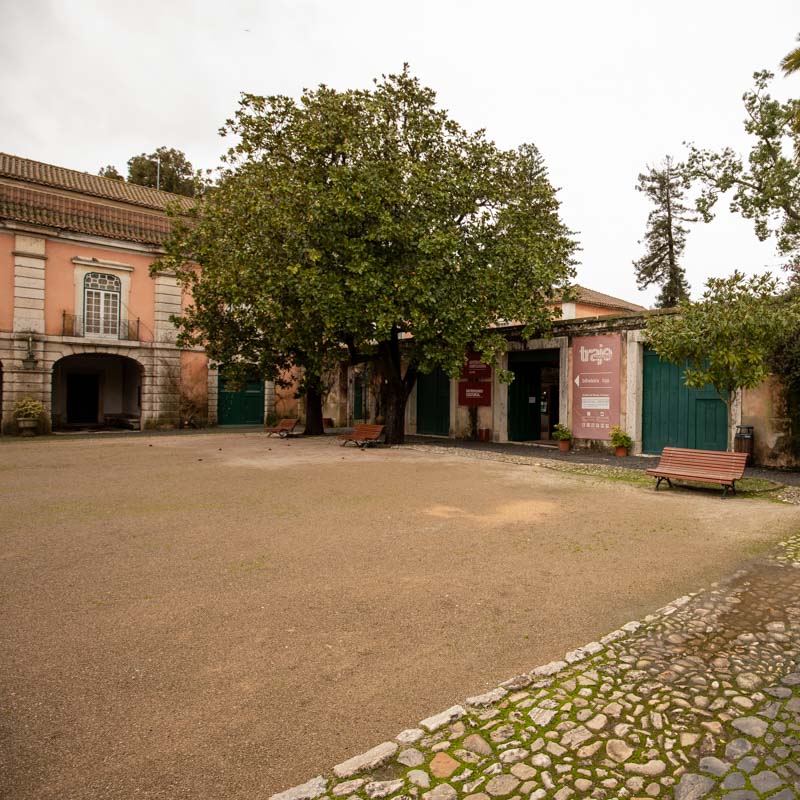
In the Angeja-Palmela Palace, a former leisure estate in Lumiar, the National Costume Museum shows how clothing can tell the story of a country. Opened in 1977, it brings together around forty thousand garments and accessories, from the eighteenth century to the present day, and follows above all the ways in which the aristocracy, the upper bourgeoisie and the middle classes dressed, represented themselves and changed over time. The original core came from the National Coach Museum and included pieces linked to the Royal Household, a detail that helps explain the richness of the collection. Yet the place does not end in the galleries: the museum extends into the Monteiro-Mor Botanical Park, created in the eighteenth century, with lakes, woodland, a kitchen garden and the first known araucaria in mainland Portugal. Here, costume stops being mere fashion and becomes a living reading of Portuguese society.

Why it matters

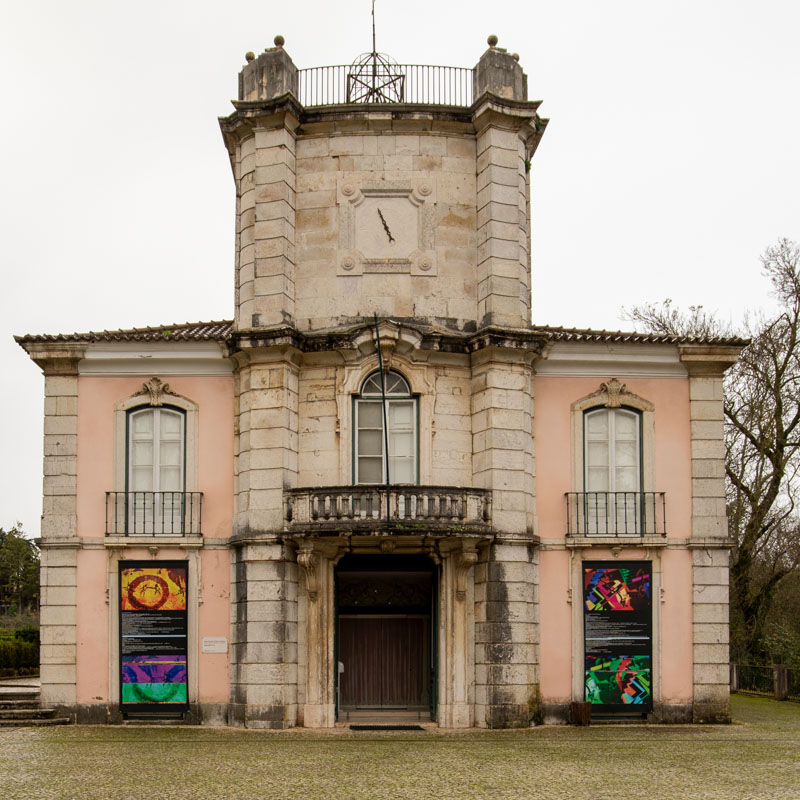
Between the rural Lumiar of earlier centuries and the later growth of Lisbon, the National Costume Museum occupies the Angeja-Palmela Palace, set within a former leisure estate connected to the Monteiro-Mor complex. The palace was built in the third quarter of the eighteenth century for the third Marquis of Angeja, and the botanical garden extending the property is attributed to the Italian naturalist Domenico Vandelli. In the nineteenth century, the estate passed into the Palmela sphere and became known for the receptions and balls held there, including one offered in honour of Queen Maria II. Its museum role is much more recent. The museum opened in 1977, following the exhibition Civil Costume in Portugal, presented in 1974 at the National Museum of Ancient Art and directed by Natália Correia Guedes. The first core of the collection came mainly from the National Coach Museum, with garments that in many cases had belonged to the Royal Household. Since then, the holdings have grown chiefly through private donations and now bring together around 40,000 pieces linked to the history of dress in Portugal.

Architecture and history

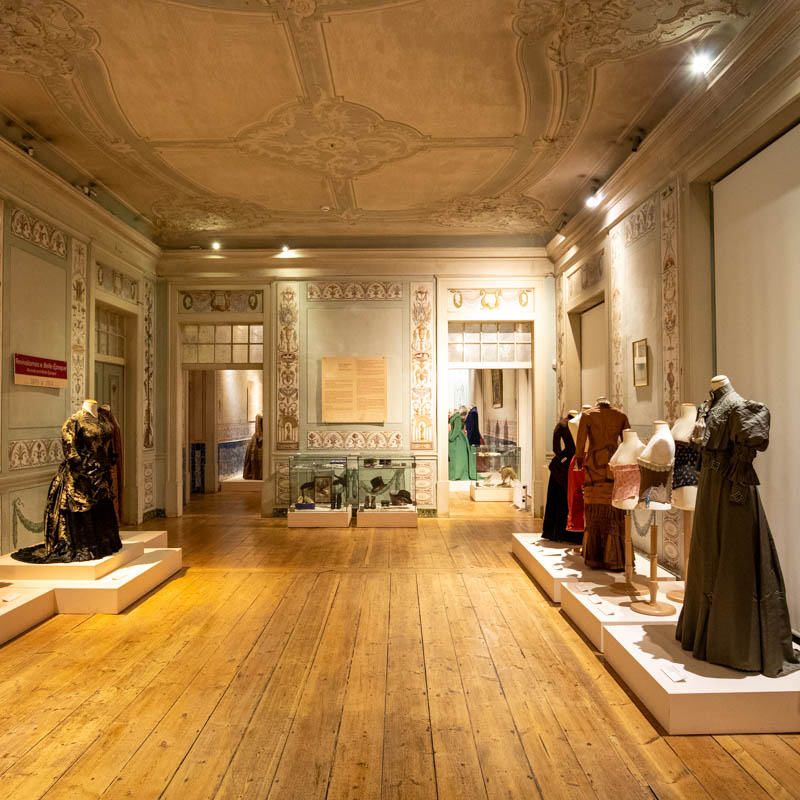
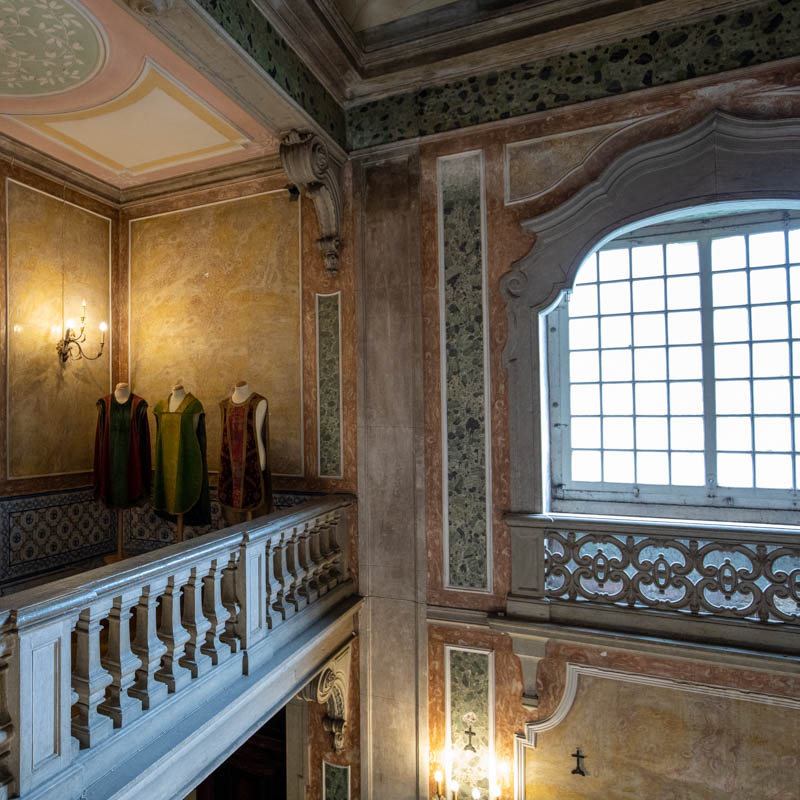
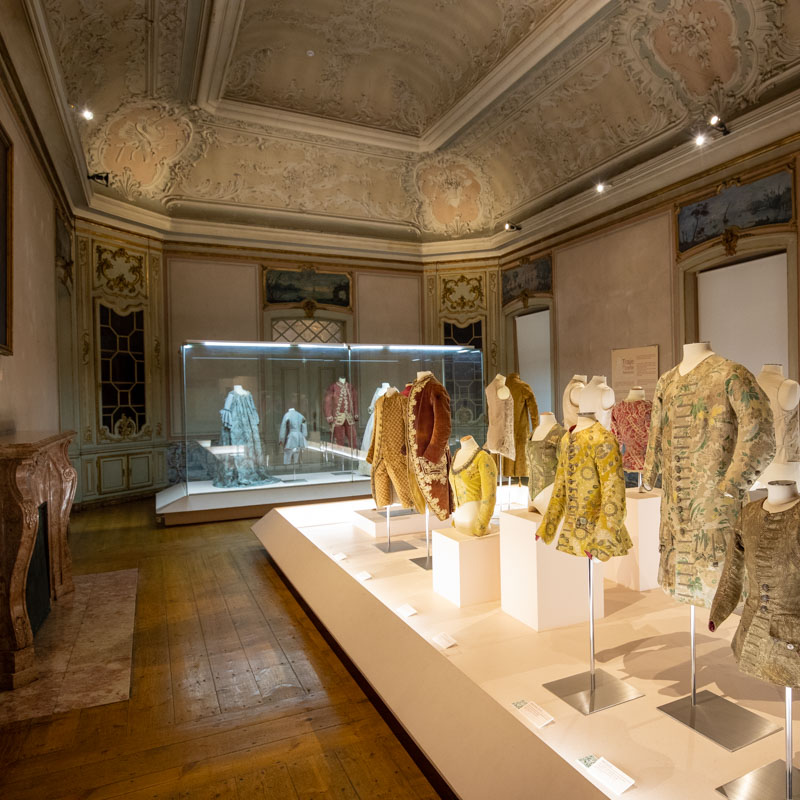
The architecture of the ensemble helps explain why this museum is more than a sequence of display cases. The Angeja-Palmela Palace has a Pombaline design and is organised on two clearly distinct floors. On the ground level were the kitchen and service rooms, while the noble floor concentrated the social rooms and principal apartments. Inside, Rococo ceilings of masseira type survive alongside tile panels with gallant scenes, maritime views and pastoral compositions, as well as painted decoration of Neoclassical taste. The collection fits within that historic frame through a route devoted to civil costume and accessories from the eighteenth century to the present day. Women’s dress forms the largest core, but the museum also preserves men’s clothing, nineteenth- and twentieth-century underwear, children’s dress, fans, hats, shoes, bags, shawls, lace, embroidery and quilts. Around the palace, the Monteiro-Mor Botanical Park extends over about eleven hectares, with lakes, meadows, paths, a botanical garden, orchard, vegetable garden and woodland.

More context

The façade of the Angeja-Palmela Palace deserves a careful first look, because its restraint and the rhythm of its openings immediately reveal the eighteenth-century origin of the house. Inside, pay attention to the relationship between the Rococo ceilings, the tile panels and the rooms where the collection is usually displayed, since that dialogue helps place costume within a broader material culture. When eighteenth- or nineteenth-century women’s dresses appear, notice the shaping of the waist, the volume of the skirts and the richness of the fabrics. In the men’s sections, the change in cut and the presence of silk and linen point to other forms of social distinction. Accessories also reward close attention, especially fans, hats, shoes and children’s clothing, because they reveal more intimate scales of use. Outside, the park extends the visit in a different language. Its lakes, former estate grounds, Neo-Gothic tea pavilion and the first known Araucaria heterophylla in mainland Portugal show that this museum is also a historic landscape.

Gallery

Museu Nacional do Traje 1
Museu Nacional do Traje 2
Museu Nacional do Traje 3
Museu Nacional do Traje 4
Museu Nacional do Traje 5

Nearby places

View all