Paço Episcopal do Porto

Porto · Porto

Paço Episcopal do Porto

PalaceXIIPalace Architecture
Terreiro da Sé, 4050-573 Porto4.4 Rating · 69765 min

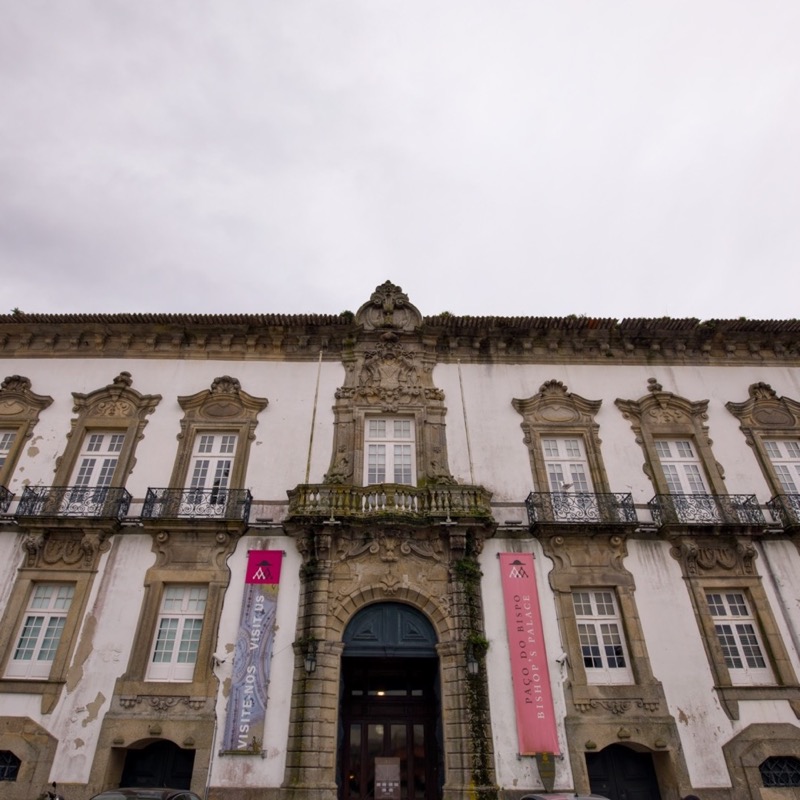
The Episcopal Palace of Porto, on the Terreiro da Sé, rises beside the cathedral and follows the history of religious power in the city. Classified as a National Monument in 1910, it occupies the site of former episcopal residences, with medieval traces still recognisable; in the medieval palace, in 1386, the wedding of King João I and Philippa of Lancaster was celebrated. Its present image results above all from the Baroque reconstruction of the 18th century. Nicolau Nasoni was paid in 1734 for the palace plan, but the works, more intense from 1737 onwards, continued for many years and altered the initial design. On the façade, the central portal, the noble balcony and the arms of Bishop Rafael de Mendonça organise the ensemble. Inside, the vestibule, the courtyard and the monumental staircase reveal a building that brought together episcopal residence, administrative services and, during part of the 20th century, municipal functions.

Why it matters

The Episcopal Palace of Porto stands on the south side of Terreiro da Sé, overlooking the Ribeira district and the Douro valley. It is the former official residence of the bishops of Porto and forms part of the core of the historic centre inscribed as a World Heritage Site. A bishop’s residence beside the cathedral is documented at least since the time of Bishop Dom Hugo in the early 12th century, and the medieval palace is generally dated to the 13th century, associated with Bishop Martinho Rodrigues. Over the Middle Ages and early modern period, the complex was enlarged and remodelled, hosting major events in national history and functioning as residence, diocesan government centre and space of representation. The decisive moment in its current configuration took place in the Baroque period. From the early 18th century to the late 19th century, the cathedral chapter and successive bishops promoted a major rebuilding campaign, whose most significant phase is linked to the government of Bishop Frei João Rafael de Mendonça (1771–1793). The project for the new palace is attributed to Nicolau Nasoni, although the works were largely overseen by architect Miguel Francisco da Silva, and continued over decades; the original design was never fully completed. The building suffered serious damage during the Siege of Porto (1832–1833) and was repaired from 1868 onwards. After the establishment of the Republic and the nationalisation of church property, the palace housed Porto’s City Hall between 1916 and 1957. Classified as a National Monument since 1910, it now belongs to the State, contains the bishop’s official residence and diocesan curia and, since 2016, includes a museum circuit open to visitors.

Architecture and history

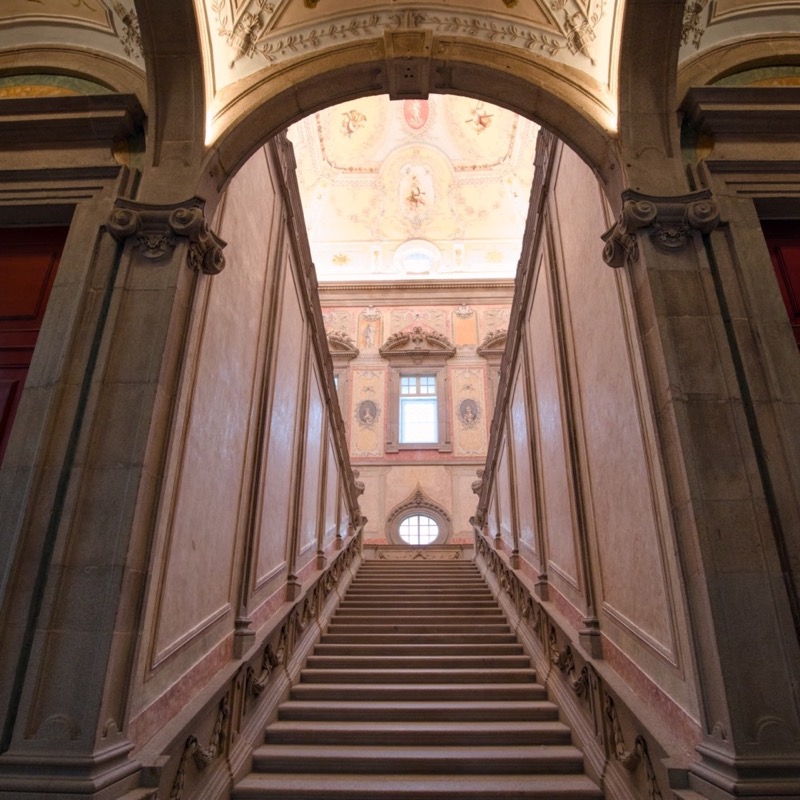
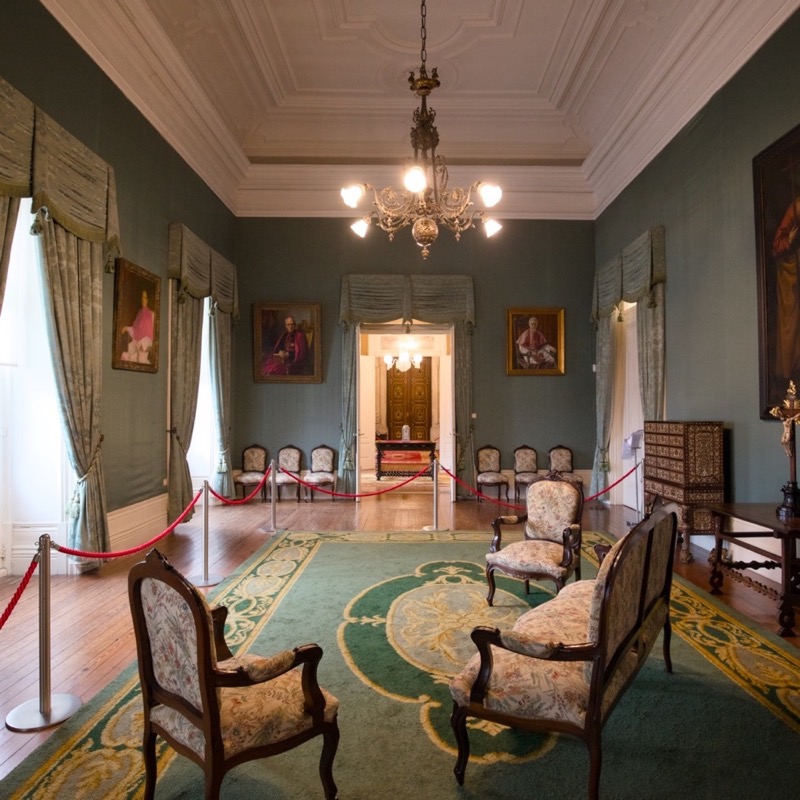
The Episcopal Palace is regarded as one of the most important examples of late Baroque architecture in Portugal and, in terms of scale and ornament, the first true urban palace in Porto. It has a rectangular plan organised around a central courtyard, with regular facades adapted to the steep slope: on the side facing Terreiro da Sé three main storeys are visible, while the western facade, overlooking the Douro, can reach up to seven levels. The main south front is marked by a large round-arched portal with rusticated jambs, above which opens a stone balcony. On the piano nobile there are 24 French windows with wrought-iron railings, symmetrically arranged and surmounted by carved pediments of Baroque and Rococo inspiration. At the centre, an honorary window is crowned by the coat of arms of Bishop João Rafael de Mendonça (or Rafael de Mendonça), set in a curved pediment that dominates the vertical axis of the facade. The interior confirms the palatial character of the building. The vaulted entrance hall preserves elements of the medieval structure, such as a late-Romanesque slit window embedded in the wall. From here the monumental granite staircase unfolds, with one central and two side flights, lit by a 19th-century lantern; the walls are clad in stucco and neoclassical mural painting with garlands, medallions and religious motifs that harmonise with the Baroque structure. On the main floor a sequence of large rooms – the Hall of Mirrors, Portraits Room, Audience Hall, Throne Room and others – is decorated with stucco, painted ceilings and period furniture. An extensive gallery of portraits of the bishops of Porto (including works by artists such as Henrique Medina and Júlio Resende), the former palace chapel and pieces of silverware, among them the famous Manueline silver dinner service designed by Rafael Bordalo Pinheiro, underline the artistic and representative value of the ensemble.

More context

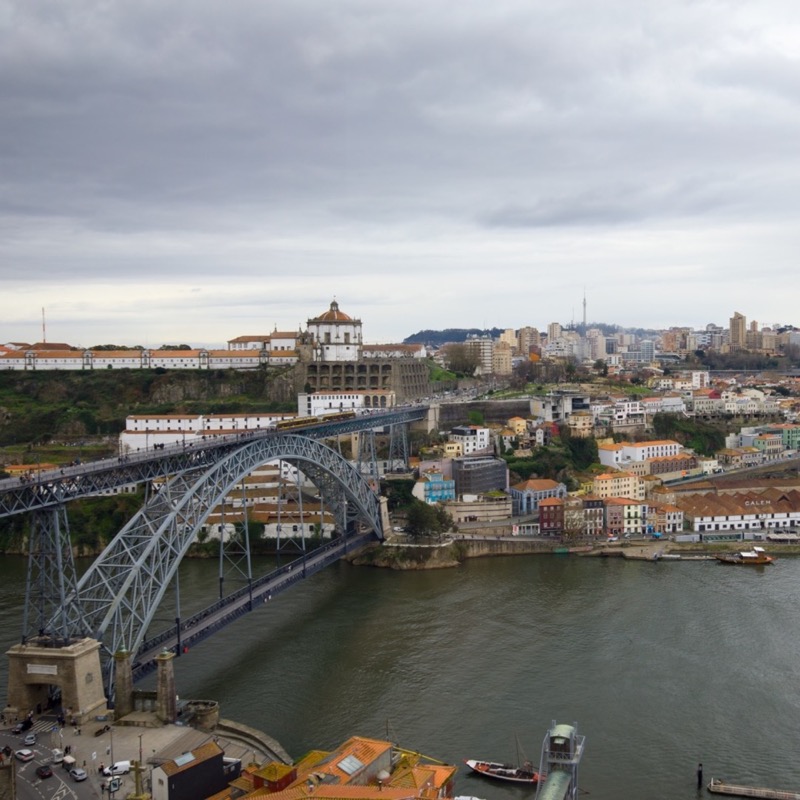
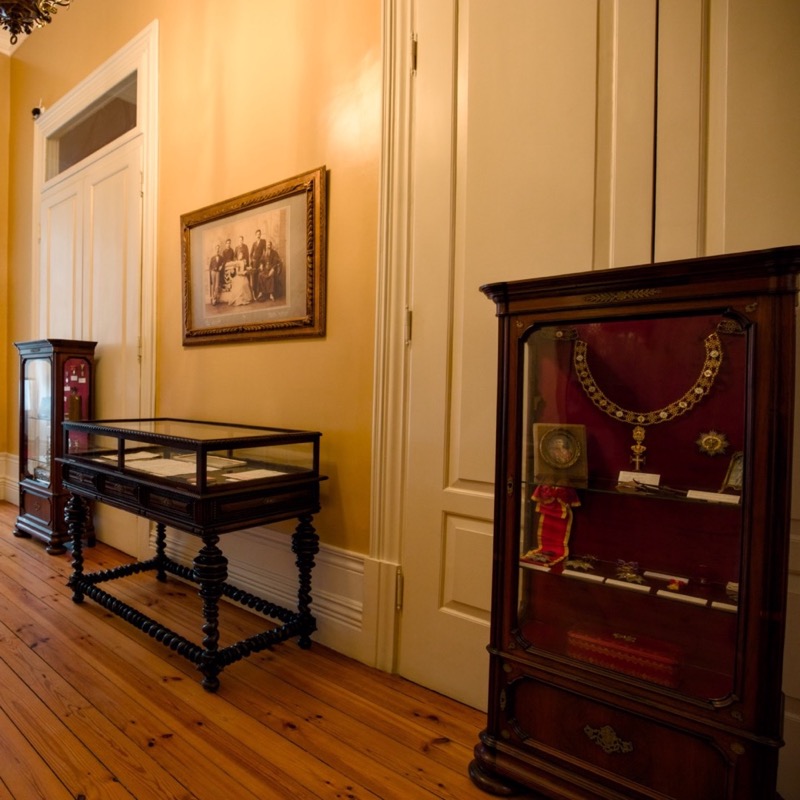
A visit to Porto’s Episcopal Palace combines an architectural reading of the building with outstanding views over the historic centre. From Terreiro da Sé, visitors can appreciate the Baroque facade, the dominant position on the hillside and the direct relationship with the cathedral and the former city walls. Inside, the museum circuit begins in the entrance hall and monumental staircase, where the granite masonry, stucco work, mural painting and lantern skylight stand out. Climbing the stairs allows an understanding of how the palace is organised around its courtyard and how the architecture responds to the steep relief of the Pena Ventosa hill. On the main floor, visitors walk through a succession of rooms that recreate 18th- and 19th-century palatial interiors. The collection of portraits of Porto’s bishops offers an overview of the diocese’s history, while other rooms showcase specific decorative programmes, such as the Hall of Mirrors and the Throne Room. One section is devoted to the Viscounts of São João da Pesqueira, major benefactors of the diocese, with a re-creation of their dining room and the display of the Manueline silver dinner service. Along the route, further pieces of furniture, religious sculpture, silverware and other works document the artistic heritage of the Church of Porto. The visit ends in spaces opening onto the surrounding landscape. From the south- and west-facing windows and galleries there are wide views over Terreiro da Sé, the Ribeira district, the Luís I Bridge, Vila Nova de Gaia and the Douro River, revealing the strategic importance of the Pena Ventosa hill in controlling the city and its river port. Part of the building still houses the bishop’s residence and curial offices, underlining the continuity of use between the medieval episcopal complex and the Baroque palace accessible today.

Routes

Explore this place in a cultural route

View all Routes

Gallery

Paço Episcopal do Porto 1
Paço Episcopal do Porto 2
Paço Episcopal do Porto 3
Paço Episcopal do Porto 4
Paço Episcopal do Porto 5

Nearby places

View all